
中俄人文交流

Search documents
“莫斯科送冬节”在京启幕 中俄人文交流添新彩
Xin Hua She· 2026-02-25 00:41
Core Viewpoint - The "Moscow Sends Winter Festival" in Beijing showcases Russian cultural traditions and enhances Sino-Russian cultural exchanges during the Spring Festival period [1][2] Group 1: Event Overview - The "Moscow Sends Winter Festival" commenced on February 19, featuring traditional Russian customs and festive culture [1] - The event is held at Chaoyang Park in Beijing, creating a vibrant festive atmosphere with performances in traditional Russian attire and themed art installations [1] - The festival includes a "Moscow Food Pavilion" where attendees can enjoy traditional Russian dishes like pancakes [1] Group 2: Cultural Significance - The "Sending Winter Festival" is a traditional Russian celebration marking the end of winter and the arrival of spring, symbolizing cultural connection between the two nations [1] - The event is part of the "Moscow Happy Spring Festival" initiative, which aims to enhance cultural interactions during the spring season [1] Group 3: Collaborative Efforts - A memorandum of understanding was signed between the Moscow City Tourism Committee and the Beijing Municipal Bureau of Culture and Tourism to strengthen cooperation in tourism promotion, industry exchange, route development, and talent training [1][2] - The event is co-hosted by the Moscow City Government and the Russian Embassy in China, with support from various Beijing governmental bodies [2] - The festival will run until February 22, further enriching the cultural tourism market in Beijing during the Spring Festival [2]
2026“欢乐春节”在莫斯科盛大启幕,中俄共绘人文交流新画卷
Xin Lang Cai Jing· 2026-02-18 15:12
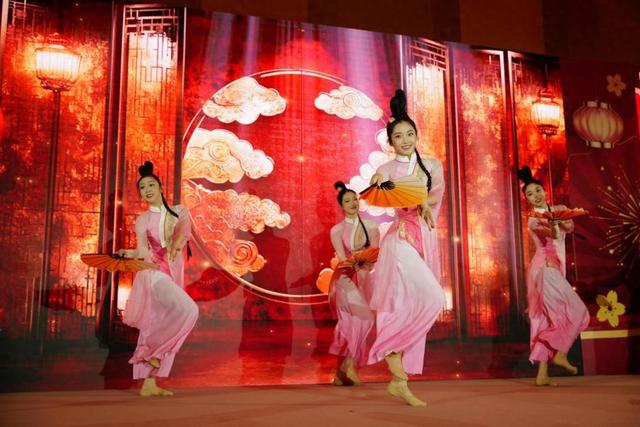
Group 1 - The "Happy Spring Festival" cultural activities in Moscow successfully showcased Chinese culture and strengthened Sino-Russian ties, attracting around 400 attendees including political figures and guests [1] - The event featured artistic performances that highlighted Beijing's rich heritage and modern vibrancy, with dedicated cultural display areas for traditional crafts [3] - The "Happy Spring Festival" outdoor fair at Manezh Square is expected to attract one million participants during the 2026 "Moscow Chinese New Year" celebrations [5] Group 2 - The performances included traditional Chinese music, dance, martial arts, and acrobatics, which captivated the audience and showcased the unique charm of Chinese culture [8] - A special non-heritage masterclass allowed local Russians to experience traditional crafts like cloisonné and Peking opera mask painting, enhancing cultural exchange [10] - A tourism promotion event titled "Hello, Beijing" was held to discuss travel opportunities and policies, with representatives from over ten key Russian tourism enterprises participating [11]

俄罗斯,亦“春运”
Jing Ji Ri Bao· 2026-02-07 22:21
Core Viewpoint - The increasing popularity of Hainan as a winter vacation destination for Russian tourists is highlighted, driven by improved bilateral relations and the implementation of a visa-free policy, leading to a significant rise in tourist numbers and cultural exchange between China and Russia [1][4][5]. Group 1: Tourist Trends - The first international flight of 2026 from Vladivostok to Sanya, China, marked the beginning of a surge in Russian tourists visiting Hainan during the New Year holiday, likened to China's "Spring Festival travel rush" [1]. - Data from various travel platforms indicate that Hainan has become the preferred vacation spot for Russian tourists in 2026, attributed to its beautiful scenery, warm climate, and diverse travel experiences [1][2]. - The number of Russian tourists visiting Hainan exceeded 500,000 in 2025, representing a year-on-year increase of over 120%, contributing to more than one-third of Hainan's inbound tourist sources [4]. Group 2: Cultural Exchange - Russian tourists express their fondness for Hainan, citing its sunny beaches and unique local experiences, such as traditional Chinese medicine and cultural practices [2][3]. - The implementation of a visa-free policy since September 2025 has led to a dramatic increase in searches for flights and travel products to China, particularly Hainan [2]. - Russian officials emphasize that cultural exchanges and tourism will benefit from the visa-free regime, with travel numbers reaching historical highs, fostering deeper understanding and friendship between the two nations [4][5]. Group 3: Infrastructure and Services - Hainan's well-developed tourism infrastructure, including international hotel chains and localized services, enhances the overall experience for visitors [3]. - The presence of Russian language services and signage in Hainan resorts significantly improves the comfort and convenience for Russian tourists [3]. - The local government and businesses are actively enhancing services tailored to Russian tourists, contributing to Hainan's appeal as a winter vacation destination [3].
中俄人士热议两国免签政策利好
Xin Hua She· 2025-12-05 11:00
Group 1 - The mutual visa exemption policy between China and Russia is expected to significantly increase tourist numbers, enhance cultural and technical exchanges, and facilitate business interactions, thereby unlocking further potential for Sino-Russian trade cooperation [1][2] - The visa exemption will reduce the time and costs associated with obtaining visas, making cross-border travel more accessible for citizens of both countries, particularly for individual and business trips [1][2] - The policy is anticipated to benefit not only major cities like Moscow and St. Petersburg but also lesser-known regions in Russia's Far East, creating new opportunities for tourism [1] Group 2 - The visa exemption is expected to foster technological exchanges, with China's rapid advancements in certain tech sectors likely to create demand in the Russian market, while Russia's established tech capabilities can quickly integrate into the Chinese market [2] - The policy will enhance student exchanges between the two countries, promoting language skills and mutual understanding through cross-border travel during holidays [2] - The Russian side is actively working to improve tourism reception capabilities to accommodate the expected increase in visitors, including measures such as adding dedicated bus parking, localizing services, and increasing currency exchange points [3]
21现场|普京亲自签发!俄罗斯友谊勋章花落中国武术大师吴彬
2 1 Shi Ji Jing Ji Bao Dao· 2025-11-25 09:29
Group 1 - The core event highlighted the awarding of the "Friendship Medal" to Wu Bin, Vice President of the Chinese Wushu Association, by Georgy Filimonov, Governor of Vologda Oblast, at the Russian Embassy in China [2] - The Russian Deputy Head of Mission, Kramintsev, emphasized that martial arts serve as an important cultural bridge connecting the peoples of China and Russia [2] - Filimonov noted that martial arts possess a unique charm that closely ties China and Russia, reflecting the strategic partnership between the two nations [2] Group 2 - The "Friendship Medal" is a prestigious honor in Russia, aimed at recognizing individuals who have made significant contributions to strengthening friendly relations between countries and promoting peace, cooperation, and cultural development [2] - The President of the Russian Martial Arts Federation, Gleb Muzrukov, praised Wu Bin as a legendary figure in martial arts, highlighting his efforts in promoting martial arts globally and his key role in elevating the Russian national team to a world-class level [2] - Wu Bin, recognized as one of the most influential martial arts masters globally, has trained numerous outstanding athletes, including international film stars Jet Li and Donnie Yen, and has been named one of China's top ten martial arts coaches [4]
俄远东学子与中国文化的 “双向奔赴”
Xin Hua Wang· 2025-10-29 02:22
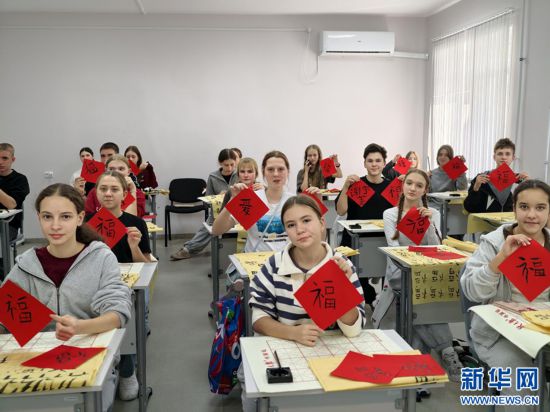
Core Points - The recent cultural exchange activities in Vladivostok highlight the growing interest in Chinese culture among Russian students [1][2][4] - The number of students learning Chinese in Vladivostok has significantly increased, with plans to expand Chinese language proficiency tests due to high demand [4] Group 1: Cultural Exchange Activities - Students in Vladivostok engaged in various Chinese cultural experiences, including watching the animated film "Ne Zha" and participating in calligraphy classes [1][2] - The activities included singing Chinese songs, playing word games, and enjoying traditional Chinese music performances [2] - The Chinese Consulate emphasized the importance of cultural exchanges in strengthening Sino-Russian friendship and encouraged students to visit China [2] Group 2: Growth in Chinese Language Learning - The number of students studying Chinese at Far Eastern Federal University has increased several times compared to pre-pandemic levels [4] - The local demand for Chinese language proficiency tests (HSK) has surged, prompting plans to add an additional testing session next year [4] - Students express a strong interest in Chinese literature, with some aiming to read original works in Chinese [4]
中俄合拍电影《红丝绸》即将上映
Xin Hua Wang· 2025-09-04 13:11
Core Viewpoint - The film "Red Silk," a Sino-Russian co-production, will be released in Chinese theaters on September 6, showcasing a story of joint efforts to uphold justice on a secret front [1] Group 1: Film Details - "Red Silk" was released in Russia on February 20 and received positive reviews, with audiences praising its gripping plot and strong visual impact in action scenes [1] - The film is a product of collaboration between China and Russia, filmed in multiple locations, reflecting the cultural exchange and cooperation between the two nations [1] Group 2: Cultural Exchange and Events - The film's release is part of the broader context of deepening cultural exchanges between China and Russia, highlighted by successful events such as the "2025 China Film Festival" held in Russia and the "2025 Russia Film Festival" currently taking place in China [1]
加强人文交流 传承伟大友谊——习近平主席贺信为中俄人民相知相亲注入新动力
Xin Hua She· 2025-05-08 16:53
Core Viewpoint - The significance of strengthening Sino-Russian cultural exchanges is emphasized, particularly in the context of commemorating the 80th anniversary of the victory in the Chinese People's Anti-Japanese War and the Soviet Great Patriotic War, aiming to enhance mutual understanding and friendship between the two nations [1][2][3]. Group 1: Historical Context - The year 2025 marks the 80th anniversary of the victory in the World Anti-Fascist War and the establishment of the United Nations, highlighting the importance of historical memory in shaping current Sino-Russian relations [3]. - The commemoration of the 80th anniversary serves as a reminder of the sacrifices made by both nations during the war and the importance of unity in facing contemporary challenges [2][3]. Group 2: Cultural Exchange Initiatives - Xi Jinping's message calls for increased humanistic exchanges to solidify the social foundation of Sino-Russian relations, emphasizing the role of cultural initiatives in fostering mutual understanding [4][5]. - The upcoming "China-Russia Cultural Year" in 2024-2025 is expected to enhance cultural cooperation, with joint film projects like "Red Silk" being pivotal in conveying shared values to younger generations [4][5]. Group 3: Media Collaboration - The importance of media collaboration is highlighted, with a call for joint efforts to promote historical memory and enhance public understanding of the significance of the anti-fascist victory [7][8]. - Media exchanges are seen as a vital component in strengthening the ties between the two nations, facilitating daily interactions that contribute to a stable and friendly relationship [7][8].

民心相通助中俄关系从容前行(环球热点)
Ren Min Ri Bao Hai Wai Ban· 2025-05-07 22:27
Group 1 - The core viewpoint emphasizes that cultural exchanges between China and Russia have been a driving force for the sustained development of bilateral relations, with a solid foundation of public opinion established over nearly 76 years of diplomatic ties [1][5][7] - The "China-Russia Cultural Year" from 2024 to 2025 will feature hundreds of cultural exchange activities, further strengthening the friendly social foundation between the two nations [1][2] - The successful performances of the original Shenzhen dance drama "Yongchun" in Russia and the co-produced film "Red Silk" highlight the growing cultural cooperation and mutual appreciation between the two countries [2][3] Group 2 - The number of Chinese tourists visiting Russia is projected to reach 848,000 in 2024, a 4.2-fold increase from 2023, while the number of Russian tourists visiting China, particularly Hainan, has surged by 11 times [6] - In 2024, the trade volume between China and Russia reached $244.8 billion, marking a 1.9% year-on-year increase, with China maintaining its position as Russia's largest trading partner for 15 consecutive years [6] - The cultural exchanges are supported by improved visa policies, deepening economic cooperation, and a mature exchange mechanism, which facilitate closer ties between the two nations [5][6][8] Group 3 - The "Cultural Year" emphasizes the importance of dialogue and understanding between different cultural traditions, enhancing mutual recognition and respect among the peoples of both countries [7][9] - Public opinion surveys indicate a high level of mutual recognition and optimism regarding the future of China-Russia relations, with 95% of young Russians expressing a favorable view of China [7][9] - The ongoing cultural cooperation is seen as a vital component of the comprehensive strategic partnership between China and Russia, contributing to the integration of cultures and the strengthening of public sentiment [8][9]
特稿丨人文交流拉紧中俄人民相知相亲纽带
Xin Hua Wang· 2025-05-06 08:00
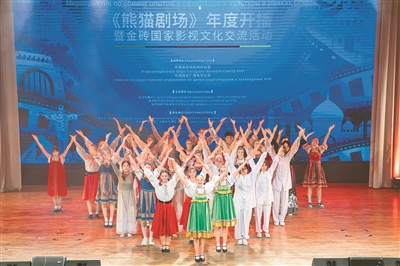
Core Viewpoint - The article emphasizes the growing cultural exchanges between China and Russia, highlighting various collaborative activities that strengthen the bond between the two nations and promote mutual understanding among their peoples [1][2][3]. Group 1: Cultural Exchange Activities - The "China-Russia Cultural Year" from 2024 to 2025 will feature hundreds of cultural exchange activities, enhancing communication and understanding between the two countries [1]. - Collaborative projects include the co-production of films, operas, and various cultural celebrations, showcasing the richness of both cultures [1][4][5]. Group 2: Language Learning and Education - Over 140 universities and 220 primary and secondary schools in Russia offer Chinese language courses, with approximately 110,000 students learning Chinese [3]. - The Russian government has included Chinese as a foreign language in the national unified examination, reflecting the increasing popularity of the language [3]. - Joint educational initiatives, such as the "10+10 Joint Training Program" and "Sino-Russian Alliance of Similar Universities," aim to enhance student exchanges and cooperation [3]. Group 3: Artistic Collaboration - Chinese artistic performances, such as the original dance drama "Yong Chun," have received positive acclaim in Russia, showcasing the beauty of Chinese culture [4]. - Russian classical art, including ballet performances of "Swan Lake" and "The Nutcracker," has also been well-received in China, highlighting the cultural exchange [5]. Group 4: Tourism and People-to-People Connections - The number of Russian tourists visiting China is projected to reach 848,000 in 2024, a 4.2-fold increase from 2023, indicating a growing interest in travel between the two countries [6]. - Efforts to facilitate travel include the introduction of Chinese signage in Russian airports and tourist spots, as well as direct flights between cities [7]. - Cultural events in Moscow during the Chinese New Year aim to attract more Chinese tourists and provide immersive experiences of Chinese culture [7].