
中医药产业高质量发展

Search documents
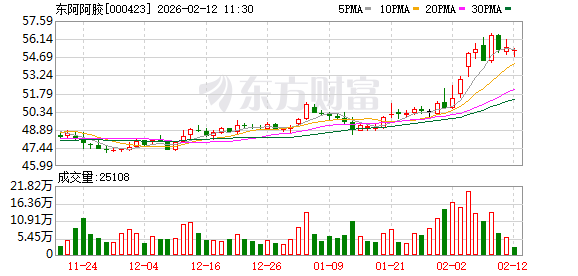
东阿阿胶14.85亿建产业园 大健康转型前路如何?
2 1 Shi Ji Jing Ji Bao Dao· 2026-02-12 04:56
Core Viewpoint - Dong'e Ejiao is making a significant investment of 1.485 billion yuan to build a health consumer goods industrial park, which is a strategic move to adapt to the trend of younger consumers and the foodification of products in the ejiao industry [2][3]. Investment Details - The total investment of 1.485 billion yuan includes 1.421 billion yuan for fixed assets and 64 million yuan for working capital, indicating a focus on capacity construction for health consumer goods [2][3]. - This investment is the largest single investment in the health consumer sector in recent years, highlighting the company's commitment to scaling production capabilities [3]. Market Trends - The consumer base for ejiao is expanding from "middle-aged women" to "universal health," with younger consumers driving demand for ready-to-eat products [3][5]. - By 2025, ready-to-eat ejiao products are expected to account for over 60% of the market, with 62% of young users preferring "ready-to-eat" formats [3]. Capacity and Financial Position - The construction of the industrial park aims to address the current capacity limitations in health consumer goods, which have been a barrier to rapid market growth for new products [4]. - As of Q3 2025, the company has total assets of 12.749 billion yuan and a low debt ratio of 21.77%, providing a solid financial foundation for the investment [4]. Industry Context - The ejiao industry has undergone significant changes, moving from price wars to value return and from traditional nourishment to consumption upgrades [5][6]. - Dong'e Ejiao holds a dominant market share of 70% in the ejiao block category, indicating a strong competitive position [5]. Policy Support - The national push for high-quality development in traditional Chinese medicine provides a favorable environment for Dong'e Ejiao's expansion into health consumer goods [7]. Challenges Ahead - The construction of the industrial park will take 2-3 years, and the company must ensure that production capacity aligns with rapidly changing market demands [8]. - The health consumer goods sector is highly competitive, requiring innovative product development to meet the needs of younger consumers [8]. - The company needs to enhance its online sales channels and improve operational efficiency to compete effectively in the new retail landscape [8]. Industry Implications - Dong'e Ejiao's strategy serves as a reference for traditional Chinese medicine companies, emphasizing the need for product innovation and industry upgrades to achieve sustainable development [9].


河南中医一附院院内制剂出圈记丨从一株草到一条链
Xin Lang Cai Jing· 2026-02-11 11:29
Core Viewpoint - The Henan Provincial Government has issued a set of 23 targeted measures aimed at enhancing the quality of traditional Chinese medicine (TCM) and promoting the high-quality development of the TCM industry in Henan Province [1] Group 1: Policy Measures - The new policies provide a clear blueprint for the high-quality development of the TCM industry in Henan [1] - The measures focus on modern research and development to transform hospital preparations into innovative TCM products [1] Group 2: Industry Development - The initiative includes exploring how a single medicinal herb can leverage technology for superior breeding and cultivation [1] - The series of reports will highlight how a pharmaceutical company utilizes smart manufacturing to achieve transformation and upgrading [1]
医药行业跟踪报告:信达生物与礼来合作再度升级,打造全球创新生态体系
Shanghai Aijian Securities· 2026-02-09 08:12
Investment Rating - The report assigns an "Outperform" rating for the pharmaceutical sector, indicating a positive outlook compared to the broader market [2][4]. Core Insights - The collaboration between Innovent Biologics and Eli Lilly has been upgraded, aiming to create a global innovative ecosystem for drug development in oncology and immunology. This partnership marks their seventh collaboration, enhancing their strategic relationship over more than a decade [2]. - The Chinese government has introduced a high-quality development plan for traditional Chinese medicine (TCM), focusing on improving raw material supply, innovation, and manufacturing capabilities. The plan aims to establish a collaborative development system by 2030, with significant investments in TCM innovation [2]. Summary by Sections Market Performance - The SW Pharmaceutical Biotechnology Index increased by 0.14% during the week of February 2 to February 8, outperforming the CSI 300 Index, which decreased by 1.33%. The Chinese medicine sector saw a notable rise of 2.56% due to new policies, while vaccines and other bioproducts experienced declines [2]. Strategic Collaborations - Innovent Biologics and Eli Lilly's new agreement includes a $350 million upfront payment and potential milestone payments of up to $8.5 billion, along with a tiered sales revenue sharing model for products outside Greater China. This partnership signifies a shift from traditional licensing to deeper integration of technology platforms and R&D systems [2]. Investment Opportunities - The report highlights continued optimism for Chinese innovative drugs entering international markets, particularly in areas such as antibody-drug conjugates (ADCs), dual antibodies, small nucleic acids, and weight-loss medications. Key companies to watch include Innovent Biologics, 3SBio, WuXi AppTec, and others [2].
步长制药:2026年首次股份回购落地 耗资3675万元彰显发展信心
Cai Fu Zai Xian· 2026-02-09 03:43
Core Viewpoint - The recent share buyback by Buchang Pharma reflects the company's strong confidence in its intrinsic value and aims to boost market sentiment while ensuring stable returns for investors [1][2][3]. Group 1: Share Buyback Details - Buchang Pharma has initiated a new round of share buybacks, with the first phase completed through centralized bidding, demonstrating management's confidence in the company's value [1]. - The company plans to use its own funds and special loans from financial institutions for the buyback, with an estimated amount between 60 million to 120 million yuan and a maximum buyback price of 23.98 yuan per share [2]. - The first buyback was completed on February 2, 2026, with 2.176 million shares repurchased at prices ranging from 16.75 yuan to 17.12 yuan, totaling approximately 36.76 million yuan [2]. Group 2: Financial Performance and Growth - Buchang Pharma's 2025 annual performance forecast indicates a significant turnaround, with net profits expected to range from 320 million to 468 million yuan, marking a successful return to profitability [1]. - The company has distributed a total of 7.948 billion yuan in dividends since its listing and has spent 1.744 billion yuan on share buybacks and cancellations, exceeding the 3.9 billion yuan raised during its IPO [1]. - The core product matrix, including over 170 drugs included in the 2025 National Medical Insurance Directory, has established a strong foundation for sales growth [4]. Group 3: Strategic Implications of Buyback - The share buyback is expected to stabilize the stock price and enhance market confidence, particularly as the company's stock is currently at a relatively low level [3]. - The buyback will also be used for employee stock ownership plans or equity incentives, aligning the interests of core employees with the company's long-term development [3]. - The buyback strategy is part of a broader effort to optimize the company's capital structure and reduce financial risks, enhancing its resilience [3]. Group 4: Innovation and Market Expansion - Buchang Pharma has launched 17 new generic drugs in 2023, expanding into antiviral, anesthetic, and neurological markets, while also addressing gaps in its product offerings [5]. - The company is advancing into biopharmaceuticals and chemical drugs, with several first-class new drugs and biosimilars in the pipeline, which are crucial for long-term growth [5]. Group 5: Commitment to Social Responsibility - Buchang Pharma has contributed nearly 33 billion yuan in taxes nationwide, playing a significant role in local economic development [7]. - The company emphasizes its commitment to social responsibility and aims to contribute to the high-quality development of traditional Chinese medicine and the health of the nation [7].

河南省将培育三至五个年营业收入超过三十亿元中药企业 为中医药产业“强筋壮骨”
He Nan Ri Bao· 2026-02-05 23:29
Core Viewpoint - The Henan Provincial Government has issued a set of 23 specific policy measures aimed at enhancing the quality of traditional Chinese medicine (TCM) and promoting the high-quality development of the TCM industry, focusing on various aspects of the industry chain from source control to brand building [1] Group 1: Industry Development and Quality Improvement - The measures emphasize the importance of standardization in the cultivation of Chinese medicinal materials, addressing issues such as low standardization, insufficient protection of genetic resources, and lack of a quality traceability system [2] - The government plans to conduct a resource survey and establish a provincial database for Chinese medicinal resources, as well as develop modern seed industries for medicinal materials, ensuring high quality and authenticity from the source [2] - The TCM industry in Henan is significant, with revenues expected to exceed 50 billion yuan in 2024, but faces challenges such as limited enterprise scale and insufficient brand recognition [2] Group 2: Brand Building and Market Competitiveness - The measures aim to cultivate 3-5 leading TCM enterprises with annual revenues exceeding 3 billion yuan, creating a nationally influential TCM industry cluster [2] - The initiative includes the development of local brands such as Nanyang Ai and "Four Major Huai Medicines," with plans to establish 10 well-known TCM brands to enhance market competitiveness [3] Group 3: Technological Advancement and Sustainability - The measures propose the construction of 6 smart workshops, 2 green factories, and 1 future factory during the 14th Five-Year Plan period to improve manufacturing quality [4] - The focus on smart workshops aims to address core issues such as standardization and quality control in traditional production methods, while green factories will promote sustainable development [4] - The government is also advancing the integration of artificial intelligence in the TCM sector, establishing a national AI application pilot base to support the development of AI models for TCM diagnosis, treatment, and health management [4]
中成药“生死大考”倒计时:行业洗牌加速 头部企业率先突围
Zheng Quan Ri Bao Wang· 2026-02-03 11:15
Industry Overview - The "Special Regulations on the Registration Management of Traditional Chinese Medicine" is set to reshape the Chinese medicine industry, with a deadline of July 1, 2026, for compliance [1] - The regulation mandates that any traditional Chinese medicine (TCM) with unclear safety information in its instructions will not be re-registered after three years from its implementation on July 1, 2023 [1] Safety and Quality Concerns - Concerns have been raised about the safety of TCM; however, data shows that TCM accounts for only 12% of adverse drug reactions, compared to 81% for chemical drugs, indicating relative safety [2] - The core purpose of the new regulation is to enhance the safety information in TCM product instructions, promoting high-quality development in the industry [2] Company Responses - Leading companies like Yiling Pharmaceutical and Rongchang Pharmaceutical have proactively updated their product instructions to comply with the new regulations, ensuring clear statements on contraindications, adverse reactions, and precautions [3] - Yiling Pharmaceutical has 17 patented TCM products that have been revised according to regulatory requirements, while Rongchang Pharmaceutical has simplified instructions for better consumer understanding [3] Industry Transformation - The industry is at a crossroads, facing short-term compliance pressures while needing to balance innovation and regulation in the long term [4] - The government encourages high-quality development and innovation in TCM, suggesting that products with clear evidence of safety and efficacy will gain a competitive edge in the market [4] - Although the policy changes may cause short-term challenges, they are expected to lead to healthier industry development by eliminating outdated practices and improving product quality [4]

中成药“尚不明确”退场倒计时!记者实探:部分常用药仍有标注
Qi Lu Wan Bao· 2026-01-29 11:59
Core Viewpoint - The implementation of the new regulations on traditional Chinese medicine (TCM) product labeling aims to eliminate the "unclear" status in safety information, enhancing the quality and safety of TCM products in the market [1][2][13]. Regulatory Changes - The new regulations, effective from July 1, 2023, require TCM product holders to manage the entire lifecycle of their products and improve the safety information in their labeling, specifically regarding contraindications, adverse reactions, and precautions [1][2]. - By July 1, 2026, any TCM product with "unclear" safety information will not be eligible for re-registration, emphasizing the urgency for companies to update their product labels [1][2]. Industry Response - Many pharmaceutical companies have begun revising their product labels to comply with the new regulations. For instance, companies like Rongchang Pharmaceutical and Yiling Pharmaceutical have completed revisions for their core products, ensuring clear safety information [11][12]. - The industry is adapting by adjusting procurement strategies to focus on compliant products and gradually reducing the inventory of those with high re-registration risks [14]. Market Observations - Despite the new regulations, some commonly used TCM products still display "unclear" safety information, indicating a gap in compliance that needs to be addressed [7][8]. - Reports indicate that TCM accounts for 12% of adverse drug reaction reports, highlighting the need for clearer safety information to mitigate risks associated with TCM usage [7][13]. Future Outlook - The new regulations are expected to promote a shift in the TCM industry from quantity expansion to quality prioritization, ultimately benefiting public health by providing clearer safety guidelines [13][14]. - The elimination of "unclear" labels is anticipated to enhance consumer confidence in TCM products, reducing the risk of unreasonable medication use [14].
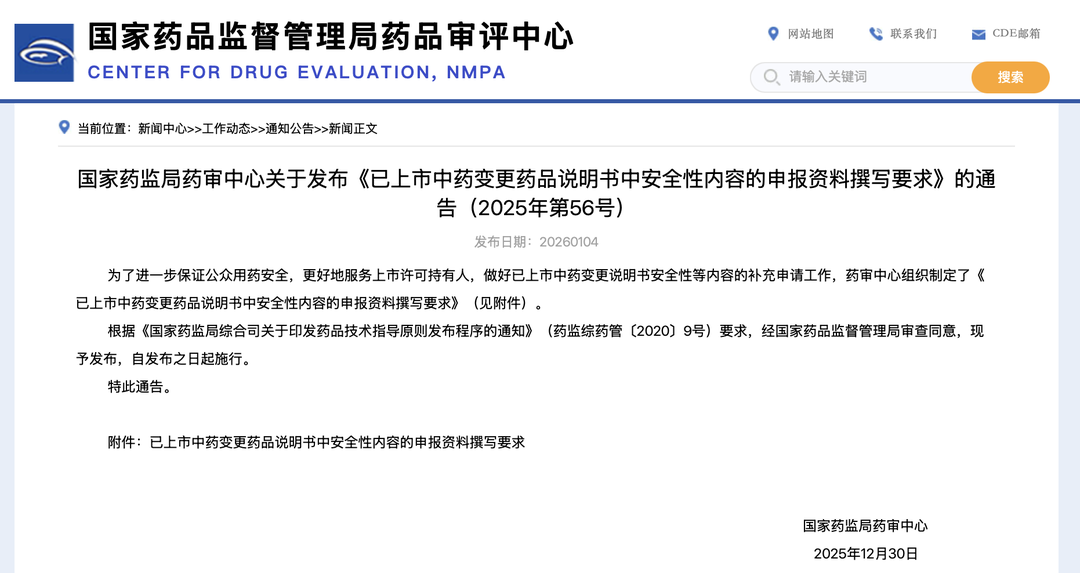
不良反应尚不明确的中成药将成历史,院士:中药相对安全
2 1 Shi Ji Jing Ji Bao Dao· 2026-01-29 09:13
Core Viewpoint - The Chinese traditional medicine industry is undergoing a significant transformation aimed at eliminating low-quality products, with new regulations set to enhance the quality and safety of traditional Chinese medicine [1] Group 1: Industry Developments - The new regulations are designed to promote high-quality development within the traditional Chinese medicine sector [1] - Over the past five years, traditional Chinese medicine has accounted for 12% of reported adverse drug reactions/events, while chemical drugs have represented 81% [1] Group 2: Expert Opinions - Zhang Boli, an academician of the Chinese Academy of Engineering, stated that traditional Chinese medicine is relatively safe [1]
将“名医名方”加速转化为“名药名品”
Xin Lang Cai Jing· 2026-01-27 15:51
Core Viewpoint - The article emphasizes the commitment of Shandong University of Traditional Chinese Medicine to innovate and promote traditional Chinese medicine (TCM) while addressing public health expectations through effective actions [1][2] Group 1: Industry Development - The TCM industry chain in Shandong is currently fragmented, with clinical, planting, and production data existing as "isolated islands," lacking effective integration and support for industry upgrades [1] - A development strategy has been proposed to create a "brain" for the TCM industry, focusing on clinical value and establishing an innovative system across the entire industry chain [1] Group 2: Achievements and Initiatives - Shandong University of Traditional Chinese Medicine has established a comprehensive service system for the transformation of TCM scientific achievements, covering the entire chain from concept validation to market transformation, with 119 cases of intellectual property transformation expected by 2025 [1] - The university has been approved to set up a center for the evaluation and promotion of TCM therapies, with plans to train 636 grassroots faculty members by the end of 2025, covering 479 grassroots health service institutions [2] - A collaborative network for clinical practice research in grassroots TCM has been initiated, focusing on the application of TCM therapies for common and frequently occurring diseases, with 80 TCM therapy promotion institutions to be selected in Shandong by 2025 [2]
政策助力中医药产业高质量发展,产品创新有望加快推进
Xuan Gu Bao· 2026-01-26 14:37
Group 1 - The National Health Commission is promoting the experience of the Sanming medical reform to enhance the development of traditional Chinese medicine (TCM) and its innovation [1] - A series of policies have been introduced to accelerate the high-quality development of county-level TCM hospitals, with over 40% of these hospitals leading the establishment of county medical communities [1] - There are currently 3,099 tightly-knit county medical communities established across 2,199 counties and cities in China [1] Group 2 - The State Council has issued opinions to improve the quality of traditional Chinese medicine and promote the high-quality development of the TCM industry, emphasizing the use of evidence-based medicine to translate clinical experience into clinical evidence [1] - Research institutions suggest that strengthening the collaboration within the TCM industry chain and optimizing the industrial structure may accelerate the pace of mergers and acquisitions among leading companies [1] - The accelerated review of new TCM drugs, while ensuring quality and clinical efficacy, is expected to facilitate the rapid market entry of more high-quality innovative TCM products [1] Group 3 - Longshen Rongfa focuses on the research and development of pharmaceutical products, medical products, and health products, including traditional Chinese medicine and health food [2] - China Resources Sanjiu's product range covers various therapeutic areas, including cardiovascular, anti-tumor, digestive, orthopedic, pediatric, and anti-infection treatments, with notable products like Xuesaitong and Sanqi series [2]

