
江中牌健胃消食片

Search documents
超75%中成药打响“保命战”
Guo Ji Jin Rong Bao· 2026-02-09 08:49
Core Viewpoint - A significant number of traditional Chinese medicine (TCM) products are at risk of being eliminated from the market due to new regulatory requirements that will take effect in July 2026, which mandate clearer safety information in product descriptions [3][10]. Industry Overview - The new regulations, effective from July 2023, require that any TCM product with unclear safety information (labeled as "unclear") will not be eligible for re-registration after July 1, 2026 [3][10]. - Approximately 75% of TCM products currently on the market have safety information marked as "unclear," which poses a substantial risk of elimination for these products [5][10]. Market Impact - The impending regulatory changes are expected to lead to a significant reshuffling of market shares within the TCM industry, as many companies may not be able to meet the new requirements [10][11]. - Notable products facing potential withdrawal include those with substantial sales figures, such as Longmu Bone Strengthening Granules, which is projected to exceed 1 billion yuan in retail sales in 2024 but has unclear safety information [7][10]. Regulatory Context - The regulatory changes aim to enhance the quality of TCM products rather than a blanket elimination of all products, allowing companies to submit additional research and safety reports to comply [10][12]. - The policy encourages companies to invest in research and development to clarify the efficacy and safety of their products, thereby improving the overall scientific standards of TCM [12][13]. Future Developments - Many leading TCM companies have already begun to prepare for compliance with the new regulations, with some having successfully updated their product safety information [14]. - The regulatory framework is expected to foster a more competitive environment, potentially benefiting companies that can adapt and innovate while disadvantaging those that cannot meet the new standards [11][12].

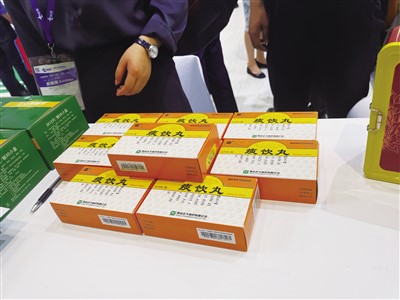
中成药说明书“尚不明确”?那就再见吧
Qi Lu Wan Bao· 2026-02-01 16:27
Policy Regulations - The new regulation, effective from July 1, 2023, mandates that any traditional Chinese medicine (TCM) with "unclear" labels in contraindications, adverse reactions, or precautions will not be re-registered after three years [3][4] - The regulation aims to enhance the management of TCM throughout its lifecycle, requiring holders to monitor and evaluate safety risks and update labels accordingly [3][4] Market Situation - Despite the impending deadline, some commonly used TCMs still carry "unclear" labels, indicating a need for compliance [5][6] - A survey of pharmacies revealed that several TCM products, including those from well-known brands, still have safety information marked as "unclear" [6][7] Industry Response - Pharmaceutical companies are actively working to revise their product labels in compliance with the new regulations, with many already completing updates for core products [9] - Companies like Rongchang Pharmaceutical and Yiling Pharmaceutical have reported that they are updating their product information to eliminate "unclear" labels and enhance consumer understanding [9] Industry Outlook - The new regulation is seen as a necessary shift from quantity expansion to quality prioritization in the TCM industry, promoting safer medication practices [10] - The implementation of this policy is expected to phase out low-quality products lacking safety data, thereby concentrating resources on higher-quality enterprises and products [10]
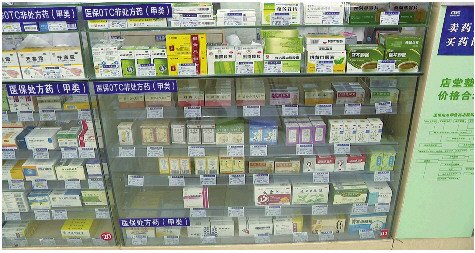
中成药“尚不明确”退场倒计时!记者实探:部分常用药仍有标注
Qi Lu Wan Bao· 2026-01-29 11:59
Core Viewpoint - The implementation of the new regulations on traditional Chinese medicine (TCM) product labeling aims to eliminate the "unclear" status in safety information, enhancing the quality and safety of TCM products in the market [1][2][13]. Regulatory Changes - The new regulations, effective from July 1, 2023, require TCM product holders to manage the entire lifecycle of their products and improve the safety information in their labeling, specifically regarding contraindications, adverse reactions, and precautions [1][2]. - By July 1, 2026, any TCM product with "unclear" safety information will not be eligible for re-registration, emphasizing the urgency for companies to update their product labels [1][2]. Industry Response - Many pharmaceutical companies have begun revising their product labels to comply with the new regulations. For instance, companies like Rongchang Pharmaceutical and Yiling Pharmaceutical have completed revisions for their core products, ensuring clear safety information [11][12]. - The industry is adapting by adjusting procurement strategies to focus on compliant products and gradually reducing the inventory of those with high re-registration risks [14]. Market Observations - Despite the new regulations, some commonly used TCM products still display "unclear" safety information, indicating a gap in compliance that needs to be addressed [7][8]. - Reports indicate that TCM accounts for 12% of adverse drug reaction reports, highlighting the need for clearer safety information to mitigate risks associated with TCM usage [7][13]. Future Outlook - The new regulations are expected to promote a shift in the TCM industry from quantity expansion to quality prioritization, ultimately benefiting public health by providing clearer safety guidelines [13][14]. - The elimination of "unclear" labels is anticipated to enhance consumer confidence in TCM products, reducing the risk of unreasonable medication use [14].
老树新枝亦繁花——江西上市公司“传统焕新”记
Shang Hai Zheng Quan Bao· 2025-11-17 19:14
Group 1: Jiangzhong Pharmaceutical - Jiangzhong Pharmaceutical's flagship product, Jianwei Digestive Tablets, has achieved cumulative sales of over 5 billion boxes and has been the top-selling OTC digestive medicine in China for 21 consecutive years [20][21] - The company aims to enhance quality through innovation, focusing on three main business areas: OTC products, health consumer goods, and prescription drugs, achieving a compound annual growth rate (CAGR) of 16% in revenue and 13% in net profit during the 14th Five-Year Plan period [20][21] - The company has implemented smart manufacturing technologies, achieving over 95% automation in its production processes, significantly improving efficiency and reducing labor costs [22][23] Group 2: Technological Innovation - Jiangzhong Pharmaceutical has developed a unique MVR concentration technology that enhances the extraction efficiency of active ingredients from traditional Chinese medicine to over 90% [22] - The company has established a national key laboratory for modern Chinese medicine creation, focusing on the innovative transformation of classic formulas into modern products [24] - The introduction of innovative flavors and purification techniques has transformed traditional herbal medicines into more palatable products, appealing to a broader consumer base [25] Group 3: Cultural Integration and Market Expansion - Jiangzhong Pharmaceutical has launched a "Healthy Hot Pot" concept that incorporates traditional medicinal ingredients, aiming to modernize and popularize traditional Chinese medicine among younger consumers [26][27] - The company plans to continue expanding its cultural outreach and application of traditional Chinese medicine through various channels, including tourism and dining [27] Group 4: Fushite Company - Fushite has positioned itself in the hydraulic pipeline sector, with a strategic focus on the mining after-market, anticipating a market size of $19.33 billion by 2030 [28][30] - The company has established a comprehensive service system that includes industrial maintenance and heavy spare parts supply, expanding its service capabilities beyond just hydraulic pipeline repairs [32] Group 5: Naipu Mining Machinery - Naipu Mining Machinery has developed a global service network covering over 50 countries, focusing on wear-resistant materials and mining machinery [34][36] - The company has successfully transitioned from basic spare parts production to advanced wear-resistant materials, leveraging new material technologies to enhance product performance [35][36] - Naipu's international strategy includes establishing production bases in Peru to meet the growing demand for mining equipment and spare parts in South America [39][40] Group 6: Sanxin Medical - Sanxin Medical has transformed from a traditional infusion and injection company to a significant player in the blood purification medical device sector, achieving a CAGR of 29.82% in net profit over the past five years [42][45] - The company has expanded its product offerings in blood purification, with revenue from this segment increasing from 20% in 2015 to 81% in 2024 [45] - Sanxin Medical is actively pursuing global market expansion, with overseas revenue growing by 39.70% in 2024, indicating a strong international presence [48][49]


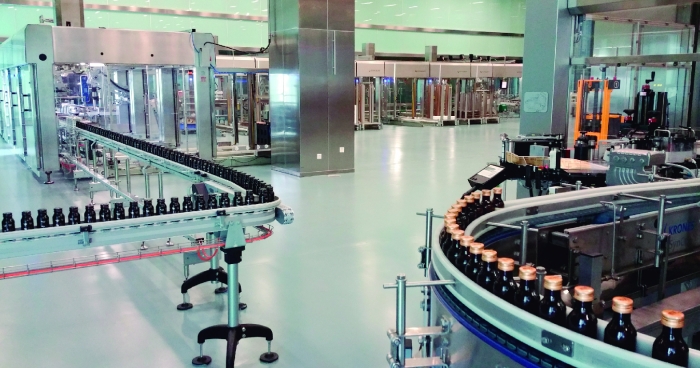
华润系收购版图再扩张:江中药业高溢价收购精诚徽药
2 1 Shi Ji Jing Ji Bao Dao· 2025-10-20 10:34
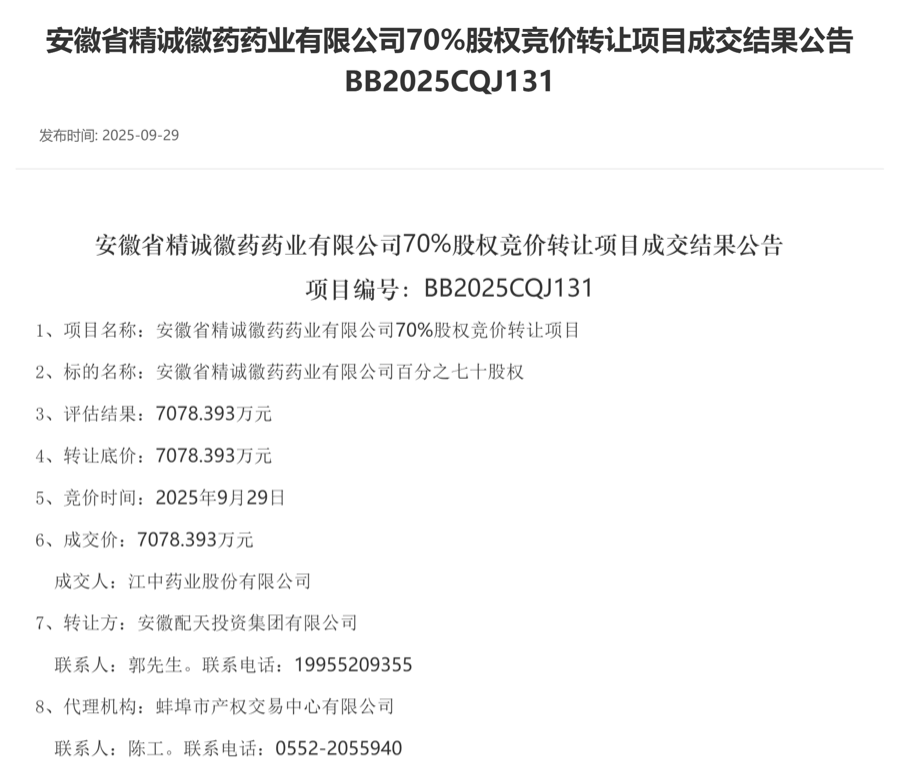
Core Viewpoint - China Resources' integration in the pharmaceutical sector is accelerating, with Jiangzhong Pharmaceutical acquiring 70% of Anhui Jingcheng Huyao for 70.78 million yuan, gaining actual control and consolidating financial statements [1][12] Group 1: Acquisition Details - Jiangzhong Pharmaceutical's acquisition of Anhui Jingcheng Huyao is notable for its high premium, with the assessed value of the target company at 101.12 million yuan, reflecting a 140.86% increase over its net assets of 41.98 million yuan [1] - Anhui Jingcheng Huyao, established in 2013, focuses on traditional Chinese medicine (TCM) health products, including popular OTC items like Liuwei Dihuang Oral Liquid and Brain Power Syrup [1][8] - The acquisition is part of a broader strategy by China Resources to expand its TCM portfolio and enhance market presence [1][12] Group 2: Financial Performance - Jiangzhong Pharmaceutical reported a revenue of 2.141 billion yuan in the first half of 2025, a decrease of 5.79% year-on-year, while net profit increased by 5.80% to 522 million yuan [4] - The OTC business, which is a major revenue driver, saw a revenue drop of 10.14% to 1.55 billion yuan, indicating greater pressure compared to overall revenue decline [6] - The company has faced declining revenue trends over the past two years, with a 3.78% drop in mid-2024 compared to the previous year [4] Group 3: Market Context and Strategy - The health consumer goods sector is becoming increasingly important, with Jiangzhong Pharmaceutical focusing on developing health products that convert low-frequency medications into high-frequency consumer goods [13][16] - The retail market for health supplements is expanding, with the retail sales of health products reaching 12.394 billion yuan in the first half of 2025, surpassing other medication categories [14] - Jiangzhong Pharmaceutical aims to enhance its product matrix in the health consumer goods sector, with a reported revenue growth of 17.35% in this segment [16] Group 4: Challenges and Future Outlook - The acquisition of Anhui Jingcheng Huyao is influenced by the financial difficulties of its previous owner, which is undergoing bankruptcy restructuring [9][10] - The transfer agreement includes conditions to ensure that key product licenses remain within the local jurisdiction, which may pose operational challenges [17] - Future success will depend on Jiangzhong Pharmaceutical's ability to manage debt risks and optimize production under the constraints of the acquisition [18]
FBIF2025 | 11场行业前沿趋势报告
FBIF食品饮料创新· 2025-04-27 00:55
2025年,乳品、饮料、零食和功能性配料四大品类将迎来哪些新趋势?FBIF2025不仅将为您揭示前沿 动态,还将深入探讨AI数字化转型、巧克力创新革命、全球便利零售、线上内容电商及风味趋势的深刻 变革。敬请期待! 全体大会 【趋势报告一】AI 新质零售:重构实体零售的韧性与生长力 【分享嘉宾】张文中 ,创始人, 物美集团 ;创始人, 多点Dmall 【时间】 5月10日 11:30-11:50 【场次】 全体大会 在消费降级与技术跃迁的双重张力下,实体零售迎来结构性重塑的新周期。张文中董事长将从零售经营 与AI创新的协同实践出发,系统阐述如何以AI为引擎,构建"零售经营+全面数字化+AI"的AI新质零售, 他将聚焦以下三大核心议题: 1. 成长力:AI新质零售坚持以数据为关键要素,以人工智能为核心驱动力,全面革新快消品从生产端 到消费端的流通环节,重构人、货、场关系,形成高效、可持续、包容性增长的新模式。 2. 生态力:AI新质零售需要以"生态协同"取代"单点竞争",流通企业、AI第三方服务商、云服务商、 算力服务商等实现资源互补与创新加速,生态内共享最佳实践、降低技术风险、共同应对AI技术复杂 性。 3. ...