
中国+N

Search documents
杨元庆:发展“中国人经济”,以“中国+N”重塑中国全球经济竞争力
21世纪经济报道· 2026-02-11 04:56
Core Viewpoint - The article emphasizes the importance of the concept of "Chinese People Economy," which focuses on the Gross National Income (GNI) generated by Chinese individuals and enterprises globally, as opposed to merely the domestic GDP. This shift is seen as essential for achieving high-quality development and ensuring sustainable economic growth during the 14th and 15th Five-Year Plans [1][2]. Group 1: Economic Context - The Chinese economy has demonstrated remarkable high-quality development, maintaining an average growth rate of 5.4% during the 14th Five-Year Plan, and surpassing 140 trillion yuan in total economic output [1]. - The goal for the 15th and 16th Five-Year Plans is to maintain an average annual growth rate of over 4.17% while fully tapping into economic potential [1]. Group 2: Strategic Importance of "Chinese People Economy" - The "Chinese People Economy" encourages enterprises to leverage domestic innovation and manufacturing capabilities to expand globally, thereby enhancing control over global resources and markets [2][5]. - This concept aims to create a virtuous cycle where the development of the "Chinese People Economy" feeds back into the domestic economy, promoting mutual growth and resilience [2][6]. Group 3: Characteristics of Global Competitiveness - To foster the "Chinese People Economy," it is crucial to cultivate globally competitive Chinese enterprises that possess resource allocation capabilities, technological innovation, and brand influence [5]. - Companies should maintain core capabilities in China, as it offers unparalleled industrial advantages and serves as a hub for global resource allocation [5][9]. Group 4: Lenovo's Globalization Practices - Lenovo's journey exemplifies the integration of "Chinese Economy" and "Chinese People Economy," having grown into a global technology giant with over 500 billion yuan in annual revenue and operations in 180 markets [8][9]. - Lenovo emphasizes the importance of "thickening China" by keeping a significant portion of its manufacturing and R&D in China while also building local operations in international markets [10][11]. Group 5: Market Expansion Strategies - The focus on emerging markets, particularly in the "Global South," is becoming a strategic priority for Chinese enterprises, with Lenovo establishing a significant presence in regions like the Middle East and Latin America [12]. - Lenovo's partnership with Saudi Arabia's Public Investment Fund aims to enhance its market position in the region while contributing to local economic diversification and job creation [12]. Group 6: Innovation and AI Development - Technological innovation, particularly in artificial intelligence, is identified as a core driver of the "Chinese People Economy," with Lenovo positioned as a key player in this space [13]. - The company aims to promote AI products that serve global users while adhering to a human-centric approach, reflecting Chinese cultural values [13][14].



“中国人经济”专题策划 发展“中国人经济”:以“中国+N”重塑中国全球经济竞争力
2 1 Shi Ji Jing Ji Bao Dao· 2026-02-10 23:09
Core Viewpoint - The concept of "Chinese People Economy" is gaining attention as a strategic focus, emphasizing the importance of Gross National Income (GNI) over Gross Domestic Product (GDP) in the context of China's modernization goals for 2035 [1][2] Group 1: Economic Growth and Development - China's economy has demonstrated remarkable high-quality growth, maintaining an average growth rate of 5.4% during the "14th Five-Year Plan" period, with the total economic output surpassing 140 trillion yuan [1] - The "15th Five-Year Plan" aims to ensure an average annual growth rate of over 4.17% while fully tapping into economic potential [1] Group 2: Strategic Importance of "Chinese People Economy" - The "Chinese People Economy" encourages enterprises to leverage domestic innovation and manufacturing capabilities to expand globally, enhancing control over global resources and markets [2][3] - This approach creates a virtuous cycle where the development of the "Chinese People Economy" can feed back into the domestic economy, promoting mutual growth [2] Group 3: Characteristics of Global Competitiveness - To foster the "Chinese People Economy," it is essential to cultivate globally competitive Chinese enterprises that possess resource allocation, technological innovation, and brand influence capabilities [3] - Companies should retain core capabilities in China, leveraging its unmatched industrial advantages and comprehensive supply chain systems [3][4] Group 4: Lenovo's Globalization Practices - Lenovo's journey exemplifies the integration of "Chinese Economy" and "Chinese People Economy," having grown into a global technology giant with over 500 billion yuan in annual revenue and operations in 180 markets [6][7] - Lenovo maintains approximately 80% of its manufacturing, 70% of its R&D personnel, and 60% of its workforce in China, emphasizing the importance of China as a base for global operations [7] Group 5: Future Strategies for "Chinese People Economy" - Lenovo plans to enhance its "China + N" strategy, optimizing supply chain layouts and supporting small and medium-sized enterprises in their global expansion [9] - The company aims to expand into emerging markets, particularly in the "Global South," with significant investments in regions like the Middle East [10] - Innovation, particularly in artificial intelligence, is identified as a core driver for the "Chinese People Economy," with Lenovo committed to making AI accessible globally [11]
盛弘股份(300693) - 2026年1月15日投资者关系活动记录表
2026-01-15 10:14
Group 1: Market Development and Trends - The charging pile industry is currently in a phase of full competition and stable development, with a target to establish 28 million charging facilities by the end of 2027, providing over 300 million kW of public charging capacity to meet the needs of over 80 million electric vehicles [2][3] - The company aims to respond to national policies promoting the large-scale application of new energy heavy trucks, leveraging its technological and market advantages in the charging pile sector to expand its market share [3][4] - The government supports the development of public charging networks in rural areas, aiming for full coverage of charging stations and piles in counties and villages, which the company is actively pursuing [3][4] Group 2: Overseas Market Opportunities - The overseas charging pile market shows low penetration but significant growth potential, with the company planning to expand its product applications and enhance its competitive edge in the fast-charging sector [4][5] - The company is focusing on localizing its products and services to meet overseas market requirements, ensuring successful delivery of overseas orders [4][5] Group 3: Energy Storage Market Insights - The domestic energy storage market is expected to develop positively in 2026, driven by the deepening of electricity market reforms and the profitability of independent storage projects [4][5] - The global energy transition towards low carbon is creating new opportunities for energy storage, with the company aiming to deepen its overseas market presence and adapt to various application scenarios [5][6] Group 4: Strategic Alignment with National Policies - The company aligns its development strategies with the "14th Five-Year Plan," focusing on innovation driven by market demand and enhancing energy efficiency through technological advancements [5][6] - Emphasizing regional economic coordination, the company is launching products tailored for rural areas to support national development goals [5][6] Group 5: AIDC Business Development - The company is experiencing growth in its AIDC (Artificial Intelligence Data Center) business, with a significant increase in the use of power quality products in data centers and smart computing centers [6] - Plans are in place to develop new products in the AIDC power supply sector, leveraging existing technological expertise to meet emerging market demands [6]
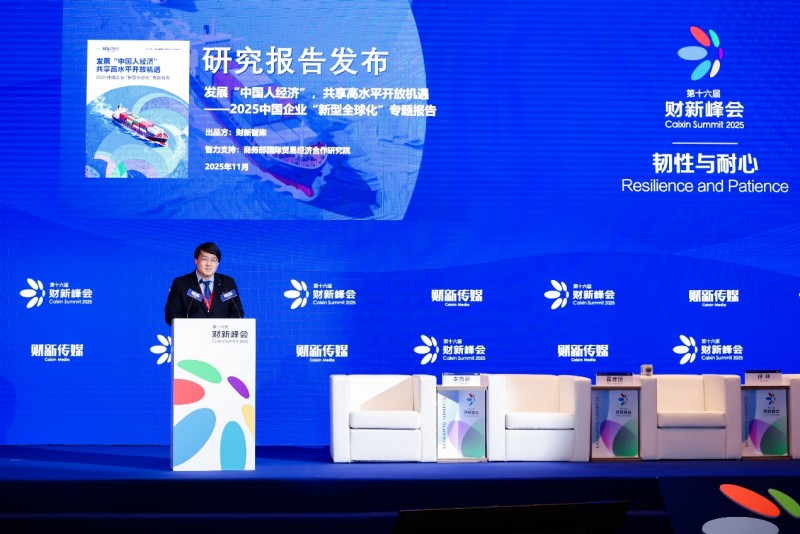
从“走出去”到“走上去”,联想集团以“中国+N”引领新型全球化浪潮
Cai Fu Zai Xian· 2025-11-14 03:31
Core Insights - The report emphasizes the concept of "Chinese People Economy" as a new perspective for Chinese enterprises to navigate globalization, highlighting the shift from focusing solely on the "Chinese Economy" to a broader view that includes wealth creation by Chinese enterprises and individuals globally [1][3] - The "China+N" strategy is proposed as a means for Chinese companies to leverage their domestic advantages while expanding globally, transitioning from product-based to brand-based and from low-value to high-value operations [5][10] Group 1: New Globalization Trends - The report identifies four characteristics of new globalization: trade protectionism, geopolitical conflicts, the rise of the Global South market, and the transformation towards service-oriented and green trade [8] - It outlines four trends in Chinese enterprises going abroad: the evolution from product export to brand and ecosystem export, diversification of investment fields, the significance of the Global South markets, and the capability output of Chinese enterprises [8][10] Group 2: Policy and Strategic Recommendations - Recommendations for enhancing the "going out" strategy include establishing a comprehensive support system for overseas operations, improving compliance and risk management, and fostering local integration and ecological collaboration [5][6] - The report suggests that the "15th Five-Year Plan" should focus on expanding high-level openness and promoting a win-win cooperation model, emphasizing the need for a structural adjustment towards balanced trade [6] Group 3: Case Study of Lenovo - Lenovo is highlighted as a leading example of the "China+N" strategy, demonstrating successful global operations while maintaining a strong base in China [11][13] - The company has achieved significant growth, with a 22-fold increase in annual revenue and nearly 80% of its revenue coming from overseas markets, showcasing its leadership in the new globalization phase [13] - Lenovo's approach includes building a global supply chain network that integrates international resources with localized operations, thereby enhancing its competitiveness and market share [11][17] Group 4: Industry Collaboration and Ecosystem Development - Lenovo has facilitated the international expansion of over 250 domestic suppliers, creating a one-stop solution platform to lower the barriers for smaller enterprises to go abroad [16] - The company emphasizes the importance of community engagement and compliance in its global operations, aiming to create a symbiotic ecosystem that benefits both local markets and Chinese enterprises [14][17]
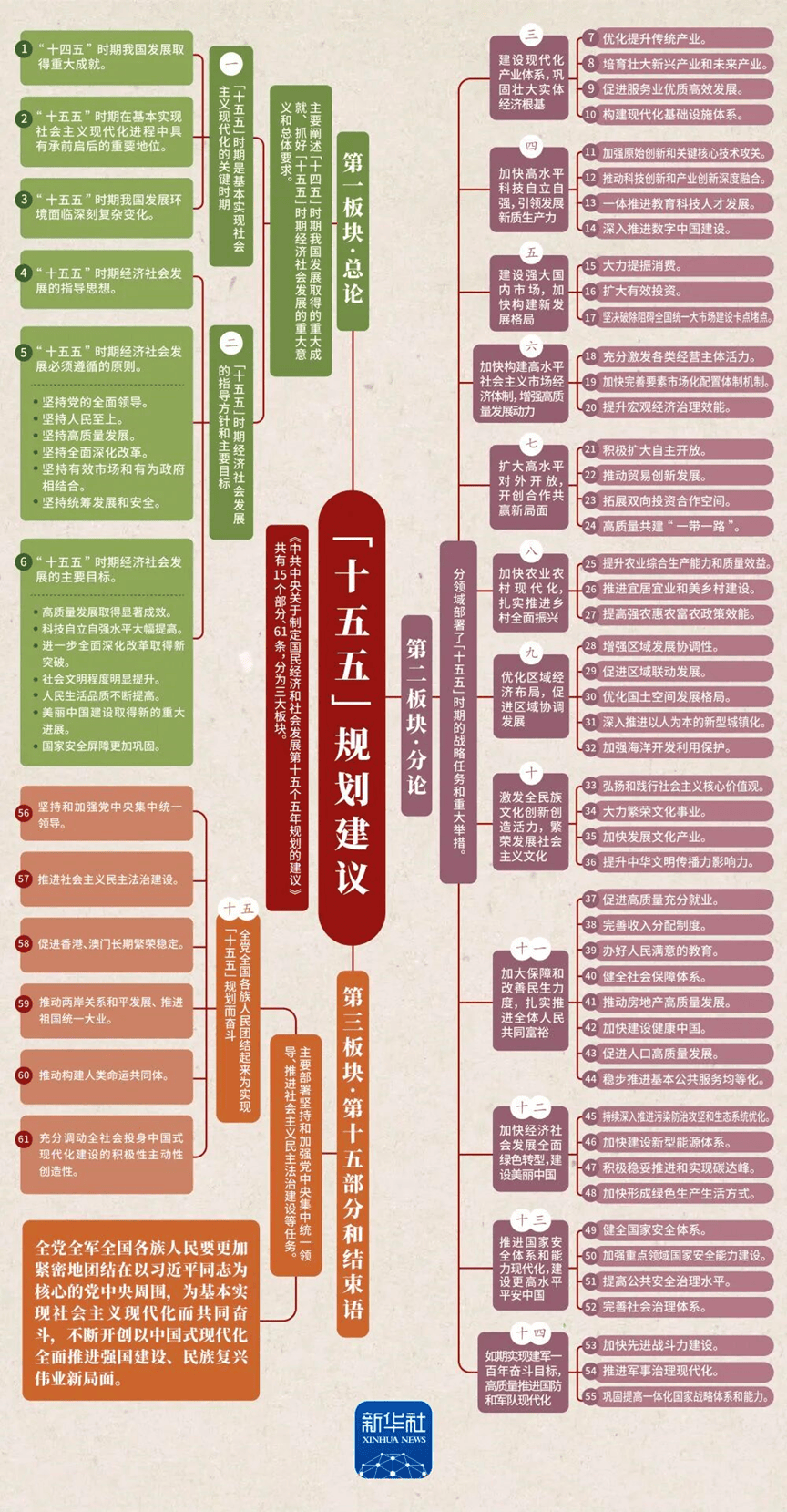
十五五规划,释放的9大信号!
Sou Hu Cai Jing· 2025-11-04 18:30
Core Insights - The "15th Five-Year Plan" is a critical roadmap for China's socio-economic development from 2026 to 2030, focusing on high-quality growth and strategic deployment towards modernization by 2035 [3][5]. Group 1: Economic Performance and Goals - During the "14th Five-Year Plan," China's GDP grew at an average rate of 5.5%, reaching 134 trillion RMB, with per capita GDP increasing from $10,632 in 2020 to $13,445 in 2024 [5]. - The "15th Five-Year Plan" aims for significant milestones, including a 70% urbanization rate by 2028, achieving carbon peak by 2030, and a 90% penetration rate for AI applications [3][5]. Group 2: Development Priorities - The plan outlines five main development lines: infrastructure, technology, finance, consumption, and livelihood [4]. - Infrastructure development will focus on major projects like the Sichuan-Tibet Railway and the national water network, which are expected to stabilize the economy [8]. - Technology will shift from factor-driven to innovation-driven growth, emphasizing high-end manufacturing, AI, and energy reform [9][10]. Group 3: Financial Sector - The financial sector is deemed essential for national competitiveness, with a focus on building a robust financial system characterized by strong institutions and regulatory frameworks [10][11]. Group 4: Consumption and Livelihood - The plan addresses insufficient domestic demand, proposing measures to increase household income and reduce consumption burdens, aiming for a consumption rate of 39.9% by 2024 [14][15]. - It emphasizes the importance of public investment in education, healthcare, and social security to stimulate consumption [17][18]. Group 5: Social Policies - The "15th Five-Year Plan" will tackle challenges in public service equality, income stability, and aging population issues, with a focus on health and education [21][22]. - It aims to enhance the quality of life through initiatives in healthcare, childcare, and social welfare, including the introduction of a national childcare subsidy [88][90]. Group 6: Market and Global Integration - The plan emphasizes the establishment of a unified national market to eliminate local protectionism and market fragmentation, which is crucial for enhancing internal stability [40][66]. - It encourages global integration through the "China + N" strategy, promoting international collaboration and investment [72]. Group 7: Key Signals for the Future - The plan reiterates the importance of economic construction, aiming for per capita GDP to reach the level of a moderately developed country by 2035 [74]. - It highlights the commitment to common prosperity, with specific targets for income distribution and social welfare improvements [76][78]. - The focus on "anti-involution" aims to streamline competition and improve industry standards, particularly in emerging sectors like renewable energy and technology [87].
报告:中国企业供应链正从“中国+1”转向“中国+N”
2 1 Shi Ji Jing Ji Bao Dao· 2025-07-18 05:58
Core Insights - The report indicates that nearly 80% of surveyed companies expect performance improvements in 2024, but cost pressures remain the biggest challenge [1] - Companies plan to integrate supply chain restructuring, digital transformation, overseas expansion, and sustainable development into their core business strategies over the next three years [1] Supply Chain Strategy - Chinese enterprises are transitioning from a "China+1" strategy to a more robust "China+N" model, addressing rising supply costs, procurement challenges, and working capital management difficulties [2][3] - 40% of surveyed companies view ASEAN as the most important overseas procurement market, with 37% considering it a key terminal sales market and 48% as a future investment destination [2] Digital Transformation and Sustainability - Digital transformation and sustainable development are identified as core drivers for enhancing operational resilience among Chinese companies [4] - 90% of surveyed companies have implemented digital solutions, with a significant focus on AI, automation, cloud computing, and generative AI technologies [4] - Over half of the surveyed companies have implemented sustainable practices in one or more business areas, particularly in the oil and gas, healthcare, and manufacturing sectors [4] Financial Constraints - Cost pressures and insufficient financing channels are major bottlenecks for sustainable development, with companies seeking innovative financing solutions from financial institutions [5]