
买方思维

Search documents
这场圆桌论坛,信息量很大!
Zhong Guo Ji Jin Bao· 2025-09-20 03:26
Core Insights - The era of buyer wealth management has officially arrived, prompting a shift from traditional product-selling models to a more client-centric approach in the securities industry [1][3] - Experts from various securities firms discussed the challenges and necessary transformations in the industry during a recent forum [1] Group 1: Buyer Thinking Evaluation Standards - The core evaluation standard for determining whether an institution or advisor possesses buyer thinking is centered around "how to earn money," contrasting with the traditional focus on product sales [5][7] - Institutions like Ping An Securities have shifted to a model focused on "earning retention money," emphasizing long-term client relationships and service value [7][11] - The recognition of the buyer fee model by clients is crucial for the transformation process, as many still prefer traditional commission-based structures [9][14] Group 2: Transformation Challenges and Solutions - The necessity for transformation in the wealth management industry is driven by declining commission levels and changing client demands for sustainable returns [14][15] - Institutions must overcome the "license dependency" mindset and create real, sustainable value for clients to gain their trust and long-term loyalty [15] - A collaborative approach involving professional services, a scientific assessment mechanism, and a reasonable profit distribution system is essential for successful transformation [15][16] Group 3: Asset Allocation Services - Asset allocation is identified as a critical component of wealth management, with a focus on long-term returns [16][17] - Institutions need to enhance their asset allocation capabilities by broadening their product frameworks and developing a core methodology tailored to different investor profiles [17][18] - Effective communication between research strategies and client services is vital for translating institutional insights into tangible client returns [18] Group 4: Building Competitive Advantages - To establish core competitiveness, firms must have clear strategic insights and maintain a long-term commitment to building unique service offerings [19][20] - Collaboration across departments is emphasized as essential for the success of buyer wealth management initiatives [20] - Differentiation in product offerings and transparent communication about risk and return characteristics are crucial for addressing information asymmetry in the wealth management sector [20][21]


七获权益团队殊荣 | 中泰证券资管再添四项英华投资大奖
中泰证券资管· 2025-09-17 11:32
Core Viewpoint - The article highlights the achievements of Zhongtai Securities Asset Management at the "2025 China Capital Market Development Forum," emphasizing its recognition as a leading institution in equity asset management and the performance of its products and investment managers [1][5]. Group 1: Awards and Recognition - Zhongtai Securities Asset Management was awarded the title of "Equity Broker Asset Management Demonstration Institution" for the seventh time at the Yinghua Award [1][4]. - The company’s two collective products received accolades for "Five-Year Equity Broker Asset Management Excellent Product Demonstration Case" and "Three-Year Fixed Income+ Broker Asset Management Excellent Product Demonstration Case" [1][4]. - Investment manager Zhang Hengjia was recognized as an excellent investment manager in the five-year equity broker asset management category [1][4]. Group 2: Performance Metrics - Zhongtai Securities Asset Management has demonstrated strong long-term performance, ranking 1st out of 86, 1st out of 95, 3rd out of 109, and 5th out of 122 in active stock investment management returns over the past 6, 5, 4, and 3 years, respectively [5][6]. - The evaluation period for these rankings spans from July 1, 2019, to June 30, 2025, indicating a consistent track record of performance [6]. Group 3: Investment Philosophy - The company emphasizes the importance of understanding client needs and providing suitable products rather than the "best" products, addressing the issue of information asymmetry in wealth management [5][6]. - The investment philosophy focuses on honest communication and a commitment to creating long-term value for clients, as articulated by the deputy general manager and fund manager Jiang Cheng [5][6].


券商半年度会议密集召开,发展布局“新风向”浮现
Guo Ji Jin Rong Bao· 2025-07-31 04:29
Group 1: Core Insights - Securities firms are focusing on continuous innovation and entrepreneurship as a key strategy for the second half of the year, reflecting a need to break through existing market competition [1][3] - The shift towards a "buy-side thinking" approach is emphasized, with firms aiming to enhance their wealth management capabilities and adapt to client needs [6][7] - The industry is experiencing a transformation driven by cost pressures, regulatory upgrades, and digital transformation, leading to a focus on operational efficiency and refined management practices [5][6] Group 2: Strategic Directions - Many securities firms are restructuring their organizational frameworks and incentive mechanisms to foster a more innovative and agile environment [3][5] - The emphasis on fine-tuning operational efficiency includes reducing costs and enhancing management effectiveness, which is seen as essential for transitioning to high-quality growth [5][6] - Firms are increasingly investing in digital transformation and financial technology to improve service quality and operational efficiency, with AI playing a crucial role in reshaping the industry [7][8] Group 3: Market Positioning - Smaller securities firms are adopting a strategy of deepening their presence in regional markets to differentiate themselves from larger competitors [10] - The overall attractiveness of the securities sector is rising, with expectations of stable economic growth and favorable policies potentially boosting market activity and investor confidence [11] - Firms with unique business advantages and growth potential are likely to outperform the average industry performance in the upcoming period [11]
券商中期经营工作会频传信号 下半年发力四大关键领域
Zheng Quan Shi Bao· 2025-07-27 17:06
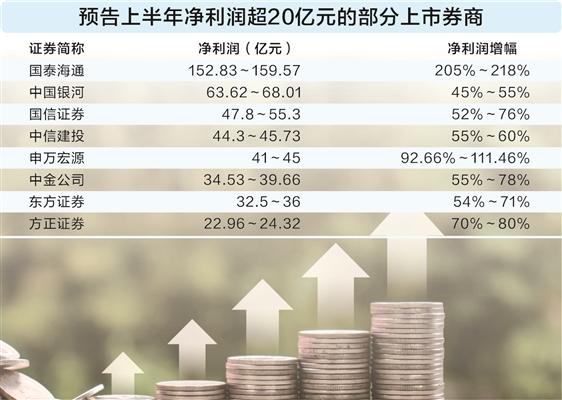
Core Insights - The brokerage industry has reported significant performance improvements in the first half of 2025, with many firms exceeding their operational targets and achieving record results [1][2] - Key focus areas for the second half of the year include entrepreneurship, operational efficiency, and a shift towards a "buy-side" mentality in wealth management [1][5] Group 1: Performance Highlights - Many brokerages have reported substantial growth in their performance, with over 20 listed brokerages indicating either profit increases or turnaround from losses in the first half of the year [2] - For instance, Open Source Securities achieved a revenue of 1.736 billion yuan, a year-on-year increase of 32.68%, and a profit of 647 million yuan, up 27.29%, marking historical highs for the company [2][4] - Non-listed brokerages also reported significant achievements, with firms like Huayuan Securities and Huabao Securities noting key progress despite intense competition [2] Group 2: Strategic Focus for the Second Half - Brokerages are emphasizing the need for a "buy-side" approach in wealth management, aiming to enhance investor satisfaction and expand asset management scale [5][6] - Innovation is seen as a critical driver for improving business efficiency, service optimization, and risk management, with firms like Zhongtai Securities focusing on technological advancements [6] - Enhancing operational efficiency and fine-tuning management practices are also priorities, with companies aiming to reduce costs and improve overall performance [6] Group 3: Market Outlook - The brokerage sector is gaining attention in the market, with 17 brokerage stocks rising over 10% since July, indicating a positive sentiment towards the sector [7] - Analysts are optimistic about the future performance of brokerage stocks, citing active market trading and favorable mid-term results as key factors [7][8] - The narrowing of the A-H premium is also highlighted, suggesting potential for A-share brokerage stocks to catch up in performance [7]
发力四大方向!券商密集召开中期经营工作会
券商中国· 2025-07-27 10:07
Core Viewpoint - The article discusses the outlook for the second half of 2025 for securities firms, highlighting a focus on innovation, operational efficiency, and wealth management transformation towards a "buy-side" mentality [3][8]. Group 1: Performance and Growth - Securities firms have reported strong performance in the first half of 2025, with many exceeding their operational targets and achieving record results [3][5]. - As of July 24, 2025, 27 listed securities firms have projected significant earnings growth, with two firms reporting over a tenfold increase [5]. - Open-source Securities achieved a revenue of 1.736 billion yuan, a year-on-year increase of 32.68%, and a profit of 647 million yuan, up 27.29%, marking historical highs for the company [5][6]. Group 2: Strategic Focus for the Second Half - Securities firms are prioritizing four main areas for development in the second half of 2025: 1. Wealth management with a focus on "buy-side" thinking, enhancing investor experience and expanding client base [9]. 2. Innovation as a key driver for improving business efficiency, service optimization, and risk management [9][10]. 3. Enhancing operational efficiency and detailed management practices to improve overall performance [10]. 4. Emphasizing talent development to support higher quality growth and effective team building [10]. Group 3: Market Outlook for Securities Stocks - Securities stocks have gained significant attention, with 17 stocks rising over 10% since July 2025, including notable increases of 38% for Zhongyin Securities and 23% for Guosen Securities [12][13]. - Analysts are optimistic about the future performance of securities stocks, citing increased market activity and favorable mid-term earnings as positive indicators [13]. - The narrowing of the AH premium ratio suggests a potential for A-share securities to catch up, driven by institutional investments returning to A-shares [13][14].

基金投顾答好“金融为民”时代考卷
Zheng Quan Ri Bao· 2025-06-11 17:23
Core Insights - The public fund industry in China has surpassed a total scale of 33 trillion yuan, with over 700 million fund investors, yet many remain in a "self-service" investment state [1] - The approval of E Fund Management to establish a sales subsidiary focused on buy-side advisory services reflects a strategic shift in the wealth management industry from "scale competition" to "service deepening" [1][2] - The fund advisory business, which provides investment advice and decision-making assistance to clients, has shown remarkable growth since its pilot launch in 2019, but faces challenges such as low penetration rates and limited service scope [1][2] Industry Development - The fund advisory business is poised for significant growth opportunities, driven by the need for professional services that align with investor demands, creating a virtuous cycle of "increased returns - inflow of funds - market stability" [2] - Continuous policy support, such as the implementation of guidelines for the regularization of public fund advisory services, is crucial for the development of this sector [1][2] Key Strategies for Wealth Management Institutions - Wealth management institutions should prioritize investor interests and focus on three dimensions: building a professional advisory capability system, creating comprehensive investor support services, and developing a high-quality advisory talent pool [2][3] - Establishing a multi-dimensional research framework is essential for wealth management institutions to provide tailored solutions for investors with varying risk preferences [2] Importance of Accompanying Services - Effective fund advisory services should extend beyond simple fund recommendations to include a full-process support system, helping investors manage expectations and anxiety during market fluctuations [3] - Regular investment health reports can help investors maintain composure and avoid impulsive trading behaviors [3] Talent Development and Technology Integration - A high-quality, large-scale advisory team is vital for the success of fund advisory services, requiring professionals who understand both market dynamics and client needs [3] - The integration of intelligent advisory tools can enhance service reach while maintaining professional depth, creating a "human-machine collaboration" model [3] Vision for the Future - The transition of fund advisory services from pilot to regularization represents a critical turning point, necessitating a shift towards a service ecosystem centered on the best interests of investors [3] - This approach aims to foster a positive interaction between capital markets and household wealth, contributing to the financial empowerment of China's modernization efforts [3]