互联网打法

Search documents
“抢资源、爱邀功、喜欢刷存在感”,被山姆需要的“阿里味儿”让各行业打工人又爱又恨?
3 6 Ke· 2025-11-27 08:15
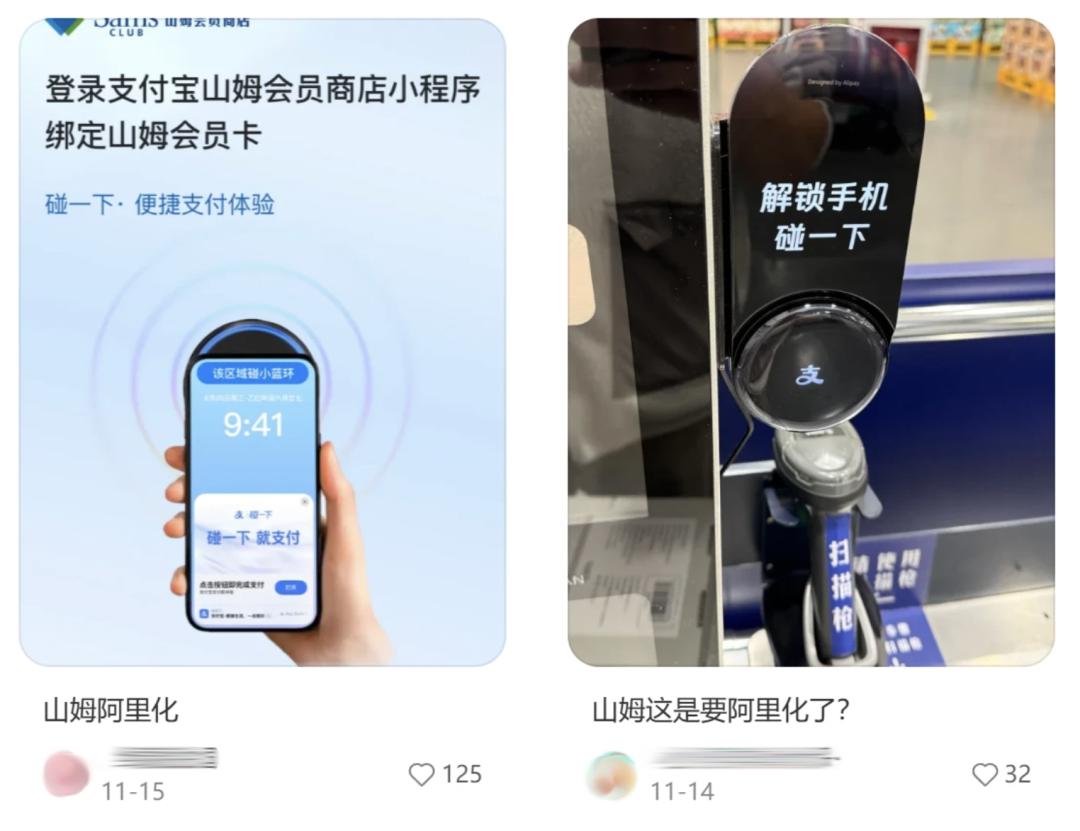
Core Viewpoint - The recent leadership change at Sam's Club, with former Alibaba executive Liu Peng taking over, has sparked controversy over the perceived "Alibaba-ization" of the brand, leading to mixed reactions from members and employees alike [1][4][6]. Group 1: Changes in Sam's Club - The Sam's Club app has undergone significant changes, including the replacement of product images with promotional graphics and the introduction of new payment features, reflecting a shift towards e-commerce strategies [1][4]. - Employees have expressed concerns about the increasing emphasis on KPI-driven culture, which they associate with Alibaba's management style, leading to a more competitive and stressful work environment [4][6]. - The introduction of former Alibaba and Hema employees into key positions at Sam's Club has intensified discussions about the impact of Alibaba's corporate culture on traditional retail operations [4][10]. Group 2: Market Position and Strategy - Sam's Club's sales in China are projected to exceed 100 billion yuan in 2024, accounting for nearly two-thirds of Walmart China's overall performance, highlighting the importance of the Chinese market for the brand [6][11]. - The company has faced challenges related to supply chain management and member experience, with complaints about product freshness and quality, indicating a need for operational improvements [6][11]. - The operational strategies being adopted, influenced by Alibaba's experience, are seen as necessary for Sam's Club to adapt to the rapid growth and competitive landscape in China [6][11]. Group 3: Broader Industry Trends - The trend of international brands shifting towards local management teams is evident, with companies like Starbucks and Burger King also making similar moves to enhance local operations and supply chain management [10]. - The cultural shift within companies, particularly the adoption of performance-driven metrics and efficiency-focused practices, is becoming more common as businesses seek to thrive in the competitive Chinese market [11][30]. - The perception of "Alibaba flavor" in corporate culture is increasingly viewed negatively, with former employees expressing concerns about the pressure and stress associated with such environments [22][25][30].


当大厂高管空降县城五星酒店
虎嗅APP· 2025-11-16 13:29
Core Viewpoint - The article discusses the challenges faced by a hotel employee, who is experiencing a shift in workplace culture due to the introduction of a new manager with a strong focus on data-driven decision-making and internet-based strategies, which contrasts with the traditional methods previously employed in the hotel industry [4][5][6]. Group 1: Changes in Management Style - The new manager, referred to as A, emphasizes the need for data cleaning, analysis, and visualization, which has left employees confused and overwhelmed [4][6]. - A has implemented frequent meetings and performance reviews, introducing terminology and practices that are unfamiliar to the local staff, leading to a sense of anxiety and frustration among employees [6][8]. - The hotel management expresses strong support for A's approach, indicating a shift towards a more modern, internet-driven operational model [12]. Group 2: Employee Reactions and Adaptation - The employee, referred to as S, initially admires A's background and skills but soon realizes that A's strategies are not effectively applicable to their local context [10][11]. - S feels that the traditional methods of building client relationships through personal connections are being undermined by A's focus on data and presentations, which do not resonate with local clients [12][13]. - There is a growing sentiment among employees that A's approach, while theoretically sound, lacks practical application in their specific market [13][17]. Group 3: Broader Implications for the Industry - The article highlights a broader trend in the hospitality industry where traditional practices are being challenged by new, data-driven methodologies, raising questions about the effectiveness of such transitions in local markets [10][12]. - The tension between modern management practices and traditional hospitality values reflects a larger industry shift, where companies must balance innovation with established customer relationship practices [15][17]. - The narrative suggests that while there is a push for modernization, the unique characteristics of local markets must be considered to avoid alienating existing customer bases [11][15].

当大厂高管空降县城五星酒店
3 6 Ke· 2025-11-10 03:20
Core Insights - The article discusses the challenges faced by a hotel employee, Si Si, as a new executive, referred to as A, implements a data-driven approach in a traditional hotel setting, leading to significant changes in work culture and expectations [1][2][3] Group 1: Changes in Management Approach - A new executive, A, emphasizes the need for data cleaning, analysis, and visualization in hotel operations, which is unfamiliar to the existing staff [1][2] - The hotel management expresses strong support for A's internet-driven strategies, leading to increased meetings and performance metrics that overwhelm employees [2][3] - Si Si feels pressured by the new expectations, contrasting her previous work-life balance with the current demands of daily reports and project meetings [3][4] Group 2: Employee Sentiments and Adaptation - Si Si initially admires A's background and skills but soon realizes that A's strategies do not align with the local market realities [4][5] - The disconnect between A's internet-based strategies and the traditional relationship-driven business model causes frustration among long-term employees [5][6] - Si Si reflects on her desire for a balanced work life, feeling conflicted about the new demands while recognizing the need to adapt to the changing environment [6][7] Group 3: A's Background and Challenges - A's previous experience in a large internet company does not translate effectively to the hotel industry, leading to confusion and misalignment with local practices [4][5] - A's personal circumstances, including a forced return to his hometown, contribute to his pressure to succeed in a new role, which may not be suitable for his skill set [6][7] - The article highlights the broader theme of individuals escaping high-pressure environments only to encounter similar challenges in different contexts [7][8]
瑞幸进军星巴克老家:$1.99的生椰拿铁能卷赢美国吗?
3 6 Ke· 2025-07-23 02:45
Core Viewpoint - Luckin Coffee has successfully entered the U.S. market after dominating the Chinese market, opening two stores in New York and employing a digital-first strategy to attract customers [1][3][39] Group 1: Market Entry Strategy - Luckin Coffee's entry into the U.S. market is characterized by its digital ordering system, which has received mixed reactions from local consumers [3][26] - The company aims to replicate its successful strategies from China, leveraging its supply chain and digital marketing capabilities [5][15][20] Group 2: Consumer Experience - The pricing strategy in New York features a cup of coconut latte priced at $1.99, which is perceived as affordable compared to competitors [3][31] - Local consumers have expressed curiosity and positive feedback about the brand, noting its innovative drink offerings tailored to American tastes [9][11][34] Group 3: Competitive Positioning - Luckin Coffee's product offerings are designed to appeal to a younger demographic, positioning itself as a more affordable alternative to Starbucks while providing a diverse menu [18][34] - The company has established a modular supply chain that allows for cost savings, which is crucial in a competitive market [20][22] Group 4: Digital and Marketing Strategy - The company's "no cash" policy and reliance on digital platforms for ordering have sparked complaints but also highlight its tech-driven approach [26][28] - Luckin Coffee's marketing strategy includes social media promotions and collaborations with popular brands, enhancing its visibility and appeal [25][29] Group 5: Financial Performance and Future Outlook - Despite past controversies, Luckin Coffee has shown significant growth, surpassing Starbucks in revenue in China and expanding internationally [37][39] - The company's ability to adapt its successful strategies from China to the U.S. market will be critical for its long-term success [39]