
亚太自由贸易区

Search documents
深圳甲级写字楼去年净吸纳量创四年新高
Sou Hu Cai Jing· 2026-01-21 08:30
Group 1 - The core viewpoint of the article highlights that Shenzhen's Grade A office market is set to see a significant supply increase in 2025, with a total of 1.182 million square meters from 21 new projects, marking a 9.4% year-on-year growth in total stock to 12.843 million square meters [3][5] - Demand for office space is notably driven by technology and high-end manufacturing companies, contributing to a net absorption of 664,000 square meters in 2025, the highest since 2021 and 16.9% above the five-year average [3][4] - The market is also witnessing a trend of repurposing existing office properties into hotels, providing a new avenue to alleviate vacancy pressures [3] Group 2 - Despite the increase in net absorption, rental prices are under pressure, with the rental index for Grade A offices in Shenzhen declining by 1.9% quarter-on-quarter and 10.6% year-on-year, averaging RMB 132.6 per square meter per month [4] - Looking ahead to 2026, the overall supply of Grade A offices is expected to remain substantial, potentially exceeding one million square meters again, with total stock projected to reach nearly 14 million square meters, an 8.0% year-on-year increase [5] - The upcoming APEC meeting in Shenzhen is anticipated to boost the city's international profile and support demand from technology and high-tech manufacturing sectors, leading to a positive outlook for the office market [6]

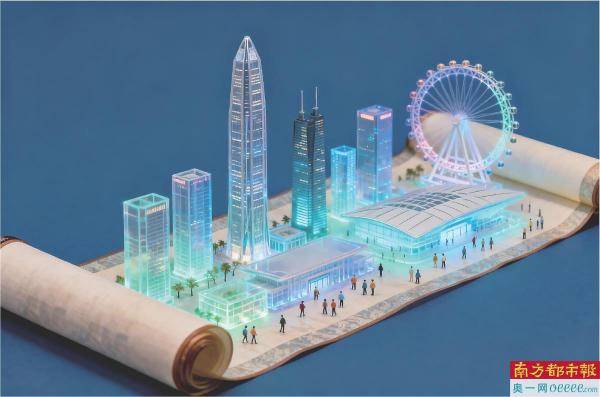
科技企业需求瞩目,深圳甲级写字楼净吸纳量创四年新高
Nan Fang Du Shi Bao· 2026-01-19 11:38
Group 1: Market Overview - The Shenzhen Grade A office market is expected to see a significant supply of 1.182 million square meters in 2025, marking the first time in three years that supply reaches the million-level [1] - The total stock of Grade A office space in Shenzhen is projected to expand by 9.4% year-on-year, reaching 12.843 million square meters by the end of 2025 [1] - The net absorption for Grade A offices in Shenzhen is forecasted to reach 664,000 square meters in 2025, the highest since 2021, and 16.9% above the five-year average [1] Group 2: Demand Drivers - The demand from technology companies for upgrades and expansions is particularly notable, contributing to significant transactions and driving net absorption growth [1] - Financial institutions, e-commerce, retail, and logistics sectors are also actively engaging in leasing activities, further supporting market demand [1] - The upcoming APEC meeting in 2026 is expected to boost demand from technology and high-end manufacturing sectors, enhancing market expectations [2] Group 3: Rental Market Trends - The rental market is experiencing downward pressure, with the rental index for Grade A offices in Shenzhen declining by 1.9% quarter-on-quarter and 10.6% year-on-year, averaging RMB 132.6 per square meter per month [2] - Landlords are offering rental discounts to secure tenants due to stricter budget controls from companies [2] Group 4: Future Outlook - The supply of Grade A office space in Shenzhen is anticipated to remain substantial in 2026, potentially exceeding one million square meters again, with total stock expected to approach 14 million square meters, reflecting an 8.0% year-on-year increase [2] - The APEC meeting is expected to enhance Shenzhen's international profile and provide opportunities for higher levels of openness, directly benefiting the development of technology and high-tech manufacturing enterprises [2]
百万平供应冲击下,深圳写字楼空置率已超三成,豪宅成全年楼市“稳定器”
Sou Hu Cai Jing· 2026-01-16 16:42
Core Insights - In 2025, Shenzhen's real estate market experienced a significant supply of over one million square meters, with a net absorption rate reaching a four-year high, yet the vacancy rate remained high at 31.4% [2][4] - The retail property market showed a dichotomy, with premium projects thriving while secondary locations faced challenges, leading to a mixed performance across the sector [5][7] - The residential market saw an overall decline in transaction volume, but luxury property demand surged, stabilizing average prices [8][10] Office Market - The supply of Grade A office space in Shenzhen reached a rare peak in 2025, with 21 new projects adding 118.2 million square meters, resulting in a total stock of 1,284.3 million square meters, a 9.4% year-on-year increase [4] - Despite a net absorption of 66.4 million square meters, the vacancy rate increased slightly by 0.8 percentage points, indicating ongoing structural challenges in the market [4] - Rental prices decreased by 1.9% month-on-month and 10.6% year-on-year, averaging 132.6 yuan per square meter per month, reflecting landlords' need to offer incentives to attract tenants [4] Retail Market - The retail property market in 2025 displayed a "two extremes" pattern, with flagship projects attracting brands and customers, while secondary locations struggled with negative net absorption [5][7] - The total supply of retail space reached 818.8 million square meters, an 11.2% year-on-year increase, indicating a competitive landscape [5] - Rental prices for premium projects remained stable, while some secondary projects had to lower rents to retain tenants, leading to noticeable differences in rental trends across the market [7] Residential Market - The supply of new residential properties decreased by 11.0% year-on-year to 3.5 million square meters, with transaction volume dropping by 24.2% to 3.785 million square meters, reflecting a cautious buying sentiment [8][9] - Luxury properties saw a significant increase in demand, with high-end projects achieving excellent sales performance, contrasting sharply with the subdued demand for entry-level homes [10][11] - The average transaction price for residential properties stabilized at 54,765 yuan per square meter, with a year-on-year decline narrowing by 7.3 percentage points, driven by luxury sales [9][12] Market Dynamics - The structural differentiation in Shenzhen's real estate market is a result of various factors, including location scarcity, product competitiveness, and changing consumer sentiment [12][13] - The luxury market's resilience highlights a shift in buyer preferences towards core assets, while the entry-level market faces challenges due to oversupply and lack of differentiation [11][13] - Overall, the market has transitioned from a phase of uniform growth to one characterized by selective performance based on property quality and location [12][13]
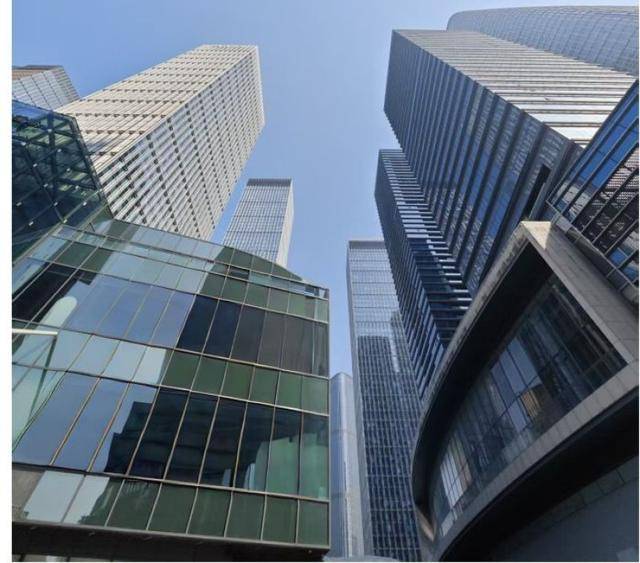
第一太平戴维斯:深圳科技企业为甲级写字楼净吸纳量增长提供有力支撑
Zheng Quan Shi Bao Wang· 2026-01-16 06:13
Core Insights - Despite significant supply pressure, the Shenzhen office market showed notable highlights in 2025 with a return of over one million square meters of supply for the first time in three years [1] - The demand from technology companies for upgrades and expansions significantly contributed to large transactions and supported net absorption growth [1] - The annual net absorption reached 664,000 square meters, marking a new high since 2021 and exceeding the five-year average by 16.9% [1] Supply and Demand - In 2025, 21 new projects were launched, contributing a total supply area of 1.182 million square meters [1] - The average vacancy rate for Grade A office buildings in Shenzhen was recorded at 31.4%, with a slight decrease of 0.2 percentage points [1] - Rental index decreased by 1.9%, with average rent falling to 132.6 yuan per square meter per month [1] Future Outlook - The overall supply scale of Grade A office buildings in Shenzhen is expected to remain substantial in 2026, potentially surpassing one million square meters [2] - The development of technology, high-end, and high-tech manufacturing industries is anticipated to positively impact office demand, with expectations for continued growth [2] - The Qianhai area is transitioning from "functional aggregation" to "capability leap," with new breakthroughs expected in cross-border data flow, green finance innovation, and high-end professional services [2]

亚太经合组织非正式高官会在深圳举行(APEC中国年:开放 创新 合作)
Ren Min Ri Bao· 2025-12-12 22:00
Core Viewpoint - The 2026 APEC informal senior officials' meeting held in Shenzhen marks the beginning of the "China Year" for APEC, emphasizing China's commitment to building an Asia-Pacific community and enhancing regional cooperation for growth and prosperity [1]. Group 1: Meeting Highlights - The meeting was attended by nearly 200 representatives from APEC member economies, the secretariat, observers, academia, and the business community [2]. - The Chinese government expressed its willingness to collaborate with all parties to strengthen economic cooperation in the Asia-Pacific region and unlock growth potential [1]. Group 2: Key Themes and Priorities - The theme for the 2026 APEC meeting, proposed by China, is "Building an Asia-Pacific Community for Common Prosperity," with three priority areas identified: openness, innovation, and cooperation [1]. - The meeting received strong support from participants for China's role in hosting the 2026 APEC meeting and for the overall success of the "China Year" [1].
2026年APEC会议主题:建设亚太共同体,促进共同繁荣
Nan Fang Du Shi Bao· 2025-12-12 16:28
Core Points - The 2026 APEC informal senior officials' meeting will be held in Shenzhen, Guangdong Province, on December 11-12, 2025, marking the beginning of the "China Year" for APEC [1] - Chinese Vice Minister Ma Zhaoxu emphasized the importance of building an Asia-Pacific community and advancing practical cooperation in areas such as free trade, connectivity, digital economy, and artificial intelligence [3] - The meeting participants expressed strong support for China's efforts in hosting the 2026 APEC meeting and agreed on the theme "Building an Asia-Pacific Community, Promoting Common Prosperity" along with three priority cooperation areas: openness, innovation, and collaboration [5] Group 1 - The APEC logo for the 2026 "China Year" was unveiled, featuring a visual element centered around the mythical bird Kunpeng, symbolizing unity and cooperation among the 21 member economies [7] - The logo's design, consisting of 21 interwoven wings, represents the diverse yet interdependent nature of APEC member economies and the significance of building an Asia-Pacific community [7] - The meeting was attended by nearly 200 representatives from APEC member economies, the secretariat, observers, academia, and the business community, highlighting the importance of collaboration in the region [8]
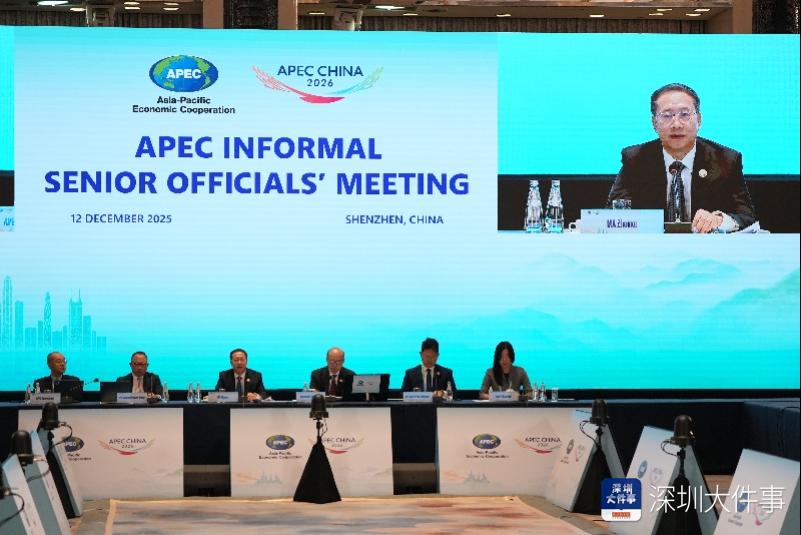
接棒APEC2026 领航亚太合作新征程
Xin Hua Wang· 2025-11-03 02:01
Core Points - China has taken over the APEC hosting role, marking the beginning of the "China Year" for APEC, with a commitment to build an Asia-Pacific community and promote growth and prosperity in the region [1][2] - The historical context highlights China's evolving role in APEC, from its early participation to becoming a key advocate for regional cooperation and economic integration [2][3] - The current global landscape presents challenges such as unilateralism and protectionism, making China's leadership in APEC crucial for fostering stability and certainty in the Asia-Pacific region [2] Group 1 - China aims to enhance regional economic integration and the construction of the Asia-Pacific Free Trade Area, emphasizing the importance of open cooperation for the stability of global supply chains [2] - The new technological revolution and industrial transformation are seen as vital growth engines, with China focusing on digital infrastructure and green economy initiatives to benefit the Asia-Pacific community [3] - The diversity of the Asia-Pacific region necessitates a path of mutual respect and cooperation, with China's proposals expected to strengthen regional collaboration and address current challenges [3] Group 2 - Shenzhen's selection as a symbol of China's commitment to deepening reforms and expanding high-level openness reflects the country's strategy of mutual benefit and win-win cooperation [3] - The expectation is that China will work alongside Asia-Pacific partners to achieve a more prosperous, stable, and inclusive future for the region [3]
新华时评丨接棒APEC2026 领航亚太合作新征程
Xin Hua She· 2025-11-03 00:01
Core Points - China has taken over the APEC hosting duties, marking the beginning of the "China Year" for APEC, with a commitment to enhance cooperation in the Asia-Pacific region [1][2] - The historical context highlights China's evolving role in APEC since its entry into the WTO, emphasizing its contributions to multilateral trade and regional economic integration [1][2] - The current global challenges, including unilateralism and protectionism, underscore the importance of China's leadership in fostering open cooperation in the Asia-Pacific [2][3] Group 1 - China aims to promote the Asia-Pacific Free Trade Area, connectivity, digital economy, and artificial intelligence as part of its commitment to regional growth and prosperity [1][2] - The emphasis on maintaining stable global supply chains and advancing regional economic integration reflects China's strategy to enhance its role in the global economy [2] - The focus on digital and green economies as key growth drivers indicates China's intention to leverage its advancements in technology for the benefit of the Asia-Pacific region [3] Group 2 - The diversity of the Asia-Pacific region necessitates a path of mutual respect and cooperation, with the goal of building a community for long-term development and prosperity [3] - Shenzhen's selection as a symbol of China's commitment to reform and high-level opening up highlights the country's dedication to a win-win cooperation strategy [3] - The belief in a collaborative future for the Asia-Pacific, driven by China's initiatives, suggests a positive outlook for regional stability and inclusiveness [3]
共建开放型亚太经济 推动中韩关系行稳致远
Ren Min Ri Bao· 2025-11-02 22:21
Group 1 - Xi Jinping's visit to South Korea and participation in the APEC meeting is seen as a significant step towards enhancing cooperation and mutual understanding between China and South Korea, promoting a stable strategic partnership [1][4] - The APEC meeting resulted in the adoption of the "Gyeongju Declaration," which emphasizes cooperation in artificial intelligence and addressing demographic changes, reflecting the collective aspirations of member economies [2][3] - Xi Jinping's advocacy for an inclusive and open Asia-Pacific economy is expected to drive economic growth and stability in the region, aligning with the expectations of various stakeholders [2][3] Group 2 - The upcoming APEC meeting in Shenzhen, China, in November 2026, aims to foster a community in the Asia-Pacific region, focusing on free trade, connectivity, and cooperation in digital economy and artificial intelligence [3] - The bilateral agreements signed during Xi Jinping's visit cover various sectors, including trade, finance, law enforcement, agriculture, technology, and media, indicating a rich and vibrant cooperation landscape between China and South Korea [4][5] - The emphasis on youth engagement and cultural exchanges is seen as a way to strengthen public sentiment and mutual understanding between the two nations, enhancing the foundation for future cooperation [5]
新华时评丨接棒APEC2026 领航亚太合作新征程
Xin Hua She· 2025-11-02 13:30
Core Points - China has taken over the APEC hosting duties for 2026, aiming to enhance cooperation in the Asia-Pacific region and promote initiatives such as free trade, connectivity, digital economy, and artificial intelligence [1][2] - The historical context highlights China's evolving role in APEC, from its early participation in 2001 to its more proactive leadership in recent years, emphasizing its commitment to multilateral trade and regional economic integration [1][2] - The current global landscape, characterized by rising unilateralism and protectionism, presents challenges for Asia-Pacific cooperation, making China's leadership in 2026 particularly significant [2][3] Group 1 - China is committed to maintaining the stability of global supply chains and promoting regional economic integration through high-level openness and the construction of the Asia-Pacific Free Trade Area [2][3] - The ongoing technological revolution and industrial transformation, particularly in digital and green economies, are seen as key growth drivers, with China aiming to share its successful practices in these areas with the Asia-Pacific community [3] - The diversity of the Asia-Pacific region necessitates a path of mutual respect and cooperation, with the construction of an Asia-Pacific community being essential for long-term development and prosperity [3] Group 2 - Shenzhen's transformation from a fishing village to a modern metropolis symbolizes China's commitment to a win-win open strategy and serves as a model for further reforms and high-level openness [3] - The expectation is that China will collaborate with Asia-Pacific partners to foster a more prosperous, stable, and inclusive future for the region [3]