
低功耗技术

Search documents
存储涨价冲击消费电子,面板厂突围押注低功耗、大尺寸
第一财经· 2026-03-03 16:19
Core Viewpoint - The panel industry is facing multiple complex factors, including the impact of rising storage prices on demand and the potential growth driven by AI technology and major sporting events in 2026 [3][4][5]. Group 1: Industry Trends - The MWC showcased new technologies from domestic panel manufacturers, emphasizing low power consumption for AI applications and highlighting OLED products [3]. - Omdia reported that memory price increases are nearing or exceeding the cost of mobile display panels, leading smartphone manufacturers to reduce procurement plans, resulting in a decline in global AMOLED panel shipments from 817 million units last year to 810 million units this year [4]. - TrendForce predicts a 5.4% year-on-year decline in global notebook shipments, causing a 7.9% drop in corresponding panel shipments, although OLED panel shipments are expected to maintain growth [4]. - IDC forecasts a more severe outlook for global PC and smartphone shipments, with expected declines of 11.3% and 12.9% respectively due to ongoing storage supply challenges [5]. Group 2: Company Responses - TCL Technology's CEO indicated that the most affected segment by rising storage prices is small-sized mobile communication products, leading to short-term pressure on smartphone OLED display demand [5]. - The company is responding to storage price impacts by improving efficiency and cost reduction, while also optimizing product structure and enhancing technical performance [5]. - Large-sized panel business, particularly in TV and commercial displays, remains stable, with growth in IT and automotive sectors offsetting declines in mobile terminal markets [5]. Group 3: Technological Developments - Low power consumption technology is a key focus for panel manufacturers, with TCL's Super Pixel solution reducing SoC power consumption by approximately 25% [6]. - ViSino's LTPS 20Hz mobile low refresh solution can lower power consumption by over 20%, while smart pixel technology can reduce AMOLED power consumption by more than 38% [6]. - OLED technology is penetrating the mid-size market, with TCL showcasing AI PC products and ViSino presenting flexible AMOLED for smart interactive robots [6]. Group 4: Market Dynamics - CINNO reported that panel prices were supported in January due to international events and domestic subsidy policies, with supply tightening from production control during the Spring Festival leading to rising prices in February [7]. - The price trend in the first quarter will depend on manufacturers' production control pace and market consumption capacity [7].



都在发力CPO
半导体行业观察· 2026-01-11 04:23
Core Viewpoint - The article discusses the growing interest in Co-Package Optics (CPO) technology as a promising solution for reducing power consumption and increasing bandwidth between server packages, particularly in the context of large-scale server deployments in the AI sector [1]. Group 1: CPO Technology and Industry Trends - CPO technology is gaining attention due to the increasing scale of servers, especially in AI, leading to higher data consumption for communication between servers and packages [1]. - The ISSCC 2025 conference in San Francisco will feature multiple papers related to CPO technology, highlighting its significance in the industry [1]. Group 2: Broadcom's Tomahawk 5 - Bailly - Broadcom introduced the Tomahawk 5 (TH5) - Bailly, which boasts a data rate of 51.2 Tbps and a power efficiency of 6 pJ/b [2]. - The TH5-Bailly has been in mass production since 2023, with samples provided to customers, although widespread market availability has not been specified [2]. Group 3: Intel's Direct-Drive Optical Engine - Intel presented a paper on a direct-drive optical engine utilizing a 0.9 pJ/b energy efficiency at 108 Gb/s using PAM4 modulation, which improves bandwidth and power consumption [4][5]. - The design incorporates 3D-printed polymer waveguides, achieving a 1/4 reduction in footprint and a 1/3 reduction in height compared to previous mechanical optical interfaces [4]. Group 4: MicroLED Technology - Ehsan Afshari from the University of Michigan discussed using MicroLEDs for low-power, high-bandwidth communication, presenting a demonstration chip achieving 1.2 Tbps bandwidth with power consumption below 1 pJ/bit [10][17]. - The focus of this technology is on inter-chip or inter-package communication rather than long-distance communication, emphasizing efficiency [17]. Group 5: Future Outlook - The article notes that while Broadcom and Intel target different markets, they share a common goal of low power and high bandwidth [19]. - NVIDIA is expected to launch its CPO products, Quantum-X Photonics and Spectrum-X, in the second half of 2025, indicating a growing trend towards high-performance computing and low-power technologies in AI [20].


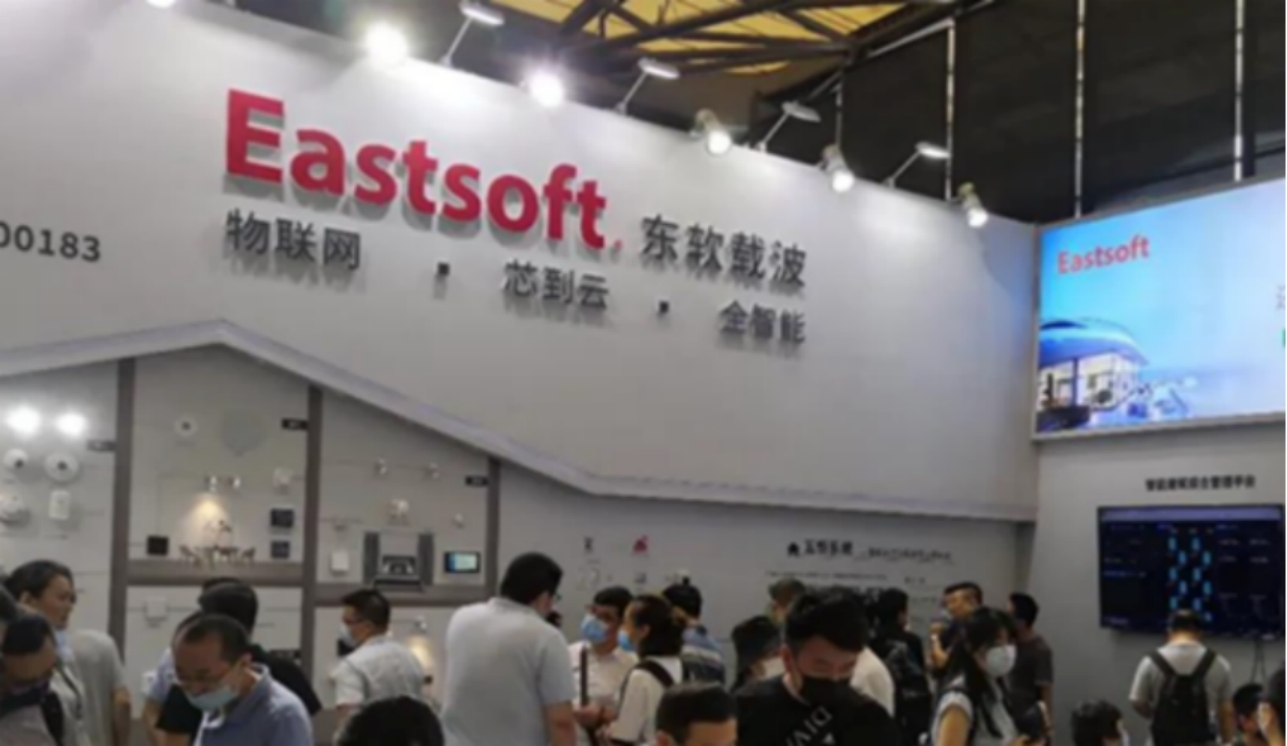
东软载波子公司MCU发明专利获授权,能降低待机功耗
Ju Chao Zi Xun· 2025-09-04 10:10
Core Points - The company announced that its wholly-owned subsidiary, Shanghai Neusoft Carrier Microelectronics Co., Ltd., has recently obtained a patent for an invention related to a power control device, method, and microprocessor for MCU working circuits [2] - The invention aims to reduce standby power consumption and improve user experience by controlling the power supply based on the comparison of current voltage and reference voltage [2] - The patent acquisition is expected to enhance the company's intellectual property advantage and maintain its technological leadership, although it will not have a significant impact on the company's recent operations [3] Summary by Sections - **Patent Details** - The patent includes a power control device that consists of a power circuit, detection circuit, energy storage capacitor, and reference capacitor [2] - The device compares the current voltage of the energy storage capacitor with the reference voltage to manage power supply effectively [2] - This innovation reduces standby power consumption compared to existing technologies, thereby increasing standby time [2] - **Impact on Company** - The patent acquisition is seen as beneficial for the company to leverage its core product's intellectual property and foster a continuous innovation mechanism [3] - It is expected to enhance the company's core competitiveness and maintain its technological edge in the industry [3]

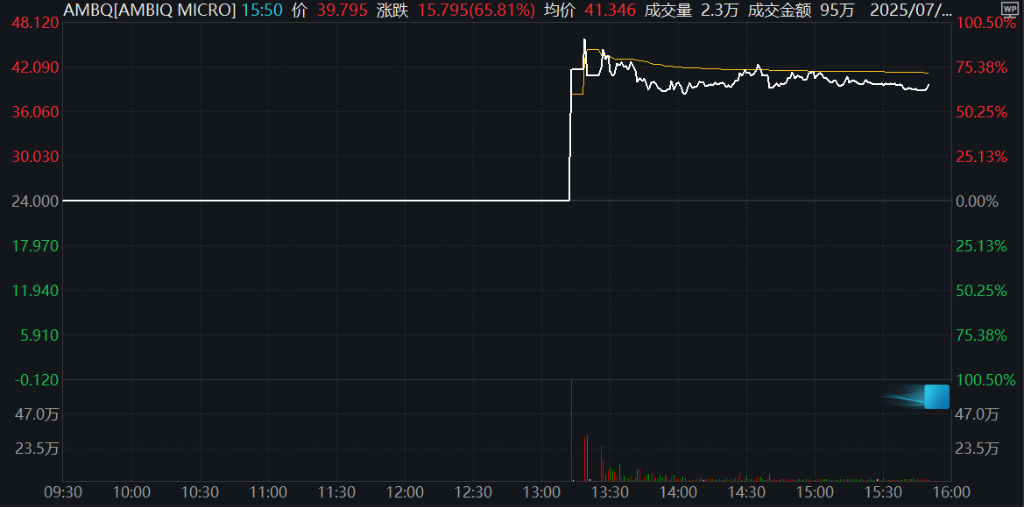
Arm投资的AI芯片公司Ambiq上市首日大涨61%,两度熔断停牌
Hua Er Jie Jian Wen· 2025-07-30 20:28
Core Viewpoint - Ambiq, an AI chip company focused on ultra-low power semiconductor solutions, experienced a significant stock price increase on its first trading day, highlighting strong investor interest and market potential [1][3]. Group 1: IPO and Market Performance - Ambiq went public on the New York Stock Exchange, issuing 4 million shares and raising $96 million [1]. - The stock closed at $38.7, a 61.25% increase from the IPO price of $24, with trading being halted twice due to volatility [1]. Group 2: Technology and Competitive Advantage - Ambiq's core technology is designed for edge AI applications, promising energy consumption five times lower than traditional chips [3]. - This breakthrough allows for the deployment of complex AI functions in power-sensitive wearable devices, such as smartwatches and fitness trackers [3]. - Potential applications of Ambiq's technology include embedding large language models in augmented reality (AR) and virtual reality (VR) devices [3]. Group 3: Financial Performance and Customer Base - Despite promising technology, Ambiq's customer base is relatively concentrated, with its largest customer contributing 38% of revenue in Q1 [4]. - Major clients include Garmin and Google, with a significant drop in revenue contribution from mainland China, from 45.5% last year to 8-9.5% this year [4]. - Ambiq reported a net loss of $8.3 million and revenue of $15.7 million for the three months ending March 31, compared to a net loss of $9.8 million and revenue of $15.2 million in the same period last year [4].
恒玄创始人,集体减持!
半导体行业观察· 2025-07-05 04:07
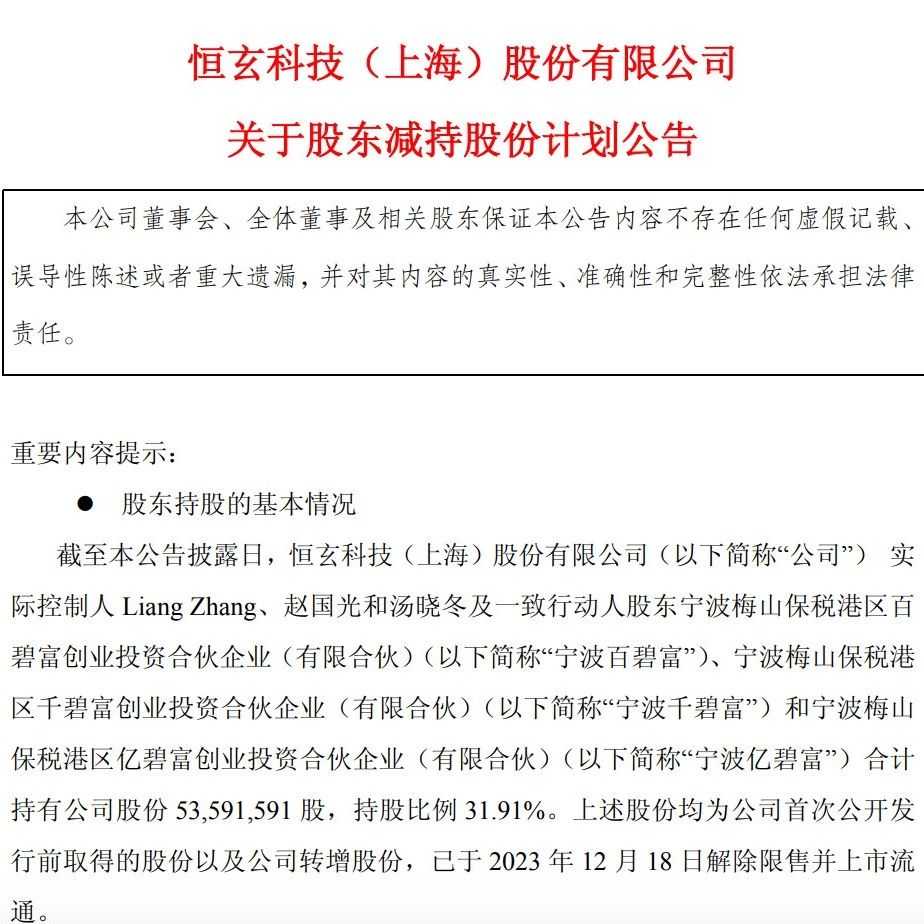
Core Viewpoint - Hengxuan Technology plans to reduce shareholding by major shareholders, with a total reduction not exceeding 2.00% of the company's total share capital, primarily due to personal funding needs [1][2]. Shareholding Reduction Plan - Major shareholders Liang Zhang, Zhao Guoguang, and Tang Xiaodong, along with their concerted actions, plan to reduce a total of 2,014,888 shares, accounting for 1.20% of the total share capital, through centralized bidding or block trading [1][2]. - Run Yuan Capital I Limited and Run Yuan Capital II Limited also plan to reduce up to 1,343,500 shares, representing 0.80% of the total share capital, due to funding arrangements [1][2]. - The reduction period is set from July 28, 2025, to October 27, 2025, with the reduction price based on market conditions at the time [2]. Shareholding Structure - As of the announcement date, the controlling shareholders and their concerted actions hold a total of 53,591,591 shares, which is 31.91% of the total share capital [3]. Company Performance - Hengxuan Technology achieved a record high revenue of 999.5 million yuan in Q1 2025, representing a year-on-year increase of 52.25% [4]. - The net profit attributable to the parent company reached 191 million yuan, a significant year-on-year growth of 590.22%, marking the highest quarterly net profit since the company's establishment [4]. - The growth in revenue is attributed to an increase in market share in the smartwatch segment, which accounted for 32% of revenue in 2024, with a year-on-year growth of approximately 116% [4][5]. Profitability and R&D - The gross profit margin for Q1 2025 was 38.47%, an increase of 5.54 percentage points year-on-year and 0.77 percentage points quarter-on-quarter, driven by changes in sales structure and cost optimization [6]. - R&D expenses for Q1 2025 were 167 million yuan, remaining stable compared to the previous year, with expectations for higher expenses in the second half of the year [6].
Qualcomm (QCOM) Conference Transcript
2025-06-11 08:00
Qualcomm Conference Call Summary Industry Overview - Qualcomm is focusing on expanding its presence beyond handsets into various edge devices, including automotive, industrial, augmented reality (AR), virtual reality (VR), and robotics [3][4][5] - The company aims for a revenue split of approximately 50% from handsets and 50% from non-handsets by the end of the decade [5] Key Areas of Focus Automotive Market - The automotive industry is undergoing a significant transformation, with a shift towards connected cars and advanced driver-assistance systems (ADAS) [16][18] - Qualcomm is experiencing growth in automotive silicon, with an annual growth rate exceeding 15-20% due to increased digitization [18] - The company has established a strong position in wireless connectivity and digital cockpit technologies [19] - Qualcomm has set a financial target of approximately $8 billion in automotive revenue by fiscal 2029 [23] Data Center Market - Qualcomm is entering the data center market with a focus on AI and low-power, high-performance computing [6][7][9] - The acquisition of AlphaWave is aimed at enhancing Qualcomm's technology portfolio with wired connectivity solutions [9][10] - The company believes in a hybrid AI model that combines device and cloud computing [7][13] Industrial Market - Qualcomm targets $4 billion in revenue from the industrial market, which is expected to transition from microcontrollers to AI and wireless connectivity [49] - The company sees significant opportunities in robotics and AI applications within industrial settings [55] PC Market - Qualcomm holds approximately 9% market share in the consumer PC market in the U.S. and Western Europe, with a target of 12% share in the next few years [32][33] - The company believes the transition to ARM architecture will benefit its position in the PC market [32] Augmented and Virtual Reality - Qualcomm is a leader in the chip market for AR and VR devices, collaborating with major OEMs [40] - The company envisions AR glasses becoming personal computing devices that integrate AI capabilities [48] Handset Market Dynamics - Despite a mature handset market, Qualcomm has seen growth due to a shift towards more expensive devices and increased gaming usage [61][62] - The Android ecosystem is gaining market share against Apple, which is beneficial for Qualcomm [63] - The company remains confident in its competitive position against Samsung and other players, emphasizing the importance of product performance [66][67] Competitive Landscape - Qualcomm has maintained its leadership position in the chip market, with only two major merchant chip companies remaining: Qualcomm and MediaTek [66] - The company is focused on delivering superior products to sustain its competitive edge [67] Conclusion - Qualcomm is strategically positioned to capitalize on growth opportunities across various sectors, including automotive, data centers, industrial applications, and augmented reality, while maintaining a strong presence in the handset market. The company's focus on innovation and technology integration will be key to its future success.
