
供给改革

Search documents
“沪七条”开启楼市纾困的新模式丨李宇嘉专栏
Xin Lang Cai Jing· 2026-02-26 22:50
李宇嘉(广东省住房政策研究中心首席研究员) 2026年春节刚过,正式开工第二天的2月25日,上海住建委等五部门联合出台"沪七条"楼市新政,重点围绕调整住房限购政策、提高住房公积 金贷款支持力度、优化房产税执行等几方面内容,支持刚性和改善性住房需求。这是继去年"8·25"政策后,上海再次出台一揽子楼市政策,也 是自去年12月24日北京调整购房政策后,一线城市又一次纾困楼市。 此次上海楼市新政,在调整限购政策方面,均针对非户籍。比如,调减外环内非户籍居民家庭或成年单身人士购房社保或个税缴纳年限, 由"满3年"降至"满1年";社保或个税满3年的非户籍家庭或单身人士可以在外环内增购1套住房等。笔者认为,此举主要在挖掘需求潜力。 化、新房交易下行。因此,如何激活非户籍需求,乃楼市企稳的关键。 对于上海来说,基于非户籍购买力、市场预期、政策博弈等综合考虑,新政能否达到预期效应尚待观察。但是,全国2.4亿外来人口占城市常 住人口近30%,上海、北京达到40%,珠三角达到近50%,这是未来住房需求的主力。可以确定的是,借助住房政策创新、供给改革(最典型 的就是公积金普惠化)、基本面修复等,将非户籍人群住房需求潜力转化为现实, ...

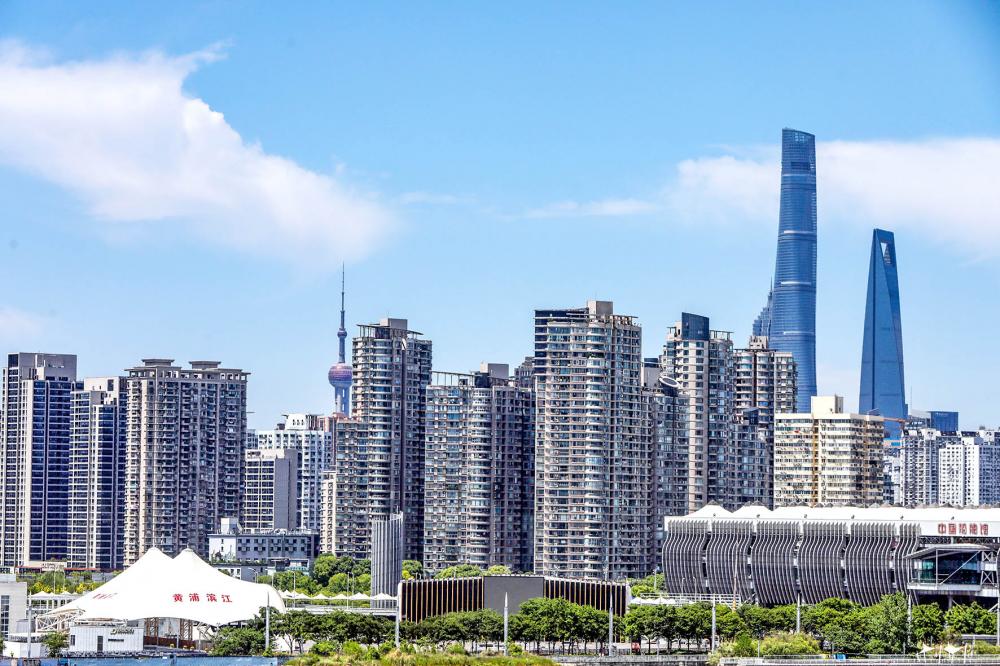
“沪七条”开启楼市纾困的新模式
2 1 Shi Ji Jing Ji Bao Dao· 2026-02-26 22:39
2026年春节刚过,正式开工第二天的2月25日,上海住建委等五部门联合出台"沪七条"楼市新政,重点 围绕调整住房限购政策、提高住房公积金贷款支持力度、优化房产税执行等几方面内容,支持刚性和改 善性住房需求。这是继去年"8·25"政策后,上海再次出台一揽子楼市政策,也是自去年12月24日北京调 整购房政策后,一线城市又一次纾困楼市。 此次上海楼市新政,在调整限购政策方面,均针对非户籍。比如,调减外环内非户籍居民家庭或成年单 身人士购房社保或个税缴纳年限,由"满3年"降至"满1年";社保或个税满3年的非户籍家庭或单身人士 可以在外环内增购1套住房等。笔者认为,此举主要在挖掘需求潜力。 目前,上海非户籍常住人群庞大,2024年达983.49万人,占常住人口40%,此外还有大量未缴纳社保或 个税的外派上海人员、基础公共服务人员,很多有购房需求。因此,调整限购政策也在情理之中。值得 注意的是,相比去年"8·25"新政主要松绑外环外购房限制,此次新政重点是支持外环内购房。特别是, 继续鼓励非户籍人群购置二手住房,激活"卖旧买新"的市场循环。 2025年,上海二手住宅成交22.7万套,同比增加4.60%,其中总价300万元 ...
2026,预见|周期篇——价值重估:紧扣“反内卷”下的中国制造龙头
Xin Lang Cai Jing· 2026-01-16 04:05
Core Viewpoint - The year 2026 marks the beginning of a new phase for China's manufacturing sector, driven by a shift from demand-driven growth to supply-side optimization, necessitating a reevaluation of company valuations and investment strategies [2][18]. Group 1: Non-Ferrous Metals - Investment in non-ferrous metals is traditionally tied to macroeconomic variables like the Federal Reserve's interest rates, but different metals are now operating on their own "industrial clocks," presenting differentiated alpha opportunities [3][13]. - Aluminum is viewed as an energy-intensive asset with a supply constraint due to global energy structure changes and domestic production limits, while demand from green sectors like electric vehicles and photovoltaics supports long-term growth [3][13]. - Copper's long-term demand story is well-known, but current supply vulnerabilities due to declining ore grades and insufficient capital expenditure may tighten the supply-demand balance, making investments in leading companies with quality resources and cost advantages attractive [3][13]. Group 2: Chemical Industry - The chemical industry reflects a clear picture of China's supply-side reform, with policies aimed at eliminating outdated capacity to shift the focus from quantity to quality [5][15]. - The core investment dilemma has shifted from "where is the demand" to "who will clear the supply," with two main investment lines emerging for 2026: focusing on companies with cost advantages and investing in sectors where high-cost capacities are exiting the market [6][16]. - The "survivor takes all" approach is catalyzed by the "anti-involution" trend, leading to significant increases in industry concentration across various segments, such as spandex and polyester [7][16]. Group 3: Methodology - Capturing investment opportunities requires a matching investment framework, focusing on the essence of "upward revisions of corporate profit expectations" through three paths: investing in clear industry structures, reverse positioning at price bottoms, and identifying advanced capacities that will lead to profit leaps [8][17]. - The methodology emphasizes transforming deep industry knowledge into pricing power that exceeds market consensus, requiring fund managers to act as both researchers and industry observers [8][17]. Group 4: Conclusion - The year 2026 may signify a new era for China's cyclical manufacturing, with a shift in driving forces from demand to supply optimization, necessitating a reconstruction of valuation systems for related listed companies [18]. - Investors are encouraged to explore companies transitioning from "cyclical stocks" to "cyclical growth stocks" and "pattern dividend stocks," focusing on proactive value discovery rather than reactive responses to cyclical fluctuations [18].
降息预期进一步推升工业金属价格 | 投研报告
Zhong Guo Neng Yuan Wang· 2025-09-22 02:21
Summary of Key Points Core Viewpoint - The report highlights the fluctuations in prices and production levels of various metals, including lithium, copper, aluminum, gold, and rare earth elements, indicating a mixed market sentiment influenced by supply and demand dynamics, geopolitical factors, and monetary policy changes [1][2][3][4][5][6]. Group 1: Lithium and Cobalt - The average price of lithium carbonate decreased by 0.69% to 73,100 yuan/ton, while the average price of lithium hydroxide fell by 0.93% to 79,000 yuan/ton. The total production of lithium carbonate increased to 20,400 tons, up by 400 tons week-on-week [1][6]. - The price of cobalt increased by 0.7% to 275,000 yuan/ton, with cobalt intermediate prices rising by 2.3% to $14.45 per pound [6]. Group 2: Copper - LME copper prices fell by 0.68% to $9,996.50/ton, while Shanghai copper prices decreased by 1.42% to 79,900 yuan/ton. The weekly copper inventory in major regions decreased by 5,300 tons to 148,900 tons due to reduced imports and domestic supply [2]. - The operating rate of domestic refined copper rod enterprises rose to 70.49%, a week-on-week increase of 2.96%, driven by pre-holiday stockpiling [2]. Group 3: Aluminum - LME aluminum prices dropped by 0.93% to $2,676.00/ton, and Shanghai aluminum prices fell by 1.54% to 20,800 yuan/ton. Domestic electrolytic aluminum ingot inventory increased by 1,000 tons week-on-week [3]. - The operating rate of downstream aluminum processing enterprises slightly increased to 62.2%, although it still showed a year-on-year decline of 1.3% [3]. Group 4: Gold - COMEX gold prices remained unchanged at $3,719.40/oz, while SPDR gold holdings increased by 17.75 tons to 994.56 tons. The market is experiencing volatility due to the Federal Reserve's interest rate cuts and rising geopolitical risks [4][5]. Group 5: Rare Earths and Antimony - Prices for praseodymium and neodymium oxide have started to recover, attributed to the implementation of new regulations and supply chain improvements. The export volume of magnetic materials surged in July, indicating potential for further price increases [5]. - Antimony demand is expected to rise due to new certification requirements for flame-retardant cables, alongside a global supply decline [5].
电解铝行业研究框架培训
2025-08-12 15:05
Summary of Aluminum Industry Research Conference Call Industry Overview - The aluminum supply is strictly limited by power factors, with domestic capacity constraints and high overseas investment costs leading to limited supply, supporting high aluminum prices [1][3] - Despite a global economic slowdown, demand for non-ferrous metals shows resilience, with increased aluminum demand driven by new energy, grid construction, and smart technologies [1][4] Key Insights - The capital expenditure in the electrolytic aluminum sector is contracting, with an increase in cash flow and dividend payout ratios, achieving the highest dividend yield in the market (over 5%) [1][7] - The aluminum and coal industries have successfully implemented supply-side reforms due to their impact on social stability, while steel and chemical industries face challenges due to local government pressures [1][8] - Aluminum demand is more resilient than copper, benefiting from rapid grid construction and new energy vehicle developments, contributing significantly to demand growth [1][15] Supply Dynamics - Both domestic and international aluminum supply are in a tight balance, with overseas planned capacity limited and actual production progress falling short of expectations [1][18] - The industrial support capacity is currently poor, with raw materials heavily reliant on imports, restricting large-scale aluminum production [1][19] Economic Impact - The interest rate cut cycle is favorable for non-ferrous asset allocation, with low inventories of copper and aluminum making them sensitive to liquidity [1][11] - The current average dividend yield for the aluminum sector is over 5%, with potential for further increases, possibly replicating the past growth of the coal sector [1][7][27] Investment Opportunities - High-dividend private enterprises such as Hongqiao and Hongchuang, as well as undervalued state-owned enterprises like Yun Aluminum and Shenhuo, are worth attention [1][26] - The aluminum sector is expected to see a significant rebound in pricing and profitability, with a potential increase in valuation multiples from 6-7 times to 15-16 times [1][28] Future Trends - The aluminum industry is anticipated to transition from a manufacturing focus to a resource-based asset industry, with strong price and profit recovery expected [1][28] - The demand for aluminum is projected to remain strong due to ongoing industrial upgrades and the transition to new energy applications [1][16][15] Conclusion - The aluminum industry is positioned for growth, driven by structural changes in demand and supply dynamics, with high dividend yields and potential for significant capital appreciation making it an attractive investment opportunity [1][30]
除光伏外,这一行业也有供给改革预期,期货率先双双大涨
Xuan Gu Bao· 2025-07-02 23:28
Group 1 - The black series futures, including coking coal and coke, experienced significant increases, with coking coal rising by 3.18% and coke by 3.15% on July 2 [1] - The Central Financial Committee emphasized the need to regulate low-price disorderly competition among enterprises and promote the orderly exit of backward production capacity [1] - The National Climate Center predicts that high temperatures this year will be intense and prolonged, with northern China potentially exceeding 42°C for over 30 days [1] Group 2 - Year-to-date data shows that the cumulative coal sales of key monitored enterprises reached 121,815.8 million tons, a year-on-year decrease of 4.1%, with thermal coal and coking coal sales down by 5.3% and 4%, respectively, while anthracite coal sales increased by 7.3% [1] - Longjiang Securities anticipates seasonal demand improvement due to the summer peak and the "Golden September and Silver October" period, alongside a potential contraction in imported coal volumes [1] - The China Coal Association has called for production control and quality improvement, with safety inspections expected to remain stringent following June's safety month [1] Group 3 - Guotai Junan Securities views the next four months as a critical verification period for fundamentals, predicting that the second quarter of 2025 will mark the bottom of the coal industry's fundamentals [1] - Companies with a small proportion of non-coal business, such as Pingjiang Co., New Energy, Yanzhou Coal, Haohua Energy, and China Coal Energy, are significantly undervalued [2] - Companies with a large proportion of non-coal business, such as Huaibei Mining and Shaanxi Energy, are even more undervalued [2]