
光伏技术转型

Search documents
趋势研判!2026年中国N型TOPCON电池片行业工艺、发展历程、产业链、出货量、竞争格局、代表企业及发展趋势分析:出货量增长,产能格局愈加集中[图]
Chan Ye Xin Xi Wang· 2025-12-30 01:53
Core Viewpoint - The N-type TOPCon solar cell technology is rapidly evolving, with significant growth in production and market share expected in the coming years, driven by its advantages over P-type cells and increasing investments from Chinese photovoltaic companies [1][4]. Group 1: Industry Overview - TOPCon cells utilize a tunneling oxide passivated contact structure, enhancing charge transport and energy conversion efficiency compared to traditional P-type cells [2][4]. - The global shipment volume for TOPCon cells is projected to reach 565.2 GW in 2025 and 652.7 GW in 2026, with significant growth also expected for Xbc and HJT cells [1][4][6]. - In China, TOPCon cell shipments are anticipated to grow from 534.6 GW in 2025 to 609.1 GW in 2026, reflecting a strong domestic market for N-type technology [1][6]. Group 2: Technological Advantages - TOPCon cells offer higher conversion efficiency, better performance in low-light conditions, and reduced degradation compared to P-type cells [3][4]. - The production process for TOPCon cells involves additional steps compared to PERC, but it results in lower costs and higher potential for premium pricing [3][4]. Group 3: Industry Development History - The development of TOPCon technology can be categorized into four phases: initial technology formation (2015-2017), product layout (2018-2020), commercial promotion (2021-2022), and explosive growth (2023-present) [8]. Group 4: Competitive Landscape - Major companies in the N-type TOPCon sector include JinkoSolar, Tongwei, JA Solar, Trina Solar, and others, all of which have begun large-scale production of N-type TOPCon cells [10][11]. - Yingfa Energy is recognized as a leading manufacturer with a significant market share, achieving a production capacity of 32.7 GW and a revenue of 35.4 billion yuan from N-type TOPCon cells in 2024 [10][11]. Group 5: Future Trends - The N-type technology is expected to dominate the market, with increasing penetration rates and a shift towards cost reduction and diverse application scenarios [14]. - The industry is likely to see accelerated technological breakthroughs and a concentration of production capacity as it moves towards a clearing phase [14].





隆基首席科学家徐希翔:中国光伏产业已实现全面超越
2 1 Shi Ji Jing Ji Bao Dao· 2025-11-12 09:08
Core Viewpoint - Longi Green Energy is positioned as a leader in the photovoltaic industry, focusing on technological innovation to transition from homogeneous price competition to differentiated value creation [1][12][15]. Group 1: Technological Advancements - Longi's research team, led by Xu Xixiang, has achieved significant breakthroughs in high-efficiency photovoltaic technology, including a world record efficiency of 26.81% for silicon solar cells in October 2022 and 27.3% in December 2023 [2][3]. - The development of the HIBC battery technology, which combines low-temperature and high-temperature processes, has led to an efficiency of 27.81%, approaching the theoretical limit of 29.4% [2][3]. - The BC technology, which transfers the battery's front grid lines to the back, reduces light shading and enhances both efficiency and aesthetic value, is now in large-scale production [3][5]. Group 2: Cost Reduction Strategies - The introduction of non-silver metallization technology is crucial for reducing costs associated with BC technology, with significant progress made in developing various methods such as copper plating and graphic vacuum coating [5][6]. - Longi aims to achieve large-scale application of non-silver metallization by the second to third quarter of 2026, with foundational work already completed [5][6]. Group 3: Industry Ecosystem and Collaboration - Longi is building an ecosystem around BC technology, emphasizing collaborative innovation to reduce R&D risks and accelerate technological iterations [6][10]. - The establishment of a knowledge-sharing and protection mechanism is intended to shift the industry from homogeneous price competition to differentiated innovation [6][10]. Group 4: Market Position and Future Outlook - Longi's strategy of "wide research and narrow investment" ensures a balance between technological innovation and commercialization, maintaining its industry-leading position [10][11]. - The company is actively exploring new battery structures and materials while focusing on scalable technologies to quickly translate innovations into competitive advantages [11][12]. - The photovoltaic industry is transitioning towards high-quality development, driven by technological innovation and differentiation, moving away from low-level competition [12][15].

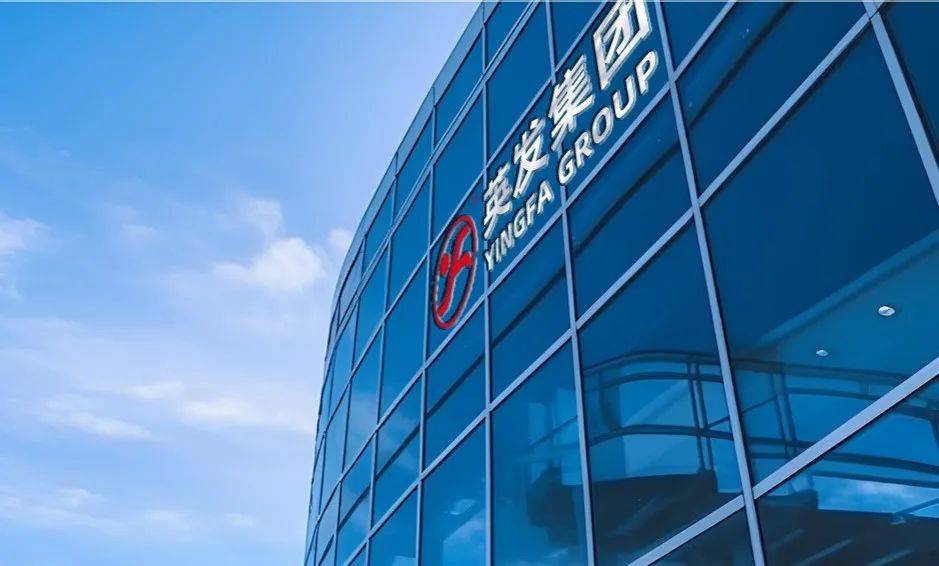
安徽富豪携英发睿能冲刺IPO,2024年巨亏8.6亿,抱紧隆基绿能“大腿”
Sou Hu Cai Jing· 2025-08-26 11:23
Core Viewpoint - The photovoltaic industry, once seen as a "golden track" for new energy, has become highly competitive and challenging, with companies like Yingfa Ruineng Technology Co., Ltd. emerging as potential leaders through rapid technological iteration and capacity adjustment [2][3]. Company Overview - Yingfa Ruineng recently relocated its headquarters to Yibin, Sichuan, and submitted its IPO application to the Hong Kong Stock Exchange, aiming for a mainboard listing [3]. - According to its prospectus, Yingfa Ruineng is the third-largest specialized manufacturer of N-type TOPCon solar cells globally, holding a market share of 14.7% [3]. - The company has been recognized as a national-level "specialized and innovative" small giant enterprise and has appeared on the GEI China Unicorn list for both 2023 and 2024 [3]. Financial Performance - Yingfa Ruineng's revenue for 2022, 2023, 2024, and the first four months of 2025 were approximately RMB 56.43 billion, RMB 104.94 billion, RMB 43.59 billion, and RMB 24.08 billion, respectively [12][15]. - The net profit figures for the same periods were RMB 3.5 billion, RMB 4.1 billion, a loss of RMB 8.64 billion, and RMB 3.55 billion [12][15]. - The company experienced a significant revenue drop of 58.5% in 2024 compared to the previous year, alongside a substantial net loss [22][24]. Product Transition - Yingfa Ruineng initially focused on P-type PERC solar cells, which contributed revenues of RMB 54.7 billion, RMB 96.46 billion, and RMB 6.02 billion from 2022 to 2024, respectively [14]. - The company successfully transitioned to N-type TOPCon solar cells, achieving rapid growth in revenue from RMB 7.44 billion in 2023 to RMB 23 billion in the first four months of 2025 [19][22]. - The average selling price of N-type TOPCon cells decreased from RMB 0.44 per watt in 2023 to RMB 0.32 per watt in early 2025 [22][23]. Strategic Partnerships - Yingfa Ruineng has a close partnership with Longi Green Energy, which serves as both a major customer and supplier, and they have established a joint venture [3][30]. - The company has signed a strategic cooperation agreement with Longi Green Energy for a project to produce 16 GW of HPBC solar cells, with Longi committing to purchase a significant portion of the production capacity [25][27]. Operational Challenges - The company has faced challenges with inventory management, as its inventory surged from RMB 2.65 billion in 2022 to RMB 13.46 billion in early 2025, indicating a fourfold increase [31]. - Yingfa Ruineng's total liabilities rose from RMB 45.12 billion in 2022 to RMB 84.45 billion by early 2025, reflecting increased financial pressure [31][34]. Future Outlook - The company's future competitiveness will depend on its ability to maintain technological leadership, manage working capital effectively, and reduce debt levels [35]. - Yingfa Ruineng is actively pursuing new technologies and products in the solar cell sector, particularly focusing on the xBC solar cell technology [25][36].
甩掉历史包袱后又遇关税风暴,晶澳科技奔赴阿曼与港股“淘金”
Bei Ke Cai Jing· 2025-04-25 11:27
Core Viewpoint - JA Solar Technology, the world's second-largest photovoltaic module manufacturer, is facing significant challenges, including its first loss since going public in 2020, with a loss amounting to 4.656 billion yuan [2][6]. Financial Performance - The company reported a revenue of 70.121 billion yuan in 2024, a year-on-year decrease of 14.02%, and a net profit attributable to shareholders of -4.656 billion yuan, compared to a profit of 7.039 billion yuan in the previous year [6]. - The loss is primarily attributed to asset impairment, with a total impairment amount of 3.154 billion yuan due to the transition from P-type to N-type solar cell technology [3][9]. Market Dynamics - The global photovoltaic market is experiencing a significant supply-demand imbalance, with a projected 600 GW of new installations in 2024 against an industry capacity exceeding 1100 GW, leading to substantial price declines across the supply chain [5]. - The prices of polysilicon, silicon wafers, solar cells, and modules are expected to drop by over 39%, 50%, 30%, and 29% respectively in 2024 [5]. Product and Market Contribution - Photovoltaic modules account for 95% of the company's revenue, with total shipments of 79.447 GW, of which approximately 49% were exported [7]. - The company achieved a gross profit of about 3.2 billion yuan from its module segment, with significant losses in the domestic and European markets, while the Americas and Asia-Pacific markets remained profitable [8]. Strategic Initiatives - To mitigate the impact of rising tariffs, the company is expanding its production capacity in Oman with a 6 GW battery and 3 GW module project, which is expected to help offset some tariff impacts when operational [4][12]. - The company is also exploring investment opportunities in other countries outside the U.S. and Southeast Asia to diversify its supply chain [11][12]. - In February, the company initiated a Hong Kong IPO to further its global development strategy, enhancing its market, supply chain, and R&D capabilities [14].
福斯特(603806):胶膜量增价减 感光膜快速起量
Xin Lang Cai Jing· 2025-04-10 11:23
Core Viewpoint - The company reported a decline in revenue and net profit for 2024, primarily due to intense competition in the photovoltaic supply chain and falling prices of encapsulant materials, but anticipates a recovery in 2025 as excess capacity is cleared and prices stabilize [1][2]. Group 1: Financial Performance - In 2024, the company achieved revenue of 19.147 billion yuan, a year-on-year decrease of 15.2%, and a net profit attributable to shareholders of 1.308 billion yuan, down 29.3% year-on-year [1]. - The fourth quarter of 2024 saw revenue of 3.973 billion yuan, with a significant decline of 33.1% quarter-on-quarter and 9.9% year-on-year [1]. - The company's 2024 encapsulant revenue decreased by 15% to 17.5 billion yuan, despite a 24.98% increase in sales volume to 2.81 billion square meters [2]. Group 2: Market Dynamics - The global photovoltaic industry faced an imbalance in supply and demand in 2024, leading to a continuous decline in prices across the entire supply chain [2]. - The average price of encapsulant materials fell from 7.3 yuan per square meter in Q1 2024 to 6.2 yuan per square meter in Q4 2024 [2]. - The company’s market share in the encapsulant segment increased to over 50% despite the price decline [2]. Group 3: Product Segments - The company reported a revenue of 593 million yuan from photosensitive dry film in 2024, reflecting a year-on-year growth of 30.72%, driven by demand from sectors like electric vehicles and AI servers [3]. - Revenue from aluminum-plastic film reached 133 million yuan, up 16.17% year-on-year, benefiting from the expansion of demand in electric vehicles and consumer electronics [3]. - The company is expanding its customer base in the digital, energy storage, and power battery sectors, which is expected to drive further growth in the future [3]. Group 4: Profit Forecast and Valuation - The company has revised its net profit forecasts for 2025 and 2026 to 2.46 billion yuan and 3.31 billion yuan, respectively, reflecting an increase of 11.6% and 9.6% from previous estimates [4]. - The target price for the company has been adjusted to 23.5 yuan, based on a price-to-earnings ratio of 25x for 2025, maintaining a "buy" rating [4].
