
全栈布局

Search documents
全栈即王道?百度AI的入口战略拆解
3 6 Ke· 2026-02-05 09:54
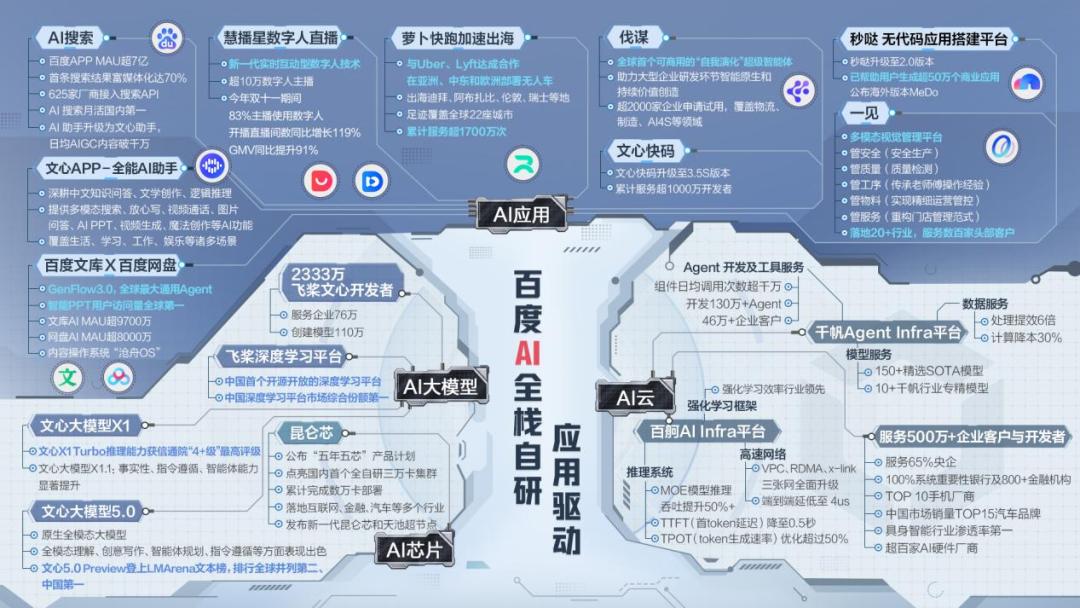
Group 1 - Baidu's CEO emphasized the importance of applications in the AI era, defining "AI applications as intelligent agents" and identifying four types of intelligent agents: search agents, digital human agents, code agents, and evolutionary agents [1] - The company has adjusted its structural framework to focus on a "chip-cloud-model-agent" strategy, highlighting the advantages of a full-stack capability in AI competition [1][10] - Baidu clarified the relationship between its search engine and the Wenxin assistant, indicating a shift from traditional search to AI-driven intelligent agents [1] Group 2 - The return of founders from major tech companies (BAT) signifies the onset of a competitive AI landscape in 2026, with each company adopting unique strategies to capture the AI market [3] - Alibaba's founder is focusing on a triad of AI narratives involving large models, cloud computing, and chips, while Tencent is reviving its "red envelope strategy" to engage users [3] - The competition for AI entry points has intensified, with major players like Baidu, Alibaba, and ByteDance vying for dominance in the AI space [5] Group 3 - The AI entry battle has evolved into a "three-legged race" among Doubao, Wenxin, and Qianwen, with a significant financial commitment of 6 billion in cash incentives [5] - Baidu's strategy involves integrating AI seamlessly into its existing app ecosystem, aiming to reduce user friction and enhance engagement [6][8] - The company is leveraging its existing user base of over 700 million monthly active users to promote AI adoption without requiring additional downloads [8][9] Group 4 - Baidu's full-stack approach, encompassing chip, cloud, model, and agent capabilities, positions it favorably in the AI competition, focusing on efficiency and cost reduction [10][14] - The launch of Wenxin 5.0, with advanced capabilities in multimodal understanding, showcases Baidu's technological leadership in the AI space [13] - Baidu's self-developed infrastructure allows for optimized performance and cost efficiency, crucial for meeting the demands of its large user base [14][15]


中国AI需要什么样的底盘?
3 6 Ke· 2025-12-30 03:24
Core Insights - The AI landscape in 2025 is characterized by intense competition and significant advertising presence, particularly in major cities like Beijing, Shanghai, Guangzhou, and Shenzhen, where cloud service providers dominate advertising spaces [1][2] - The focus has shifted from merely showcasing AI capabilities to demonstrating practical applications that solve real business problems, indicating a transition from a storytelling phase to a results-driven phase [3][4] Group 1: Market Dynamics - Baidu Intelligent Cloud has secured 95 bidding projects with a revenue of 710 million yuan, significantly outperforming competitors like Volcano Engine and Huawei Cloud, which earned 475 million yuan and 446 million yuan respectively [2][3] - The disparity in revenue highlights Baidu's strategic focus on practical applications of AI rather than just theoretical models, positioning it as a leader in the market [3][4] Group 2: Business Transformation - Companies are misinterpreting AI transformation as merely implementing chatbots, while true transformation requires integrating AI into core business processes to enhance productivity [7][8] - Successful examples include China Railway and Taikang Insurance, where AI has drastically reduced operational time and improved training efficiency, showcasing the tangible benefits of AI integration [10][13] Group 3: Infrastructure and Cost Efficiency - Baidu's AI infrastructure is designed to optimize performance and reduce costs, with a focus on minimizing data transmission losses and maximizing training efficiency [16][18] - The dual-layer infrastructure, comprising AI Infra and Agent Infra, allows for seamless integration and deployment of AI solutions, making it easier for businesses to adopt and benefit from AI technologies [19][22] Group 4: Industry Adoption - A significant portion of China's central enterprises and major banks are utilizing Baidu Intelligent Cloud, indicating a strong trust in its capabilities to handle critical operations [24][25] - The emphasis on reliability and stability in AI applications is crucial for industries such as finance and energy, where operational continuity is paramount [25][26] Group 5: Long-term Vision - Baidu's strategic investments in AI infrastructure since 2011 reflect a long-term vision that prioritizes foundational capabilities over short-term gains, positioning it well for future challenges [30][31] - The focus on building a robust AI ecosystem that integrates deeply with industrial applications is seen as essential for sustainable growth and competitiveness in the evolving AI landscape [31][32]
起大早的百度为何能领跑AI“赶大集”?
Feng Huang Wang· 2025-11-13 11:17
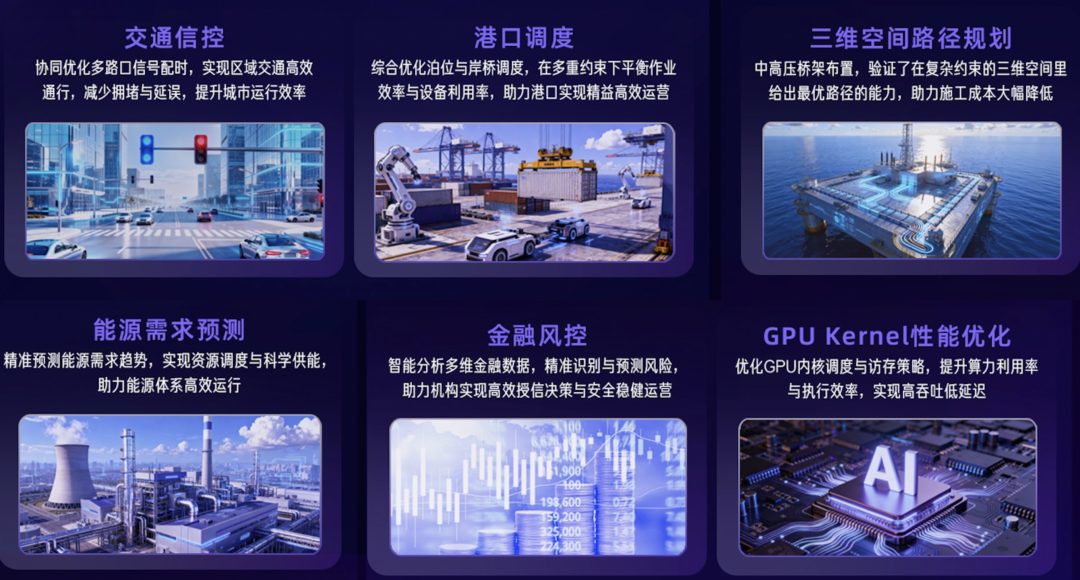
Core Insights - The healthy AI industry structure should resemble an "inverted pyramid," where models generate ten times the value of chips, and AI applications create one hundred times the value of models [1][5]. Group 1: AI Evolution and Internalization - Baidu's "伐谋" is the world's first commercially viable self-evolving super-intelligent system, reshaping industry logic by internalizing AI capabilities within enterprises [2][3]. - The traditional reliance on top algorithm experts has created a bottleneck in AI application, necessitating a shift from manually optimized models to self-evolving AI systems [3][4]. - The internalization of AI capabilities allows enterprises to activate dormant data energy, transitioning from superficial solutions to fundamental improvements [4][10]. Group 2: Industry Applications and Impact - In the energy sector, Baidu's "伐谋" optimizes cable layout in complex environments, significantly reducing project delivery time and costs [1][4]. - In finance, the collaboration between Citic Baixin Bank and Baidu has led to a dynamic risk model that enhances credit decision-making accuracy, improving feature extraction efficiency by 100% and risk differentiation by 2.41% [4]. - The application of "伐谋" extends to traffic control, where it has optimized traffic light timing across 4,942 intersections, alleviating congestion during peak hours [4]. Group 3: Comprehensive AI Infrastructure - Baidu's full-stack AI layout includes self-developed Kunlun AI chips, robust cloud infrastructure, and advanced deep learning frameworks, addressing core concerns of enterprises regarding computational efficiency and data security [6][8]. - The recent launch of the next-generation Kunlun chip and super node products enhances Baidu's AI capabilities, solidifying its position as a leader in AI transformation [6][8]. Group 4: Diverse AI Solutions - Baidu offers a comprehensive toolbox for enterprises, including "慧播星" for e-commerce, "萝卜快跑" for autonomous driving, and various AI development tools that lower application development barriers [8][9]. - The integration of AI into Baidu's search business has transformed 70% of search results into AI-generated outputs, enhancing user experience and engagement [9][10]. Group 5: Competitive Landscape - The AI industry is likened to a bustling marketplace, where efficiency and scale are the new competitive advantages, and early adopters are likely to establish significant barriers to entry [10].
这可能是最体现OpenAI“真正意图”的对话!Altman:给几个月时间,我们没有那么疯狂,我们有计划
Hua Er Jie Jian Wen· 2025-11-11 03:13
Core Insights - OpenAI is transitioning from a leading AI research company to a core infrastructure and service platform for the AI era, marking a significant shift in its strategy [1][2] - The collaboration with major companies like Nvidia, AMD, Samsung, SK Hynix, and Oracle is seen as a "full-stack gamble" to accelerate the AI ecosystem [1][2] - CEO Sam Altman's vision is to create a ubiquitous general artificial intelligence (AGI) that integrates infrastructure, products, and research through substantial investments [1][2][3] Group 1: OpenAI's Unified Vision - OpenAI aims to build powerful AI and AGI that benefits humanity, requiring unprecedented investment in infrastructure, products, and research [3][4] - The company positions itself as the "Windows of AI," providing both user interfaces and core infrastructure for AI services [2][3] - Altman emphasizes the importance of a strategic capital allocation approach influenced by his venture capital background [2][10] Group 2: Infrastructure Deals - OpenAI's recent infrastructure deals are valued at over $1 trillion, significantly impacting partner companies' market valuations [6][10] - Altman acknowledges the unusual nature of these market impacts, reflecting the rapid evolution of OpenAI from a research lab to a market influencer [6][10] - The company is focused on building sufficient infrastructure to meet current demands, which presents both challenges and opportunities [4][6] Group 3: Investor Mindset - Altman believes that his experience as a venture capitalist is crucial for OpenAI's operations, particularly in strategic resource allocation [10][14] - The company is committed to making substantial investments in infrastructure, viewing it as a necessary gamble at this stage [7][10] - OpenAI's approach involves supporting partners financially to ensure they can deliver products before generating revenue [10][14] Group 4: Platform Strategy - OpenAI is adopting a platform strategy that prioritizes empowering partners rather than controlling user interfaces, fostering long-term trust [2][3] - Altman envisions a future where AI services blend consumer and enterprise needs, establishing a relationship between users and a central "AI assistant" [2][3] - The company aims to create a seamless experience across various devices and applications, ensuring that AI tools are widely accessible [4][15] Group 5: Future of AI and Copyright - OpenAI is actively engaging with copyright holders to navigate the complexities of AI-generated content and its implications [48][50] - Altman notes that the emotional impact of video content differs from static images, influencing how copyright owners perceive AI's role [48][50] - The company is focused on establishing rules that benefit both creators and users, recognizing the evolving landscape of AI-generated content [50][51]