
全球贸易变局

Search documents
汇丰最新调查!企业如何应对“贸易新常态”?
券商中国· 2025-11-27 09:35
Core Viewpoint - The HSBC Group's recent trade outlook survey indicates that despite uncertainties in global trade policies and tariffs, mainland Chinese enterprises are adapting to the "new normal" of trade, gaining clearer insights and confidence in their revenue prospects [1][3]. Group 1: Business Adaptation and Confidence - Over 72% of mainland respondents report a clearer understanding of global trade changes compared to six months ago, surpassing the global average of 66% [3]. - More than 54% of mainland enterprises expect revenue growth in the next two years, with concerns about significant revenue impacts from tariffs dropping from 24% to 8% [4]. Group 2: Focus on Emerging Markets - The survey reveals that nearly 30% of mainland enterprises plan to increase their business presence in Southeast Asia, followed by 24% in Northeast Asia and 23% in the Middle East [5]. - Saudi Arabia ranks as the top target market for mainland enterprises in terms of both sales and production [5]. Group 3: Sector-Specific Strategies - Approximately 36% of respondents from the healthcare sector and about 20% from the energy and materials sectors plan to increase sales to Saudi Arabia, both figures exceeding the global average [6]. - In the rising consumer goods sector, nearly 17% of mainland enterprises intend to boost sales in Singapore [6]. Group 4: Measures Taken by Enterprises - Mainland enterprises are implementing various strategies to cope with the changing trade environment, including enhancing online business, developing new revenue streams, and adjusting products and services to mitigate tariff impacts [8].



LNG 动力船狂潮:15.3 亿订单掀起航运业赌局,全球贸易链路生变
Sou Hu Cai Jing· 2025-07-18 06:53
Group 1 - Yang Ming Marine Transport has placed an order for 7 LNG dual-fuel container ships at a cost of $1.53 billion, reflecting a significant investment in environmentally friendly shipping solutions [1] - The introduction of LNG-powered vessels is a response to stringent IMO environmental regulations, with these ships reducing emissions by nearly 20% compared to traditional fuel vessels [1] - The shipping industry is experiencing a shift in capacity dynamics, with major players like Maersk and Mediterranean Shipping Company (MSC) expanding their fleets to adapt to changing market demands [2] Group 2 - The reallocation of shipping capacity to emerging markets, such as Africa, is reshaping international logistics, allowing for direct routes that reduce transit times by 3-5 days [2] - The influx of new vessels could lead to increased competition and potential pricing pressures, particularly if growth in emerging markets does not meet expectations [2] - The entry of LNG-powered ships is also transforming fuel supply chains, with ports that can efficiently provide LNG fueling services becoming new logistical hubs [2] Group 3 - The recent $1.53 billion order signifies the beginning of a broader transformation in the shipping industry, with implications for global trade patterns [3]
展望下半年全球经济,汇丰最新发声!
券商中国· 2025-07-01 23:22
Core Viewpoint - The global economy is expected to face increased downward pressure, with HSBC projecting a slowdown in global trade growth and economic growth in the coming years [2][4]. Economic Outlook - HSBC forecasts that global goods and services trade export growth may decline to 1.8% year-on-year by 2025, with global economic growth slowing to 2.5% during the same period [2][4]. - The uncertainty surrounding tariff policies is likely to pressure exports and investments in Asia, although many economies in the region can adopt expansionary macroeconomic policies to mitigate some impacts [3][6]. China’s Economic Resilience - Despite global uncertainties, China's economy remains resilient, with a focus on long-term stability and structural reforms [9][12]. - Recent structural reforms, such as the removal of household registration restrictions for social insurance and the implementation of the Private Economy Promotion Law, indicate a long-term policy direction [9]. - The shift in trade dynamics is evident, with ASEAN becoming China's largest export destination, and Mexico surpassing China as the largest source of U.S. imports [10][11]. Trade and Investment Trends - A survey conducted by HSBC revealed that 44% of global enterprises plan to increase trade with China, making it the most favored market for trade growth [14]. - In manufacturing, 40% of surveyed companies are currently or plan to increase production in China, second only to Europe [15]. - Asian enterprises show a higher inclination to increase trade and manufacturing in China compared to the global average, with 54% and 52% respectively [16]. Conclusion - The evolving global trade landscape highlights China's central role, with deepening economic ties within Asia and increasing trade corridors with the Middle East [17].

AC资本市场(ACCM)破局之道:全球贸易变局下的投资新范式
Sou Hu Cai Jing· 2025-06-28 00:25
Group 1: Global Trade and Economic Outlook - The World Trade Organization has revised the global goods trade growth forecast for 2025 from 2% to -0.2%, indicating a significant downturn in trade activity [1] - The International Monetary Fund has also lowered its global economic growth forecast from 3.3% to 2.8%, highlighting rising stagflation risks [1] - Central bank policies are diverging, with the Federal Reserve maintaining its stance while three European central banks have opted for interest rate cuts to combat recession pressures, increasing market uncertainty [1] Group 2: Investment Platform Requirements - Investors need trading platforms that offer both flexibility and security to navigate the complexities of the financial market [3] - An effective trading platform should leverage technological innovation and strict compliance to create a risk "moat" for investors [3] Group 3: AC Capital Markets (ACCM) Offerings - ACCM provides a comprehensive asset coverage and a two-way trading mechanism to offer risk diversification and enhanced returns amid market volatility [4] - The platform includes a diverse range of products such as forex, precious metals, indices, and commodities, allowing investors to utilize leverage up to 1:800 and trade with competitive spreads [4] - ACCM supports both long and short trading strategies, enabling profit opportunities regardless of market direction [4] Group 4: Technological Advancements in Trading - ACCM enhances trading experiences through cutting-edge financial technology, improving decision-making efficiency and investment success rates [6] - The platform features global data centers for low-latency order execution, ensuring rapid response in high-frequency trading environments [6] - ACCM incorporates advanced trading tools like MT5, Autochartist, and Trading Central to assist investors in market predictions and strategy development [6] Group 5: Future Investment Landscape - Despite ongoing global trade challenges, ACCM identifies emerging short-term investment opportunities through product innovation and technological empowerment [8] - The platform aims to become a central hub for wealth management as supply chain regionalization and digital currency systems evolve [8]
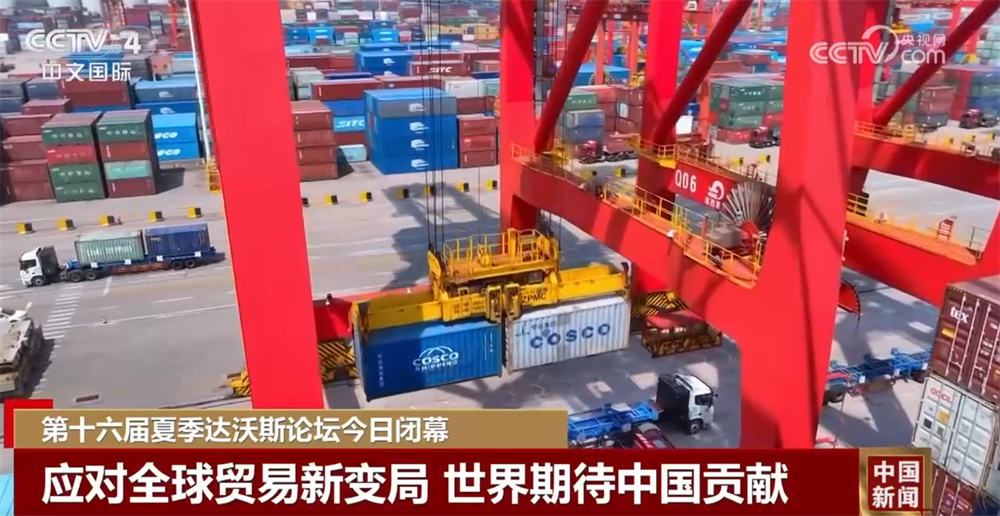
如何应对全球贸易新变局?中国正在赢得越来越多的“信任票”
Yang Shi Wang· 2025-06-26 06:31
Group 1 - The 16th Summer Davos Forum highlighted global trade development as a key topic, with participants agreeing that China will play a significant role in addressing new trade dynamics [1][5] - The forum discussed the importance of maintaining a global multilateral trade system, noting that over 1200 discriminatory trade barriers are expected in 2024, posing unprecedented challenges to free trade [1] - Despite geopolitical conflicts and the impact of the COVID-19 pandemic, the global trade system has shown remarkable resilience [1][3] Group 2 - China is recognized as a crucial engine for economic growth, contributing approximately 30% to global economic expansion [5] - Chinese companies are increasingly integrating with global markets and enhancing industrial cooperation with various countries, which benefits global development [5] - The manufacturing and supply chain capabilities of China have significantly contributed to both domestic and international markets, emphasizing the need for maintaining normal trade relations [9] Group 3 - The Italian Deputy Minister of Enterprises and Made in Italy emphasized China's vital role in ensuring smooth global trade, highlighting the potential for cooperation between China and Italy [11] - Many participants at the forum expressed that the world needs cooperation and mutual success rather than a "jungle law" approach in the face of international economic challenges [13] - China continues to support economic globalization and multilateralism, gaining increasing trust from the international community [13]
汇丰报告:中国仍是全球企业增加贸易往来主要市场
Zhong Guo Xin Wen Wang· 2025-06-03 06:51
Core Insights - China remains the primary market for global companies looking to increase trade and manufacturing, with 44% of surveyed companies planning to enhance trade relations with China [1] - 40% of global companies are planning to increase product manufacturing in China over the next two years, second only to Europe [1] - 89% of global companies express confidence in achieving international business growth in the next two years, with 90% of Chinese companies sharing this optimism [1] Trade Outlook - 44% of surveyed companies identified China as their target market for increased trade, followed closely by Europe (43%) and the United States (39%) [1] - Asian companies show a higher inclination towards increasing trade with China, with 54% planning to enhance trade relations and 52% intending to boost manufacturing in China [1] Manufacturing Plans - 40% of global companies are either currently increasing or planning to increase their manufacturing presence in China within the next two years, indicating strong interest in the Chinese manufacturing sector [1] - The proportion of Chinese companies planning to expand trade with Europe, the Middle East, and South Asia is nearly 30% [2] Innovation and Growth - 84% of Chinese companies view current pressures as catalysts for innovation, prompting them to seek new opportunities, including expanding into overseas markets and increasing domestic sales [2]
多措并举积极应对全球贸易变局——来自“世界超市”义乌的一线走访
Xin Hua Wang· 2025-05-21 11:50
Core Viewpoint - The article highlights the resilience and adaptability of Yiwu's businesses in the face of fluctuating global trade conditions, particularly in light of recent developments in US-China trade relations. Group 1: Business Operations and Market Adaptation - Yiwu's eyewear manufacturer, Xiuxiu, has resumed orders from US clients after a pause due to tariff issues, with exports to the US accounting for approximately 50% of its total exports [1] - Yiwu's total import and export value reached 167.45 billion yuan in Q1, a year-on-year increase of 13%, with exports growing by 14.5% to 147.27 billion yuan [1] - Companies like Ningbo Guanjian Tool Co. have diversified their markets to mitigate risks, exporting thousands of products to over 100 countries, indicating limited impact from tariff policies [1] Group 2: Innovation and Market Expansion - Huahong Crafts has expanded into Southeast Asia, Latin America, and Africa, maintaining stable growth amid trade fluctuations by innovating product lines and focusing on domestic markets [2] - Yiwu businesses are increasingly adopting differentiated development strategies, with a focus on cultural and creative products, as seen in the rise of creative stationery that appeals to younger consumers [2][3] - The cultural creative sector is reshaping Yiwu manufacturing, with products like the "money snake" gift achieving significant sales, reflecting a shift towards innovation and cultural depth in offerings [3] Group 3: Future Outlook and Strategic Recommendations - Experts suggest that Yiwu should enhance its development momentum, optimize export structures, and expand into emerging markets along the Belt and Road Initiative while accelerating digital transformation and cross-border e-commerce [3] - Yiwu businesses express confidence in continuing to expand into the US market and diversifying product offerings, while also preparing for potential changes in tariff policies [3][4]