关税制度

Search documents
大摩闭门会-Global-Tariffs-Japan-CPI-and-Key-Themes-under-Takaichi
2026-03-01 17:23
Summary of Key Points from Conference Call Records Industry and Company Involvement - The records primarily discuss the implications of tariffs, trade policies, and economic conditions in Asia, particularly focusing on Japan and the broader Asian region. The discussions also touch on the U.S. government's tariff strategies and their potential impacts on various industries. Core Insights and Arguments 1. **Tariff Investigations and Adjustments** The Trump administration may initiate new Section 301 investigations based on 122 clauses to replace existing tariff arrangements, with a proposed 15% tariff acting as a temporary cap [1][2] 2. **Political Constraints on Tariff Increases** Concerns over affordability and midterm election pressures limit the scope for further tariff escalations, although unilateral increases in tariffs against China could occur rapidly due to geopolitical events [1][2] 3. **Supreme Court Ruling Impact** The Supreme Court ruling allows the president to impose broad tariffs under IEEPA, but it does not clarify the implications for refund arrangements or existing tariffs. The ruling is expected to have limited macroeconomic impact [2][4] 4. **Changes in Average Tariffs in Asia** The weighted average tariff in Asia has decreased from 15% to 13% due to changes in trade structures, with China experiencing the largest reduction of 7% [1][6] 5. **Trade Agreement Effects** Following the signing of trade agreements in October, non-tech exports from Asia have begun to recover, driven by increased global spending on AI infrastructure, defense, and energy transition, indicating a turning point in the industrial cycle [1][8] 6. **Sector-Specific Tariff Risks** The potential for tariff increases remains, particularly concerning China, where the current Section 301 tariffs apply to about 60% of imports from China with an average rate of 17% [4][5] 7. **Economic Security and Strategic Areas** Japan's government has consolidated 17 strategic areas into six key concepts, focusing on economic security, supply chain resilience, AI deployment, and infrastructure updates, which are expected to yield significant excess returns in related stocks [3][13] 8. **Wage Growth Trends in Asia** Wage growth has been slowing, particularly in emerging Asian economies, with expectations for improvement contingent on the recovery of non-tech exports [8][10] 9. **Inflation and Monetary Policy in Japan** Japan's inflation is expected to rise moderately, with the Bank of Japan likely to wait until June to raise interest rates, influenced by upcoming CPI data and the dovish stance of newly appointed board members [3][9] 10. **Investment Themes and Market Behavior** The focus on AI, semiconductors, and advanced materials is expected to drive market performance, with significant capital inflows into these sectors. The market is also showing caution regarding the long-term impacts of AI-driven industry disruptions [13][14] Other Important but Potentially Overlooked Content - The potential for a "patchwork" tariff system in the long term could provide a more predictable policy framework for businesses regarding capital expenditures [5] - The interaction between inflation and wages in Japan is critical, with expectations for real wage growth to turn positive by 2026, supporting consumer spending [10][12] - The impact of Japan's restrictions on rare earth exports to China could affect defense-related stocks, with existing inventories providing a buffer in the short term [12] This summary encapsulates the key points discussed in the conference call records, highlighting the implications for tariffs, economic conditions, and investment opportunities in the Asian market, particularly Japan.
特朗普又要TACO:拟削减部分钢铁铝制品关税!
Jin Shi Shu Ju· 2026-02-13 05:33
Group 1 - The Trump administration is planning to reduce certain tariffs on steel and aluminum products to address the rising cost of living for American citizens, which has negatively impacted his approval ratings ahead of the midterm elections [1] - The tariffs, which were previously raised to as high as 50% on steel and aluminum imports, have been criticized for increasing prices on consumer goods, including food and beverage cans [1][2] - A recent Pew Research Center poll indicates that over 70% of American adults view the economy as average or poor, with about 52% believing Trump's economic policies have worsened the situation [1] Group 2 - The softening of steel and aluminum tariffs is one of the earliest policies introduced in Trump's second term, with economists noting that the costs of tariffs are being borne by American citizens, undermining Trump's claim that foreign companies would pay for them [2] - Trump's trade policies have faced political backlash, including opposition from both Republican and Democratic lawmakers regarding tariffs on Canada, which may set the stage for further votes against his economic policies [3] - Several Republican lawmakers are facing tough re-election campaigns due to voter concerns about the impact of tariffs on small businesses and consumers, prompting the adjustment of metal tariffs to simplify the increasingly complex lobbying process in Washington [4] Group 3 - The current tariff system has been described as overly complex and difficult to enforce, indicating a need for simplification [6] - Countries such as the UK, Mexico, Canada, and EU member states may benefit from the relaxation of U.S. tariffs on steel and aluminum products, as discrepancies in tax rates have been reported by companies exporting to the U.S. [7] - Numerous applications from U.S. companies have sought additional tariffs on foreign products, often framing them as national security risks, highlighting the extent to which businesses are leveraging this narrative [8]
特朗普畅谈经济蓝图:2026年将迎强劲增长,誓守“反通胀高增长”路线
Jin Shi Shu Ju· 2026-01-14 01:49
Group 1 - The U.S. economy is projected to experience solid growth this year, with President Trump citing stable inflation data as a key factor in addressing the Republican Party's political weaknesses ahead of the midterm elections [1] - Recent federal data indicates an annualized economic growth rate of 4.3% for Q3 2025, the highest in two years, with low unemployment rates below 5% and wages increasing faster than inflation [1] - Ford Motor Company has recently added a third production shift for the F-150, operating six days a week, indicating strong demand for the product [2] Group 2 - President Trump has been pressuring the Federal Reserve for larger interest rate cuts, believing it would benefit the economy, while expressing dissatisfaction with Fed Chairman Jerome Powell [3] - Trump plans to unveil more economic proposals, including a housing affordability plan and initiatives to lower healthcare costs, aimed at addressing voter concerns over high prices [4][5] - Proposed measures include preventing large investors from purchasing single-family homes and directing government-backed mortgage companies to buy $200 billion in mortgage bonds to lower rates for homebuyers [5]
特斯拉预计2025年的资本支出约90亿美元 低于市场预期
Ge Long Hui A P P· 2025-10-23 10:32
Core Viewpoint - Tesla (TSLA.US) is expected to have capital expenditures of approximately $9 billion for 2025, down from previous estimates of over $9 billion, while market expectations stand at $9.96 billion [1] Group 1: Financial Projections - The anticipated capital expenditure for 2025 is around $9 billion, which is a revision from earlier estimates [1] - Market expectations for Tesla's capital expenditure are higher at $9.96 billion [1] Group 2: Impact of Tariffs - The current tariff regime is expected to have a more significant impact on the energy production and storage business compared to the automotive sector [1] Group 3: Third Quarter Expenses - In the third quarter, Tesla confirmed expenses of $238 million related to supercomputer assets in the automotive division, contract terminations, and employee layoffs [1]

特朗普喊话:半导体关税可能达300%
中国基金报· 2025-08-16 22:50
Core Viewpoint - The article discusses the potential imposition of high tariffs on semiconductors by the U.S. government, with President Trump indicating rates could reach as high as 300% [1][4]. Group 1: Tariff Announcement - President Trump announced that tariffs on semiconductors will be set in the coming weeks, indicating a significant expansion of the tariff system [1]. - The tariffs on semiconductors are part of a broader strategy that includes steel tariffs, which were previously raised to 50% [1]. - Trump has previously mentioned a 100% tariff on semiconductors, with exemptions for companies relocating manufacturing to the U.S. [2]. Group 2: Industry Impact - The semiconductor industry is under scrutiny as it is crucial for various modern consumer products and artificial intelligence applications [2]. - Manufacturers are eager for clarity on the tariff plans due to the widespread use of chips in their products [2]. - The investigation by the U.S. Department of Commerce into the semiconductor and pharmaceutical industries is ongoing, with potential delays in the final decision [2].

美股异动 | 芯片板块普跌 美光科技(MU.US)跌超3%
智通财经网· 2025-08-15 14:25
Core Viewpoint - The semiconductor sector experienced a significant decline, with major companies like Micron Technology, Broadcom, NVIDIA, AMD, and TSMC all reporting losses due to impending tariffs on semiconductors announced by President Trump [1] Group 1: Market Reaction - Micron Technology (MU.US) fell over 3% - Broadcom (AVGO.US) and NVIDIA (NVDA.US) both dropped over 1% - AMD (AMD.US) decreased by over 1.2% - TSMC (TSM.US) saw a decline of 0.44% [1] Group 2: Government Policy - President Trump indicated plans to impose tariffs on semiconductors within the next two weeks - He mentioned the potential tariff rates could be as high as 200% or even 300% [1]


特朗普宣布对印度征收25%关税,外加一项“惩罚”!
Jin Shi Shu Ju· 2025-07-30 14:29
Group 1 - President Trump announced that India will face a 25% tariff starting August 1, which is slightly lower than the previously announced 26% tariff [1] - The tariff is part of Trump's broader strategy to address what he perceives as unfair trade practices and India's significant trade deficit with the U.S. [1] - Trump criticized India's high tariffs and non-tariff trade barriers, stating they are among the highest in the world [1] Group 2 - Economists have questioned the motivations behind the tariffs, suggesting that importing goods from lower-cost countries allows American consumers to purchase products at lower prices [2] - There is uncertainty regarding whether American workers are willing or able to take on low-skill jobs that are typically outsourced [2] - Trump's recent threats to impose additional tariffs on countries purchasing Russian oil and gas could significantly impact major trade partners like India and Brazil [2]
特斯拉(TSLA.O):与汽车业务相比,现行关税制度对能源生产和存储业务的影响将相对更大。
news flash· 2025-07-24 10:08
Core Insights - The current tariff system has a relatively greater impact on Tesla's energy production and storage business compared to its automotive operations [1] Group 1 - The existing tariff structure is more detrimental to the energy sector than to the automotive sector [1]
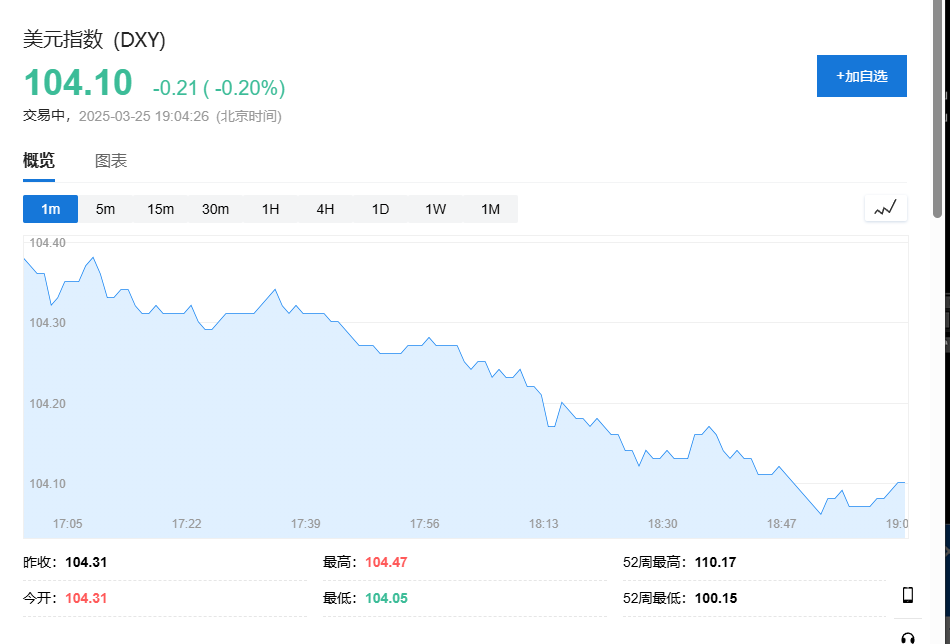
关税继续主导市场!美股盘前,三大股指期货下跌,欧股走高、油价上涨
Hua Er Jie Jian Wen· 2025-03-25 11:24
Group 1 - The market is influenced by ongoing tariff threats from Trump, leading to a decline in U.S. stock index futures while European stocks rise and oil prices increase [1][5] - Investors remain uncertain about the impact of tariffs on inflation and economic growth, with recent data indicating a slowdown in U.S. economic momentum despite high price pressures [1] - The Atlanta Fed President Raphael Bostic expects only one 25 basis point rate cut this year due to volatile inflation, contrasting with swap market expectations of two cuts [1] Group 2 - U.S. stock index futures show a decline, with Nasdaq 100 futures down 0.2% and S&P 500 futures down 0.1%, while Tesla and Trump Media Technology Group see significant gains [5] - European stock markets open higher, with the DAX 30 up 0.23%, FTSE 100 up 0.18%, and CAC 40 up 0.01% [5] - The Brent crude oil price rises by 0.5% to $73.49 per barrel, continuing its upward trend [5]