
反通胀

Search documents
战争打响,一场改变全球经济的危机正在逼近
凤凰网财经· 2026-03-02 13:18
Group 1 - The global economic growth remains resilient despite trade conflicts and regional tensions, with the oil market being a key indicator for sustaining this positive trend [1] - The focus is on the Strait of Hormuz, where the ability of the US and its allies to prevent long-term disruptions in energy transport is crucial [1] - If oil supply routes remain open and production increases successfully, the economic impact can be controlled [1] Group 2 - Two scenarios for the energy market are proposed: a severe and prolonged disruption of all transport through the Strait of Hormuz, or a situation where only Iranian oil exports are cut off [2][3] - In the first scenario, global oil prices could exceed $100 per barrel, with Brent crude already nearing a seven-month high of approximately $73 per barrel after a nearly 12% increase in the past month [3] - The second scenario could see oil prices rise to at least $80 per barrel, although increased production from other oil-producing countries may mitigate this impact [5] Group 3 - The US has achieved near energy independence, with only 17% of its energy consumption reliant on imports, but disruptions in Gulf oil transport could still affect global oil prices [6] - A $100 per barrel oil price could raise the consumer price inflation rate from 2.4% to over 4%, impacting the Federal Reserve's interest rate decisions [6] - Historical trends suggest that such oil price shocks typically strengthen the US dollar, with a 10% increase in oil prices potentially raising the dollar's value by 0.5% to 1% [6] Group 4 - The majority of oil and LNG transported through the Strait of Hormuz is destined for Asian markets, and a rise in Brent crude prices to $100 could increase global inflation by 0.6% to 0.7% [7] - Europe is expected to be significantly affected by rising oil prices and LNG costs, although its current inflation rate of 1.7% may limit the European Central Bank's policy responses [7] - Central banks may choose to downplay the impact of rising oil prices, as higher energy costs could ultimately reduce consumer purchasing power, leading to a counter-inflationary effect [7]


The Supreme Court Tariff Ruling Is Good for Stocks, Says Wall Street Strategist
Barrons· 2026-02-21 15:28
Core Viewpoint - The Supreme Court ruling on President Trump's IEEPA tariffs is perceived positively by Wall Street, indicating a potential boost for stocks as it is seen as a disinflationary event [1]. Market Reaction - Following the Supreme Court's decision, the S&P 500 experienced an increase on Friday, reflecting investor optimism regarding the ruling [1]. Analyst Commentary - Fundstrat's Head of Research, Tom Lee, stated that the ruling is a "risk-clearing event" and is likely to be viewed favorably by investors in the long term [1].
贝森特和沃什的“导师”,德鲁肯米勒Q4“精准”开仓金融股ETF、标普等权重ETF和巴西ETF
华尔街见闻· 2026-02-19 10:24
Core Insights - Stanley Druckenmiller's Duquesne Family Office made significant portfolio adjustments in Q4 2025, including large positions in financial sector ETFs and a notable exit from Meta [1][2] Group 1: Portfolio Adjustments - In Q4, Druckenmiller opened positions in the Financial Select Sector SPDR ETF (XLF) with 5.4956 million shares, valued at approximately $301 million, making it the second-largest holding in the portfolio at 6.7% of total assets [3] - The Duquesne Family Office also acquired 1.1739 million shares of the Invesco S&P 500 Equal Weight ETF (RSP), valued at about $225 million, representing 5% of the portfolio [4] - Additionally, a new position was taken in the iShares MSCI Brazil ETF (EWZ) with 3.5526 million shares, valued at approximately $113 million, accounting for 2.51% of the portfolio [5] Group 2: Technology Sector Moves - Druckenmiller completely exited his position in Meta Platforms, selling all 76,100 shares, which resulted in a negative exposure change of about 1.38% [6] - Conversely, he significantly increased his stake in Alphabet (GOOGL) by 282,800 shares, a 276.71% increase, bringing the total holding to 385,000 shares valued at around $120 million [7] - The position in Sea Ltd (SE) was also increased by 669,900 shares, a 244.32% rise, with a total holding value of approximately $120 million [8] Group 3: Overall Portfolio Composition - As of the end of Q4 2025, Druckenmiller's portfolio consisted of 62 stocks, with the top five holdings being Natera Inc, Financial Select Sector ETF (XLF), Insmed Inc, S&P 500 Equal Weight ETF (RSP), and Teva Pharmaceutical [8] Group 4: Market Implications - Druckenmiller's trading activities have garnered significant attention on Wall Street, particularly due to his close relationships with key economic decision-makers in the new administration [9] - The potential influence of "Druckenmiller economics," which opposes deficits, inflation, and tariffs, may permeate policy-making through his former associates now in power [10]



美联储理事库克称当前政策利率仅略具限制性
Xin Lang Cai Jing· 2026-02-05 01:15
Core Viewpoint - Federal Reserve Governor Lisa Cook believes that the current policy interest rate is only slightly restrictive and suggests waiting for a period before further rate cuts [1] Group 1: Economic Policy - Cook stated that a significant amount of easing policy was introduced at the end of last year, indicating that the current economic conditions warrant a wait-and-see approach [1] - She emphasized the importance of observing the labor market and inflation situation before making further policy adjustments [1] Group 2: Inflation and Price Levels - Cook mentioned that the impact of tariffs suggests that the rise in price levels should be temporary [1] - The goal is to return to a path of anti-inflation, and she characterized the current policy stance as a very mild restriction [1]
他的门徒,一统美联储和财政部
华尔街见闻· 2026-02-01 10:01
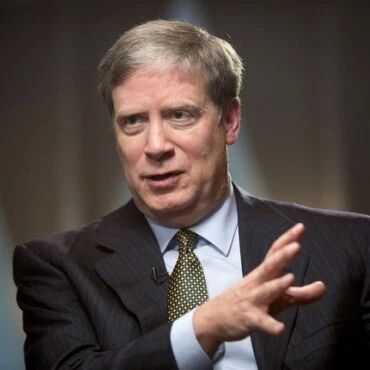
Core Viewpoint - The article discusses the influence of investor Stanley Druckenmiller on U.S. economic policy through his close relationships with key figures in the Trump administration, specifically Treasury Secretary Bentsen and Federal Reserve Chair nominee Waller [2][4][15]. Group 1: Influence and Relationships - Druckenmiller's two key mentees, Bentsen and Waller, hold significant positions in the U.S. government, allowing Druckenmiller's economic ideas to permeate the highest levels of decision-making [4][9]. - The relationship between Druckenmiller and his mentees is described as "father-son-like," with frequent communication that influences their policy positions [4][10]. - Market observers express concern over the direct connection between an active investor and the Federal Reserve Chair, viewing it as a potentially risky situation [4][15]. Group 2: Economic Views and Predictions - Druckenmiller has consistently warned about the U.S. fiscal deficit, labeling it a "debt bomb," and has criticized excessive government spending on social programs [4][12]. - During the pandemic, he publicly criticized the Federal Reserve for slow interest rate hikes, which he believed contributed to uncontrolled inflation [5][12]. - Analysts speculate that Druckenmiller may advocate for immediate interest rate increases, which could conflict with Trump's preferences [5][12]. Group 3: Career Background - Druckenmiller is recognized as a legendary figure in macro investing, having never experienced a losing year in his 30-year career [6][7]. - He began his career in 1976 and founded Duquesne Capital Management, later achieving significant success at George Soros's hedge fund [7]. - His investment philosophy is characterized by a dislike for tariffs, a belief in the dangers of rising government debt, and a tendency to quickly change positions [12]. Group 4: Potential Conflicts - There are noted differences between Druckenmiller's views and those of the Trump administration, particularly regarding tax cuts and their potential impact on national debt [14]. - The extent to which Waller will rely on Druckenmiller's advice while maintaining policy independence remains uncertain [15].
“门徒”一统财政部和美联储,是时候学习“德鲁肯米勒经济学”了
Sou Hu Cai Jing· 2026-02-01 04:28
Core Insights - The article discusses the influence of investor Stanley Druckenmiller on U.S. economic policy through his former students, who now hold key positions in the government [1][3][6] Group 1: Key Figures and Relationships - Druckenmiller's former students, Treasury Secretary Becerra and Federal Reserve Chair nominee Waller, maintain a close relationship with him, described as "father-son" [1][3] - Becerra was hired by Druckenmiller over 30 years ago and has a history of significant trades with him, including the famous shorting of the British pound [3] - Waller has been a partner at Druckenmiller's family office and previously served on the Federal Reserve Board, competing for the Fed chair position in 2017 [3] Group 2: Economic Views and Predictions - Druckenmiller has consistently warned about the U.S. fiscal deficit, labeling it a "debt bomb," and criticized excessive government spending on social programs [5] - He has publicly opposed the slow pace of interest rate hikes by the Federal Reserve during the pandemic, attributing it to rising inflation [5] - Market analysts speculate that Druckenmiller may advocate for interest rate increases, which could conflict with Trump's preferences [5] Group 3: Potential Challenges and Risks - The close relationship between a Fed chair and an active investor is viewed as "quite risky" by market participants, raising questions about the independence of monetary policy [6] - Druckenmiller's views on fiscal policy may not align with Trump's administration, particularly regarding tax cuts and their impact on national debt [5][6]
美联储“鸽派暂停”意味着什么?大摩:未来降息路径将更多由通胀驱动
Hua Er Jie Jian Wen· 2026-01-29 13:55
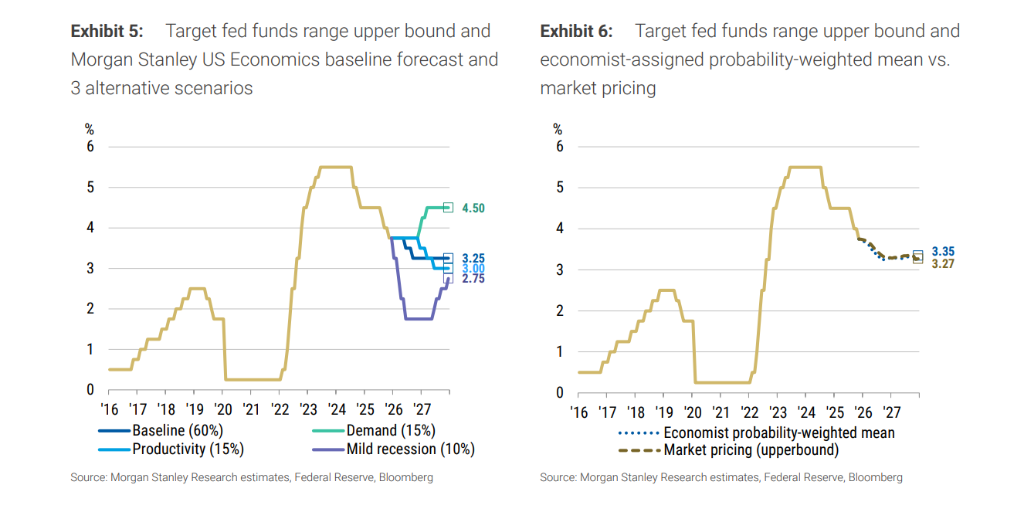
Core Viewpoint - The Federal Reserve implemented a "dovish pause" during the January FOMC meeting, signaling a shift in the future rate cut path, which will now depend more on inflation data rather than solely on labor market weakness [1][5] Economic Outlook - FOMC members showed greater consensus on the economic outlook, with Powell noting stronger economic performance compared to December, supported by resilient consumer spending, expanding business investment, fiscal support expectations, favorable financial conditions, and ongoing AI-related capital expenditures [5] - The only weak area identified was the housing market [5] Rate Cut Logic - The logic for future rate cuts has fundamentally changed, with a shift towards being "inflation-based" rather than "employment-based" as the risk of job losses diminishes [5][6] - Morgan Stanley expects the Fed to maintain patience until clearer signs of inflation deceleration appear, likely later in the year, before considering rate cuts [5][6] Market Strategy - Morgan Stanley's rate strategists recommend maintaining a neutral position on U.S. Treasury durations and curves, while continuing to favor 2-year UST SOFR swap spreads [8][9] - In the foreign exchange market, the firm predicts a weaker dollar, but notes that the Fed's policy is unlikely to be the main driver of dollar depreciation, with more focus shifting to international monetary policies and related intervention risks [9] MBS Strategy - For agency MBS, Morgan Stanley maintains a neutral stance, citing low volatility as favorable but noting that the option-adjusted spread (OAS) is near its narrowest levels in recent years, with ongoing uncertainty in housing policy [9]
Kudlow: The Federal Reserve never seems to talk about this
Youtube· 2026-01-28 23:30
Economic Overview - The economy is experiencing a disinflationary supply-side boom with strong growth and easing inflation pressures, as indicated by a 2.3% annual increase in core PCE over the past three months [1] - The three-month core CPI stands at 1.6%, while the topline CPI is at 2.1%, suggesting low inflation rates [2] Labor and Productivity - Unit labor costs, which reflect wages relative to productivity, have increased by just over 1% in the past year, indicating a productivity-led economy that is counterinflationary [2] - Full-cost expensing is driving a boom in business capital investment, further promoting productivity growth [3] Energy Prices and Tariffs - Energy prices, including gasoline, have been declining for a year, contributing to counterinflationary trends, yet the Federal Reserve does not address this [3] - Despite concerns about tariff inflation, goods prices have remained below the Fed's 2% target rate, indicating that the anticipated inflation from tariffs has not materialized [4] Market Reactions and Interest Rates - Financial markets react negatively to good economic news due to fears that the Federal Reserve will increase interest rates, potentially stifling economic growth [5] - Questions arise regarding why U.S. bond rates are higher than those in countries like Japan and China, despite stronger economic performance in the U.S. [6] Federal Reserve's Approach - There is a call for a change in the Federal Reserve's approach, advocating for a dismissal of outdated models and attitudes regarding growth and inflation [7]

特朗普畅谈经济蓝图:2026年将迎强劲增长,誓守“反通胀高增长”路线
Jin Shi Shu Ju· 2026-01-14 01:49
Group 1 - The U.S. economy is projected to experience solid growth this year, with President Trump citing stable inflation data as a key factor in addressing the Republican Party's political weaknesses ahead of the midterm elections [1] - Recent federal data indicates an annualized economic growth rate of 4.3% for Q3 2025, the highest in two years, with low unemployment rates below 5% and wages increasing faster than inflation [1] - Ford Motor Company has recently added a third production shift for the F-150, operating six days a week, indicating strong demand for the product [2] Group 2 - President Trump has been pressuring the Federal Reserve for larger interest rate cuts, believing it would benefit the economy, while expressing dissatisfaction with Fed Chairman Jerome Powell [3] - Trump plans to unveil more economic proposals, including a housing affordability plan and initiatives to lower healthcare costs, aimed at addressing voter concerns over high prices [4][5] - Proposed measures include preventing large investors from purchasing single-family homes and directing government-backed mortgage companies to buy $200 billion in mortgage bonds to lower rates for homebuyers [5]
市场仍押注美联储12月降息 贵金属窄幅震荡
Jin Tou Wang· 2025-12-09 07:07
Core Viewpoint - The market is cautious ahead of the Federal Reserve's interest rate decision, with silver prices experiencing narrow fluctuations due to a stable dollar and rising U.S. Treasury yields, while geopolitical risks continue to support safe-haven buying [1][2]. Group 1: Market Sentiment and Economic Indicators - The market widely expects the Federal Reserve to lower interest rates in its final meeting of the year, potentially bringing the target range down to 3.50%-3.75% [2]. - Recent inflation indicators show a slowdown in the disinflation process, and mixed signals from the labor market have led investors to adopt a cautious stance regarding monetary easing before 2026 [2]. - Data on U.S. household spending and inflation, particularly the preferred Personal Consumption Expenditures (PCE) index, indicate a weakening disinflation momentum [2]. Group 2: Precious Metals Analysis - Silver maintains a long-term bullish trend, but short-term movements are characterized by upward corrections followed by declines, with key support levels at 54-55 [3]. - Platinum prices are stable, with traders closely monitoring the dollar for new trading catalysts, needing to hold above the critical support area of 1620-1630 to build short-term upward momentum [3]. - The overall sentiment in the precious metals market is cautious, with investors focusing on monetary policy signals and macroeconomic data for guidance [1][2].