关键矿产供应链多元化

Search documents
美国拉盟友开关键矿产会议,多国持谨慎态度
Huan Qiu Shi Bao· 2026-02-04 22:46
Core Points - The first U.S. Critical Minerals Ministerial meeting was held to strengthen global supply chains and reduce reliance on China for critical minerals [1] - The meeting faced challenges due to recent diplomatic tensions, particularly related to President Trump's comments on Greenland [2] - Many attending countries are hesitant to commit to U.S. proposals for cooperation, reflecting a cautious attitude towards signing agreements [2] Group 1: U.S. and Allies' Cooperation - The U.S. aims to build a cooperative framework with over 50 countries to establish a supply chain that bypasses China [1] - European diplomats expressed skepticism about the U.S. proposals, linking their reluctance to recent U.S. diplomatic missteps [2] - The EU plans to propose a partnership with the U.S. to reduce dependence on China, including a memorandum to develop a strategic partnership roadmap within three months [2] Group 2: Market Dynamics and Geopolitical Context - The new proposal emphasizes not just cooperation but also the construction of market systems, including pricing mechanisms and high-end market development [3] - The inclusion of a clause respecting territorial integrity in the EU proposal highlights the geopolitical challenges intertwined with mineral diplomacy [3] - Previous efforts by the U.S. and EU to diversify supply chains have faced obstacles due to regulatory delays and China's dominant position in the midstream industry [3] Group 3: China's Position - China maintains its stance on the stability and security of the global critical minerals supply chain, emphasizing the need for constructive dialogue among nations [3]
NHK:日本将动用390亿日元储备资金 保障关键矿产供应链
Xin Lang Cai Jing· 2026-01-19 08:11
Core Viewpoint - The Japanese government plans to utilize 39 billion yen from the current fiscal year's budget reserves to diversify the supply chain of critical minerals [1] Group 1 - The allocated funds will be invested in the Japan Metal and Mineral Resources Agency [1] - The agency supports Japanese companies in developing mines or smelting operations overseas [1]
七国集团达成共识:将减少进口中国稀土!中方表态
Xin Lang Cai Jing· 2026-01-13 11:27
Core Insights - The meeting, hosted by US Treasury Secretary Scott Bessent, included finance ministers from G7 countries and other major economies, discussing strategies to reduce dependence on Chinese rare earth elements [2][3][10] - Participants represent 60% of global demand for critical minerals, while China dominates the supply chain, refining 47% to 87% of key minerals like copper, lithium, cobalt, graphite, and rare earths [2][9] Group 1: Meeting Objectives - The meeting aimed to explore solutions for securing and diversifying the supply chain of critical minerals, particularly rare earth elements, with a focus on cautious risk reduction rather than complete decoupling from China [4][11] - Japan's Finance Minister Satsuki Katayama emphasized the need for immediate action to reduce reliance on Chinese rare earths, proposing a range of policy measures including market establishment based on labor and human rights standards [4][11] Group 2: Policy Discussions - Discussions included potential price floors for rare earths and partnerships to increase supply, with German Finance Minister Lars Klingbeil noting that negotiations are just beginning and many issues remain unresolved [4][12] - The meeting's outcomes will be a central topic during France's presidency of the G7 this year, highlighting the urgency of developing alternative supply sources [4][11] Group 3: International Relations - Klingbeil cautioned against forming an anti-China alliance, stressing the importance of proactive measures in Europe to develop essential raw material supplies [5][12] - China's Ministry of Foreign Affairs reiterated its commitment to maintaining stability and security in the global critical minerals supply chain, emphasizing shared responsibility among all parties [7][14]


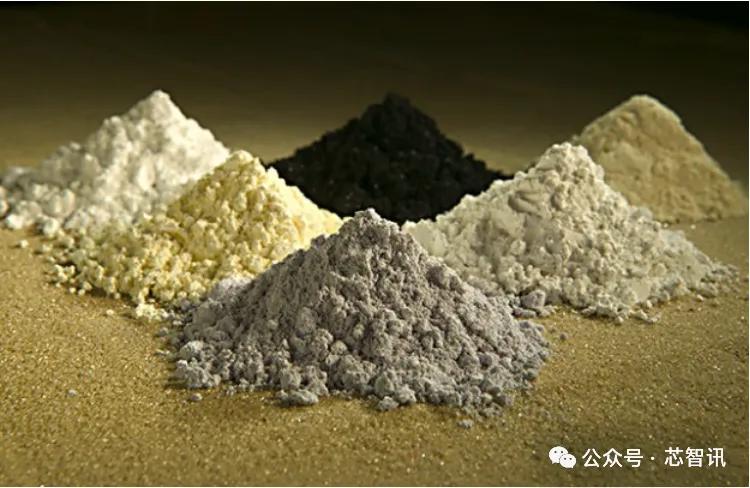
特朗普为何盯上格陵兰?战略要地之外,这座冰封岛屿埋着“关键资源”
Hua Er Jie Jian Wen· 2026-01-09 02:36
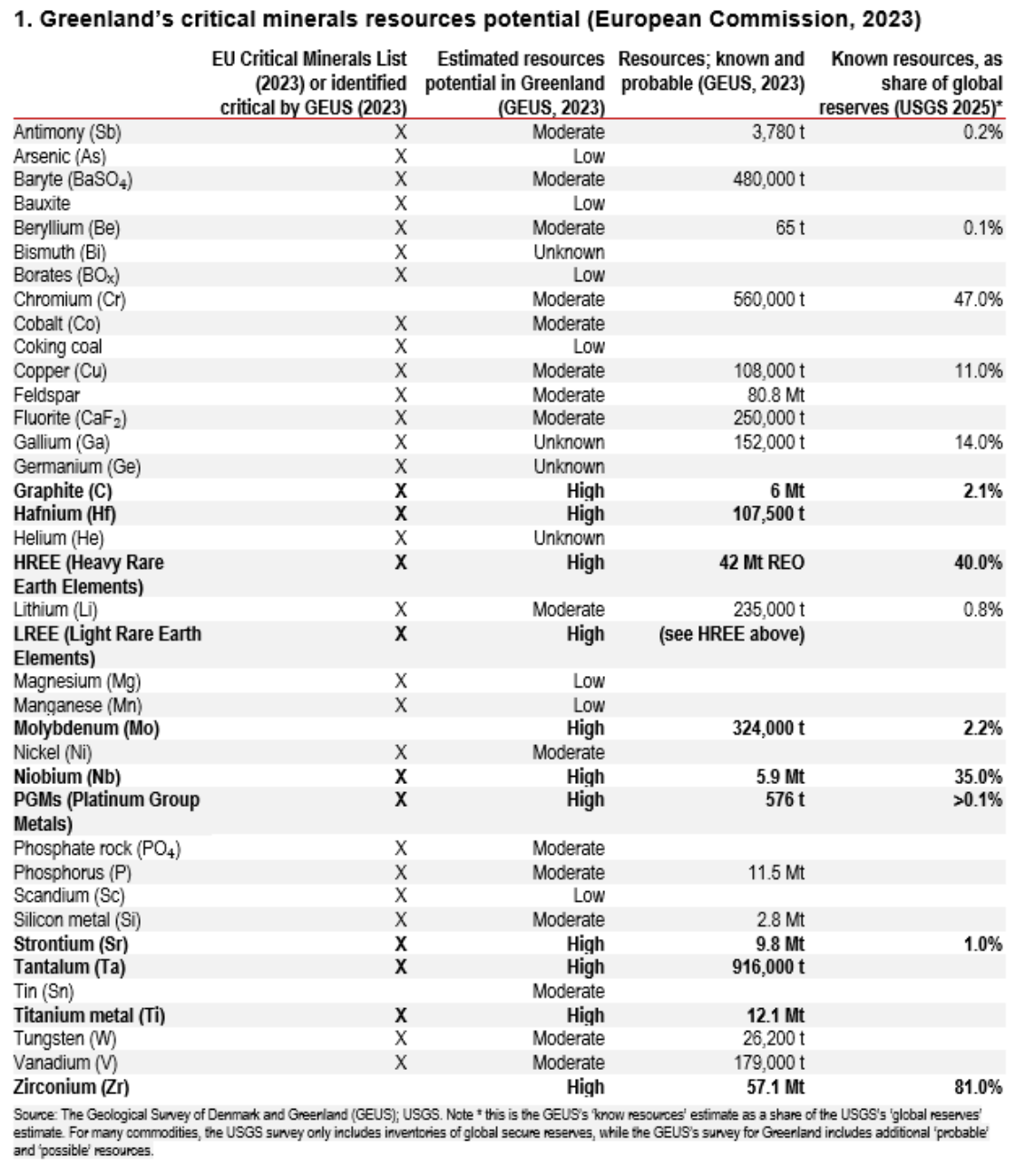
Core Viewpoint - Greenland has become a focal point in geopolitical discussions due to its strategic location and rich mineral resources, particularly rare earth elements, despite challenges in economic viability for extraction [2][3][4]. Group 1: Geopolitical Importance - The U.S. has shown interest in Greenland since the 19th century, with discussions about its acquisition resurfacing under the Trump administration, emphasizing national security [3]. - Greenland's strategic position lies between the U.S., Europe, and Russia, making it a significant military asset [3]. - The melting Arctic ice due to climate change may enhance Greenland's shipping potential, further increasing its geopolitical relevance [3]. Group 2: Mineral Resources - Greenland possesses the 8th largest rare earth reserves globally, estimated at approximately 1.5 million tons, with potential reserves possibly reaching 36.1 million tons, which could position it as the second-largest rare earth holder [4][5]. - The island is rich in 29 out of 38 minerals classified as critical by the EU, including nickel, copper, lithium, and various rare earth elements essential for modern technologies [5][6]. - Heavy rare earth elements, crucial for wind turbines, electric vehicles, and defense systems, are found in unusually high concentrations in Greenland [4][6]. Group 3: Economic Viability Challenges - Despite significant theoretical reserves, the actual economic feasibility of mining in Greenland is questionable due to high extraction costs and challenging geographical conditions, with over 80% of the island covered in ice [7][8]. - Current prices and production costs render the extraction of Greenland's resources economically unviable, necessitating a rise in commodity prices for feasible mining operations [7][8]. - The situation in Greenland mirrors that of Venezuela, where vast resources exist but are not economically extractable, highlighting the importance of economic feasibility in resource-rich regions [8].
美国与日本等多国签署关键矿产协议,律师:难有实质性影响
第一财经· 2025-10-30 03:36
Core Viewpoint - The article discusses recent agreements signed by the United States with multiple countries, including Japan, Malaysia, and Thailand, focusing on securing the supply of critical minerals essential for advanced technologies and industries. The agreements emphasize cooperation in investment, technology transfer, and supply chain diversification, although they are largely non-binding and politically oriented [3][4][6]. Group 1: Agreements and Frameworks - The U.S. and Japan signed a framework agreement to enhance cooperation in securing critical minerals, including financial support mechanisms and trade measures [3][4]. - Similar agreements were made between the U.S. and Australia, as well as memorandums with Malaysia and Thailand during President Trump's visit to Asia [4]. - The U.S. and Japan plan to hold a ministerial meeting within 180 days to promote investment in the mining sector [5]. Group 2: Investment and Technology Transfer - The U.S. and Japan committed to investing in mineral recycling and ensuring the management of critical minerals through technological cooperation [6]. - The agreements with Malaysia and Thailand emphasize trade and investment in critical mineral supply chains, with a focus on technology transfer and innovation [6][7]. - The U.S. expects to prioritize investments in critical mineral assets that can be sold in Malaysia and Thailand, promoting domestic processing industries [6]. Group 3: Non-Binding Nature and Stability - The agreements are non-binding and may not have substantial impacts on mining policies unless actual investments and technological collaborations materialize [4][7]. - The stability of these non-binding frameworks depends on whether the involved countries can genuinely benefit from U.S. investments and technology transfers [7]. - The U.S.-Japan framework is viewed as potentially more stable due to mutual needs for critical minerals, compared to the agreements with Malaysia and Thailand [7].
美国与日本等多国签署关键矿产协议,律师:难有实质性影响
Di Yi Cai Jing· 2025-10-29 11:35
Core Points - The recent agreements between the US and multiple countries focus on enhancing cooperation in critical mineral supply chains, but are largely seen as political commitments rather than having substantial impacts on mining and trade policies [1][4]. Group 1: Agreements Overview - The US and Japan signed a framework agreement to strengthen cooperation in securing critical mineral supplies for their domestic industries, including advanced technologies [1][3]. - The framework includes plans for a ministerial meeting within 180 days to promote investment in the mining sector and emphasizes investment in mineral recycling and technology cooperation [3][5]. - Similar agreements were signed with Malaysia and Thailand, focusing on trade and investment in critical mineral supply chains, with an emphasis on technology transfer and innovation [4][5]. Group 2: Non-Binding Nature - All three bilateral documents (with Malaysia, Thailand, and Japan) are non-binding and lack legal enforceability, raising questions about their long-term stability and effectiveness [4][6]. - The success of these agreements depends on whether the involved countries can genuinely benefit from US investments and technology transfers [4][6]. Group 3: Potential Challenges - There may be legal, technical, or environmental challenges associated with the technology transfers outlined in the agreements, particularly in Malaysia and Thailand [6]. - Environmental concerns could arise from increased mining and refining activities in these countries, potentially complicating the implementation of the agreements [6].

金价高位强势整理 黄金ETF创纪录流入近10亿澳元 “新经济时代”已然到来利率上行压力或持续 鑫海战略入股 SSH Group
Sou Hu Cai Jing· 2025-10-24 12:39
Group 1 - Australia and the US have signed a framework agreement to secure critical minerals and rare earth supply chains, marking a significant effort to reduce China's dominance in the rare earth market [1][2] - The agreement identifies priority projects valued at $8.5 billion and includes commitments from the Australian government to invest directly in two major mines, enhancing local processing and refining capabilities [1][2] - The strategic partnership is expected to diversify the supply chain for metals essential for US defense, clean energy, and semiconductor manufacturing [1][2] Group 2 - The new model shifts from exporting raw materials to refining and adding value domestically, benefiting companies involved in refining, separation, and processing [3] - Companies like Lynas Rare Earths (ASX: LYC) and Arafura Rare Earths (ASX: ARU) are positioned to capitalize on this geopolitical shift, with potential for significant stock price increases [3][4] - However, the capital-intensive nature of critical mineral projects poses risks, including funding challenges and price volatility for rare earths and specialty metals [3] Group 3 - Three categories of potential winners have been identified: established companies like Lynas and Iluka Resources (ASX: ILU) that are ready to leverage rising mineral prices, developers like Arafura and Cobalt Blue Holdings (ASX: COB) progressing towards commercialization, and exploration companies like WA1 Resources (ASX: WA1) that could see stock price surges from new discoveries [4][5] - The Australian mining sector is experiencing a surge in interest, with record inflows into gold ETFs prior to recent price corrections, indicating strong retail investor engagement [6] Group 4 - The IMARC 2025 conference in Sydney highlighted the importance of critical minerals and rare earths, attracting over 11,000 participants from 125 countries to discuss global resource challenges and opportunities [22][25] - Australian states are competing to attract global investment in critical minerals, with state leaders emphasizing their regions' resource advantages and readiness to support new projects [25][26]