
制度变迁

Search documents
从“制度变迁”维度透视二十届四中全会深意
Xin Jing Bao· 2025-12-02 04:23
Core Points - The core argument emphasizes that institutional change is the driving force behind modernization, with the 20th National Congress aiming for breakthroughs in comprehensive reform to support Chinese-style modernization [1] Group 1: Change Logic Upgrade - The 20th National Congress establishes a dual-driven logic of change combining goal-oriented and problem-oriented approaches, aiming for the 2035 goal of basic socialist modernization [2] - This approach includes forward-looking institutional layouts to enhance new productive forces and targeted reforms to address existing market barriers [2] - China's institutional evolution is characterized by dynamic balance, avoiding the stagnation seen in Western systems [2] Group 2: Deepening Change Content - The focus has shifted from economic areas to a comprehensive "five-in-one" layout, enhancing governance capabilities across various sectors [3] - In the economic sector, a high-level socialist market economy is being developed, stimulating various business entities [3] - Political reforms include strengthening democratic processes, while cultural, social, and ecological reforms aim to improve overall governance and public welfare [3] Group 3: Release of Change Efficiency - The transformation of institutional advantages into governance efficiency is a core goal, with a systematic layout for comprehensive reform [4] - The emphasis is on modernizing the governance system and capabilities to align with the goals of socialism with Chinese characteristics [4] Group 4: Governance Efficiency Transformation - Economic governance focuses on building a modern industrial system and enhancing the foundation of the real economy [5] - Social governance aims to improve service efficiency through digital reforms and integrated government services [5] - Risk governance involves creating a comprehensive system for development and security, ensuring stability in food production and supply chains [5] Group 5: Future Directions - There is a call for greater courage and measures to eliminate institutional barriers to modernization, aiming for a complete and effective institutional system [6]
一个国家将如何衰落?
首席商业评论· 2025-11-18 04:07
Group 1 - The core issue facing Germany is a population crisis, characterized by severe aging and labor shortages, which exacerbates other economic challenges [10][12][22] - Germany's total fertility rate has declined to 1.35 in 2024, significantly below the replacement level of 2.1, leading to a rapidly aging population where 23.2% are aged 65 and above [13][15] - The labor force participation rate for those aged 15-64 is projected to drop to 62.89% by 2024, below the global average of 65.07%, indicating a shrinking workforce [15][19] Group 2 - Institutional reform is crucial for addressing Germany's economic challenges, including high energy costs and labor shortages, but progress has been slow [23][24] - The German tax system, characterized by high progressive taxes, discourages additional work and innovation, contributing to stagnant wages despite labor shortages [27][28] - The difficulty in implementing reforms is compounded by entrenched interest groups that resist changes that could disrupt their benefits, such as the rental price control system [36][37] Group 3 - The decline in population directly impacts market size and economic competitiveness, as a smaller workforce limits innovation and increases production costs [19][20] - Germany's reliance on large corporations, which have high overseas revenue dependence (70%), indicates a vulnerability to global market shifts and a lack of domestic investment [19] - The aging population and declining birth rates suggest that Germany's economic model may need to adapt significantly to maintain competitiveness in the global market [22][39]

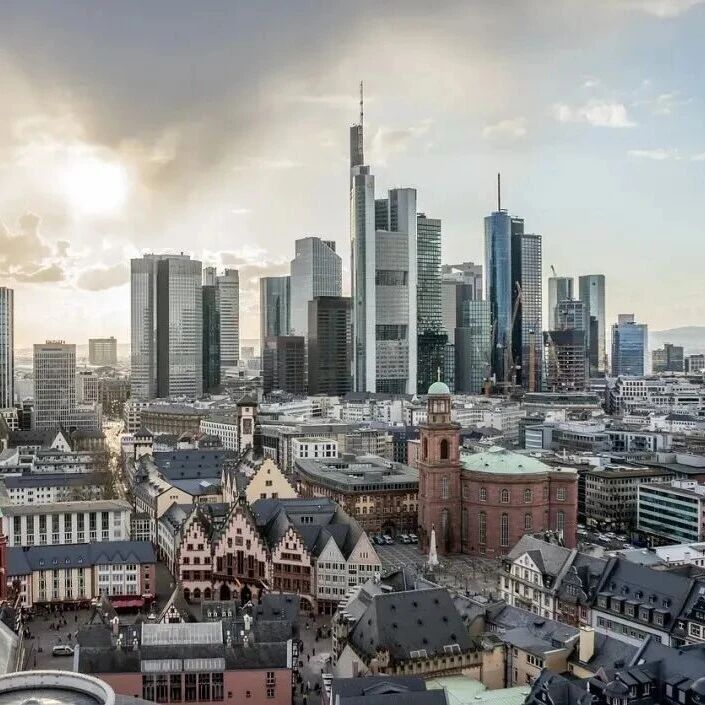
德国衰落启示
投资界· 2025-11-17 08:10
Core Viewpoint - The article discusses the decline of Germany, emphasizing that the primary issues are a demographic crisis and institutional challenges, which could serve as a warning for other countries, including China [6][18]. Group 1: Demographic Crisis - Germany is facing a severe demographic crisis characterized by an aging population and a declining birth rate, with the total fertility rate dropping to 1.35 in 2024, well below the replacement level of 2.1 [10][11]. - The aging population is projected to increase, with those aged 65 and above expected to account for over 27% by 2035, which poses significant challenges to the labor market and economic productivity [11]. - The labor force participation rate is declining, with the working-age population (15-64 years) expected to fall to 62.89% by 2024, compared to a global average of 65.07% [11]. Group 2: Institutional Challenges - Institutional reforms in Germany are slow and face significant resistance, with attempts to address issues like high energy costs and labor shortages being met with limited success [20][21]. - The tax system in Germany is seen as a disincentive for labor participation, with high progressive taxes discouraging additional work and innovation [21][22]. - Large corporations in Germany are announcing layoffs despite labor shortages, indicating that the economic challenges are leading to reduced competitiveness and profitability [23][24].
一个国家将如何衰落?
创业邦· 2025-11-16 03:38
Group 1 - Germany is facing a significant economic decline, transitioning from "stagnation" to "decline" due to various challenges, including geopolitical tensions and energy crises [7][8] - The core issues identified include a severe population crisis, institutional changes, and economic stagnation, with a particular emphasis on the aging population and labor shortages [9][11] - The automotive, chemical, and machinery sectors, which account for 30% of Germany's GDP, are heavily impacted by the ongoing geopolitical and economic challenges [10] Group 2 - The aging population in Germany is a critical issue, with the total fertility rate dropping to 1.35 in 2024, significantly below the replacement level of 2.1 [14][15] - The labor force participation rate is declining, with the working-age population (15-64 years) expected to fall to 62.89% by 2024, compared to global averages [15] - The lack of young people exacerbates existing economic problems, limiting innovation and competitiveness in the global market [11][19] Group 3 - Institutional reforms in Germany are slow and face significant challenges, including a heavy tax burden that discourages labor participation and innovation [28][29] - The high welfare system and progressive tax structure create disincentives for workers to increase their labor supply, leading to paradoxical labor shortages [28][29] - Major corporations are announcing layoffs despite labor shortages, indicating deeper structural issues within the economy [32][33] Group 4 - The existing institutional framework in Germany is resistant to change, with entrenched interests making it difficult to implement necessary reforms [36][41] - The complexity of the railway system and the high rate of train delays (70%) illustrate the challenges of reforming public services in the face of bureaucratic inertia [41][42] - The demographic shift towards an older population is influencing political dynamics, with older generations dominating decision-making processes, potentially stifling innovation and reform [43]

一个国家将如何衰落?
虎嗅APP· 2025-11-15 13:40
Core Viewpoint - Germany is facing a significant decline, transitioning from "stagnation" to "decline," influenced by various socio-economic challenges, particularly a severe population crisis [6][7][23]. Group 1: Economic Challenges - Germany's economy is heavily impacted by the Russia-Ukraine war and the oil crisis, affecting key industries such as automotive, chemical, and machinery, which together account for 30% of GDP [10]. - Inflation has surged in recent years, with some prices doubling, while wage growth has been slow, leading to diminished household purchasing power and consumer spending [10]. - The country is overly reliant on large enterprises, resulting in low market competition and an aging manufacturing sector that struggles with digital transformation [10]. - Financial regulations are excessive, hindering innovation and the ability of startups to secure funding, leading to a stagnation in technological advancement [10]. Group 2: Population Crisis - The most pressing issue for Germany is its population crisis, characterized by severe aging and labor shortages [11][12]. - The total fertility rate has plummeted to 1.35 in 2024, significantly below the replacement level of 2.1, indicating a long-term demographic decline [14]. - The proportion of the population aged 65 and older is projected to exceed 27% by 2035, exacerbating labor shortages and economic constraints [15]. - A shrinking labor force limits both supply and demand, stifling innovation and international competitiveness [15][19]. Group 3: Institutional Challenges - Institutional reforms are crucial but have been slow and limited in Germany, despite ongoing discussions about necessary changes [26][27]. - The existing tax system discourages additional work and innovation, contributing to the paradox of labor shortages alongside stagnant wages [30][31]. - Large corporations are announcing layoffs despite labor shortages, indicating deeper structural issues within the economy [32][33]. Group 4: Global Integration - Countries with declining populations must integrate deeply into the global market rather than attempting to rebuild domestic supply chains [20]. - Germany's market size limits its ability to support multiple competitive industries, particularly in the context of electric vehicles compared to China's vast market [17][19]. - The aging population and declining birth rates will increasingly constrain economic growth and innovation, necessitating a shift towards global market participation [18][20].

诺奖启示录:技术创新是持续性的社会变革
3 6 Ke· 2025-10-15 09:40
Group 1: Core Insights - The 2025 Nobel Prize in Economic Sciences is awarded to Joel Mokyr, Philippe Aghion, and Peter Howitt for their contributions to understanding innovation-driven economic growth [1] - Mokyr receives half of the prize for identifying prerequisites for sustained growth through technological advancement, while Aghion and Howitt share the other half for their theory on creative destruction as a means to achieve sustained growth [1] Group 2: Joel Mokyr's Contributions - Joel Mokyr is a prominent economic historian whose work is significant despite the low status of economic history in the academic hierarchy [2] - Mokyr's research focuses on the relationship between technological progress and economic growth, analyzing factors such as geography, institutions, and government [3][4] - He connects the Enlightenment with the Industrial Revolution, arguing that the former facilitated the spread of useful knowledge that led to the latter [3] Group 3: Theoretical Frameworks - Mokyr's research emphasizes the importance of creativity, institutional incentives, and diversity in fostering technological progress [3] - He explores why the Industrial Revolution did not occur in certain regions, attributing it to high transaction costs, lack of entrepreneurial spirit, and institutional repression [4] - The research expands to include the impact of culture, human capital, and interest groups on economic development [4] Group 4: Aghion and Howitt's Contributions - Aghion and Howitt are recognized for formalizing Schumpeter's concept of creative destruction, explaining how disruptive innovation drives economic growth [5] - Their work highlights the positive correlation between democratic governance and innovation success, suggesting that higher levels of democracy enhance economic growth [12] Group 5: Broader Implications - The recent Nobel Prize winners' research addresses significant issues relevant to current economic challenges, particularly in the context of the ongoing AI revolution [6] - The relationship between technological progress and macroeconomic policy is emphasized, suggesting that innovation alone cannot resolve macroeconomic issues without structural improvements [10][11] - The interplay between technology, institutions, and freedom is explored, indicating that a balance is necessary for fostering innovation [15][16]