内生增长

Search documents
美丽田园医疗健康(02373):25年业绩高增,内生增长+外延并购双驱动
GF SECURITIES· 2026-03-31 02:46
Investment Rating - The report assigns a "Buy" rating to the company, with a current price of HKD 19.30 and a fair value of HKD 30.13 [5]. Core Insights - The company has achieved significant growth in 2025, with a revenue of RMB 3.001 billion, representing a year-on-year increase of 16.65%. The net profit reached RMB 340 million, up 34.77%, and the attributable net profit was RMB 318 million, reflecting a 39.00% increase. The adjusted net profit was RMB 381 million, showing a growth of 40.97% [8]. - The strong performance is attributed to accelerated external expansion, including the acquisition of the Nair brand, which enhances market share, and sustained organic growth driven by high-margin business segments [8]. - The company operates three main business segments: beauty and health services, medical beauty services, and sub-health medical services, all of which have shown growth in revenue and profitability [8]. Financial Summary - Revenue projections for 2024 to 2028 are as follows: RMB 2.572 billion (2024), RMB 3.001 billion (2025), RMB 4.013 billion (2026), RMB 4.786 billion (2027), and RMB 5.644 billion (2028), with growth rates of 19.9%, 16.7%, 33.7%, 19.3%, and 17.9% respectively [4][12]. - The company's EBITDA is projected to grow from RMB 704 million in 2024 to RMB 1.311 billion in 2028, with a notable increase in net profit from RMB 228 million in 2024 to RMB 651 million in 2028 [4][12]. - The report highlights a significant improvement in profitability metrics, with ROE expected to rise from 24.2% in 2024 to 35.8% in 2028 [4][12]. Business Performance - The beauty and health services segment generated RMB 1.658 billion in 2025, up 14.88%, while medical beauty services and sub-health medical services achieved revenues of RMB 1.017 billion and RMB 326 million, respectively, with growth rates of 9.56% and 62.16% [8]. - The gross margins for these segments were reported at 41.88%, 55.87%, and 64.31%, respectively, indicating an upward trend in profitability [8]. Strategic Outlook - The company is positioned as a leader in the industry, with a strong brand portfolio including Meili Tianyuan, Nair, and Siyuanli, which collectively enhance its competitive advantage [8]. - The dual strategy of organic growth and external acquisitions is expected to drive sustained high growth in the coming years, supported by refined operational efficiencies and scale effects [8].
紫金黄金国际:内生增长+外延并购,黄金产量有望持续快速增长-20260324
Guoxin Securities· 2026-03-24 07:45
Investment Rating - The investment rating for Zijin Gold International (02259.HK) is maintained at "Outperform the Market" [4][18]. Core Views - The company reported a revenue of $5.383 billion for 2025, representing a year-on-year increase of 80.05%, and a net profit attributable to shareholders of $1.602 billion, up 232.71% year-on-year [10][4]. - The gold production for 2025 is approximately 46.9 tons, a 20% increase from the previous year, with a planned production of about 59.2 tons for 2026, reflecting a 26% increase [13][17]. - The company is pursuing both organic growth and external acquisitions, with a significant acquisition of 100% equity in United Gold for approximately CAD 5.5 billion (around RMB 28 billion), which is expected to enhance future production [17][2]. Summary by Relevant Sections Financial Performance - For 2025, the company achieved a revenue of $5.383 billion and a net profit of $1.602 billion, with a cash dividend of HKD 1.5 per share, totaling approximately $512 million, which is about 32% of the net profit [10][16]. - The overall All-In Sustaining Cost (AISC) for gold in 2025 was $1,501 per ounce, a 3% increase year-on-year, indicating effective cost management despite rising costs [13][16]. Production Outlook - The company plans to increase gold production significantly, with expectations of reaching approximately 68.8 tons in 2026 if the acquisition of United Gold is successful [13][17]. - Specific mines are projected to enhance their production capabilities, such as the Akim mine in Ghana and the Raygorodok mine in Kazakhstan, which are expected to increase their annual gold output significantly [2][17]. Earnings Forecast - The earnings forecast for 2026-2028 has been revised upwards, with expected revenues of $9.396 billion, $11.400 billion, and $12.129 billion, respectively, and net profits of $3.280 billion, $3.997 billion, and $4.269 billion [4][18]. - The diluted EPS is projected to be $1.23, $1.49, and $1.60 for the years 2026, 2027, and 2028, respectively, with corresponding P/E ratios of 17.7, 14.5, and 13.6 [4][18].
紫金黄金国际(02259):内生增长+外延并购,黄金产量有望持续快速增长
Guoxin Securities· 2026-03-24 05:35
Investment Rating - The investment rating for Zijin Gold International (02259.HK) is maintained at "Outperform the Market" [4][7][18]. Core Views - The company reported a revenue of $5.383 billion for 2025, representing a year-on-year increase of 80.05%, and a net profit attributable to shareholders of $1.602 billion, up 232.71% year-on-year [10][16]. - The gold production for 2025 is approximately 46.9 tons, a 20% increase year-on-year, with plans for 2026 to reach about 59.2 tons, a 26% increase, not accounting for the potential acquisition of United Gold [10][13]. - The company is focusing on both organic growth and external acquisitions to sustain rapid growth in gold production [2][17]. Summary by Sections Financial Performance - Revenue for 2025 was $5.383 billion, with a year-on-year growth of 80.05% [10]. - Net profit for 2025 reached $1.602 billion, reflecting a 232.71% increase year-on-year [10]. - The company plans to distribute a cash dividend of HKD 1.5 per share, totaling approximately $512 million, which is about 32% of the net profit for 2025 [16]. Gold Production - The company achieved a gold production of approximately 46.9 tons in 2025, with a year-on-year increase of about 20% [10][13]. - For 2026, the production target is set at approximately 59.2 tons, with a potential increase to about 68.8 tons if the acquisition of United Gold is completed successfully [13][17]. Cost Management - The all-in sustaining cost (AISC) for gold in 2025 is projected to be $1,501 per ounce, a 3% increase year-on-year [10][16]. - The company is implementing refined management practices to maintain core operational cost control at a good level despite rising costs [10][16]. Future Outlook - The company is expected to continue its strong growth trajectory, with revenue forecasts for 2026-2028 at $9.396 billion, $11.400 billion, and $12.129 billion, respectively, indicating growth rates of 74.5%, 21.3%, and 6.4% [4][18]. - The net profit forecasts for the same period are $3.280 billion, $3.997 billion, and $4.269 billion, with growth rates of 104.8%, 21.9%, and 6.8% [4][18].
中烟香港:业绩表现优异,外延扩张有望加速
Xinda Securities· 2026-03-08 13:25
Investment Rating - The investment rating for China Tobacco Hong Kong (6055.HK) is not explicitly stated in the provided documents, but the overall performance and future outlook suggest a positive sentiment towards the stock [1]. Core Insights - The company reported a strong annual performance for 2025, achieving revenue of HKD 14.58 billion (up 11.5% year-on-year) and a net profit attributable to shareholders of HKD 980 million (up 21.7 year-on-year), with a net profit margin of 6.7% (up 0.6 percentage points) [1]. - The second half of 2025 saw a revenue of HKD 4.26 billion (down 2.5% year-on-year) and a net profit of HKD 270 million (up 30.2% year-on-year), indicating a recovery in profitability despite a slight decline in revenue [1]. - The company aims to accelerate its global expansion through both organic growth and acquisitions, with expectations for improved profitability driven by product structure optimization and market positioning [4]. Summary by Sections Financial Performance - The company experienced a robust revenue growth of 11.5% year-on-year, with a total revenue of HKD 14.58 billion for 2025. The net profit increased by 21.7% year-on-year to HKD 980 million, reflecting a net profit margin improvement [1][2]. - In the second half of 2025, the revenue was HKD 4.26 billion, showing a slight decline of 2.5% year-on-year, while the net profit surged by 30.2% to HKD 270 million, indicating strong operational efficiency [1][2]. Segment Analysis - **Tobacco Leaf Imports**: Revenue for H2 2025 was HKD 1.14 billion (down 21.5% year-on-year), with a gross margin of 7.5% (up 1.9 percentage points) [2]. - **Tobacco Leaf Exports**: Revenue reached HKD 1.33 billion (up 15.9% year-on-year), with a gross margin of 7.06% (up 2.2 percentage points) [2]. - **Cigarette Exports**: Revenue was HKD 1.11 billion (up 8.6% year-on-year), with a gross margin of 21.4% (up 6.2 percentage points) [3]. - **New Tobacco Exports**: Revenue fell to HKD 50 million (down 45.8% year-on-year), but the decline in sales volume is expected to narrow in the future [3]. - **Brazil Operations**: Revenue was HKD 630 million (down 3.5% year-on-year), with a gross margin of 16.9% (down 0.8 percentage points) [3]. Profit Forecast - The company anticipates net profits of HKD 1.13 billion, HKD 1.39 billion, and HKD 1.61 billion for 2026, 2027, and 2028, respectively, with corresponding price-to-earnings ratios of 23.6X, 19.2X, and 16.6X [4].
长久物流:公司将持续规范资本市场运作,完善公司治理结构
Zheng Quan Ri Bao Wang· 2026-02-05 12:17
Core Viewpoint - The company emphasizes the importance of standardizing capital market operations, improving corporate governance, and enhancing information disclosure and investor relations management [1] Group 1: Strategic Investment - The company will adhere to the principle of maximizing shareholder value when evaluating quality enterprises or resource targets for strategic investments [1] - It plans to conduct mergers and acquisitions at appropriate times to promote market resource integration and extend the industrial chain [1] Group 2: Internal Growth Focus - In the absence of clear investment opportunities, the company will concentrate on internal growth through technological innovation, business expansion, and management optimization [1] - This approach aims to solidify the company's development foundation and enhance its core competitiveness [1]

在五个“新”中读懂中国经济
Jing Ji Ri Bao· 2026-02-04 03:24
Core Insights - The article discusses the current state of the Chinese economy, emphasizing the need to understand both the "form" and the "momentum" behind its development, particularly in light of the "strong supply and weak demand" contradiction [1][9]. Economic Performance Overview - In 2025, China's GDP growth rate was 5%, aligning with the initial target, and significantly above the global average of approximately 3% [3][4]. - The employment rate remained stable, with an urban unemployment rate kept within 5.5%, creating around 12 million new jobs due to the 5% growth rate [4]. - The Consumer Price Index (CPI) remained stable, indicating controlled inflation but also reflecting weak overall demand [4]. - China's foreign trade saw a 3.8% increase, with foreign exchange reserves stable at over $3.2 trillion, providing a buffer against external risks [4]. Structural Changes and Trends - The economy is characterized by "steady progress," with improvements in quality and efficiency, particularly in high-tech and equipment manufacturing sectors [5]. - Domestic demand has become the primary driver of growth, with consumption contributing over 50% to economic growth, indicating a shift towards a more balanced growth model [5][26]. Challenges and Risks - The main challenges facing the economy include insufficient domestic demand, particularly in consumer spending and private investment, which are critical for sustaining growth [7][9]. - Structural issues such as mismatches between labor skills and job requirements, as well as external pressures from global economic conditions, are also significant [7][9]. Policy Directions - The article highlights the need for macroeconomic policies to focus on expanding domestic demand while ensuring supply-side structural reforms continue [11][14]. - Emphasis is placed on the importance of policy coordination, integrating both existing and new policies to enhance effectiveness [16][17]. - The "Five Musts" proposed in the 2025 Central Economic Work Conference outline key areas for economic governance, including maximizing economic potential and balancing government-market relations [19][20]. New Development Model - The new economic development model emphasizes domestic demand, consumption-driven growth, and endogenous growth, marking a shift from reliance on external demand and investment [24][25]. - This model aims to enhance the quality of growth, focusing on innovation and the establishment of a modern industrial system [28].
保持定力精心运筹赢得战略主动
Jing Ji Ri Bao· 2026-01-27 00:02
Core Viewpoint - The article emphasizes the importance of maintaining strategic determination and tactical flexibility in the face of both opportunities and challenges in the current international landscape, highlighting the need for a comprehensive approach to ensure sustainable development in China. Group 1: Strategic Determination - Confidence in strategic determination stems from a solid economic foundation, numerous advantages, strong resilience, and significant potential, which remain unchanged in the long term [2] - The economic achievements during the "14th Five-Year Plan" period, including surpassing 140 trillion yuan in total economic output, provide a robust basis for future goals [2] - The leadership of the Central Committee, under Xi Jinping, has been pivotal in navigating challenges and achieving significant accomplishments for the party and the nation [2] Group 2: Tactical Flexibility - Maintaining strategic determination does not imply rigidity; it requires balancing strategic consistency with adaptability to changing circumstances [2] - The "15th Five-Year Plan" outlines development goals and strategic tasks that align with the ongoing trends and challenges, ensuring a coherent approach to modernization [3] - The focus on building a modern industrial system and strengthening the real economy is crucial, as it reflects a deep strategic consideration for sustainable growth [3] Group 3: Economic Development Model - The "15th Five-Year Plan" advocates for an economic model driven by domestic demand, consumption, and endogenous growth, which is essential for responding to external uncertainties [4] - Emphasizing high-quality development and effective investment in both physical and human capital is necessary to maintain economic vitality and competitiveness [4] - Practical measures that integrate social welfare, consumption stimulation, and technological innovation will be key to achieving the outlined strategic goals [4]
国联民生投行业务后劲十足:IPO排队第六、新报辅导第四、新三板挂牌第一!
Xin Lang Cai Jing· 2026-01-23 06:58
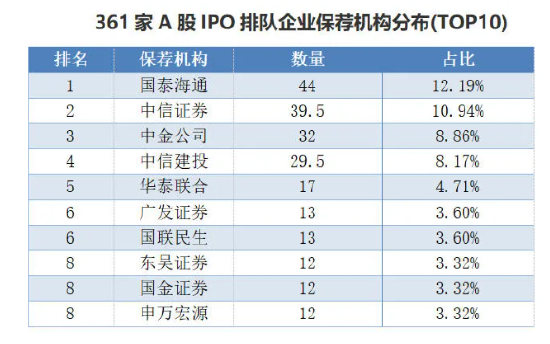
Core Viewpoint - Guolian Minsheng (601456) expects a significant increase in net profit attributable to shareholders, projecting a net profit of 2.008 billion yuan for 2025, representing a year-on-year growth of approximately 406% [1][13]. Investment Banking Performance - The investment banking segment of Guolian Minsheng has shown remarkable growth, with a strong pipeline of IPO projects. As of the end of 2025, there are 361 companies queued for IPOs in the A-share market, with Guolian Minsheng ranking sixth with 13 companies [1][19]. - The company completed five IPO underwriting projects in the A-share market in 2025, ranking seventh in terms of the number of projects and underwriting amounts exceeding 3 billion yuan, also placing seventh in the industry [7][19]. New Third Board Market - In the New Third Board market, Guolian Minsheng led the underwriting and sponsorship with 27 new listing projects, achieving a market share of 8%, confirming its strong collaborative and professional service capabilities [2][16]. - The company ranked first among main underwriters in the New Third Board market for 2025, with a total of 27 projects [3][17]. IPO Guidance - In terms of IPO guidance, Guolian Minsheng ranked fourth with 24 new guidance projects in 2025, amidst a total of 410 new guidance projects across the market [4][18]. Strategic Development - Following the merger with Minsheng Securities, Guolian Minsheng has focused on integrating technology, finance, and industry, enhancing its comprehensive financial service capabilities through a strategy centered on "collaborative empowerment" and "internal growth" [6][18]. - The company aims to be the "most industry-friendly investment bank," providing tailored financial solutions across various stages of enterprise development, including equity financing, bond financing, mergers and acquisitions, and financial advisory services [12][22]. Future Outlook - Industry experts predict that Guolian Minsheng will achieve better results in the IPO market in 2026, especially as the A-share market is expected to recover [13][23].


21评论丨GDP140万亿意味着什么?
2 1 Shi Ji Jing Ji Bao Dao· 2026-01-22 23:10
Economic Growth and Structure - In 2025, China's GDP is projected to reach 140,187.9 billion yuan, with a growth rate of 5.0% year-on-year at constant prices, reflecting a resilient economic performance amid external uncertainties and domestic challenges [1] - The contribution rate of China to global economic growth remains stable at around 30%, highlighting its role as a stabilizing force in the world economy [1] Structural Improvements - The transition from old to new growth drivers is ongoing, with the tertiary sector's value-added increasing by 5.4%, particularly driven by the information transmission, software, and IT services sector, which grew by 11.1% [2] - High-tech manufacturing and equipment manufacturing saw value-added growth rates of 9.4% and 9.2%, respectively, significantly outpacing the average growth rate of large-scale industries [2] - Exports of high-tech products increased by 13.2%, contributing to a 9.4% growth in high-tech industry value-added, indicating a strong correlation between export performance and industrial growth [2] Income Structure and Challenges - The income structure is improving, with per capita disposable income growing by 5.0%, aligning with GDP growth, and per capita wage income increasing by 5.3% [3] - Despite positive trends, challenges remain, including external demand uncertainties, persistent supply-demand imbalances, and issues related to private investment and local debt [3] Policy Recommendations - To enhance internal demand, it is essential to address consumption bottlenecks, stabilize the real estate market, and improve the social security system and income distribution mechanisms [4] - Fiscal policies should focus on effectively utilizing new "old-for-new" policies and long-term bonds to invest in key areas such as new infrastructure and regional development [4] - Monetary policy should maintain a moderately loose stance to lower financing costs and support economic operations, while deep structural reforms should be a continuous focus for sustainable growth [4]
爱博医疗(688050)公告点评:拟收购德美医疗51%股权 切入运医培育新增长点
Xin Lang Cai Jing· 2026-01-22 10:30
Core Viewpoint - Aibo Medical has signed a Letter of Intent with Demei Medical to acquire at least 51% of its shares, with an estimated valuation of Demei Medical not exceeding 1 billion yuan, indicating a stable profit growth commitment from 2026 to 2028 [1][2] Acquisition Details - The acquisition is expected to be financed through a combination of self-funds and bank loans [1] - Demei Medical's preliminary valuation corresponds to a price-to-earnings (PE) ratio of approximately 22X, 18X, and 15X for the years 2026, 2027, and 2028 respectively [1] - Demei Medical's net profit commitments for 2026, 2027, and 2028 are projected to be 45 million, 55 million, and 65 million yuan, representing year-on-year growth rates of +28.5%, +22.2%, and +18.2% respectively [1] Company Profile - Demei Medical, established in 2015, is a leading brand in China's sports medicine sector, offering a comprehensive range of products including imaging equipment, surgical tools, implantable consumables, and rehabilitation devices [1] - The company has achieved significant breakthroughs in core technologies and has established a full industry chain layout, making it a representative manufacturer of sports medicine in China [2] Financial Performance - Demei Medical's projected revenues for 2023, 2024, and 2025 are 178 million, 236 million, and 286 million yuan, with year-on-year growth rates of +32.6% and +21.4% [2] - The adjusted net profits for the same years are expected to be -7.08 million, 9.29 million, and 23.60 million yuan, indicating a significant increase in profitability [2] International Expansion - Demei Medical has developed strong international capabilities, with a sales network covering over 50 countries and regions, and plans to participate in more than 10 international exhibitions and academic exchanges in 2025 [2] - The collaboration with Aibo Medical is expected to enhance its overseas business, which accounted for 5.5% of total revenue in the first half of 2025 [2] Profit Forecast and Investment Outlook - Aibo Medical is projected to achieve revenues of 1.572 billion, 1.823 billion, and 2.173 billion yuan from 2025 to 2027, with year-on-year growth rates of +11.5%, +16.0%, and +19.2% respectively [3] - The expected net profits for the same period are 414 million, 476 million, and 575 million yuan, with growth rates of +6.7%, +14.9%, and +20.7% respectively [3] - The current stock price corresponds to PE ratios of 29X, 25X, and 21X for the years 2025, 2026, and 2027 [3] Rating - The company maintains a "recommended" rating [4]