双碳经济

Search documents
华商基金童立:2026年关注科技与新质生产力 国内科技产业链表现或更具弹性
Xin Lang Cai Jing· 2026-02-04 01:07
Core Viewpoint - The A-share market has shown active performance with a continuous increase in profitability, and the products managed by Tong Li of Huashang Fund ranked in the top 20% of their peers in 2025 [1][17]. Group 1: Performance and Management - As of the end of 2025, all products managed by Tong Li ranked in the top one-third over the past 3 and 5 years, providing a good holding experience for investors [1][17]. - Tong Li has been with Huashang Fund since 2011, serving in various roles and currently as the Research Director and General Manager of the Research and Development Department [1][17]. Group 2: Investment Philosophy - Tong Li's investment philosophy can be summarized in three keywords: long-termism, three-dimensional stock selection, and left-side layout [4][20]. - His investment style reflects a long-term perspective, emphasizing that true investors will be rewarded over time despite short-term market fluctuations [4][20]. Group 3: Stock Selection Logic - Tong Li employs a "three-dimensional framework" focusing on industry prosperity, strong potential, and genuine growth to uncover intrinsic value [4][20]. - He maintains a broad capability circle, covering growth sectors like TMT and high-end manufacturing, as well as cyclical industries like chemicals and non-ferrous metals, balancing value and growth [4][20]. Group 4: Timing and Positioning - Tong Li does not excessively predict short-term market fluctuations but adjusts equity positions based on macroeconomic cycles, focusing on industry rotation and left-side layout [5][21]. - In 2024, he reduced exposure to risk while focusing on sectors like digital economy and dual-carbon economy, demonstrating a cautious investment style and keen industry insight [5][21]. Group 5: Future Outlook - Looking ahead, Tong Li remains optimistic about technology and new productive forces, particularly in AI applications, smart driving, robotics, and semiconductor self-control [6][23]. - He anticipates that global macroeconomic fluctuations in 2026 may exceed those of 2025, and he will remain vigilant to adapt investment strategies accordingly [6][23]. Group 6: Fund Performance Rankings - The performance rankings of various funds managed by Huashang Fund indicate strong relative performance, with several funds ranking in the top tiers over 1, 3, and 5 years [9][24]. - Specific rankings include: - Huashang New Trend Preferred Flexible Allocation Mixed Fund: 11/446 over 5 years [9][24] - Huashang Research Selected Flexible Allocation Mixed Fund: 52/446 over 5 years [9][24].

锂电回收行业迎来转机 能源金属涨价推升“城市矿山”价值
Zheng Quan Shi Bao· 2026-01-12 03:03
Core Viewpoint - The lithium battery recycling industry is transitioning from a rough development phase to a more refined, standardized, and globalized stage, driven by rising prices of lithium and cobalt, supportive policies, and increasing demand for energy metals [1][2][6]. Industry Overview - Lithium battery recycling is likened to the development of "urban mines," converting waste batteries into valuable, recyclable resources [1]. - The industry is witnessing a transformation, with a market size exceeding 100 billion yuan, reshaping the resource supply landscape in the new energy sector [1][7]. Profitability and Market Dynamics - The profitability of lithium battery recycling businesses has improved significantly, with a reported 59% year-on-year increase in battery dismantling volume, reaching 36,000 tons in the first three quarters of 2025 [2]. - The rise in prices of lithium, cobalt, and nickel has enhanced cash flow for recycling companies, shifting the profit model from reliance on subsidies to the intrinsic value of recycled materials [2][3]. Policy and Regulatory Environment - The Chinese government has relaxed import policies for recycled materials, allowing certain types of black powder to be imported, which addresses previous challenges in the industry [3]. - This regulatory change is expected to secure domestic strategic resource supply and integrate China's battery recycling industry into global resource allocation [2][3]. Capacity Expansion and Capital Operations - Leading companies are adopting a dual strategy of capacity expansion and capital operations to capture market opportunities, with significant investments in new facilities and technology partnerships [4][5]. - Companies like Grinmei and Tianqi are actively pursuing acquisitions and financing to enhance their operational capabilities and market presence [4][5]. Technological Advancements and Lifecycle Integration - The industry is evolving from merely end-of-life disposal to playing a crucial role in the entire battery lifecycle, with companies developing comprehensive value chains from recycling to remanufacturing [6]. - Grinmei has achieved a lithium recovery rate exceeding 96.5% through innovative technologies, establishing partnerships with over 1,000 automotive and battery manufacturers [6]. Future Outlook - The lithium battery recycling market is projected to grow at an annual rate exceeding 50% over the next 3 to 5 years, with the domestic market expected to surpass 100 billion yuan by 2030 [7]. - The industry is moving towards a more regulated and competitive environment, with non-compliant players gradually exiting the market, signaling a positive trend for sustainable practices [7].


沙湖“双碳”带、大智门“文脉+”、青山“钢铁记忆街”……武汉城市更新“多点开花”吸引客商目光
Chang Jiang Ri Bao· 2025-12-19 01:35
Core Insights - Wuhan is actively promoting urban renewal projects across various districts, focusing on integrating cultural heritage and modern industry to attract investment and enhance urban living conditions [1][5][6] Group 1: Urban Renewal Initiatives - The Shahu Ring Road in Wuchang District aims to create a "dual carbon" economic belt through the green transformation of existing buildings [1] - The Changchenghui building in Wuchang has undergone a green transformation, significantly reducing energy consumption and carbon emissions, serving as a model for business building green transformation [2] - The revitalization of historical sites, such as the Dazhimeng Railway Station, is part of a broader strategy to merge cultural heritage with modern commercial activities [3][5] Group 2: Economic Impact and Investment Attraction - The carbon industry in Wuhan has surpassed 10 billion yuan, supported by the establishment of over 460 demonstration enterprises in the area [2] - The transformation of old industrial sites, like the cold storage facility into high-end business buildings, exemplifies the revaluation of land space [2] - The Qing Shan Ancient Town has been recognized as one of the "Top Ten Urban Renewal Cases in the Country," highlighting its successful integration of cultural heritage and modern urban development [6] Group 3: Cultural and Historical Preservation - The renovation plans for the Cooperation Road area include restoring historical buildings and enhancing the operational management of the area to create a model for cultural tourism and industrial innovation [5] - The Qing Shan Ancient Town project emphasizes preserving historical architecture while revitalizing the area through structural updates and new business activities [6]
熊征宇调研武汉经开区、武昌区 扛牢使命担当 奋力赶超跨越 在全面建设现代化大武汉新征程中挑大梁走在前
Chang Jiang Ri Bao· 2025-12-10 00:34
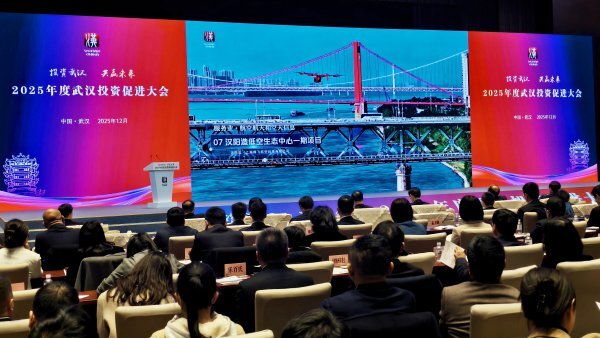
Group 1 - The Deputy Mayor emphasized the importance of aligning with the spirit of the 20th Central Committee and the significant speeches by General Secretary Xi Jinping, focusing on the mission to build a modern Wuhan [1] - In Wuhan Economic Development Zone, the Deputy Mayor highlighted the zone's role as the main battlefield for the city's industrial economy and its mission to create a "World Car Valley" [1] - The Deputy Mayor called for strengthening innovation leadership and promoting the integration of the automotive and optical industries, aiming for a transformation and upgrade of the automotive industry [1] Group 2 - In Wuchang District, the Deputy Mayor focused on the development of the digital economy and the construction of an artificial intelligence industry cluster [2] - The Deputy Mayor stressed the need to enhance urban renewal to drive functional innovation, industrial revitalization, and governance innovation, aiming to create a high-quality living and working environment [2] - The Deputy Mayor urged for proactive alignment with the strategic deployment of building "five centers" and modernizing Wuhan, emphasizing the importance of completing annual goals and planning for the upcoming year [2]
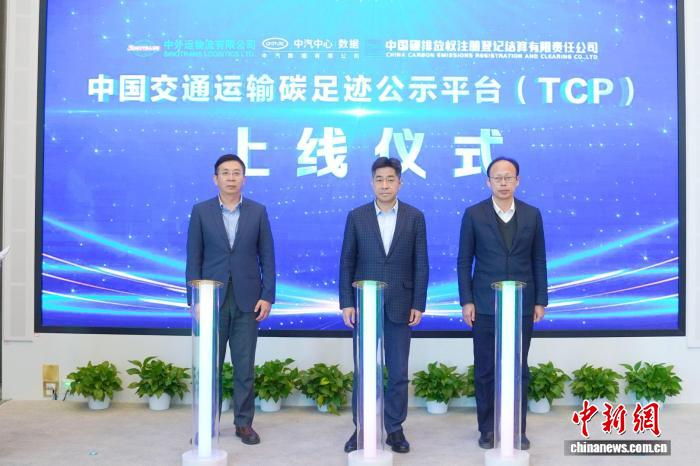
中国交通运输碳足迹公示平台(TCP)正式上线
Zhong Guo Xin Wen Wang· 2025-11-19 09:28
Core Insights - The "Automobile + Double Carbon Economy Summit" was held in Wuhan, marking a significant step in China's transportation carbon emission management and accounting system with the launch of the China Transportation Carbon Footprint Public Platform (TCP) [1][3] - The TCP platform focuses on four core functions: data publicization, factor inquiry, benchmark enterprise inquiry, and data services, aimed at supporting the automotive industry in utilizing carbon footprint data for decision-making and strategy optimization [1][3] - The summit emphasized the theme "New Perspectives on Production and Finance, New Paths for Carbon, and New Driving Forces," with experts discussing topics such as zero-carbon park construction, energy-saving industry development, green finance practices, and sustainable information disclosure [3] Industry Developments - The TCP platform will be open to automotive industry chain enterprises, government agencies, research institutions, and the public, facilitating comprehensive data support for green low-carbon business growth [1] - Future iterations of the TCP platform will aim to establish a carbon footprint management system covering the entire lifecycle of automobiles, from production to recycling [1] - The summit was organized by the China Automotive Technology Research Center Co., Ltd. and the Carbon Emission Rights Registration and Settlement (Wuhan) Co., Ltd., with support from various industry and research institutions [3]
人民网:武汉都市圈14个绿色低碳科技成果转化项目签约
Ren Min Wang· 2025-10-29 09:39
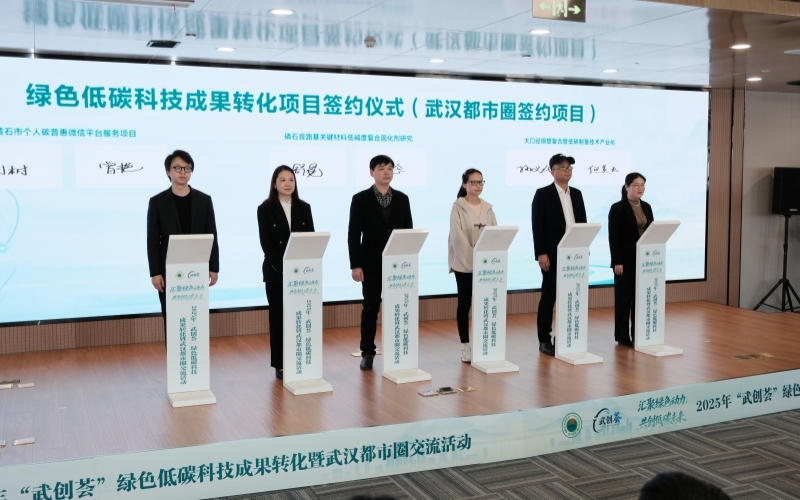
Core Insights - The event "Wuchuanghui" focused on green low-carbon technology innovation and industrial development in the Wuhan metropolitan area, featuring project signings and policy announcements aimed at promoting technology transfer and green industry development [3] Group 1: Project Signings - A total of 14 technology transfer projects were signed, covering areas such as renewable energy, resource recycling, and carbon capture, highlighting Wuhan's influence in green technology [3] - The first two batches of projects included innovations like "high-water organic solid waste incineration disposal technology" and "collaborative water management engine," while the latter batches focused on local projects such as the Huangshi carbon benefit platform and wastewater treatment in Xiaogan [3] Group 2: Policy Support - The Wuhan Municipal Science and Technology Bureau released the "2025 Wuhan Ecological Environment Protection Advanced Applicable Technology Guidance Directory," outlining technology promotion pathways [3] - The Wuhan Municipal Ecology and Environment Bureau explained policies related to "one-stop environmental protection for enterprises," optimizing environmental management processes for businesses [3] - The Wuhan Energy Conservation Supervision Center introduced the "Wuhan Industrial Energy Efficiency Guide (2025 Edition)," achieving full coverage of energy efficiency in industrial, building, and transportation sectors [3] Group 3: Technological Innovation and Collaboration - Wuhan Wuchuangtong Technology Service Co., Ltd. showcased its "Wuchuangtong" innovation service platform, which has successfully matched policies, technologies, and funding to facilitate technology transfer [4] - The Wuhan Planning Research Institute proposed a conceptual plan for the "Double Carbon Economic Belt" centered around Shahu Lake, aiming for a reduction in carbon emission intensity by over 20% through green building and smart energy projects [4] - The Wuhan Municipal Ecology and Environment Bureau emphasized the importance of ecological environment technology innovation to support the construction of a beautiful Wuhan, focusing on major technological needs and actions [4]

“双碳”经济下,上海新能源重卡充电站的现状、机会与建议——基于夜间经济的视角
Guo Ji Jin Rong Bao· 2025-10-13 11:22
Core Insights - The rapid development of new energy vehicle (NEV) charging stations in Shanghai is driven by the "carbon peak and carbon neutrality" strategy, with the city having the highest NEV ownership in China at 1.512 million vehicles by the end of 2024 [1] - The charging demand for NEVs exhibits a clear "tidal characteristic," with over 60% of charging occurring at night, benefiting from lower electricity prices during off-peak hours [1] - The surge in sales of pure electric heavy trucks in Shanghai is supported by substantial subsidies, with sales increasing from 807 units in 2023 to 2,617 units in 2024, and a total of 17,412 units sold from January to August 2025 [2] Group 1: Current Status and Challenges - Despite the booming sales of pure electric heavy trucks, only about 1,000 are estimated to be operational in Shanghai, indicating a significant gap between sales and actual usage [3] - The primary challenges for electric heavy trucks include "difficulties in parking," "slow charging," and "difficulties in accessing charging stations" [3][4][5] - The design of existing charging stations is often inadequate for the larger size of heavy trucks, leading to inefficiencies and increased time for drivers to find suitable parking and charging options [4] Group 2: Charging Infrastructure Needs - The current number of dedicated heavy truck charging stations in Shanghai is insufficient, with only about 10 operational stations, necessitating the construction of approximately 525 additional stations to meet potential demand [7][8] - A standard heavy truck charging station requires significant space and power capacity, with a single station needing to accommodate multiple trucks and provide fast charging capabilities to minimize downtime [6][7] - The existing charging infrastructure is not aligned with the operational needs of heavy trucks, which require faster charging solutions to maintain efficiency in logistics operations [5][6] Group 3: Recommendations for Development - It is recommended to establish a separate classification for heavy truck charging stations in policy frameworks to better address their unique requirements [9] - Electric companies should create green approval channels for new heavy truck charging stations and offer flexible pricing options to enhance service availability [10] - The government should consider expanding subsidy programs to include older heavy trucks, facilitating their replacement with electric models and accelerating the transition to electric logistics [11] - Establishing standardized facilities at heavy truck charging stations can provide essential services for drivers, enhancing their overall experience and fostering community among truck drivers [11]
国电南瑞20250903
2025-09-03 14:46
Summary of Guodian NARI Conference Call Company Overview - **Company**: Guodian NARI - **Industry**: Smart Grid and Energy Solutions Key Points Financial Performance - **Revenue Growth**: In the first half of 2025, Guodian NARI's revenue increased by 139%, with overseas contracts surging by 200% [2][4] - **Cash Flow Improvement**: Operating cash flow rose by over 2 billion RMB year-on-year, indicating strong financial health [2][6] - **Profitability**: Despite revenue growth, the gross margin in the smart grid segment decreased by over 2 percentage points due to the absence of high-margin projects from the previous year [2][11] Business Segments Performance - **Smart Grid Segment**: Revenue grew by 28% to approximately 12.2 billion RMB, accounting for about half of total revenue [2][16] - **Ultra-High Voltage and Flexible Transmission**: Revenue reached around 2.3 billion RMB, nearly doubling year-on-year, but faced lower margins compared to previous high-margin projects [2][14] - **Energy Low Carbon Segment**: Expected to grow over 30%, driven by new energy access, with wind power nearly doubling and solar and storage increasing by over 20% [2][23] Strategic Initiatives - **International Expansion**: The company aims to achieve over 10 billion RMB in overseas revenue by 2030, currently maintaining a gross margin of about 20% in overseas operations [3][36] - **Technological Innovation**: Focus on upgrading technology to meet challenges in energy transition and digital transformation, with plans to establish multiple model teams for research and development [5][9] - **Market Diversification**: The company is actively expanding into new markets, with a notable increase in contracts outside traditional systems [5][10] Future Outlook - **Growth Projections**: For 2025, the company anticipates a 15% growth in the smart grid segment, 5% in digital energy integration, over 30% in energy low carbon, and close to 10% in industrial interconnection [2][21] - **Investment in R&D**: The company plans to maintain a focus on R&D while controlling non-productive expenses, ensuring that expense growth remains below revenue growth [26] Investor Relations - **Dividend Policy**: The average dividend payout ratio has exceeded 45%, with recent increases bringing it close to 60%. The 2024 dividend yield is approximately 2.5% [7][20] - **Commitment to Shareholder Returns**: The company emphasizes a stable and attractive dividend strategy to reward investors [32] Additional Insights - **Emerging Technologies**: The company is exploring blockchain technology applications in its energy solutions and has made progress in high-voltage IGBT products for grid applications [35][37] - **Market Conditions**: The competitive landscape in the electromechanical protection market has led to price declines, impacting gross margins [13] This summary encapsulates the key insights from Guodian NARI's conference call, highlighting its financial performance, strategic initiatives, and future outlook in the smart grid and energy solutions industry.

上半年省属企业营收2193亿元江苏国企稳进提质 夯实经济压舱石
Xin Hua Ri Bao· 2025-08-09 23:42
Group 1: Economic Performance of State-Owned Enterprises - In the first half of the year, state-owned enterprises under provincial and municipal supervision achieved a total operating revenue of 632.9 billion yuan, with provincial enterprises contributing 219.3 billion yuan and a profit total of 28.32 billion yuan, indicating positive growth in both revenue and profit [1] - The provincial energy investment entity, facing challenges from declining power generation and grid prices, reported a profit total exceeding 4 billion yuan, maintaining year-on-year growth [2] - Jiangsu's traffic infrastructure investment reached 23.368 billion yuan in the first half of the year, with several major projects completed and operational [3] Group 2: Strategic Developments and Innovations - The provincial planning and design group focused on emerging sectors, capturing nearly 400 business opportunities and achieving a year-on-year growth of 5.6% in western region business [4] - The high investment group successfully launched multiple funds, with the second batch of 22 funds totaling 40.8 billion yuan and a third batch of 5 funds starting at 15.5 billion yuan, significantly expanding its investment scope [5] - The Jiangsu International Group is transitioning towards green manufacturing, with a 36.7% increase in new international engineering contracts and a 23% rise in total import and export volume [6] Group 3: Industry-Specific Developments - The provincial salt industry group is optimizing its salt and alkali circular economy, achieving an operating revenue of 2.493 billion yuan and a profit total of 424 million yuan, with production of salt chemical products reaching 4.8588 million tons [7] - The agricultural group reported a 10% increase in summer grain purchases and a 49.2% revenue growth from reserve replenishment activities, indicating strong performance in the agricultural sector [7]
江苏国企稳进提质,夯实经济压舱石
Xin Hua Ri Bao· 2025-08-09 21:25
Group 1: Economic Performance - In the first half of the year, state-owned enterprises under provincial and municipal supervision achieved a total operating revenue of 632.9 billion yuan, with provincial enterprises contributing 219.3 billion yuan and a profit total of 28.32 billion yuan, indicating positive growth in both revenue and profit [1] - Jiangsu's transportation infrastructure investment reached 23.368 billion yuan in the first half of the year, with several major projects completed and operational, including the Ningyang Yangtze River Bridge and the Binhuai Expressway [3] - The Jiangsu Salt Industry Group reported an operating revenue of 2.493 billion yuan and a profit total of 424 million yuan, with production of salt chemical products reaching 4.8588 million tons, outperforming industry expectations [8] Group 2: Sector-Specific Developments - The provincial energy investment group, facing challenges from declining power generation and pricing, achieved a profit total exceeding 4 billion yuan, maintaining growth through strategic focus on core business [2] - The Jiangsu Planning and Design Group reported a 5.6% year-on-year growth in business in the western region, driven by significant projects in urban planning and collaboration with local governments [4] - The Jiangsu Agricultural Reclamation Group established a 1 billion yuan industry investment fund to promote technological and industrial innovation, with a focus on enhancing the agricultural production system [6] Group 3: Investment and Expansion - The High Investment Group successfully launched the second batch of 22 specialized funds totaling 40.8 billion yuan, with a third batch of 5 funds worth 15.5 billion yuan initiated, expanding its investment reach [5] - The Jiangsu International Group reported a 36.7% increase in new international engineering contracts and a 23% growth in total import and export volume, reflecting strong performance in the international market [7]