
城市一刻钟便民生活圈建设

Search documents
中国城市便利店发展指数第一名:超过厦门、太原、长沙,3家企业跻身全国TOP100
Sou Hu Cai Jing· 2025-12-06 15:07
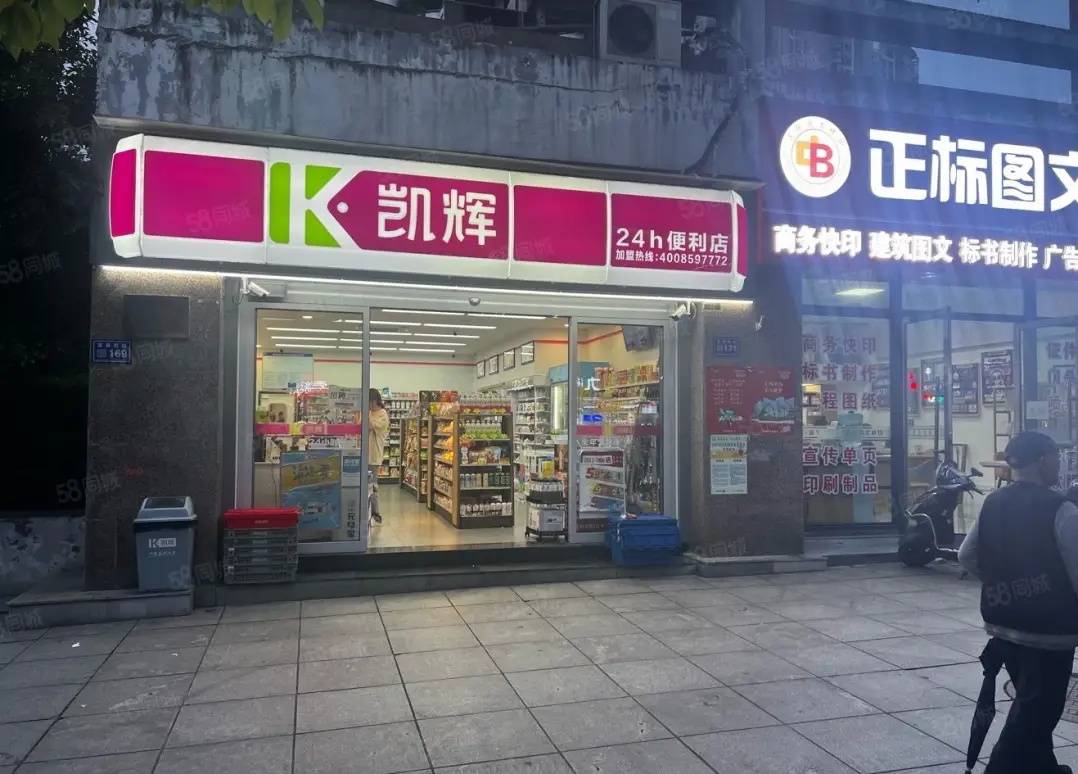
Core Insights - The article discusses the development of convenience stores in China as part of the "15-minute city convenience living circle" initiative aimed at improving urban residents' quality of life and promoting consumption [1][3]. Group 1: Convenience Store Development Index - The China Chain Store & Franchise Association (CCFA) released the "2025 China Urban Convenience Store Development Index," marking the 12th consecutive year of this survey, which evaluates cities based on store growth rate, saturation, 24-hour store ratio, and business environment [1][3]. - The average development index for the surveyed cities is 81.1, with Guiyang, Shenzhen, Guangzhou, Haikou, and Beijing ranking 6th to 10th [3][9]. - Guiyang leads with a store growth rate of 7.0%, continuing its position from the previous year, and is projected to have over 1,600 convenience stores by the end of 2024, generating over 3 billion yuan in consumption [3][6]. Group 2: City Rankings and Growth Rates - Fuzhou has risen to the top of the index with a score of 91.6, marking a significant increase from 5th place in 2024, while Xiamen, which held the top position for five consecutive years, is now in second place with a score of 91.2 [6][9]. - The top five cities in terms of growth rates include Guiyang (7.0%), Hefei (5.8%), Fuzhou (4.8%), and Jinan (4.7%) [9][10]. - The highest proportion of 24-hour convenience stores is found in Guangzhou, with 78.0%, significantly above the average of 53.4% [7]. Group 3: Local Brands and Market Dynamics - Local brands such as Kaihui Convenience Store dominate the market in Guiyang, holding over 60% market share and operating the largest modern logistics center in Guizhou [3]. - Fuzhou has seen a mix of local and foreign brands, with notable growth in convenience store numbers and a 4.8% growth rate last year [8]. - The "2024 China Convenience Store TOP 100" list features seven brands from Fujian, with three from Fuzhou, indicating a strong local presence in the convenience store sector [6].

福建厦门推进城市一刻钟便民生活圈建设 把幸福生活“圈”在身边
Ren Min Ri Bao· 2025-11-30 22:20
Group 1 - The core idea of the article is the development of a "15-minute convenient living circle" in Xiamen, Fujian Province, which aims to enhance community services and improve residents' quality of life [1][2] - The community of Lianxing has over 22,000 residents and has seen significant improvements in local amenities, including markets, supermarkets, and fitness facilities [1] - Xiamen was selected as one of the first pilot cities for the 15-minute living circle initiative in 2021, focusing on integrating community resources and enhancing service capabilities [1] Group 2 - Lianxing community addresses the needs of vulnerable groups, including elderly individuals living alone and those with disabilities, by providing tailored services such as home visits and assistance with daily tasks [2] - The community has established partnerships with local enterprises to offer meal services and hired third-party agencies for home care, improving the quality of life for residents like Wang Jianzhong, a disabled elderly man [2] - As of now, Xiamen has 61 pilot communities for the 15-minute living circle, encompassing over 21,200 commercial outlets and creating employment for approximately 105,000 people, serving more than 980,000 residents [2]
“美丽的菜市场”长啥样
Jing Ji Ri Bao· 2025-10-20 00:38
Group 1: Market Development - The "Beautiful Vegetable Market" in Tianjin's Hexi District has been upgraded from the original San Shui Dao market, now attracting over 6,000 visitors daily by offering fresh vegetables and new dining options like cooked meals and desserts [1] - The market aims to meet the needs of local residents, including students and the elderly, by providing a variety of ready-to-eat food options, addressing the shortfall in hot food supply [1] Group 2: Community Services - The Tianjin Hexi District has established regular community service events, such as the convenience market, which occurs bi-weekly, offering services like knife sharpening and fresh agricultural products [2] - The local Agricultural Bank is actively participating in community development by providing financial education and services tailored to the needs of the community, including the establishment of an "Elderly-Friendly Station" [2] Group 3: Economic Impact - The Hexi District has implemented a "government platform, enterprise participation, multi-party linkage, and resident benefit" approach to enhance the community's economic activities, resulting in over 32 million yuan in sales through the introduction of new retail formats [3] - The district prioritizes high-frequency consumer businesses, successfully attracting over ten chain convenience stores and establishing a unique commercial system at the community level [3]
瑞达期货纯碱玻璃产业日报-20250923
Rui Da Qi Huo· 2025-09-23 11:12
1. Report Industry Investment Rating - Not provided in the content 2. Core View of the Report - For soda ash, it is expected that supply will be loose, demand will decline slightly, and prices will continue to be under pressure. However, with the hype of the "anti - involution" policy, there may be changes. The report suggests short - term long positions on the soda ash main contract when the price is low [2]. - For glass, although the current real - estate situation is not optimistic, if the central bank cuts interest rates, it will support real - estate demand. The market will fluctuate around the demand side, and the overall de - stocking trend remains unchanged. The report suggests short - term long positions on the glass main contract when the price is low [2]. 3. Summary by Relevant Catalog 3.1 Futures Market - Soda ash main contract closing price: 1273 yuan/ton, down 20 yuan [2]. - Glass main contract closing price: 1183 yuan/ton, down 16 yuan [2]. - Soda ash and glass price difference: 90 yuan/ton, down 4 yuan [2]. - Soda ash main contract position: 1415505 lots [2]. - Glass main contract position: 1315901 lots, up 41822 lots [2]. - Soda ash top 20 net position: - 275366 lots, up 3732 lots [2]. - Glass top 20 net position: - 194539 lots, up 21194 lots [2]. - Soda ash exchange warehouse receipts: 2154 tons [2]. - Glass exchange warehouse receipts: 0 tons [2]. - Soda ash basis: - 68 yuan/ton, up 40 yuan [2]. - Glass basis: - 103 yuan/ton, up 16 yuan [2]. - January - May glass contract spread: - 129 yuan/ton, up 1 yuan [2]. - January - May soda ash contract spread: - 88 yuan/ton, up 3 yuan [2]. 3.2 Spot Market - North China heavy soda ash: 1225 yuan/ton, up 15 yuan [2]. - Central China heavy soda ash: 1300 yuan/ton [2]. - East China light soda ash: 1250 yuan/ton [2]. - Central China light soda ash: 1215 yuan/ton, up 5 yuan [2]. - Shahe glass sheets: 1080 yuan/ton [2]. - Central China glass sheets: 1140 yuan/ton [2]. 3.3 Industry Situation - Soda ash plant operating rate: 85.53%, down 1.76 percentage points [2]. - Float glass enterprise operating rate: 76.01% [2]. - Glass in - production capacity: 16.02 million tons/year [2]. - Glass in - production line number: 225 [2]. - Soda ash enterprise inventory: 169.57 tons, down 5.99 tons [2]. - Glass enterprise inventory: 6090.8 ten - thousand weight boxes, down 67.5 ten - thousand weight boxes [2]. 3.4 Downstream Situation - Cumulative real - estate new construction area: 39801.01 ten - thousand square meters, up 4595.01 ten - thousand square meters [2]. - Cumulative real - estate completion area: 27693.54 ten - thousand square meters, up 2659.54 ten - thousand square meters [2]. 3.5 Industry News - Sino - US bilateral economic and trade relations are expected to be promoted, and the two sides are in communication about a possible meeting at APEC [2]. - China's military and naval forces have carried out important activities, and the Fujian aircraft carrier has achieved take - off and landing training of three types of carrier - based aircraft [2]. - The CSRC and the SSE plan to promote capital market reforms and the entry of long - term funds [2]. - The central bank governor mentioned that China's monetary policy adheres to its own stance and takes into account internal and external balance [2]. 3.6 Macro - situation and Market Outlook - For soda ash, the domestic operating rate and production are decreasing in the short term, and in the long run, backward production capacity may be phased out, while natural soda ash production capacity is increasing. Glass production is at a low level, and photovoltaic glass demand may decline. Soda ash inventory is rising slightly, and prices will be under pressure [2]. - For glass, production is at a low level with obvious signs of rigid - demand production, and profits are rising due to higher spot prices. Real - estate demand is currently weak, but may be supported by interest rate cuts. The market will fluctuate around demand, and the de - stocking trend remains unchanged [2].
中国多部门加力推动城市一刻钟便民生活圈建设扩围升级
Zhong Guo Xin Wen Wang· 2025-09-19 13:37
Core Viewpoint - The Chinese government, through nine departments including the Ministry of Commerce, has issued a notification to enhance the construction of "15-minute convenient living circles" in urban areas, aiming to improve residents' daily life and consumption experiences by 2030 [1][2]. Group 1: Policy Objectives - The goal is to achieve a "Hundred Cities, Ten Thousand Circles" initiative by 2030, which includes establishing 100 pilot cities and creating 10,000 well-structured, diverse, and high-quality living circles [1]. - The initiative aims for a resident satisfaction rate of over 90% and a chain store rate of over 30% within these living circles [1]. Group 2: Focus on Specific Demographics - The policy emphasizes services for the elderly and children, mandating the inclusion of elderly care services and facilities in the living circles, such as senior dining halls and social activities [2]. - It encourages the development of child-friendly spaces, including mother-baby facilities, children's bookstores, and daycare services, to enhance family-oriented consumption [2]. Group 3: Current Status and Future Plans - Currently, the coverage of the 15-minute living circles is limited, only reaching 12.5% of urban communities nationwide [2]. - The government plans to expand the reach of these living circles to create age-friendly and quality living environments for all residents [2].
九部门:优先支持保障基本民生的百货商场等消费基础设施项目发行REITs
Sou Hu Cai Jing· 2025-09-19 04:27
Core Viewpoint - The Ministry of Commerce and nine other departments in China have issued a notice to enhance the construction and upgrade of the "15-minute convenient living circle" in urban areas, emphasizing financial and insurance support for community services [1] Financial Support - Financial institutions are encouraged to revitalize idle commercial facilities around communities, prioritizing services for the elderly and children [1] - The establishment of a long-term care insurance system is being accelerated, with a focus on determining the coverage and standards for subsidies for economically disadvantaged elderly individuals [1] - The policy aims to support community commercial complexes, neighborhood centers, department stores, and markets through the issuance of Real Estate Investment Trusts (REITs) [1] Policy Implementation - The government plans to utilize a 500 billion yuan service consumption and elderly care relending policy to guide financial institutions in increasing support [1] - There is an emphasis on implementing loan interest subsidy policies for service industry operators [1]
扩围升级!推动城市一刻钟便民生活圈建设相关政策将出台
Zhong Guo Zheng Quan Bao· 2025-09-16 02:17
Core Viewpoint - The Chinese government is implementing measures to expand and upgrade the "15-minute convenient living circle" in cities, focusing on services for the elderly and children, and extending these services to eligible county towns [1][2]. Group 1: Policy Initiatives - The initiative aims to create a community service radius of approximately 15 minutes on foot, targeting basic and quality consumption needs of residents [1]. - The "15-minute convenient living circle" is part of the "Consumption Promotion Special Action Plan" issued by the Central Committee and the State Council in March [1]. - A total of 30 regions have been selected as pilot areas for the second batch of the "15-minute convenient living circle" initiative, announced by the Ministry of Commerce and 11 other departments [1]. Group 2: Development Report - According to the "2024 Annual Development Report on the 15-Minute Convenient Living Circle," by the end of 2024, 210 pilot areas will have established 5,188 convenient living circles, serving 118 million community residents [1]. - The commercial outlets within these living circles have created a total of 7.324 million jobs, reflecting a year-on-year growth of 44.9% [1]. Group 3: Future Directions - The report suggests that the next steps should include extending the convenient living circle from major cities to eligible county towns, while continuously upgrading its functions [2]. - There is an emphasis on building a multi-layered and diversified service system that caters to residents of all age groups, particularly focusing on the needs of the elderly and children [2].