
大枣

Search documents
野菜排毒 浓茶祛湿?立春养生快“避雷”
Xin Lang Cai Jing· 2026-02-23 17:36
Group 1 - The article discusses common spring health practices, such as consuming wild vegetables and drinking strong tea, which may pose safety risks and could be harmful to health [1] - Wild vegetables, while believed to have some health benefits, do not effectively detoxify blood vessels and can cause discomfort if consumed in excess [2] - It is important to ensure the safety and source of wild vegetables, as they can be confused with toxic plants and may carry safety risks if foraged from uncontrolled environments [2] Group 2 - Drinking strong tea is discouraged due to high levels of tannins and caffeine, which can lead to health issues like stomach pain and osteoporosis [3] - The recommended approach to tea consumption is "light tea at a warm temperature," with choices based on individual constitution [3] - After the Rain Water solar term, dietary recommendations include consuming foods that are sweet and warm to strengthen the spleen, such as yam and millet [4] - It is advised to avoid cold, greasy, and spicy foods to prevent depleting vital energy and fluids [4]
节前忙碌、饮食不规律?试试假期“充电宝”!好吃又营养!
Xin Lang Cai Jing· 2026-02-07 23:55
Group 1 - The article emphasizes the importance of sweet foods, particularly in the context of traditional Chinese medicine, where "sweet" is associated with balancing health and enhancing physical strength [1][2] - It distinguishes between "sweet" in a culinary sense and "sweet" in a medicinal context, highlighting that some foods may not taste sweet but possess beneficial properties [2] - The arrival of spring is noted as a time to increase the intake of sweet foods to support digestive health, as the liver's activity can affect the spleen and stomach [3] Group 2 - Sweet foods are said to provide energy and boost immunity during the spring season, which coincides with travel peaks and the Chinese New Year holiday [4] - Specific foods like yam are highlighted as beneficial for those with weak digestive systems, serving as a natural source of nourishment [5] - Recipes for health-promoting teas and porridge using yam and other ingredients are provided, aimed at those with mild to moderate digestive issues [6] Group 3 - Malt is described as a remedy for common gastrointestinal issues encountered during travel, such as diarrhea and abdominal pain [7] - Sugarcane is referred to as a natural humidifier, helping to alleviate dryness during the transition from winter to spring [8] - The article also mentions the benefits of Buddha's hand for emotional well-being, acting as a natural remedy for stress and anxiety [8]
云南中药材追溯体系覆盖559家企业
Xin Lang Cai Jing· 2026-01-15 22:30
Core Insights - The Yunnan Province Traditional Chinese Medicine (TCM) traceability system aims to enhance the quality development of the TCM industry by covering 559 enterprises by December 30, 2025 [1] Group 1: Traceability System Overview - As of December 30, 2025, the traceability system has registered 559 entities, including 167 TCM production enterprises and 392 TCM planting and breeding enterprises and cooperatives, covering 1.253 million acres [1] - A total of 681.5 million codes have been assigned, with 103 production enterprises producing 15.5434 million TCM products with traceability codes, involving 16,243 products and covering 28,535 specifications [1] Group 2: 2025 Performance Metrics - In 2025, 127 new TCM planting and breeding enterprises were registered, marking an increase of nearly 50% from 2024, with a total of 468.51 million codes assigned and over 23,400 tons of traceable medicinal materials [2] - 80 TCM product manufacturing enterprises participated in the coding process, assigning a total of 66.036 million codes, covering 10,209 products and 15,757 specifications, with 107,069 scans of traceable products by consumers [2] Group 3: Top Products and Varieties - The top three TCM varieties by code assignment in 2025 were star anise (46,165 codes), platycodon root (35,446 codes), and goji berries (29,183 codes) [2] - The leading TCM products by code assignment were rose flowers (20.374366 million codes), jujubes (2.397536 million codes), and bear bile freeze-dried powder (2.090911 million codes) [2]
脱贫地区乡村产业提质增效
Ren Min Ri Bao Hai Wai Ban· 2026-01-12 07:14
Core Insights - The "832 Platform" is significantly enhancing the sales of agricultural products from poverty-stricken areas, with a cumulative transaction volume expected to exceed 60 billion yuan by the end of 2025 [1][2]. Group 1: Sales Growth and Impact - Agricultural products such as raisins and jujubes from Xinjiang's Moyu County have seen sales growth exceeding 60% year-on-year, while the transaction volume on the supplier platform in Tibet has surpassed 49 million yuan, with a growth rate of 40% [1]. - The platform is facilitating the transition of local agricultural products from primary processing to deep processing, greatly increasing their value [1]. Group 2: Brand Development and Standardization - The platform is not only generating orders but also educating local producers on branding and standardized operations, addressing common challenges such as lack of stable sales channels and poor packaging [2]. - The "832 Platform" has helped establish 25 regional public brands, including "Moyu Fudai" and "Hailun Soybeans," benefiting over 100,000 farmers and achieving cumulative sales exceeding 3 billion yuan [2]. Group 3: Market Engagement and Future Plans - Various consumer engagement activities, such as "Taste 832" and "832 Platform Rural Revitalization Public Welfare," are being implemented to enhance market access for products from poverty-stricken areas [3]. - The platform aims to maintain its commitment to public welfare while improving product quality and competitiveness, with plans to attract more social participation for sustainable development [3].
“832平台”助力脱贫地区乡村产业提质增效
Xin Lang Cai Jing· 2026-01-11 22:25
Core Insights - The "832 Platform" is significantly enhancing the sales of agricultural products from poverty-stricken areas, with a cumulative transaction volume expected to exceed 60 billion yuan by the end of 2025 [1][2]. Group 1: Sales Growth and Impact - Agricultural products such as raisins and jujubes from Xinjiang's Moyu County have seen sales growth exceeding 60% year-on-year, while the transaction volume of suppliers in Tibet has surpassed 49 million yuan, reflecting a 40% increase [1]. - The platform has facilitated the transition of local agricultural products from primary processing to deep processing, greatly enhancing their value [1]. Group 2: Brand Development and Standardization - The platform is not only generating orders but also educating local producers on branding and standardized operations, addressing the common challenges of poor sales channels and inadequate packaging [2]. - The "832 Platform" has helped establish 25 regional public brands, such as "Moyu Fudai" and "Hailun Soybeans," contributing to over 10,000 farmers' income increases and achieving cumulative sales exceeding 3 billion yuan [2]. Group 3: Product Range and Market Engagement - Over 60% of products on the platform are deep-processed, with 440,000 items available for sale, including 13,000 certified products [2]. - Various consumer engagement activities, such as "Taste 832" and "832 Platform Rural Revitalization Public Welfare Activities," are enhancing market connections for products from poverty-stricken areas [3]. Group 4: Future Outlook - The platform aims to maintain its commitment to public welfare while ensuring product quality and pricing, with plans to improve operational mechanisms and attract more social participation for sustainable support [3].
累计成交超600亿元,“832平台”助力脱贫地区乡村产业提质增效
Xin Lang Cai Jing· 2026-01-11 09:54
Core Insights - The sales of agricultural products such as raisins and jujubes in Xinjiang's Moyu County have increased by over 60% year-on-year, with the brand "Moyu Fudai" gaining recognition [1] - The transaction volume of the supplier platform in Tibet has surpassed 49 million yuan, with a growth rate of 40%, as more agricultural products like barley are moving from primary processing to deep processing, significantly enhancing their value [1] - The "832 Platform," a network sales platform for agricultural products from poverty alleviation areas, has enabled a growing number of specialty agricultural products to be sold online, reaching households across the country [1] Summary by Category Sales Growth - Agricultural products in Xinjiang's Moyu County have seen a sales increase of over 60% year-on-year [1] - The transaction volume in Tibet has reached over 49 million yuan, marking a 40% growth [1] Platform Development - The "832 Platform" has achieved a cumulative transaction volume exceeding 60 billion yuan by the end of 2025 [1] - The platform is operated by China Supply and Marketing E-commerce Co., Ltd., under the guidance of the Ministry of Finance, Ministry of Agriculture and Rural Affairs, and the All-China Federation of Supply and Marketing Cooperatives [1] Impact on Rural Development - The establishment of the "832 Platform" is transforming the development of rural industries in many regions, particularly in the 832 poverty-stricken counties it is named after [1]
冬季进补勿“盲补” 专家提醒辨清体质科学滋养
Xin Lang Cai Jing· 2026-01-10 14:21
Core Viewpoint - Winter is considered an ideal time for supplementation to enhance physical health, but individuals should understand their body constitution to avoid inappropriate supplementation that may lead to adverse effects [1][5] Group 1: Body Constitution Types - Traditional Chinese medicine categorizes body constitution into nine types, with six common types in winter:平和质 (Balanced), 气虚质 (Qi Deficiency), 阳虚质 (Yang Deficiency), 阴虚质 (Yin Deficiency), 痰湿质 (Phlegm-Damp), and 湿热质 (Damp-Heat) [1][5] - Individuals with a balanced constitution do not require excessive supplementation and should maintain a moderate and balanced diet [1] Group 2: Supplementation Principles - For Qi Deficiency, characterized by fatigue and pale complexion, the principle is to supplement gently with foods like yam and lotus seeds, avoiding heavy or overly warming supplements [1][2] - Yang Deficiency presents with cold extremities and a preference for warm foods; suitable foods include lamb and ginger, while cold foods should be avoided [2] - Yin Deficiency is marked by symptoms like dry mouth and insomnia; individuals should focus on nourishing foods like duck and black sesame, avoiding spicy and hot foods [2] - For Damp-Heat constitution, the focus is on clearing heat and dampness with foods like adzuki beans and winter melon, while avoiding warming foods [4] - Phlegm-Damp constitution requires strengthening the spleen and eliminating phlegm, with recommended foods including yam and poria, while avoiding cold drinks and fatty foods [4] Group 3: Professional Guidance - Due to the complexity of body constitutions, individuals experiencing difficulty in self-assessment or with complicated symptoms are advised to seek professional help from a traditional Chinese medicine practitioner for personalized supplementation plans [5]


各地市场购销两旺升腾浓浓烟火气 “年经济”释放强大消费活力
Xin Lang Cai Jing· 2026-01-09 15:39
Group 1: Market Overview - The South Zuo Grand Market in Yuanshi County, Shijiazhuang, has become a popular destination for citizens and tourists as the Spring Festival approaches, featuring over 1,800 stalls and a variety of products [3][5] - The market is divided into nine operational zones, offering everything from fruits and vegetables to live poultry and local snacks, and has added an extra Saturday market to accommodate increased demand for New Year goods [3][5] Group 2: Local Products - Over 70% of the stalls at the South Zuo Grand Market are operated by local farmers selling homegrown or handmade products, including signature mountain goods like walnuts, jujubes, and persimmons from the Taihang Mountains [5] Group 3: Infrastructure Improvements - Significant improvements have been made to the market's infrastructure, including a parking lot that can accommodate over 4,000 vehicles, enhanced restroom facilities, and the installation of drinking water points, enhancing the overall visitor experience [7] Group 4: Flower Market Trends - In Lanzhou, the flower market is experiencing a surge in demand as the Spring Festival approaches, with the Lanzhou New Area's flower industry base producing over 100 million fresh-cut flowers annually, making it the largest rose breeding base in Northwest China [9][13] - The favorable natural conditions, including high altitude and ample sunlight, contribute to the high quality of the roses, which are also exported to countries like Kazakhstan and Russia [11][13] Group 5: Culinary Events - In Ningbo, Zhejiang Province, the 2026 New Spring Food Tourism Consumption Season is underway, featuring a "Yangtze River Delta Flavor Corridor" with nearly 100 food stalls showcasing local delicacies, attracting many visitors [18] Group 6: Fruit Market Dynamics - The Haixia Fruit Wholesale Market in Fuzhou is experiencing a rise in trading volume as the Spring Festival approaches, with daily trading volumes reaching 1,700 tons, a 10% increase compared to regular days [22][24] - The market, covering approximately 49,000 square meters, includes various fruit categories and has a cold storage capacity of 60,000 tons to ensure the freshness of the products [22][24]

2025武功电商双十二狂欢节暨武功电商集市圆满落幕
Sou Hu Cai Jing· 2025-12-08 12:44
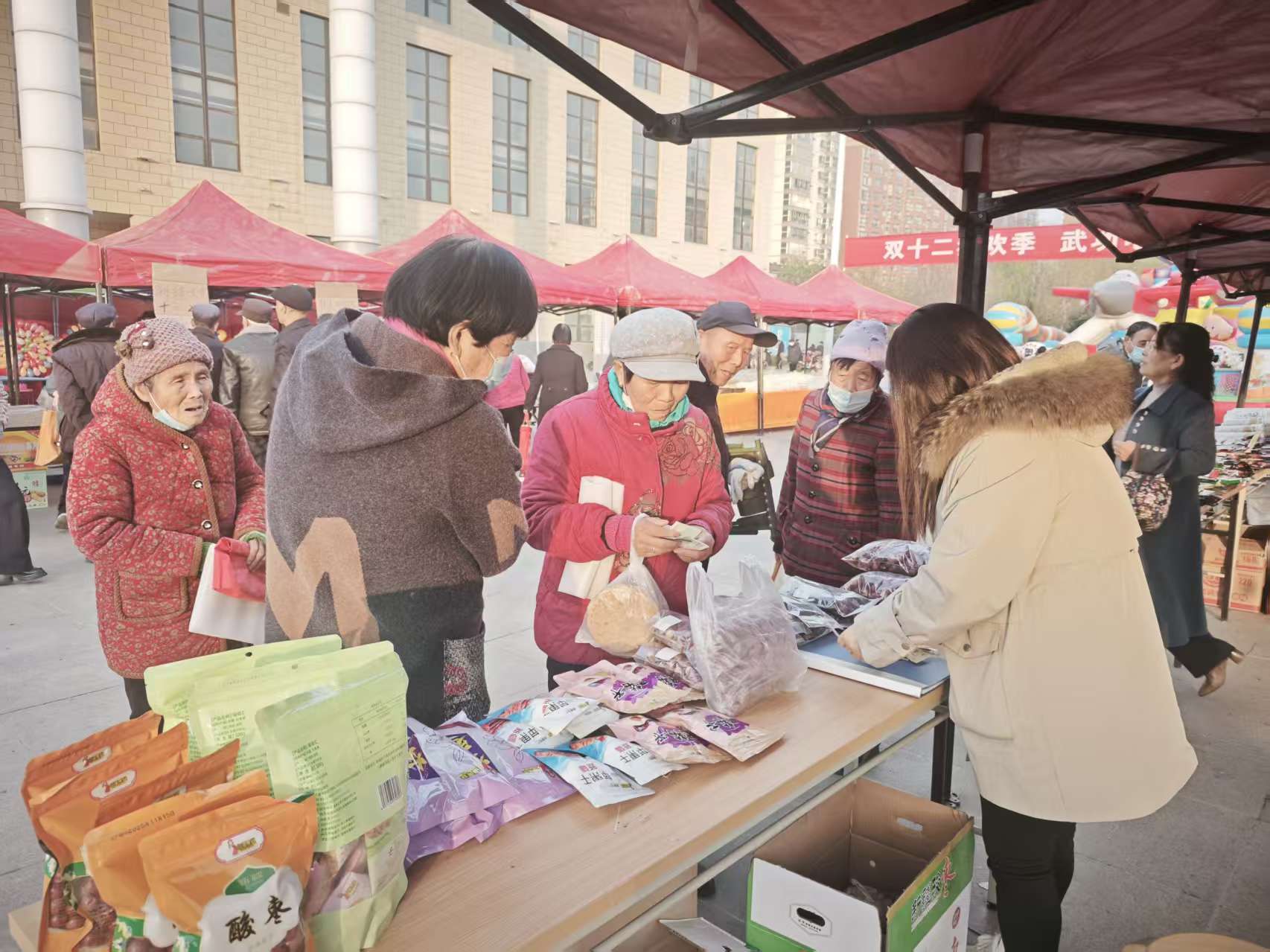
Group 1 - The event "2025 Wugong E-commerce Double Twelve Carnival" successfully took place in Wugong County, focusing on consumption, culture, and experience [1] - The core objectives of the event included boosting consumer confidence, empowering local brands, and exploring new retail models through a dual approach of offline market experience and online live streaming sales [2] - The event featured dozens of local e-commerce companies showcasing over a hundred types of specialty agricultural products, including dried fruits and snacks, highlighting the quality of Wugong's e-commerce offerings [2] Group 2 - The shopping festival provided an efficient platform for local enterprises to promote their brands and connect with markets, aiding farmers' income and promoting rural revitalization [2] - Wugong County is recognized as a benchmark for e-commerce in Northwest China, continuously driving consumption upgrades through innovation and injecting strong momentum into the high-quality development of the local economy [2]
了不起的河洛文化 | 驼铃声声向洛阳
He Nan Ri Bao· 2025-10-29 00:52
Core Viewpoint - The "Camel Team from East Tianshan" is undertaking a cultural expedition along the ancient Silk Road, aiming to cover approximately 2,700 kilometers from Hami, Xinjiang to Luoyang, Henan by the end of November [1][4]. Group 1: Expedition Details - The team consists of 33 camels and over 20 members, including local farmers and volunteers, retracing the historical Silk Road route through key locations such as Dunhuang, Gua Zhou, and Xi'an [1][2]. - The journey has faced extreme challenges, including severe weather conditions and significant temperature fluctuations, with team members walking about 30 kilometers daily [2][3]. Group 2: Cultural Significance - The expedition is not just a physical journey but also a cultural event, showcasing the spirit of the Silk Road through various activities, including camel markets and performances along the route [2][3]. - The team aims to build a cultural and tourism bridge between Xinjiang and Central China, expressing gratitude for support received from Henan [3]. Group 3: Community Engagement - The team engages with local communities, sharing knowledge about camel husbandry and promoting local products such as Hami melons and jujubes [3]. - The expedition has garnered public interest, with local residents and children actively participating in the experience [3].