太空态势感知

Search documents
美国推进重返月球计划,太空战略布局或将带来国际竞争
Orient Securities· 2025-12-22 06:54
Investment Rating - The report maintains a "Positive" outlook for the defense and military industry [4] Core Insights - The U.S. is advancing its lunar return plan, which may lead to increased international competition in space strategy, benefiting China's rocket technology and space operations [8][11] - The proximity of low Earth orbit satellites between China and the U.S. highlights the need for enhanced space traffic management and situational awareness [12][16] - The upcoming "14th Five-Year Plan" is expected to clarify new equipment construction plans, emphasizing the importance of unmanned and anti-unmanned equipment, deep-sea technology, and operational informatization [17] Summary by Sections Investment Recommendations and Targets - The report suggests focusing on commercial aerospace, military trade, and new quality combat capabilities as key investment areas [9][17] - Specific recommended stocks include: - Commercial Aerospace: Aerospace Electronics (600879, Buy), Haige Communication (002465, Buy), and others [17] - Engine & Fuel Chain: West Superconductor (688122, Buy) and others [17] - New Quality Domains: New Light Optoelectronics (688011, Increase) and others [17] - Military Electronics: Aerospace Electric (002025, Buy) and others [17] - Military Trade/Main Equipment: Aerospace Electronics (600879, Buy) and others [17] Industry Performance - The defense and military industry index (Shenwan) rose by 1.53%, outperforming the Shanghai and Shenzhen 300 index [19][21] - The report notes that the defense and military sector ranked 11th out of 31 in terms of weekly performance [22] Key News and Developments - The report highlights significant developments such as the successful first flight of the Rainbow-7 high-altitude stealth drone and the establishment of a permanent lunar outpost by 2030 as part of the U.S. space strategy [26][27] - It also mentions the ongoing military trade dynamics and the implications of recent geopolitical events on the defense sector [28][29]


没红绿灯的太空开始“堵车”了,“感知卫星”成了商业航天的新战场
Tai Mei Ti A P P· 2025-11-30 09:36
Core Viewpoint - The rapid growth of commercial space activities is leading to increased satellite launches and a crowded orbital environment, raising concerns about space debris and safety [2][3][9]. Group 1: Market Growth and Trends - The global commercial space market is projected to grow from $62 billion in 2020 to $75 billion in 2024, with an estimated revenue of $93.7 billion by 2029, reflecting a compound annual growth rate (CAGR) of 4.6% from 2024 to 2029 [3]. - The number of satellites is expected to increase from 12,000 to 57,000 over the next five years, with significant contributions from companies like SpaceX and OneWeb, as well as China's ambitious satellite deployment plans [3][5]. Group 2: Space Debris and Safety Concerns - The proliferation of satellites has led to a significant increase in space debris, with over 50,000 pieces larger than 10 cm and approximately 1.2 million pieces between 1 cm and 10 cm, posing a serious threat to operational spacecraft [5][6]. - Recent incidents, such as the damage to the Chinese Shenzhou 20 spacecraft due to space debris, highlight the urgent need for effective monitoring and mitigation strategies [2][6]. Group 3: Regulatory and Strategic Developments - The National Space Administration of China has established a Commercial Space Bureau to oversee the burgeoning commercial space sector, emphasizing the importance of safety and sustainable development [2][9]. - Various countries have implemented policies to address space debris, with China also accelerating its regulatory framework to ensure responsible satellite operations and debris mitigation [9][12]. Group 4: Space Situational Awareness and Technology - Space situational awareness (SSA) satellites are being developed to monitor space debris and potential collision risks, with both domestic and international companies investing in this technology [11][12]. - The commercial application of SSA satellites is expected to include data services, insurance risk assessment, and launch window optimization, creating a new business model in space management [12][13]. Group 5: Future Challenges and Collaboration - The complexity of commercial space operations necessitates collaboration across the industry to effectively manage space traffic and debris, distinguishing it from traditional aerospace sectors [16]. - The development of SSA capabilities is seen as a critical first step, but challenges remain in achieving high-precision tracking and addressing dynamic space environments [16].


商业航天产业迎来黄金发展期,太空感知基础设施加快布局
Di Yi Cai Jing· 2025-11-28 04:47
Core Insights - China's commercial space industry is entering a golden development period with significant technological breakthroughs and industrial growth as it is included in the national space development plan [1][2] - The "Star Eye" space awareness constellation plan aims to provide innovative solutions for space traffic management and enhance satellite operation reliability [1][6] Industry Development - The commercial space sector has been included in government work reports for two consecutive years, indicating its importance as a new industry [2] - The market size of China's commercial space industry is projected to reach 2.3 trillion yuan in 2024, with estimates of 2.5 trillion to 2.8 trillion yuan in 2025 [2] - Total financing for the commercial space sector is expected to exceed 20 billion yuan in 2024, with projections of 25 billion to 28 billion yuan in 2025 [2] - The industry is anticipated to enter a significant acceleration phase by 2025, driven by advancements in reusable rocket technology and satellite manufacturing [2][3] Action Plan Highlights - The "Action Plan" outlines 22 key measures across five areas to promote high-quality development in the commercial space sector [3] - Emphasis is placed on optimizing the industrial structure, encouraging innovation, and enhancing collaboration between upstream and downstream players [3][5] - The plan aims to establish a support mechanism for commercial satellite operations, including policies for launch, tracking, and decommissioning [5] Space Traffic Management - The "Star Eye" constellation will consist of 156 satellites to monitor near-Earth orbits, track satellites, and analyze space debris [6] - The increasing number of satellites and debris poses significant risks, with over 50,000 pieces of debris larger than 10 cm and approximately 1.4 billion pieces between 1 mm and 1 cm [5][6] - The development of autonomous space awareness capabilities is crucial for safeguarding in-orbit assets and ensuring sustainable space operations [6]
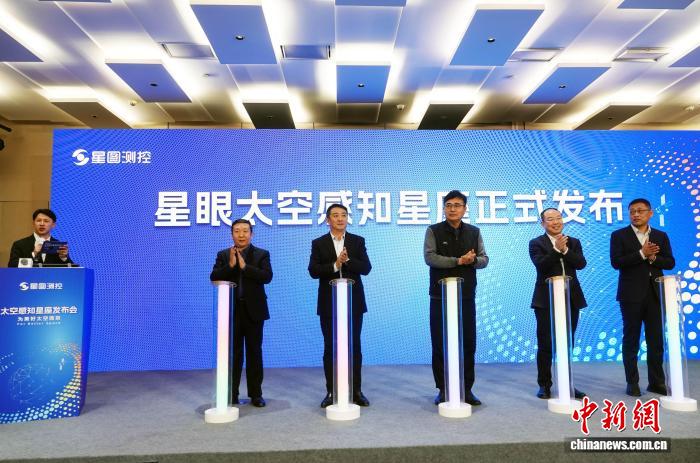
构筑太空安全新防线 星图测控正式发布“星眼”太空感知星座
Zheng Quan Ri Bao· 2025-11-27 07:36
Core Insights - The "Star Eye" space perception constellation plan was officially launched by China Science and Technology Star Map Control Technology Co., Ltd, aiming to create an innovative path for space traffic management and establish a new model for space management services [2] Group 1: Industry Challenges - The current space environment faces unprecedented challenges, including a rapid increase in the number of satellites in orbit, heightened collision risks, and threats to sustainable space development [2] - The importance of space situational awareness is increasingly highlighted as a foundational support for space safety, especially in the context of rising space debris and collision risks [2] Group 2: Company Initiatives - The "Star Eye" space perception constellation will consist of 156 satellites, designed to create a global, responsive near-Earth orbit monitoring network [2] - The constellation will utilize the company's independently developed "Observer" space information analysis platform and space management service platform, "Space Cloud," to track, catalog, and monitor satellites, analyze orbital data, and predict collision risks [2] Group 3: Commercial Value - The space perception constellation is becoming a key infrastructure in the commercial space era, with its core commercial value lying in building a complete ecosystem of "monitoring-warning-service" [3] - The "Star Eye" constellation, driven by AI capabilities, will provide satellite operators with rapid collision warnings and orbit determination, significantly reducing operational risks [3] - Commercial applications extend to three main areas: data services for space traffic management, insurance and risk assessment for quantifying collision probabilities, and launch window optimization for ensuring safety during rocket launches [3]

156星组网!太空碰撞风险加剧,星图测控太空感知星座计划发布
Guan Cha Zhe Wang· 2025-11-27 07:28
Group 1 - The "Star Eye" space perception constellation plan was officially launched by Xingtong Measurement and Control, aiming to provide new solutions for space traffic management [1] - The global satellite launch numbers are rapidly increasing, with large-scale constellation deployments becoming mainstream, leading to unprecedented challenges in the space environment [2] - The European Space Agency reported over 50,000 pieces of space debris larger than 10 cm, approximately 1.2 million pieces between 1 cm and 10 cm, and about 140 million pieces between 1 mm and 1 cm, posing significant collision risks [2] Group 2 - The "Star Eye" constellation consists of 156 satellites designed to create a global, responsive near-Earth orbit monitoring network, capable of tracking, cataloging, and analyzing satellite orbital data [4] - The construction of the constellation is divided into two phases: the first phase will establish a high-performance perception backbone with 12 satellites, while the second phase will add 144 satellites for enhanced low-cost perception [5] - The "Star Eye" constellation is positioned as a key infrastructure for the commercial space era, creating a complete ecosystem of monitoring, early warning, and service [6] Group 3 - Internationally, companies like NorthStar Earth & Space and Turion Space are developing their own satellite constellations for space situational awareness, while domestically, Xingtong Measurement and Control plans to launch experimental satellites by mid-2026 [7] - The development of space perception capabilities is crucial for collision warning and active avoidance, marking a step towards China becoming a space power and participating in future international space governance [7]
“星眼”发布!瞄准更安全的太空
Huan Qiu Wang Zi Xun· 2025-11-27 07:23
Core Insights - The company StarMap Control aims to become a global leader in space management services with the launch of its "Star Eye" space perception constellation plan, addressing the urgent need for innovative solutions in space traffic management [1][3] Industry Overview - The global interest in space exploration is increasing, with various commercial aerospace companies actively exploring industrial applications. The number of satellites is projected to rise from 12,000 to 57,000 in the next five years, highlighting a competitive landscape in the aerospace sector [1] - The space environment is facing unprecedented challenges due to an increase in space debris, with over 50,000 pieces larger than 10 centimeters currently in orbit, raising the risk of satellite collisions [1][3] Company Initiatives - StarMap Control's "Star Eye" constellation will consist of 156 satellites, with the first experimental satellites expected to launch in the first half of 2026. The initial phase will include a high-performance backbone constellation of 12 satellites, followed by a low-cost enhancement constellation of 144 satellites [3] - The company plans to provide tracking, orbit determination, and cataloging of satellites, monitor space debris, and predict collision risks, offering precise and efficient space traffic management data services [3] - StarMap Control also aims to provide space situational awareness data services to insurance companies and other third parties, promoting the healthy development of related industries [3][4]
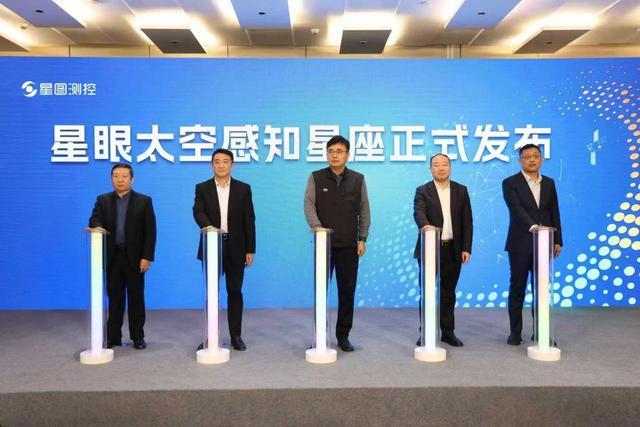
构筑太空安全新防线 星图测控“星眼”太空感知星座正式发布
Zheng Quan Shi Bao Wang· 2025-11-27 05:45
Core Insights - The "Star Eye" space perception constellation plan was officially launched by Xingtong Measurement and Control, aiming to create an innovative path for space traffic management and establish a new model for space management services [1][2] - The current space environment faces unprecedented challenges, with an increasing number of satellites in orbit leading to heightened collision risks, threatening the sustainable development of space [1] - The National Space Administration has recently released a plan emphasizing the integration of commercial space into the overall national space development layout, highlighting the growing importance of space situational awareness for national security [1] Company Developments - The "Star Eye" constellation will consist of 156 satellites, designed to create a global, responsive near-Earth orbit monitoring network [2] - The constellation will utilize the self-developed "Observer" space information analysis platform and the space management service platform "Space Cloud" to track, orbit, and catalog satellites, monitor space debris, and analyze satellite orbit data [2] - Xingtong Measurement and Control aims to become a global leader in space management services, focusing on enhancing its capabilities and increasing R&D investment to contribute to a safer and more orderly space environment [2]
中国发布“星眼”太空感知星座 156星组网助力太空安全
Zhong Guo Xin Wen Wang· 2025-11-26 23:32
Core Viewpoint - China has officially launched the "Xingyan" space situational awareness constellation, which aims to deploy 156 satellites to create a global, responsive near-Earth orbit monitoring network to enhance space safety [1][2]. Group 1: Project Overview - The "Xingyan" constellation will utilize the independently developed "Observer" space information analysis platform and the "Space Cloud" management service platform by China Siwei Technology Co., Ltd. to implement its objectives [1]. - The constellation will track, orbit, and catalog satellites, monitor space debris, analyze satellite orbit data, and predict collision risks, providing precise and efficient space traffic management data services [1][2]. Group 2: Industry Context - The current space environment faces unprecedented challenges due to the rapid deployment of satellite constellations, leading to an increase in the number of satellites in orbit and heightened collision risks [2]. - The Chinese government has recently released the "National Space Administration's Action Plan for Promoting High-Quality and Safe Development of Commercial Space (2025-2027)," emphasizing the integration of commercial space into the national space development framework [2]. - The importance of space situational awareness as a foundational support for space safety is increasingly recognized, aligning with China's strategic goal of becoming a space power [2]. Group 3: Future Directions - China Siwei Technology aims to become a global leader in space management services by enhancing its space management capabilities and increasing R&D investment [2]. - The company plans to collaborate with industry partners to build a more secure and orderly space environment, contributing to China's goal of accelerating its development as a space power [2].