
女性就业

Search documents
着力保障和改善民生 提高群众生活品质
Xin Lang Cai Jing· 2026-01-26 16:55
Group 1: Enhancing Public Fitness Services - Beijing aims to improve its public fitness service system during the "15th Five-Year Plan" period, addressing issues such as service precision in certain areas [4] - Suggestions include expanding fitness coverage, creating volunteer service teams, and offering tailored fitness programs for different demographics, including the elderly and youth [4][5] - The proposal emphasizes the need for a diverse range of sports events and activities to enhance community engagement and attract participation [4] Group 2: Expanding Employment Opportunities for Women - The employment situation for women in Beijing is improving, but challenges such as re-employment pressure and limited career development remain [6] - Recommendations include launching targeted training programs for women in caregiving roles and establishing community service centers to facilitate job access [6][7] - A structured career development system for the caregiving industry is proposed, including incentives and recognition for outstanding professionals [7] Group 3: Addressing Population Aging - The "15th Five-Year Plan" period is seen as a critical opportunity to address population aging, with a focus on supporting high-aging areas like Yanshan [8] - Suggestions include expanding subsidies for low-income elderly individuals and implementing personalized renovation plans for aging facilities [8] - The integration of aging-friendly renovations with urban renewal projects is recommended to create a comprehensive approach to community support [8]



国际劳工组织:2026年全球失业率预计在4.9%左右
Zhong Guo Xin Wen Wang· 2026-01-14 11:37
Group 1 - The International Labour Organization (ILO) projects a global unemployment rate of approximately 4.9% by 2026, equating to around 186 million people [1] - Nearly 300 million workers are currently living in extreme poverty, earning less than $3 a day, while informal employment continues to expand, with an estimated 2.1 billion workers engaged in informal work by 2026 [1] - Youth and women face significant employment challenges, with a projected global youth unemployment rate of 12.4% in 2025, affecting about 260 million young people, and a labor participation rate for women that is 24% lower than that of men [1] Group 2 - Global trade disruptions are adding uncertainty to the labor market, particularly affecting worker incomes in Southeast Asia, South Asia, and Europe, despite trade being a crucial support for global employment [2] - Trade is identified as a potential driver for decent work, creating more job opportunities for women and youth, with digital services accounting for 14.5% of global export value [2] - Over 465 million jobs are supported by trade globally, with more than half of these jobs concentrated in the Asia-Pacific region [2]
激增35.6%!就业市场巨变
Ge Long Hui· 2025-11-09 09:20
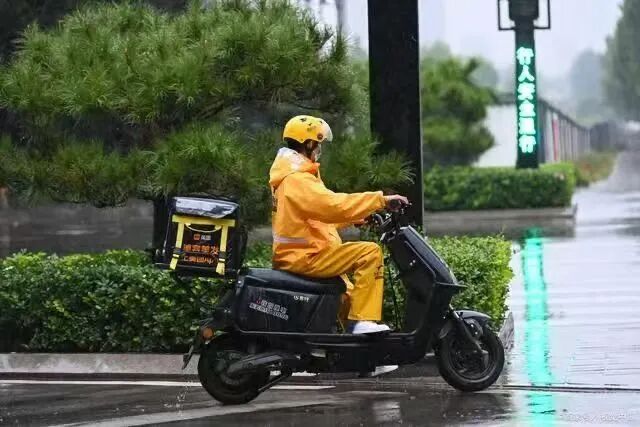
Group 1 - The core point of the article highlights the significant increase in female delivery workers in China, particularly in the food delivery and ride-hailing sectors, with female riders on Meituan rising from 517,000 in 2022 to 701,000 in 2024, a growth rate of 35.6%, which is 1.8 times the overall industry growth of 19.3% [1] - By 2025, the total number of delivery riders in China is projected to reach approximately 14 million, with women making up 24.3% of this workforce [1] - The article notes that the rise of female delivery workers is not limited to food delivery, as the number of female ride-hailing drivers on Didi is expected to increase from 600,000 in 2023 to over 1.05 million in 2024, marking a 75% increase [1] Group 2 - The article discusses the challenges faced by female delivery workers, including low income, with over 60% earning less than 5,000 yuan per month, and a high percentage of low-priced orders [25] - It highlights the dual burden of work and family responsibilities, with 85% of married female riders taking on more than 70% of household chores, leading to a demanding schedule that includes both work and childcare [25][23] - The article also points out the lack of labor rights and protections for female riders, with 92% not having signed labor contracts and less than 15% having social insurance coverage, exposing them to significant risks without proper compensation [30][27] Group 3 - The article emphasizes that the increase in female delivery workers is a response to economic pressures, with many women entering this workforce due to job losses in other sectors, particularly in service and manufacturing [21] - It notes that the average age of female riders is 37, and many are married with children, indicating that they are often the primary caregivers in their households [23] - The article concludes that the rise of female delivery workers reflects broader economic trends and societal pressures, where women are forced into flexible, low-paying jobs due to a lack of better opportunities [35][36]
外卖女骑手越来越多,藏着什么经济真相?
3 6 Ke· 2025-10-17 09:35
Core Insights - The article highlights the significant increase in female delivery riders in the food delivery industry, with female riders growing from 517,000 in 2022 to 701,000 in 2024, a 35.6% increase, while the total number of riders increased by 19.4% during the same period [1][2]. Group 1: Demographics and Trends - The presence of female riders has become more common in the last two years, contrasting with five years ago when it was rare to see women in this role [2]. - The majority of female riders are middle-aged mothers, with 85% being married and 96.6% having children, indicating that this demographic is crucial to the workforce in the delivery sector [8]. Group 2: Reasons for Participation - Female riders are drawn to this job due to its flexibility, allowing them to balance work with family responsibilities [9][10]. - Economic pressures, such as debt from failed businesses or family obligations, have led some women to take up delivery work as a transitional solution [11][12]. - The decline of traditional industries has pushed many women, particularly those with limited skills, into the delivery sector as other job opportunities diminish [13][14]. Group 3: Gender Disparities - There is a notable pay gap between male and female riders, with over 60% of female riders earning less than 5,000 yuan per month, compared to 70% of male riders earning above this threshold [19]. - Factors contributing to this disparity include systemic biases in the delivery algorithms favoring male riders, as well as physical challenges faced by women [20]. Group 4: Skills and Advantages - Female riders possess strong communication skills, which can enhance customer interactions and service quality [22][23]. - Despite facing challenges, some female riders have developed strategies to overcome performance barriers related to physicality and speed [21]. Group 5: Recommendations for Female Riders - The article suggests that female riders consider transitioning to related fields that leverage their existing skills, as many are in a transitional phase of their careers [27]. - It emphasizes the importance of seeking industries with growth potential and maintaining a commitment to lifelong learning to enhance career prospects [29][30]. Group 6: Societal Perspectives - The narrative challenges traditional gender roles in the workforce, advocating for respect and recognition of all workers, regardless of gender or job type [32][33].

2024年末我国女性就业人员3.2亿人,占比43.4%
Xin Jing Bao· 2025-09-28 12:24
Core Insights - The report from the National Bureau of Statistics highlights the demographic and employment status of women in China as of the end of 2024, indicating a total female population of 690 million, which constitutes 48.9% of the total population [1] - The employment rate of women stands at 320 million, making up 43.4% of all employed individuals, reflecting a 0.3 percentage point increase from the end of 2021 [1] - The gender ratio in various levels of education remains balanced, and there has been a significant increase in the number of women participating in social insurance programs since the end of 2020, with increases of 45.837 million in basic pension insurance, 12.897 million in unemployment insurance, and 14.71 million in work injury insurance [1]