安全困境

Search documents
日媒:高市早苗令日本民众郁闷
Xin Lang Cai Jing· 2026-01-03 00:40
Core Viewpoint - The election of Sanna Takashita as Japan's first female Prime Minister has generated mixed feelings among the public, primarily due to concerns over rising prices and inadequate government responses to inflation [1] Economic Concerns - The national consumer price index increased by 3.0% year-on-year in November, marking 51 consecutive months of rising prices [1] - Real wages fell by 0.8% year-on-year in October, continuing a trend of negative growth for 10 months [1] - 73.1% of respondents in a social awareness survey identified "prices" as a sector expected to worsen, maintaining the top position for four consecutive years [1] Government Budget and Fiscal Policy - The supplementary budget for fiscal year 2025 totals 18.3 trillion yen (approximately 100 billion USD), with only 8.9 trillion yen allocated to address rising prices [1] - The remaining budget is primarily directed towards "crisis management investment," "growth investment," and enhancing defense and diplomatic capabilities [1] - Concerns over fiscal health have led to a decline in government bond prices and an increase in long-term interest rates [1] Defense and Foreign Policy - The Takashita administration is increasing defense spending in line with the previous U.S. administration's policies, aiming to raise the defense budget to 2% of GDP [1] - There is uncertainty regarding public support for tax increases to cover the substantial fiscal gap created by increased defense spending amid rising prices [1] - Tensions with China have escalated following Takashita's comments regarding Taiwan, with no signs of improvement in Japan-China relations [1]
欧洲紧锣密鼓,普京备好应对:俄欧冲突风险几何?
Sou Hu Cai Jing· 2025-12-05 15:36
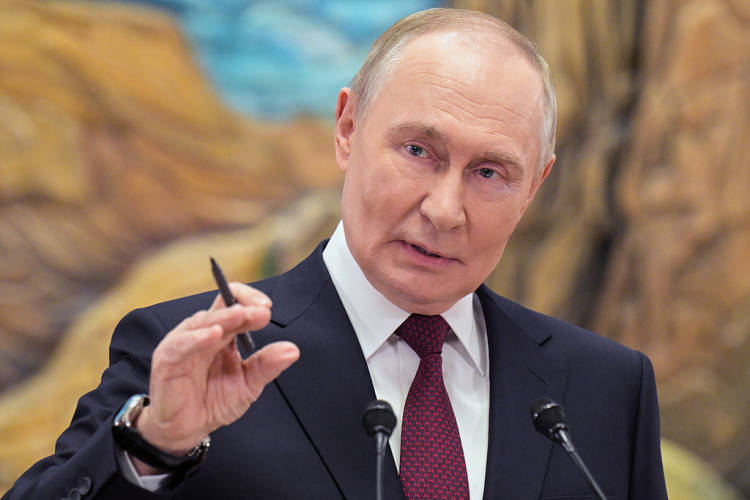
Core Viewpoint - The rumors of "Putin is ready to fight Europe" are misinterpretations, as Russia is not seeking conflict but is prepared for worst-case scenarios in response to European provocations [2][5] Group 1: Russia's Position - Putin emphasized on December 2 that Russia has no intention of going to war with Europe, but is prepared if Europe decides to act aggressively [2] - Russia's preparations are defensive rather than offensive, focusing on securing its borders and preventing incursions from Ukraine [3] - The Russian military has established a three-tier security buffer along its borders and has called up 160,000 troops for normal defense rotations, not for active conflict [3] Group 2: European Actions - The EU has implemented its 19th round of sanctions against Russia, targeting the natural gas sector with 69 new measures [3] - NATO has initiated the "Eastern Sentinel" operation to strengthen defense in Eastern Europe, with countries like Poland and Estonia calling for NATO intervention [3] - European leaders express that the continent is in a "preparation phase" for potential conflict with Russia, heightening tensions [3] Group 3: Diplomatic Stalemate - The December 2 US-Russia talks lasted five hours but resulted in no compromise, leaving the peace process stagnant [4] - The initial 28-point peace plan proposed by the US was significantly altered by Europe, leading to further disagreements [4] - Ukraine's government insists on being part of any resolution, complicating the diplomatic landscape [4] Group 4: Security Dilemma - The ongoing military preparations by both sides are creating a "security dilemma," where defensive actions are perceived as offensive threats [5] - The situation is precarious, with rising risks of misjudgment and potential escalation into conflict [5] - The resolution of this standoff depends on the willingness of all parties to abandon confrontational mindsets and return to political negotiations [5]

北约计划对俄率先开战,美国缺席北约会议透露信号,普京这次难了
Sou Hu Cai Jing· 2025-12-03 09:43
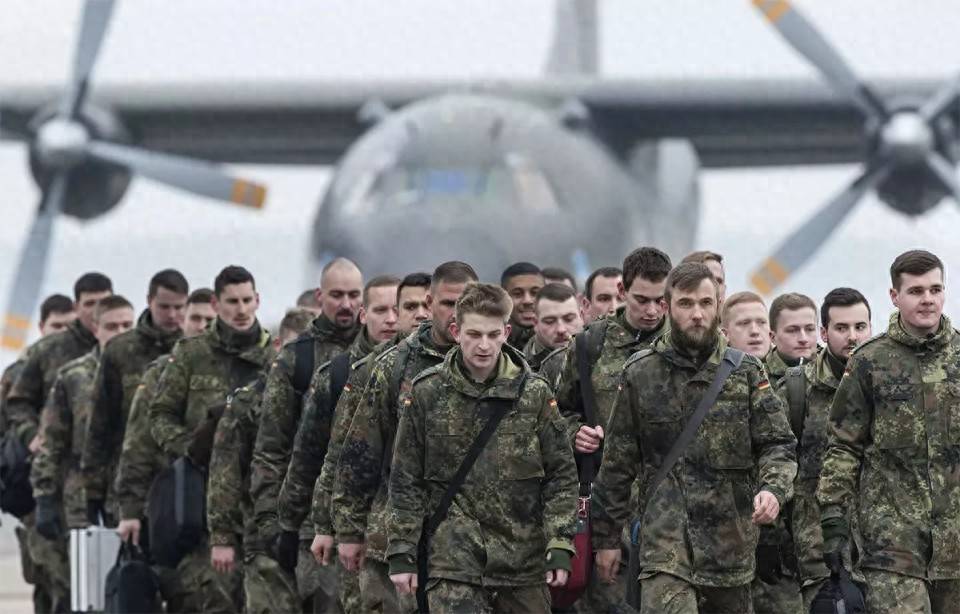
Group 1 - NATO's military preparations have escalated significantly, with a detailed 1200-page operational plan aimed at deploying 800,000 troops, 30,000 main battle tanks, and 120,000 armored vehicles to Eastern Europe within a month [4][23]. - The absence of U.S. Secretary of State Rubio at the NATO foreign ministers' meeting has raised concerns, as it is a rare occurrence that signals a potential strategic shift [2][11]. - NATO is transitioning from deterrence to actual military deployment, with plans for a joint military exercise involving over 50,000 troops scheduled for September 2025 [6][23]. Group 2 - The NATO Military Committee Chairman has suggested a more aggressive strategy against Russia, including the possibility of preemptive strikes, which has drawn strong criticism from Russia [6][16]. - The U.S. stance on NATO appears ambiguous, with Trump oscillating between supporting NATO and emphasizing European self-funding for defense, while also pushing for a peace plan with Ukraine [9][12]. - There is a growing divide within the EU regarding military spending, with Eastern European countries advocating for increased military capabilities, while Southern European nations express concerns over rising costs [25]. Group 3 - Russia faces significant challenges, including economic limitations and high military casualties, while still maintaining a substantial defense budget and nuclear capabilities [16][17]. - The ongoing military buildup and strategic discussions by NATO have led to a deteriorating trust between the two sides, contributing to a classic security dilemma in Eurasia [23][21]. - The geopolitical landscape is further complicated by Japan and South Korea strengthening ties with NATO, indicating a broader regional military alignment against perceived threats [19][18].
【环球财经】巨额军售凸显全球安全赤字
Xin Hua She· 2025-12-02 03:05
Core Insights - The global arms sales report by the Stockholm International Peace Research Institute indicates that the revenue of the top 100 arms manufacturers reached a record high of $679 billion in 2024, reflecting a year-on-year growth of 5.9% [1][2] - The report highlights that U.S. arms manufacturers account for nearly half of the total revenue, with 39 U.S. companies generating $334 billion, a 3.8% increase from 2023 [2] - The ongoing regional conflicts, particularly the situations in Gaza and Ukraine, are driving nations to expand their military capabilities, contributing to the surge in arms sales [3][4] Revenue Breakdown - Among the top 100 arms manufacturers, 26 European companies (excluding Russia) reported a total revenue of $151 billion, marking a 13% increase [2] - Middle Eastern arms manufacturers generated $31 billion in sales, a 14% increase, with Israeli companies contributing $16.2 billion, up 16% [2] - Russian arms manufacturers saw a revenue increase of 23%, totaling $31.2 billion [2] Market Dynamics - The report indicates that the demand for arms is driven by security anxieties stemming from ongoing conflicts, leading to increased military procurement, especially in Europe [3][4] - Czech arms manufacturer Czechoslovak Group experienced a remarkable 193% revenue growth due to significant sales of ammunition to Ukraine [3] - The report suggests that the current military expansion may lead to a vicious cycle of insecurity and arms races, rather than achieving lasting peace [4][5] Global Security Context - The number of armed conflicts involving at least one country reached 61 in 2024, the highest since 1946, with Africa being the most affected region [3][4] - The UN Secretary-General has warned that rising military expenditures are not only triggering a new arms race but also putting immense pressure on national finances and development [5] - Analysts emphasize that military expansion and alliances are not effective paths to achieving lasting peace and security, advocating for enhanced diplomatic communication and multilateral cooperation [5]
贸易战2.5:市场太乐观了?
Hu Xiu· 2025-10-13 08:41
Group 1 - The article discusses the potential for prolonged trade friction between China and the U.S., with the APEC meeting not necessarily being a decisive moment for resolution [1][9][11] - There is a focus on the semiconductor and rare earth sectors as central to the ongoing tensions, highlighting their importance in both capital markets and geopolitical strategies [1][8] - The article emphasizes the need for understanding technology and its evolution as a critical factor in macroeconomic and geopolitical analysis [1] Group 2 - The U.S. government shutdown has led to a lack of employment data, while China's consumer spending has declined, indicating economic concerns on both sides [2] - China proposed a significant increase in direct investment in the U.S. during negotiations, aiming to ease restrictions on Chinese investments and trade [3][6] - The article notes that direct investment can deepen ties between nations, potentially fostering local support for Chinese interests in the U.S. [3] Group 3 - The importance of direct dialogue between ordinary citizens of both nations is highlighted as crucial for improving bilateral relations [4] - The U.S. appears to need China's manufacturing experience, reflecting a shift in the dynamics of international trade relationships [5] - The article points out that the U.S. has implemented further restrictions on semiconductors and shipping, increasing insecurity in trade relations [7][8] Group 4 - The article discusses the security dilemma and suspicion spiral in international relations, emphasizing the lack of trust between nations [21][22] - It notes that countries are increasingly creating non-military "weapons" in trade and technology to assert their influence [22][23] - The article suggests that the U.S. has opened a "Pandora's box" in trade relations, leading to a cycle of learning and adaptation among nations [23][30] Group 5 - The article raises questions about the negotiation power dynamics between buyers and sellers in a trade conflict, suggesting that sellers may hold more leverage due to control over key resources [24][25] - It discusses the significance of the U.S. dollar's status as a reserve currency and its implications for global trade [26][32] - The article concludes with observations on Trump's negotiation style and its impact on international relations, suggesting a decline in the credibility of threats made by the U.S. [35][36]