宽财政+紧货币

Search documents
高市早苗众议院获得压倒性胜利,令日本政局的右翼民粹色彩显著上升
Lian He Zi Xin· 2026-02-09 11:24
Political Landscape - The overwhelming victory of the Takashi Saimai political alliance in the House of Representatives reflects a significant rise in right-wing populism in Japan, with the Liberal Democratic Party (LDP) supporters expressing expectations for "strongman politics" [3] - The LDP secured 316 seats in the House of Representatives, achieving more than two-thirds of the legal seats for the first time since World War II, allowing the current government to push its economic and political policies without obstruction [4] Economic Policies - The Takashi Saimai government continues to view expansionary fiscal policy as the core means to boost domestic demand and economic recovery, despite facing severe challenges regarding interest payments and fiscal sustainability [9] - In November 2025, the Japanese cabinet approved a comprehensive economic strategy totaling approximately 21.3 trillion yen (about $112 billion), aimed at reducing living costs and increasing defense spending [9] Debt and Fiscal Concerns - Japan's fiscal deficit reached 17.8 trillion yen in 2025, increasing the deficit-to-GDP ratio by 0.4 percentage points to 2.9% [9] - By the end of 2025, Japan's total government debt rose to 1,466.7 trillion yen, representing about 235% of GDP, the highest debt pressure globally [9] Market Reactions - Following the election victory, concerns arose regarding the government's expansionary fiscal policies potentially exacerbating debt burdens, leading to a sell-off of Japanese government bonds [10] - The yield on Japan's 40-year government bonds surpassed 4% for the first time since 1995, while the 30-year bond yield reached a historical high of 3.85% [10] Economic Outlook - Japan's economy is expected to experience moderate recovery in 2025, with real GDP growth rebounding to 1.1%, but is projected to slow to around 0.6% in 2026 due to various pressures including tariffs and inflation [12][13] - The yen depreciated significantly following the election results, dropping to approximately 156.7 against the dollar, nearing the critical psychological level of 160 [13]
1226黄金点评:宽松叙事再加码,贵金属短期波动加大
Xin Lang Cai Jing· 2025-12-26 02:40
Core Viewpoint - The article discusses the recent performance of gold and silver in the market, highlighting a significant increase in prices and the implications of Japan's fiscal policy on the global economy [2][5]. Group 1: Precious Metals Market - SHFE gold rose by 1.07% on December 26, with London spot gold surpassing $4500 per ounce [2][5]. - London spot silver opened higher, breaking through $73 per ounce, reaching a new high [2][5]. - The precious metals market is experiencing renewed enthusiasm, with gold and silver showing strong performance despite increased short-term volatility [2][5]. Group 2: Japan's Fiscal Policy - Japan's initial budget for the fiscal year 2026 is set at 122.3 trillion yen, a 6.3% increase from the 115.2 trillion yen budget of 2025, marking the largest budget in history [2][5]. - The budget increase significantly exceeds the current inflation rate of approximately 2%, driven primarily by rigid expenditures such as social security, defense, and debt costs [2][5]. - Japan is currently implementing a "loose fiscal + tight monetary" policy combination, which aims to support the economy and livelihoods while controlling inflation, resulting in a complex policy effect [2][5]. Group 3: Geopolitical Context - The President of Ukraine has indicated discussions to expedite the timeline for achieving "real peace," which may influence global economic conditions [2][5].


申万宏观·周度研究成果(11.29-12.5)
赵伟宏观探索· 2025-12-06 16:04
Core Viewpoint - The article discusses the outlook for fiscal and monetary policy in 2026, emphasizing the need for strengthened coordination, structural optimization, and deepened reforms in the context of the "15th Five-Year Plan" [5]. Group 1: In-depth Topics - The fiscal and monetary policy in 2026 is expected to enhance coordination and optimize structure, focusing on deepening reforms [5]. - The combination of "expansive fiscal policy and tight monetary policy" in Japan may trigger a reversal in carry trade, highlighting the need to be cautious about the divergence and potential shifts in monetary policy between the US and Japan [5]. Group 2: Data Commentary - The November PMI showed a limited rebound, primarily influenced by high inventory levels and the fading effects of holidays [9]. - In the US, September retail sales were weaker than expected, leading to a significant increase in gold and silver prices, with COMEX gold rising by 3.4% to $4223.9 per ounce [9].

热点思考 | 日本宽财政,市场忽视了什么?(申万宏观·赵伟团队)
赵伟宏观探索· 2025-12-01 16:05
Core Viewpoint - The article discusses the economic stimulus plan introduced by Prime Minister Kishi Sanae, which is expected to weaken the yen and increase inflationary pressures in Japan. The combination of expansive fiscal policy and tight monetary policy may lead to risks of a reversal in carry trade, necessitating caution regarding the divergence in monetary policies between the Bank of Japan and the Federal Reserve [2][8]. Group 1: Economic Stimulus Plan - Kishi Sanae's economic stimulus plan amounts to 21.3 trillion yen (approximately 135 billion USD), slightly exceeding market expectations of 17 trillion yen. The fiscal deficit rate for Japan is projected to rise significantly in 2026 [3][9]. - The stimulus plan focuses on three main areas: 55% for inflation subsidies and social welfare (11.7 trillion yen), 34% for strategic industry investments (7.2 trillion yen), and 8% for defense and diplomacy (1.7 trillion yen) [3][15]. Group 2: Impact on GDP and Inflation - The expansive fiscal policy may raise Japan's GDP growth by 0.5 percentage points in 2026, which is lower than the contributions expected from the US (0.6 points) and Germany (0.63 points). The fiscal deficit rate is expected to increase by 1.77 percentage points in Japan, compared to 1.0 points in the US and 0.84 points in Germany [4][23]. - While the inflation subsidies may temporarily lower the overall CPI growth by 0.7 percentage points in early 2026, they could simultaneously increase core inflation pressures in the medium term due to rising real incomes and a weaker yen [4][29]. Group 3: Risks of Carry Trade Reversal - The combination of high inflation and a weak yen makes it difficult for Kishi's expansive fiscal policy to coexist with the Bank of Japan's loose monetary policy. Recent hawkish signals from the Bank of Japan suggest a potential shift towards interest rate hikes [5][35]. - The divergence between the yen and US dollar interest rates, with the yen reaching a low of 157.9 against the dollar while the US-Japan 2-year interest rate spread narrows to around 2.5%, indicates that the market has priced in risks associated with Japan's fiscal expansion [5][41]. - The current conditions suggest a potential for a reversal in carry trade, although the impact may be milder compared to August 2024. Factors such as net short positions in the yen, the degree of divergence between exchange rates and interest rates, volatility, and triggering conditions should be monitored [5][47].

日本宽财政,市场忽视了什么?
Shenwan Hongyuan Securities· 2025-11-30 14:45
Group 1: Economic Stimulus in Japan - The economic stimulus plan introduced by Prime Minister Kishi is valued at 21.3 trillion yen (approximately 135 billion USD), exceeding market expectations of 17 trillion yen[2] - The plan allocates 55% (11.7 trillion yen) for inflation subsidies and social welfare, 34% (7.2 trillion yen) for strategic industry investments, and 8% (1.7 trillion yen) for defense and diplomacy[3] - Japan's fiscal deficit rate is projected to rise significantly to 2.8% in 2026, with an increase of 1.77 percentage points, compared to 1.0% for the US and 0.84% for Germany[18] Group 2: Economic Growth and Inflation - The fiscal stimulus is expected to boost Japan's GDP growth by 0.5 percentage points in 2026, which is lower than the contributions expected from the US (0.6 points) and Germany (0.63 points)[23] - Temporary inflation subsidies may reduce the overall CPI growth by 0.7 percentage points in early 2026, but could increase core inflation pressures in the medium term[27] - The combination of loose fiscal policy and tight monetary policy may lead to a reversal of carry trade, with the USD/JPY exchange rate reaching a low of 157.9 recently[4] Group 3: Market Reactions and Asset Performance - In the week following the announcement, major equity indices rose, with the S&P 500 increasing by 3.7% and the Nasdaq by 4.9%[5] - The US dollar index fell by 0.7% to 99.44, while gold prices surged by 3.4% to 4223.9 USD per ounce[5] - The 10-year US Treasury yield decreased by 4.0 basis points to 4.02%, indicating a shift in investor sentiment following the economic developments[5]
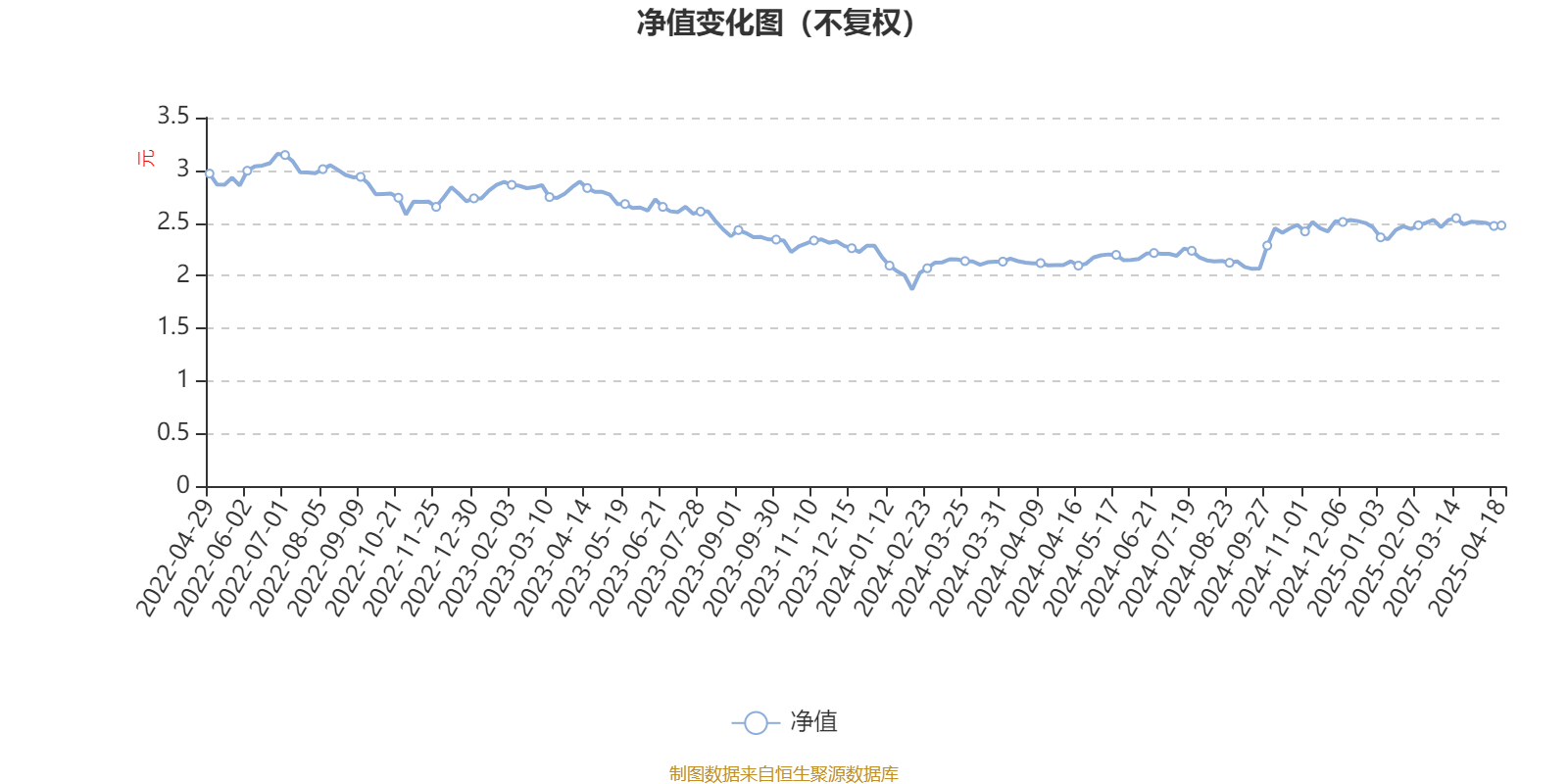
东方红睿元混合:2025年第一季度利润2394.65万元 净值增长率2.03%
Sou Hu Cai Jing· 2025-04-22 11:54
Core Insights - The AI Fund Dongfanghong Ruiyuan Mixed (000970) reported a profit of 23.9465 million yuan for Q1 2025, with a weighted average profit per fund share of 0.0497 yuan [3] - The fund's net value growth rate for the reporting period was 2.03%, and as of the end of Q1, the fund size was 1.209 billion yuan [3] - The fund is categorized as a flexible allocation fund, with a unit net value of 2.477 yuan as of April 18 [3] Economic Context - Domestically, the economy showed stable growth in Q1, with fiscal counter-cyclical adjustments yielding positive results in sectors like automotive, home appliances, and consumer electronics [3] - Internationally, consumer confidence in the U.S. weakened, raising recession expectations; the outlook for 2025 suggests a continued expansive fiscal and monetary environment in China, while the U.S. may experience marginally declining fiscal conditions with tight monetary policy [3] Performance Metrics - As of April 18, the fund's three-month cumulative net value growth rate was 1.81%, ranking 239 out of 918 comparable funds; the six-month growth rate was 1.10%, ranking 291 out of 918; the one-year growth rate was 18.18%, ranking 138 out of 918; and the three-year growth rate was -17.76%, ranking 674 out of 901 [3] - The fund's Sharpe ratio over the past three years was -0.1544, ranking 737 out of 909 comparable funds [9] - The maximum drawdown over the past three years was 40.78%, with the highest single-quarter drawdown occurring in Q1 2022 at 19.9% [11] Investment Strategy - The average stock position over the past three years was 79.77%, slightly below the comparable average of 80.16%; the fund reached a peak stock position of 97.78% at the end of 2022 and a low of 60.8% by mid-2024 [14] Top Holdings - As of the end of Q1 2025, the fund's top ten holdings included Heng Rui Pharmaceutical, Sanhua Group, SMIC, AVIC Optoelectronics, Keda Li, China Mobile, Siyuan Electric, Mango Super Media, Jingchen Technology, and China Telecom [20]