尼帕病毒防治

Search documents
印度尼帕病毒爆发,死亡率极高,会波及中国么?
虎嗅APP· 2026-01-28 10:41
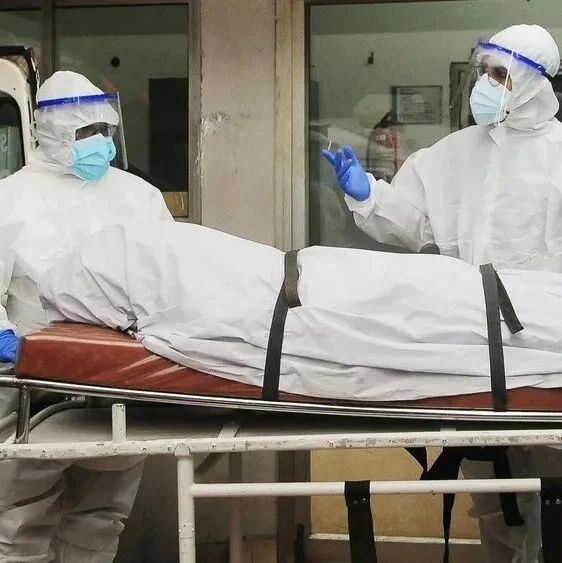
Core Viewpoint - The article discusses the emergence of the Nipah virus in India, highlighting its high fatality rate and potential for human-to-human transmission, raising concerns about its spread and impact on public health systems [4][6][21]. Group 1: Virus Characteristics - The Nipah virus is classified as a high-risk pathogen, capable of causing severe respiratory illness and encephalitis, with symptoms ranging from mild fever to severe neurological impairment [9][11]. - The natural host of the Nipah virus is fruit bats, particularly the flying fox, which do not exhibit symptoms of the virus [10]. - Transmission to humans can occur through contaminated food or direct contact with infected animals, leading to rapid and severe health deterioration [11][21]. Group 2: Current Situation and Response - As of now, India has reported at least five confirmed cases of Nipah virus, with one nurse in critical condition [6][21]. - There is currently no approved antiviral treatment or vaccine for the Nipah virus, although recent research indicates that the oral nucleoside drug VV116 shows significant antiviral activity against it [16][20]. - The World Health Organization has classified the Nipah virus as a biosafety level 4 pathogen, similar to the Ebola virus, necessitating rapid public health responses to any confirmed cases [22]. Group 3: Public Health Implications - The fatality rate of the Nipah virus ranges from 40% to 75%, with some outbreaks reporting rates as high as 100%, placing it among the deadliest viruses globally [21]. - Preventive measures focus on avoiding contact with fruit bats and contaminated food, as well as strict hygiene practices in outbreak areas [22]. - Neighboring countries, such as Nepal, have increased health monitoring at borders in response to the outbreak, reflecting a proactive approach to infectious disease control [22][23]. Group 4: Geographic Distribution and Risk Assessment - The Nipah virus has been reported in several countries, including Malaysia, Singapore, the Philippines, Bangladesh, and India, but the distribution of fruit bats suggests a broader potential risk [26][27]. - While there is concern about the virus spreading to China, current assessments indicate that the risk of large-scale transmission remains low, although vigilance is necessary due to the presence of fruit bat populations in southern China [28].

旺山旺水-B回落近7% 昨日受尼帕疫情催化大涨近11%
Zhi Tong Cai Jing· 2026-01-28 06:11
Group 1 - The stock of Wangshan Wangshui-B (02630) experienced a decline of nearly 7% after a previous increase of nearly 11%, currently trading at 101.4 HKD with a transaction volume of 11.0993 million HKD [1] - A significant research finding was published by the Wuhan Institute of Virology, confirming that the oral nucleoside drug VV116 has notable antiviral activity against the Nipah virus, providing new hope for the prevention and treatment of this highly lethal emerging infectious disease [1] - VV116, developed by Wangshan Wangshui, is an oral nucleoside drug with broad-spectrum antiviral potential, already approved for use against SARS-CoV-2 in China and Uzbekistan under the brand names Mindwei and Mindvy respectively [1] Group 2 - Industry expert Li Changcheng analyzed that if the efficacy of the drug against the Nipah virus is confirmed, pharmaceutical companies may expand the drug's usage, leading to greater commercial benefits, as extending indications on existing drugs incurs the lowest costs and highest returns [2] - It is noted that while there is theoretical support for nucleoside drugs inhibiting the Nipah virus, the effectiveness against the current Indian strain of the virus requires clinical validation [2]
港股异动 | 旺山旺水-B(02630)回落近7% 昨日受尼帕疫情催化大涨近11%
智通财经网· 2026-01-28 03:10
Group 1 - The stock of Wangshan Wangshui-B (02630) experienced a decline of nearly 7% after a previous increase of nearly 11%, currently trading at 101.4 HKD with a transaction volume of 11.0993 million HKD [1] - A significant research finding was published by the Wuhan Institute of Virology, confirming that the oral nucleoside drug VV116 has notable antiviral activity against the Nipah virus, providing new hope for the prevention and treatment of this highly lethal emerging infectious disease [1] - VV116, developed by Wangshan Wangshui, is an oral nucleoside drug with broad-spectrum antiviral potential, already approved for use against SARS-CoV-2 in China (marketed as Mindwei®) and Uzbekistan (marketed as Mindvy®) [1] Group 2 - Industry expert Li Changcheng analyzed that if the efficacy of the drug against the Nipah virus is confirmed, pharmaceutical companies may expand the drug's usage, leading to greater commercial benefits, as extending indications on existing drugs incurs the lowest costs and yields the highest returns [2] - It is noted that while there is theoretical support for nucleoside drugs inhibiting the Nipah virus, the effectiveness against the current Indian strain of the virus requires clinical validation [2]
武汉病毒研究所,有新发现
2 1 Shi Ji Jing Ji Bao Dao· 2026-01-27 12:19
Group 1: Nipah Virus Outbreak - The Nipah virus outbreak in West Bengal, India has confirmed 5 cases, with nearly 100 individuals under observation [1] - Neighboring countries like Thailand and Nepal have increased health screening measures for travelers from India [1] - The World Health Organization (WHO) states that Nipah virus is zoonotic and can be transmitted from infected animals to humans, with symptoms including acute respiratory infections and fatal encephalitis [1] Group 2: VV116 Drug Development - VV116 is an oral nucleoside drug with broad-spectrum antiviral potential, developed by Wangshan Wangshui and Junshi Biosciences [2][4] - Recent research published in the journal Emerging Microbes & Infections confirms that VV116 shows significant antiviral activity against the Nipah virus, providing new hope for treatment [1][6] - The drug has previously been approved for COVID-19 treatment in China and Uzbekistan, and its commercialization has significantly contributed to the company's revenue [4] Group 3: Market Response and Stock Performance - Following the announcement of VV116's potential against Nipah virus, Wangshan Wangshui's stock rose by 10.9%, reaching a new high since its listing in November 2025 [2] - Other companies in the IVD sector, such as Kaipu Bio and Da'an Gene, have also seen stock price increases due to their development of Nipah virus detection kits [9] - The market sentiment towards high-pathogenic virus detection has intensified, with multiple diagnostic companies reporting stock price gains [9] Group 4: Clinical and Regulatory Developments - VV116 has shown potential in animal models to improve survival rates against Nipah virus infections, indicating its possible use as a preventive treatment for high-risk populations [6] - The Chinese government has included Nipah virus in its health quarantine regulations, emphasizing the importance of rapid laboratory diagnostics for outbreak control [8] - Several companies have developed and announced their Nipah virus detection technologies, enhancing the diagnostic capabilities in response to the outbreak [8][9]
武汉病毒研究所,有新发现
21世纪经济报道· 2026-01-27 12:11
Group 1 - The Nipah virus outbreak in West Bengal, India has confirmed 5 cases with nearly 100 people under observation, prompting neighboring countries like Thailand and Nepal to enhance health screening for travelers from India [1] - The World Health Organization (WHO) classifies the Nipah virus as a high-priority regional threat due to its high mortality rate of 40%-70% and the absence of approved vaccines or treatments [4][11] - The research team from Wuhan Institute of Virology has published findings indicating that the oral nucleoside drug VV116 shows significant antiviral activity against the Nipah virus, providing new hope for treatment [2][8] Group 2 - VV116, developed by Wangshan Wangshui and Junshi Biosciences, has shown potential against various RNA viruses, including the Nipah virus, and has been approved for COVID-19 treatment in China and Uzbekistan [7][8] - Following the announcement of VV116's efficacy against the Nipah virus, shares of Wangshan Wangshui surged by 10.9%, reaching a new high since its listing in November 2025 [4][5] - The market response to the Nipah virus outbreak has led to significant stock price increases for several companies involved in diagnostic testing, with companies like Kaipu Biological and Da'an Gene reporting substantial gains [12][13]




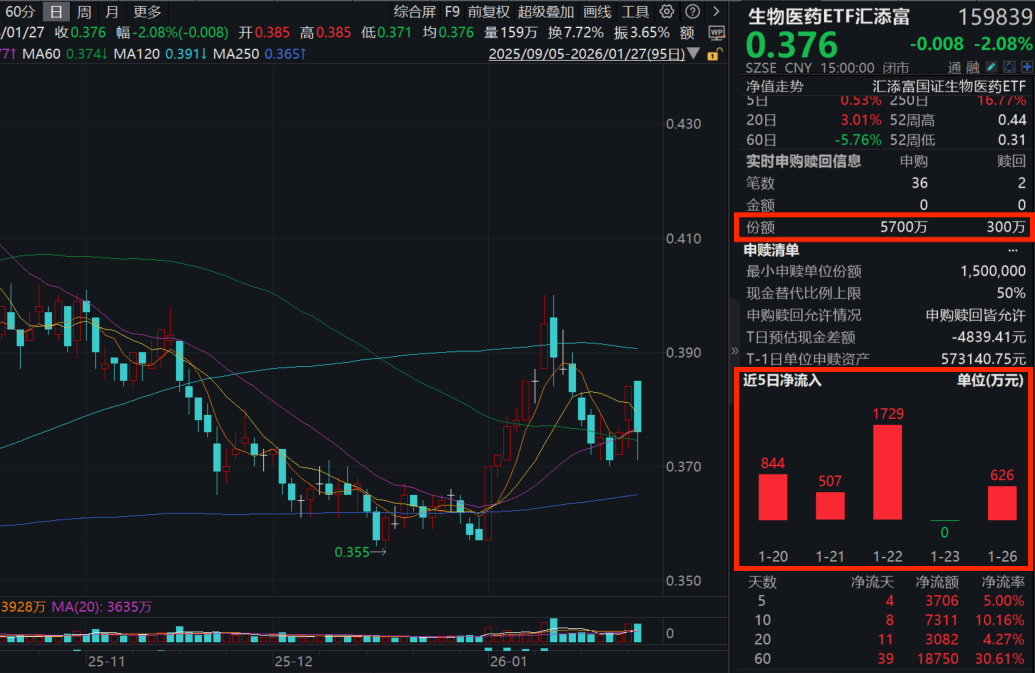
武汉病毒所发现尼帕有效药物!生物疫苗回调,沃森生物、智飞生物跌超6%!生物医药ETF汇添富(159839)收跌超2%,再获超5400万份净申购!
Sou Hu Cai Jing· 2026-01-27 09:32
Group 1 - The core viewpoint of the news highlights a recent pullback in the biopharmaceutical sector, with the Huatai-PineBridge Biopharmaceutical ETF (159839) declining by 2.08% while maintaining high trading volume, with nearly 600 million yuan in transactions for the day [1][4] - The ETF has seen continuous inflows, with a net subscription of over 54 million shares today and a total of over 73 million yuan in the last 10 days [1] - The ETF tracks the Guozheng Biopharmaceutical Index, which includes sectors such as CXO, vaccines, chemical drugs, blood products, and medical aesthetics, with the vaccine sector currently accounting for 15.1% of the index [6] Group 2 - A significant research breakthrough was reported by the Wuhan Institute of Virology, confirming that the oral nucleoside drug VV116 shows significant antiviral activity against the Nipah virus, providing new hope for the prevention and treatment of this high-mortality emerging infectious disease [3] - The biopharmaceutical ETF's major component stocks mostly experienced declines, with Watson Bio and Zhi Fei Bio dropping over 6%, while Sanofi Biopharma saw an increase of over 10% [4][5] - The latest performance forecast from Sanofi Biopharma indicates an expected net profit of approximately 2.9 billion yuan for 2025, representing a year-on-year growth of 311.35% [4] Group 3 - Data from Guoxin Securities indicates a decrease in pharmaceutical holdings among funds, with the overall pharmaceutical holding ratio at 7.97%, down by 1.71 percentage points from the previous quarter [7] - The largest sub-sector in pharmaceutical holdings is chemical preparations and other biological products, while the internet pharmacy and other biological products saw the most significant decline in holdings [9] - The JPM 2026 conference highlighted the acceleration of internationalization among Chinese pharmaceutical companies, with significant technological breakthroughs in areas such as ADC and GLP-1, leading to increased global competitiveness [10][11]





旺山旺水:将适时启动新冠药用于尼帕病毒治疗或暴露后预防的临床试验
Xin Lang Cai Jing· 2026-01-27 08:35
Group 1 - The core message highlights the significant antiviral activity of the oral nucleoside drug VV116 against the Nipah virus, providing new hope for the prevention and treatment of this high-mortality infectious disease [1][2] - VV116, also known as Dromidavir, has previously been approved for COVID-19 treatment in Uzbekistan and China, with its development for Nipah virus treatment being closely monitored by the companies involved, including Wangshan Wangshui and Junshi Biosciences [1] - Clinical pre-data indicates VV116's potential for treating Nipah virus infections, with plans to initiate clinical trials in response to public health needs due to the virus's high fatality rate and lack of vaccines or effective treatments [1] Group 2 - The World Health Organization describes the Nipah virus as a zoonotic virus with a human fatality rate typically exceeding 40%, with no licensed vaccines or specific treatments available [2] - Recent reports indicate a small outbreak of Nipah virus in West Bengal, India, with confirmed cases rising to five, highlighting the virus's potential for localized high-fatality outbreaks [2] - Despite the outbreak in India, there have been no reported human cases of Nipah virus infection in mainland China, suggesting a need for vigilance and good hygiene practices without causing public panic [3] Group 3 - As of January 27, Wangshan Wangshui's stock rose by 10.90%, while Junshi Biosciences saw an increase of 7.96% in A-shares and 1.35% in H-shares, reflecting market optimism following the announcement of VV116's potential [4]

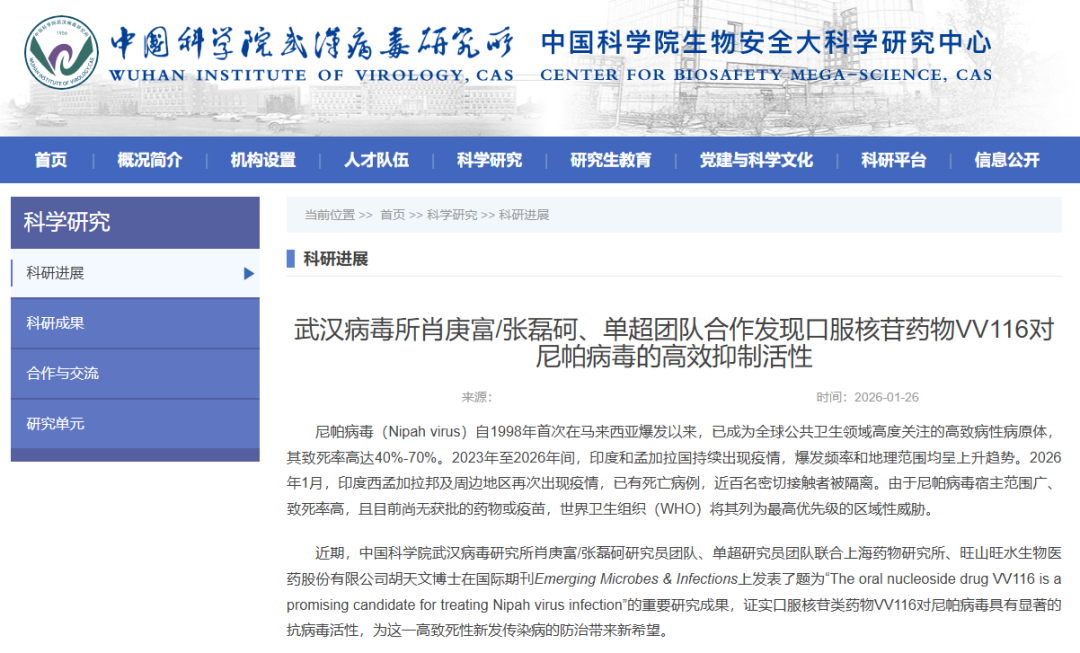
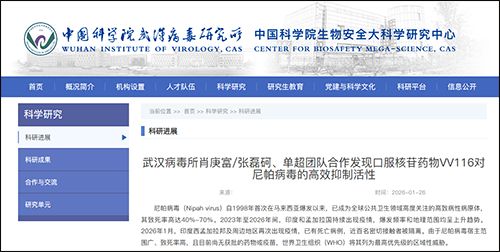
中科院武汉病毒研究所:发现口服核苷药物VV116对尼帕病毒的高效抑制活性 为这一高致死性新发传染病的防治带来新希望
Jin Rong Jie· 2026-01-27 07:56
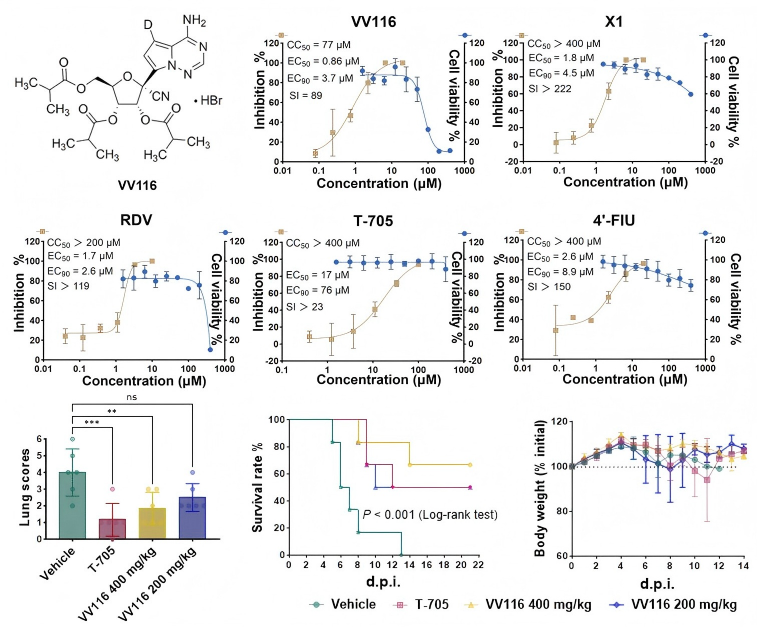
Group 1 - The Nipah virus has a high mortality rate of 40%-70% and has been a significant public health concern since its first outbreak in Malaysia in 1998 [1] - The frequency and geographical spread of Nipah virus outbreaks in India and Bangladesh are increasing, with recent cases reported in January 2026 [1] - The World Health Organization (WHO) has classified Nipah virus as a top priority regional threat due to its high fatality rate and lack of approved treatments or vaccines [1] Group 2 - VV116 is a new oral nucleoside antiviral drug that has shown significant antiviral activity against the Nipah virus in vitro and in animal models [2] - In a study, VV116 increased the survival rate of infected golden hamsters to 66.7% at a dosage of 400 mg per kg body weight, while significantly reducing viral loads in target organs [2] - The research indicates that VV116 could serve as a preventive treatment for high-risk groups and provide a ready option for addressing current and future Nipah virus outbreaks [2]

中科院武汉病毒研究所发现尼帕病毒潜在治疗药物
Guan Cha Zhe Wang· 2026-01-27 05:30
Core Insights - The research team from Wuhan Institute of Virology has discovered that the oral nucleoside drug VV116 exhibits high antiviral activity against the Nipah virus, providing new hope for the treatment of this highly lethal emerging infectious disease [2][3] Group 1: Research Findings - VV116, a novel oral nucleoside antiviral drug, has been approved for the treatment of COVID-19 in Uzbekistan and China [2] - The study demonstrated that VV116 and its active metabolites significantly inhibit the Nipah virus in vitro, including both Malaysian strain NiV-M and Bangladeshi strain NiV-B [2] - In a lethal dose infection model using golden hamsters, VV116 administered at a dose of 400 mg/kg increased the survival rate of the animals to 66.7% and significantly reduced viral loads in the lungs, spleen, and brain [2] Group 2: Public Health Implications - The Nipah virus has a mortality rate ranging from 40% to 70% and has been a growing public health concern since its first outbreak in Malaysia in 1998 [1] - The World Health Organization (WHO) has classified the Nipah virus as a high-priority regional threat due to its wide host range and high fatality rate, with no approved drugs or vaccines currently available [1] - The findings from this research provide a potential preventive treatment option for healthcare workers and laboratory personnel at high risk of exposure to the Nipah virus [3]
旺山旺水新冠口服药有抑制尼帕病毒潜力,但距离应用还很远
第一财经· 2026-01-27 04:11
Core Viewpoint - The recent emergence of Nipah virus cases in West Bengal, India, with a mortality rate exceeding 40%, has raised significant concerns, especially given the lack of specific vaccines and effective treatments. A promising oral nucleoside drug, VV116, has shown significant antiviral activity against the Nipah virus, offering new hope for treatment and prevention [3][5]. Group 1: Drug Development and Efficacy - VV116 (hydrobromide deuterated remdesivir) is a novel oral nucleoside antiviral drug that has been approved for COVID-19 treatment in Uzbekistan and China. It targets viral RNA-dependent RNA polymerase (RdRp) and has demonstrated significant inhibitory activity against both Malaysian (NiV-M) and Bangladeshi (NiV-B) strains of the Nipah virus in vitro [5]. - In a lethal dose infection model using golden hamsters, VV116 administered at a dose of 400 mg/kg increased the survival rate of the animals to 66.7% and significantly reduced viral loads in the lungs, spleen, and brain [5]. - The research from the Wuhan Institute of Virology confirms VV116's potential for treating Nipah virus infections, suggesting it could serve as a preventive medication for high-risk groups such as healthcare workers and laboratory personnel [5]. Group 2: Market Reaction and Future Prospects - Following the announcement of VV116's efficacy against the Nipah virus, the stock of its parent company, Wangshan Wangshui (02630.HK), surged over 10% in intraday trading on January 27 [6]. - Despite the promising results, VV116 is still in the preclinical research stage and must undergo human clinical trials, regulatory approval, and market entry before it can be effectively used against the Nipah virus [6]. - The Nipah virus has a history of outbreaks since 1998 in Malaysia, Singapore, India, and Bangladesh, but the lack of effective vaccines and treatments has been attributed to insufficient funding for research and the relatively low number of cases, despite its high mortality rate [6].