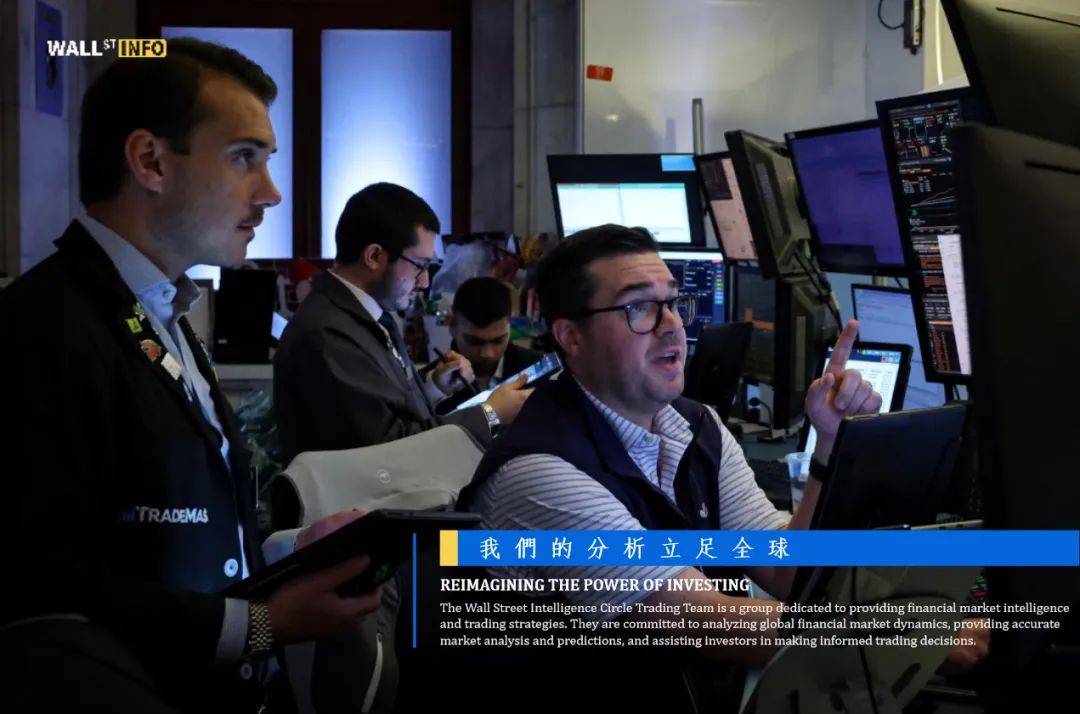
市场再定价

Search documents
市场双周观察(第二期)
Tebon Securities· 2025-12-22 05:28
Macro Economic Outlook - The market is expected to reprice current economic realities and future interest rate cuts as the U.S. economic data gradually recovers from the impact of the standstill[2] - Increased market volatility is anticipated in the next two weeks, necessitating heightened vigilance[2] Global Market Performance - Global markets were primarily influenced by U.S. and Japanese monetary policies, with the domestic market affected by policy and economic data[3] - The FOMC cut rates by 25 basis points in December, leading to a weaker dollar, while the Bank of Japan raised rates without a clear future rate hike schedule, resulting in a weaker yen[3] - A-shares saw significant declines, with the ChiNext Index down by 2.26% and the Science and Technology Innovation Board down by 2.99% over the two-week period[8] Stock Market Valuation - The P/E ratio for the CSI 300 Index is 74.8, while the Shanghai Composite Index stands at 72.2, indicating relatively high valuations compared to historical averages[9] - The P/B ratio for the CSI 300 Index is 82.5, suggesting a premium valuation compared to historical norms[11] Sector Performance - The defense and military sector led A-share performance with an 8.6% increase over the past two weeks, while the banking sector saw a decline of 0.9%[13] - The non-bank financial sector outperformed with a 7.5% increase, indicating strong investor interest[13] Bond Market Insights - The yield on 10-year Chinese government bonds is at 1.84%, while U.S. 10-year bonds yield 4.14%, highlighting a significant yield gap[15] - The FOMC's interest rate cut expectations suggest two more cuts in 2026, with probabilities of 65.32% and 34.68% for March and July, respectively[18] Commodity Market Trends - Precious metals, particularly silver, have seen significant price increases, with silver up by 8.28% over the past week[44] - Lithium carbonate has emerged as a leading commodity, reflecting strong demand in the market[42]
【UNforex下周展望】重磅事件落幕后 市场进入再定价与节奏博弈阶段
Sou Hu Cai Jing· 2025-12-20 08:54
Group 1 - Global markets are transitioning from a high-volatility phase driven by macro events to a focus on recalibrating existing expectations and price deviations [1][2] - The upcoming week lacks new significant data, shifting market attention to the impacts of already released information, such as interest rate paths and inflation risks [1][2] - Market behavior is expected to be characterized by oscillation around established ranges rather than forming a clear directional trend [1][3] Group 2 - The absence of new interest rate decisions does not diminish the importance of Federal Reserve-related factors, with market focus shifting to interpreting policy attitudes [2] - Japanese central bank policy adjustments continue to influence market dynamics, particularly regarding yen volatility and its effects on global risk sentiment [2][3] - As the year-end approaches, liquidity factors are becoming more significant, leading to increased caution among institutions and a potential decrease in new capital inflows [2][3] Group 3 - The market is likely to experience differentiated performance, with risk assets fluctuating between emotional recovery and year-end caution, while safe-haven assets may consolidate at high levels [3] - Currency markets may enter a phase of range trading, with price movements driven more by capital flows and position adjustments than by macroeconomic changes [3] - The upcoming week presents trading opportunities that require higher execution and adaptability, emphasizing the importance of position control and rhythm management over betting on a single macro direction [3]
【UNFX本周总结】政策重启下的再定价:情绪修复但结构性风险依旧
Sou Hu Cai Jing· 2025-11-22 03:38
Group 1 - The global financial market shows significant differentiation due to policy changes, data delays, and fluctuations in risk sentiment [1][2] - The end of the U.S. government shutdown provides short-term certainty and prompts the recovery of previously delayed economic data [1][2] - Despite the recovery in market sentiment, the Federal Reserve officials maintain a cautious stance, indicating that inflation has not yet reached a level that would justify interest rate cuts [1][2] Group 2 - The market is currently relying more on expectations for trading due to the delay in key data caused by the shutdown, leading to increased asset volatility [1][2] - Risk appetite in the market has been restored, with some funds flowing back into the stock market and high-beta assets, although the recovery is uneven across sectors [1][2] - The transition from a "defensive" to a "selective offensive" market approach resembles an emotional rebound rather than a trend-based recovery [1][2] Group 3 - The U.S. dollar index stabilizes and rebounds, benefiting from the cooling of rate cut expectations and rising U.S. Treasury yields [3] - Gold is under pressure due to hawkish policy signals and rising yields, yet it remains within a strong support range [3] - Global stock markets continue to experience a volatile rebound, with significant structural differentiation among sectors [3]
20:30,一个重大意外
Sou Hu Cai Jing· 2025-08-15 12:56
Group 1 - The core point of the article highlights the unexpected rise in the New York Fed Manufacturing Index for August, which recorded 11.9, significantly surpassing the previous value of 5.5 and market expectations of 0, marking the highest level since November 2024 [2] - The timing of the data release is crucial, falling between the CPI and PPI reports and just before the Jackson Hole meeting, creating a pivotal moment for market direction [2] - The substantial deviation from market expectations is rare in macro data, prompting traders to quickly reassess their positions regarding interest rate cuts by the Federal Reserve [2] Group 2 - Upcoming significant events that could influence market direction include a speech by Fed Chair Powell at the Jackson Hole meeting on August 22, the release of August non-farm payroll data on September 1, and the Fed's interest rate decision on September 18 [3] - The non-farm payroll data on September 1 is expected to have a decisive impact on the Fed's interest rate cut decisions, with Powell needing to consolidate recent data for his speech [3] - Analysts warn that even dovish signals from Powell could lead to market sell-offs, as investors may "buy the rumor, sell the news" [3] Group 3 - The article discusses the potential for the Chinese stock market and provides predictions for A-shares and Hong Kong stocks over the next year and three years, offering insights for long-term investors [4] - A brief news item is interpreted as a signal of significant actions by the Federal Reserve in the coming three months, indicating that the timing of rate cuts is not the only factor affecting the market [4] - The article raises questions about the future of gold and the potential for a resurgence, along with strategies for investors [5]