情绪修复

Search documents
金工定期报告:市场底部特征显现,情绪修复信号强化
Soochow Securities· 2026-03-21 12:24
Quantitative Models and Construction Methods - **Model Name**: Dividend-adjusted futures basis model **Model Construction Idea**: The model adjusts the futures basis by incorporating the impact of expected dividends during the contract's lifespan[8][17] **Model Construction Process**: 1. The futures basis is defined as the difference between the futures contract closing price and the underlying index closing price[17]. 2. The adjustment formula is: $ \text{Adjusted Basis} = \text{Actual Basis} + \text{Expected Dividends during Contract's Lifespan} $[18] 3. Annualized basis calculation: $ \text{Annualized Basis} = (\text{Actual Basis} + \text{Expected Dividend Points}) / \text{Index Price} \times 360 / \text{Days Remaining in Contract} $[19] **Model Evaluation**: The model effectively accounts for dividend impacts, providing a more accurate representation of futures pricing dynamics[8][17] - **Model Name**: Continuous hedging strategy **Model Construction Idea**: This strategy leverages the convergence of futures basis over time by continuously rolling over contracts[40] **Model Construction Process**: 1. Backtesting period: July 22, 2022, to March 20, 2026[41] 2. Portfolio allocation: 70% of funds in the spot index and 30% in short futures contracts[41] 3. Rebalancing rule: Roll over contracts when fewer than two days remain until expiration, using the closing price to open new positions in the next contract[41] **Model Evaluation**: The strategy provides stable returns but is sensitive to transaction costs and market liquidity[40][41] - **Model Name**: Minimum basis strategy **Model Construction Idea**: This strategy selects futures contracts with the smallest annualized basis for hedging[42] **Model Construction Process**: 1. Backtesting period: July 22, 2022, to March 20, 2026[42] 2. Portfolio allocation: 70% of funds in the spot index and 30% in short futures contracts[42] 3. Selection rule: Calculate the annualized basis for all available contracts and choose the one with the smallest basis[42] 4. Holding period: Hold the selected contract for eight trading days or until fewer than two days remain until expiration[42] **Model Evaluation**: The strategy reduces basis risk but requires frequent rebalancing, increasing operational complexity[42] Model Backtesting Results - **Dividend-adjusted futures basis model**: - IC contract: Current basis -7.30%, weekly high -5.81%[20] - IF contract: Current basis -4.51%, weekly high -4.23%[25] - IH contract: Current basis -0.54%, weekly high 0.26%[30] - IM contract: Current basis -8.91%, weekly low -9.69%[35] - **Continuous hedging strategy**: - IC: Annualized return -3.27%, volatility 3.82%, max drawdown -12.10%, net value 0.8862[44] - IF: Annualized return 0.25%, volatility 2.85%, max drawdown -3.95%, net value 1.0093[49] - IH: Annualized return 0.99%, volatility 2.89%, max drawdown -4.22%, net value 1.0364[53] - IM: Annualized return -6.17%, volatility 4.30%, max drawdown -21.04%, net value 0.7936[55] - **Minimum basis strategy**: - IC: Annualized return -1.66%, volatility 4.55%, max drawdown -8.56%, net value 0.9412[44] - IF: Annualized return 1.16%, volatility 2.99%, max drawdown -4.06%, net value 1.0428[49] - IH: Annualized return 1.62%, volatility 2.94%, max drawdown -3.91%, net value 1.0599[53] - IM: Annualized return -3.95%, volatility 5.13%, max drawdown -14.41%, net value 0.8638[55] Quantitative Factors and Construction Methods - **Factor Name**: VIX (Volatility Index) **Factor Construction Idea**: Reflects market expectations of future volatility based on option prices[58] **Factor Construction Process**: 1. Adjusted methodology based on international practices and domestic market characteristics[58] 2. Incorporates term structure to show volatility expectations across different time horizons[58] **Factor Evaluation**: Provides valuable insights into market sentiment and risk levels[57][58] - **Factor Name**: SKEW (Skewness Index) **Factor Construction Idea**: Measures the asymmetry in implied volatility across different strike prices, indicating market sentiment towards extreme events[62] **Factor Construction Process**: 1. Tracks the slope of implied volatility curves for options with varying strike prices[62] 2. Higher values indicate increased concern about downside risks, while lower values suggest reduced tail risk[62] **Factor Evaluation**: Useful for assessing market expectations of tail risks and extreme events[62] Factor Backtesting Results - **VIX**: - 30-day VIX levels: - SSE 50: 21.61 (74% percentile since 2024)[58] - CSI 300: 20.97 (69% percentile since 2024)[58] - CSI 500: 34.19 (91% percentile since 2024)[58] - CSI 1000: 28.52 (65% percentile since 2024)[58] - **SKEW**: - 30-day SKEW levels: - SSE 50: 100.79 (72.2% percentile since 2024)[63] - CSI 300: 103.11 (73.1% percentile since 2024)[63] - CSI 500: 99.94 (44.0% percentile since 2024)[63] - CSI 1000: 98.68 (13.1% percentile since 2024)[63]
伊朗局势引发通胀担忧,外部扰动下港股震荡调整
Guoyuan International· 2026-03-16 14:49
Market Performance - The Hang Seng Index (HSI) fell by 1.13% last week, while the Tech Index decreased by 0.62%[1] - The energy sector rose by 3.25% due to an increase in international oil prices, while the financial sector dropped by 4.36%[1] - The electrical equipment sector saw a significant increase of 15.1%, and the coal industry rose by 8.3%[1] Capital Flows - The net inflow of funds through the Hong Kong Stock Connect reached HKD 52.44 billion last week, indicating a notable recovery in mainland capital[1] - The number of units in the Tracker Fund of Hong Kong decreased by 4.87%, while the short ETFs for the Hang Seng Index and Hang Seng Tech Index increased by 8.42% and 2.87%, respectively[1] External Influences - Global markets were impacted by the situation in Iran, with oil prices rising over 10% during the week[2] - Concerns about inflation are expected to deepen due to the potential for prolonged military conflict affecting shipping safety in the Strait of Hormuz[3] Economic Data - Domestic financial data showed that new RMB loans increased by CNY 5.61 trillion in the first two months of the year, with social financing scale growing by CNY 9.6 trillion, up by CNY 316.2 billion year-on-year[7] - The M2 money supply grew by 9% year-on-year, while the stock of social financing increased by 8.2%[7]
每日期货全景复盘2.4:黄金避险狂飙VS沪银巨震!焦煤、沪锡冲高后急转弯?
Jin Shi Shu Ju· 2026-02-04 10:43
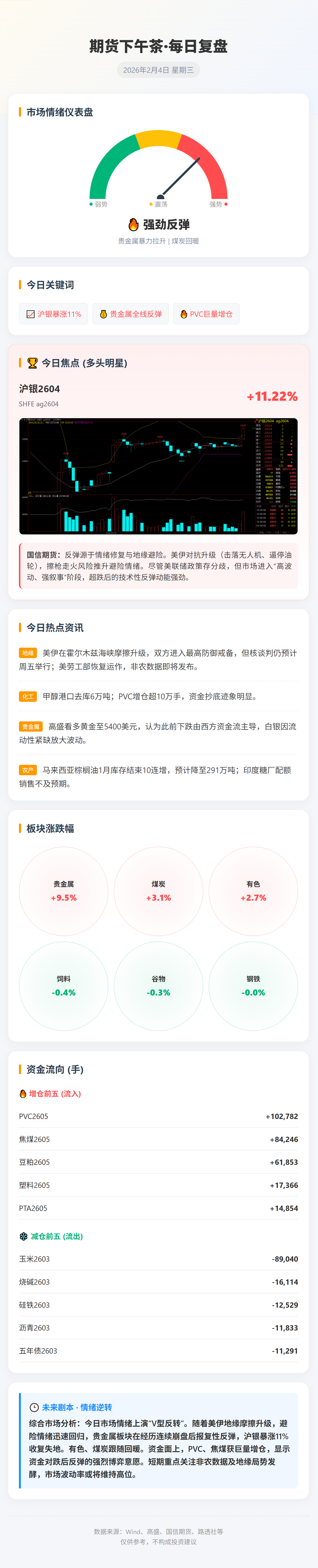
Market Sentiment - The market sentiment is currently weak, with a strong rebound observed in precious metals and a recovery in coal prices [2][6]. Key Highlights - Silver futures surged by 11% today, while all precious metals experienced a significant rebound [3][4]. - PVC saw a massive increase in open interest, exceeding 100,000 contracts, indicating strong buying interest [3][8]. Geopolitical Factors - The escalation of tensions between the U.S. and Iran, including the downing of a drone and increased military readiness, has heightened risk aversion in the market [6][16]. - Despite the geopolitical tensions, discussions regarding nuclear negotiations are set to take place on Friday [7]. Commodity Performance - Precious metals, particularly gold and silver, saw substantial gains, with gold rising by 7.29% and silver by 11.22% [15]. - Coal futures also experienced a rise, with coking coal increasing by 3.6% to 1,209 CNY/ton, marking a three-week high [16]. Investment Insights - Analysts suggest that the recent volatility in precious metals is driven by geopolitical uncertainties and market corrections after previous declines [15][16]. - The focus remains on upcoming non-farm payroll data and ongoing geopolitical developments, which may sustain high volatility in the market [13]. Supply and Demand Dynamics - The supply of methanol at ports decreased by 60,000 tons, while PVC's open interest indicates a strong bottom-fishing sentiment [8][17]. - The palm oil inventory in Malaysia ended a ten-month increase, expected to drop to 2.91 million tons [9]. Market Outlook - The market is expected to maintain high volatility and wide fluctuations due to the dual impact of risk aversion and policy expectations [16]. - The sentiment in the double焦 (coking coal) futures market is influenced more by funds and emotions rather than fundamentals, suggesting a cautious approach to trading [17].

中信证券裘翔:多因素驱动 春节前A股结构性机会凸显
Zhong Guo Zheng Quan Bao· 2026-01-16 20:47
Core Viewpoint - The A-share market is experiencing a steady upward trend supported by policy, economic stabilization, and improved liquidity, with a focus on investment logic and layout direction as the Spring Festival approaches [1][2] Policy Support - Regulatory bodies are guiding the A-share market towards a "gradual rise" pattern, with mechanisms for long-term capital entering the market being continuously improved, enhancing market stability [2] - Policies aimed at boosting domestic demand, such as fertility subsidies, are being implemented, which are expected to stabilize and improve the return on equity (ROE) for related listed companies [2] Economic Signals - The overall revenue growth rate for A-shares improved from -0.02% in the first half of 2025 to 1.2% in the third quarter, while net profit growth increased from 2.5% to 5.3% during the same period, indicating a trend of improving profitability [2] - Forecasts for 2026 suggest a stable macroeconomic environment with net profit growth expected to be 4.8% for the year, peaking in the second quarter [2] Long-term Capital Inflow - Long-term capital, particularly from insurance funds, is becoming a major source of market liquidity, with an estimated potential inflow of approximately 1.73 trillion yuan based on 2025 insurance premium income [3] - This influx of stable capital is expected to reduce market volatility and enhance internal stability [3] Market Structure and Opportunities - Structural opportunities are evident, with 39 out of 360 industry or thematic ETFs reaching new highs in December 2025, particularly in sectors like telecommunications, non-ferrous metals, and military aerospace [3] - The market is characterized by a significant divergence in performance, with small-cap stocks and thematic sectors outperforming larger indices [5] Investor Sentiment - Investor sentiment is showing signs of recovery, with a sentiment index reading of 98.1 on January 9, 2026, indicating a high level of optimism [4] - The market is currently in a phase where emotional recovery and capital reallocation are key themes, especially as the Spring Festival approaches [4][5] Investment Strategy - Investment strategies should focus on three dimensions: consensus direction, counter-consensus direction, and long-term investments, while also considering the opportunities presented by the appreciation of the renminbi [6][8] - In the consensus direction, sectors like non-ferrous metals and semiconductors are highlighted as key areas for institutional investment [7] - For counter-consensus investments, sectors related to domestic demand, such as travel services and quality real estate developers, are recommended due to their potential for valuation recovery [7] Long-term Considerations - There is a growing demand for investments that reduce volatility, with a focus on sectors that have room for ROE improvement, such as chemicals and renewable energy [8] - The appreciation of the renminbi is expected to create investment opportunities, particularly in industries like paper and aviation, which have already seen positive effects [8]

密切关注两大因素
British Securities· 2025-12-10 02:44
Market Overview - The A-share market showed mixed performance on Tuesday, with the Shanghai Composite Index declining by 0.37% to close at 3909.52 points, while the ChiNext Index rose by 0.61% to 3209.60 points, indicating a weak and fluctuating market sentiment overall [4][8]. - The total trading volume across both exchanges reached 19,040 billion, with significant activity in sectors such as commercial retail, communication services, and food and beverage, while sectors like non-ferrous metals and pharmaceuticals faced declines [4][6]. Sector Analysis - CPO (Co-packaged optics) stocks continued to rise, driven by increased capital expenditure plans from U.S. tech companies for AI data centers, which are expected to generate substantial orders for optical modules due to their advantages in high-speed data transmission [5]. - Consumer stocks, particularly in commercial retail and food and beverage, saw increased activity following the release of a government plan aimed at enhancing consumer goods supply and demand adaptability, suggesting potential opportunities in sectors catering to the elderly and budget-conscious consumers [6]. Investment Strategy - The report emphasizes a cautious approach, advising investors to closely monitor the Federal Reserve's meetings and domestic policy developments, adjusting portfolio structures accordingly. If favorable policies emerge, there may be opportunities to increase positions in structurally advantageous assets [7][8]. - The recommendation is to focus on individual stocks rather than indices, employing strategies such as balanced allocation and tactical buying and selling, particularly in sectors with strong earnings support, including technology growth (semiconductors, AI themes) and cyclical industries (solar, batteries, chemicals) [7][8].
【UNFX本周总结】政策重启下的再定价:情绪修复但结构性风险依旧
Sou Hu Cai Jing· 2025-11-22 03:38
Group 1 - The global financial market shows significant differentiation due to policy changes, data delays, and fluctuations in risk sentiment [1][2] - The end of the U.S. government shutdown provides short-term certainty and prompts the recovery of previously delayed economic data [1][2] - Despite the recovery in market sentiment, the Federal Reserve officials maintain a cautious stance, indicating that inflation has not yet reached a level that would justify interest rate cuts [1][2] Group 2 - The market is currently relying more on expectations for trading due to the delay in key data caused by the shutdown, leading to increased asset volatility [1][2] - Risk appetite in the market has been restored, with some funds flowing back into the stock market and high-beta assets, although the recovery is uneven across sectors [1][2] - The transition from a "defensive" to a "selective offensive" market approach resembles an emotional rebound rather than a trend-based recovery [1][2] Group 3 - The U.S. dollar index stabilizes and rebounds, benefiting from the cooling of rate cut expectations and rising U.S. Treasury yields [3] - Gold is under pressure due to hawkish policy signals and rising yields, yet it remains within a strong support range [3] - Global stock markets continue to experience a volatile rebound, with significant structural differentiation among sectors [3]
【UNforex本周总结】停摆结束缓释不确定性 市场定价重回政策与数据主线
Sou Hu Cai Jing· 2025-11-22 03:08
Group 1: Market Overview - Global financial markets showed significant divergence due to policy adjustments, data delays, and fluctuations in risk sentiment [1] - The end of the U.S. government shutdown provided clearer policy signals, leading to a new pricing process for major assets [1] - The cautious stance of Federal Reserve officials regarding inflation has cooled expectations for interest rate cuts by year-end [1] Group 2: Economic Data and Market Sentiment - Important economic data was delayed during the shutdown, leading to increased reliance on expectations for trading [1] - Despite a short-term recovery in sentiment, investors remain wary of potential shocks from the backlog of economic data [1] - The absence of employment, inflation, and manufacturing data has increased volatility in certain assets, with data uncertainty being a major market disruptor [1] Group 3: Asset Class Performance - Market risk appetite has seen some recovery, with funds flowing back into equities and high-beta assets [1] - Structural differences in recovery are evident, with technology and growth sectors performing better, while energy and financial sectors are constrained by fundamentals and interest rate expectations [1] - Safe-haven assets have experienced mixed fund flows, with gold under pressure but maintaining key support levels [1][4][5] Group 4: Stock Market Dynamics - Global stock markets continued to show a volatile rebound, with significant structural differentiation [6] - High-valuation sectors exhibited greater volatility, while low-valuation cyclical sectors remained weak, indicating that investors have not fully shifted to a risk-on mode [6] - The core themes of the week include policy return, sentiment repair, and ongoing risks, with the end of the U.S. shutdown providing certainty but leaving Fed policy direction unclear [6]
币安研究:加密市场在 10 月经历去杠杆冲击后下跌 6.1%,11 月有望迎来情绪修复
Sou Hu Cai Jing· 2025-11-13 12:58
Core Insights - The cryptocurrency market experienced a 6.1% decline in October, marking the first "red October" since 2018, following a deleveraging shock [1] - Despite the overall market pressure, BNB rose by 6.2% due to the launch of popular projects and the tokenization of a money market fund by China Merchants Bank [1] - Major tokens such as SOL, ADA, and DOGE saw declines exceeding 10% [1] Market Performance - The total value locked (TVL) in DeFi decreased by 4.85% [1] - The market capitalization of stablecoins increased by 3.54% [1] - Institutional demand for ETH remains strong, with treasury holdings reaching 5% of total supply [1] Future Outlook - The report suggests that November may see a recovery in market sentiment, with attention on the potential benefits from the end of the Federal Reserve's balance sheet reduction and improvements in US-China relations [1]
四季度:政策对冲会重现吗?
SINOLINK SECURITIES· 2025-10-12 11:09
Group 1 - The report highlights that the fourth quarter is traditionally a high-frequency window for fiscal policy to intensify, especially under weak domestic demand conditions, where the pressure to meet annual economic targets becomes more pronounced [2][8][10] - The cumulative GDP growth for the first three quarters is projected to exceed the annual target, suggesting that the pressure to implement large-scale counter-cyclical policies in the fourth quarter is lower than in previous years [10][11] - The report indicates that even if the economic growth continues to moderate in the fourth quarter, as long as it does not deviate significantly from the central level, the growth rate is expected to remain stable within a reasonable range [11][18] Group 2 - The establishment of 500 billion new policy financial tools at the end of the third quarter is noted as a significant measure to support project initiation in the fourth quarter, which could leverage local matching investments and potentially create a multiplier effect of around one trillion [3][11] - The report suggests that the reliance on large-scale additional stimulus is decreasing, indicating that the fiscal policy's focus may shift towards consolidating the economic fundamentals rather than introducing substantial new measures [11][18] - The report emphasizes that the short-term market dynamics are likely to be driven more by risk appetite and market microstructure rather than significant policy changes, with a notable recovery in market sentiment observed [4][14][18] Group 3 - The report discusses the potential for emotional recovery and risk preference resonance in the market, suggesting that the current low sentiment levels may lead to a phase of recovery, although this is subject to external shocks or internal sentiment weakening [4][14] - It is noted that the market's microstructure is currently similar to that of April, with sentiment indicators at a two-year low, reflecting a comprehensive pricing of negative factors [14][18] - The report concludes that while there is some room for fiscal policy intervention, the urgency is not as pronounced as in previous years, and the market's mid-term expectations have shifted significantly compared to earlier in the year [18]
商品日报(9月22日):金银再创新高 多晶硅震荡下跌
Xin Hua Cai Jing· 2025-09-22 09:19
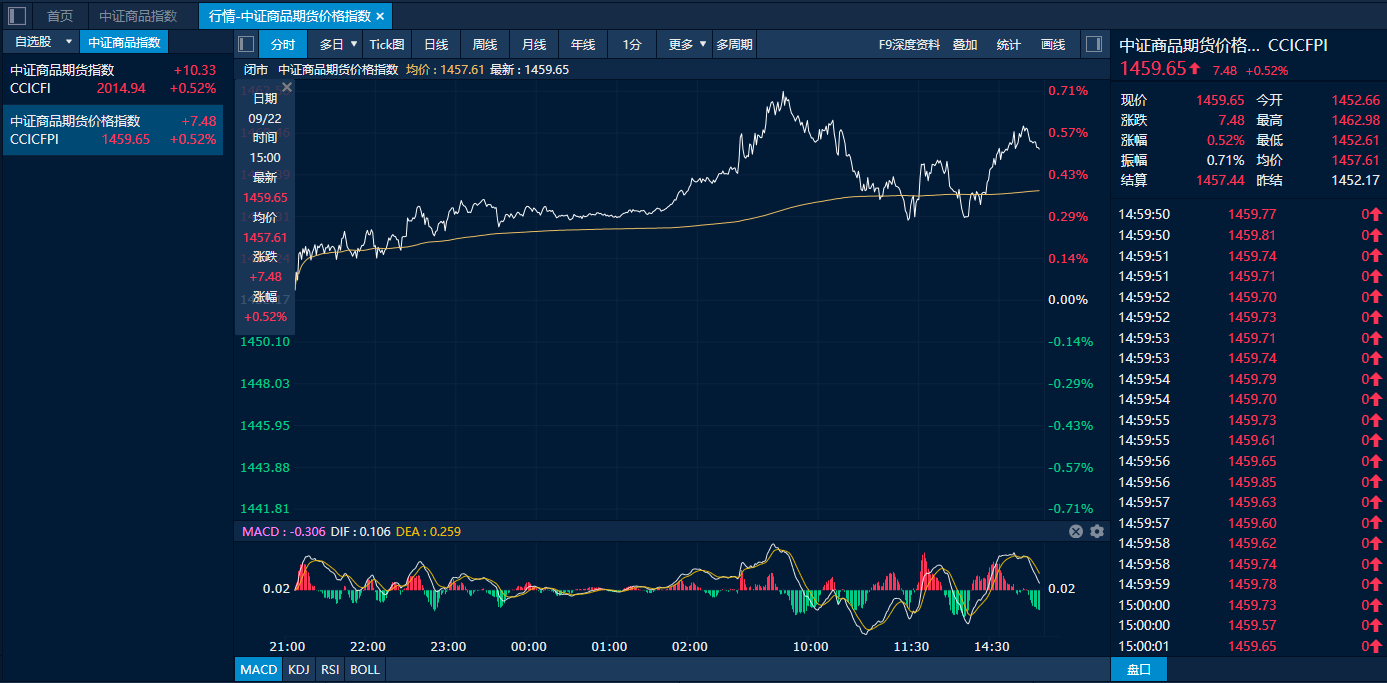
Group 1: Commodity Market Overview - The domestic commodity futures market showed mixed results on September 22, with the main silver contract rising over 3% and gold contracts increasing by more than 2% [1][2] - The China Securities Commodity Futures Price Index closed at 1459.65 points, up 7.48 points or 0.52% from the previous trading day [1] Group 2: Precious Metals - Precious metals remain the market's highlight, with silver prices continuing to rise and spot gold prices surpassing $3700 per ounce, reaching new highs [2] - The market sentiment for gold and silver is overwhelmingly bullish due to ongoing positive factors and increased safe-haven buying amid rising risks of a U.S. government shutdown [2] Group 3: Shipping and Transportation - The shipping index (European line) experienced a rebound, attributed to emotional recovery after a significant drop last week due to airline pricing adjustments during the off-season [2] - The market sentiment for shipping is stabilizing as the main contract transitions to a relatively busier season, with cautious expectations for further price declines [2] Group 4: Other Commodities - Oilseeds and oils showed an overall rebound, with prices for various soybean and oil products rising approximately 1% [3] - The main contract for polysilicon saw a significant decline of 3.63%, driven by a lack of new stimulus from policies and a still loose supply-demand balance [4] Group 5: Oil and Gas Sector - The SC crude oil main contract fell by 1.67%, with a general downturn in the oil and gas sector as demand weakens with the arrival of the off-season [4] - Despite geopolitical tensions potentially affecting oil supply, the overall market is expected to face a widening supply-demand surplus, leading to a bearish outlook for crude oil prices [4]