
房地产调控政策

Search documents
套现356亿全身而退!潘石屹在美国抄底,给美国房企上了一课
Sou Hu Cai Jing· 2025-11-15 18:11
Core Insights - The article highlights the contrasting fortunes of real estate moguls in China, with Pan Shiyi successfully exiting the market while others like Evergrande face massive debts [1][2][11] Group 1: Pan Shiyi's Strategic Moves - Pan Shiyi has withdrawn from the Chinese real estate market, cashing out over 30 billion RMB (approximately 4.5 billion USD) and recently acquiring six properties in New York for 76 million USD [1][5] - His ability to identify market trends allowed him to sell assets before the downturn, showcasing his foresight and strategic planning [4][11] - The properties acquired in New York will be transformed into a mixed-use project, indicating Pan's intent to re-enter the real estate sector with a new vision [1][8] Group 2: Market Context and Comparisons - In stark contrast, Evergrande Group is burdened with 2.39 trillion RMB (approximately 335 billion USD) in debt, leading to its collapse [2] - Other major developers like Sunac and Country Garden are also struggling due to high leverage, highlighting the precarious state of the Chinese real estate market [2][11] - Pan's past decisions, such as shifting focus from residential to commercial real estate during market peaks, demonstrate his adeptness at navigating market cycles [4][5] Group 3: Lessons from Pan Shiyi's Career - Pan's success is attributed to his cautious and strategic approach, prioritizing asset safety over aggressive expansion [7] - His partnership with his wife, Zhang Xin, who has a strong financial background, has been instrumental in their business strategies [4][5] - The narrative emphasizes that long-term success in business often comes from foresight and careful decision-making rather than rapid growth [7][11]


深圳楼市新政掀起新房市场销售热潮!多区域出现“跨城购房团”
Sou Hu Cai Jing· 2025-10-01 14:57
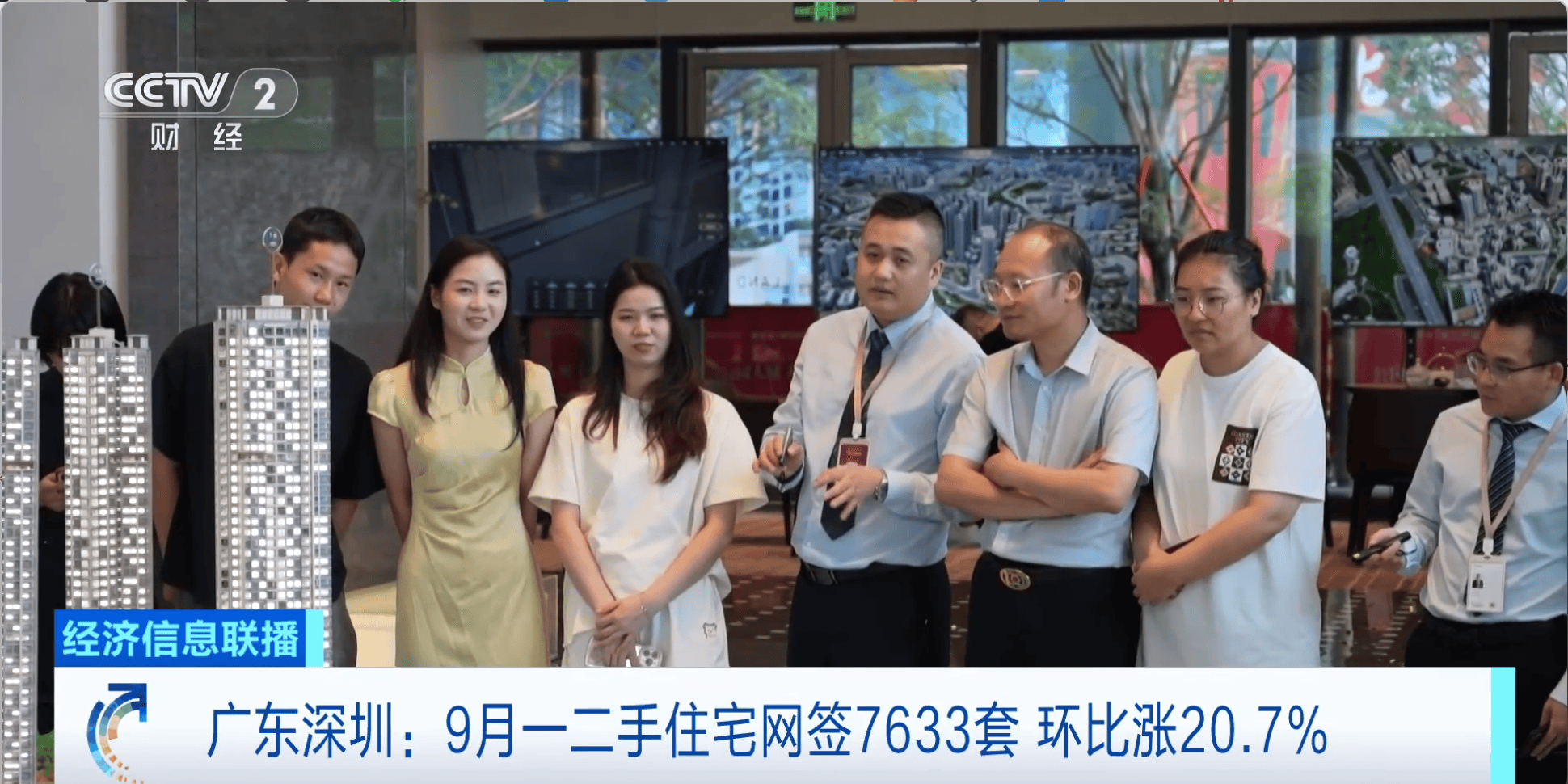
Group 1 - The core viewpoint of the article highlights that the recent adjustments to real estate policies in Shenzhen have significantly boosted market activity, with a notable increase in both new and second-hand residential transactions in September [1][3]. - Shenzhen's housing authority reported that in September, the number of new and second-hand residential contracts signed reached 7,633, representing a month-on-month increase of 20.7% [1]. - The new policies have stimulated demand from first-time buyers and those seeking improved housing options, leading to a surge in sales activity in the new housing market [3]. Group 2 - Key areas such as Futian and Nanshan have retained purchase restrictions, but the eligibility criteria for single buyers have been relaxed, encouraging demand in various districts like Qianhai and Baoan [5]. - Non-core districts have seen the removal of social security restrictions and a reduction in mortgage rates, which has led to the emergence of "cross-city home-buying groups" in areas like Longgang and Guangming [5]. - Data from the Shenzhen housing authority indicates that new residential contracts for newly built properties reached 3,087 in September, marking a month-on-month increase of 43.5% and a year-on-year increase of 32.7% [9].
上海“825楼市新政”满月:新房成交总量环比涨19% 外环外占比超七成
Zheng Quan Ri Bao Wang· 2025-09-26 13:30
Core Viewpoint - The "825 Real Estate New Policy" in Shanghai aims to stabilize market confidence and activate transaction demand through measures such as lifting purchase restrictions outside the outer ring, lowering down payment ratios, increasing housing provident fund loan limits, and relaxing commercial loan conditions [1][2]. Group 1: New Housing Market Response - In the first month of the new policy, the new housing market showed a positive response, with online signing transaction volume increasing by 19% month-on-month [1]. - Transactions outside the outer ring accounted for 73.45% of the total market, reaching a new high for the year, indicating the policy's guiding effect on this segment [1]. - The first week after the policy implementation saw a significant spike in transaction volume, with a month-on-month increase exceeding 30%, followed by a stabilization at a high level [1]. Group 2: Second-hand Housing Market Dynamics - In the second-hand housing market, the negotiation space for sellers slightly decreased but remained high, reflecting ongoing price negotiations between buyers and sellers [2]. - The policy is expected to activate the second-hand housing replacement chain, which is crucial for improving market liquidity and fostering a virtuous cycle [2]. - The proportion of second-hand housing transactions outside the outer ring was notably higher than the average for the year, indicating increased activity in this area due to the new policy [2]. Group 3: Overall Market Impact - The initial effects of the "825 Real Estate New Policy" have begun to manifest, boosting market confidence and facilitating the release of reasonable housing demand [3]. - The policy is seen as a strong support for the upcoming peak buying season, laying a solid foundation for market recovery [3].
地产经纬丨上海房产税优化细节落地 非沪籍多套房税负下降
Xin Hua Cai Jing· 2025-09-19 13:48
Core Viewpoint - The recent policy adjustment by Shanghai's Finance Bureau aims to optimize the property tax regulations for non-local residents, particularly focusing on reducing the holding costs for families owning multiple properties, thereby stimulating the real estate market [1][2]. Policy Adjustments - The new policy aligns the property tax exemption standards for non-local families purchasing second or additional homes with those of local residents, allowing for a tax-free area of 60 square meters per person when calculating total housing area [2]. - Non-local families can achieve full exemption from property tax if their second home is 180 square meters or less after accounting for the exempted area, significantly supporting demand for improved housing [2]. Tax Regulations - The tax exemption policy for first-time homebuyers among non-local families remains unchanged, continuing to benefit high-level talents and those with residence permits for over three years [2][3]. - The policy will take effect on January 1, 2025, allowing eligible homeowners to apply for tax refunds on previously overpaid taxes, which alleviates concerns regarding housing costs [2]. Market Impact - The policy is expected to boost the willingness of non-local families to purchase homes, particularly in areas where purchase restrictions have been relaxed, potentially increasing housing transaction volumes [4][5]. - Data indicates that the Shanghai real estate market, especially in outer districts, is under pressure, with significant declines in new construction and sales, highlighting the need for supportive measures [3][4]. Market Sentiment - The policy reflects Shanghai's commitment to supporting reasonable housing consumption, contributing to a more favorable market environment characterized by the lowest purchase costs and thresholds in history [5]. - While the policy is anticipated to improve market sentiment, its actual impact on sales data will require further observation, as the market faces challenges such as declining second-hand home prices and reduced new construction [5].
国泰海通|地产:第36周成交回落,深圳放松政策刺激需求
国泰海通证券研究· 2025-09-07 14:33
Core Viewpoint - The real estate market in major cities has shown a decline in transaction volume, but policy adjustments in Shenzhen are expected to stimulate demand and stabilize the market trend for the year, maintaining an "overweight" rating for the industry [1]. Group 1: New Housing Transactions - In the week of 2025, the new housing transaction area in 30 major cities was 1.65 million square meters, a decrease of 3.35% week-on-week, but an increase of 8.37% year-on-year [2]. - First-tier cities saw a sales area of 470,000 square meters, down 11.8% week-on-week and down 4% year-on-year [2]. - Second-tier cities recorded a sales area of 830,000 square meters, down 13.1% week-on-week but up 5% year-on-year [2]. - Third-tier cities had a sales area of 360,000 square meters, up 5.5% week-on-week and up 41.1% year-on-year [2]. Group 2: Second-Hand Housing Transactions - The second-hand housing transaction volume in 24 cities for the week was 1.85 million square meters, down 8.97% week-on-week and up 11.15% year-on-year [2]. - First-tier cities had a transaction area of 747,000 square meters, down 4.7% week-on-week and up 6.3% year-on-year [2]. - Second-tier cities recorded a transaction area of 726,500 square meters, down 13.7% week-on-week and up 5.1% year-on-year [2]. - Third-tier cities had a transaction area of 375,000 square meters, down 7.5% week-on-week and up 39.4% year-on-year [2]. Group 3: Land Transactions - The land supply area for the week was 22.39 million square meters, with a transaction area of 13.13 million square meters, resulting in a supply-to-sales ratio of 1.70 [2]. - The total land transfer amount was 30.8 billion yuan, with a cumulative land supply area of 49.8 million square meters for the year, down 15% year-on-year [2]. - The cumulative land transaction area was 46.177 million square meters, down 4.7% year-on-year, and the cumulative land transfer amount was 1,388.4 billion yuan, up 9.1% year-on-year [2]. Group 4: Inventory and Clearance Cycle - The available housing inventory in 35 cities was 31.387 million square meters, up 0.64% month-on-month but down 4.42% year-on-year [3]. - The inventory clearance cycle for August 2025 was 22.09 months, an increase of 1.89% month-on-month and a decrease of 4.91% year-on-year [3].

行业点评报告:7月供需两端均走弱,地产数据仍在探底
KAIYUAN SECURITIES· 2025-08-15 07:55
Investment Rating - The industry investment rating is "Positive" (maintained) [1] Core Insights - The report highlights a decline in new housing transaction volume and value, with a year-on-year decrease of 4.0% in sales area and 6.5% in sales value for the first seven months of 2025 [5][14] - The report indicates a continued downward trend in sales data, with July showing a significant drop of 7.8% in sales area and 14.1% in sales value compared to the previous year [5][14] - The report notes that the construction data shows a narrowing decline, with new construction area down 19.4% year-on-year, while completion area decreased by 16.5% [6][20] - The report emphasizes that the investment in real estate development has seen an increasing decline, with a 12.0% drop in investment amount for the first seven months of 2025 [7][24] - The report mentions that the funding available to real estate developers has decreased by 7.5%, with only personal mortgage loans showing a month-on-month increase [7][27] Summary by Sections Sales Data - In the first seven months of 2025, the total sales area of commercial housing was 516 million square meters, down 4.0% year-on-year, with residential sales area down 4.1% [5][14] - The sales value for the same period was 4.96 trillion yuan, a decrease of 6.5% year-on-year, with residential sales value down 6.2% [5][14] Construction Data - The new construction area for the first seven months was 352 million square meters, down 19.4% year-on-year, with residential new construction down 18.3% [6][20] - The completion area was 250 million square meters, down 16.5% year-on-year, with residential completion down 17.3% [6][20] Investment Trends - Real estate development investment for the first seven months was 5.36 trillion yuan, down 12.0% year-on-year, with residential investment down 10.9% [7][24] - The funding available to developers was 5.73 trillion yuan, down 7.5% year-on-year, with domestic loans and personal mortgage loans showing slight increases [7][27] Investment Recommendations - The report suggests that the traditional off-season in July and August will see continued weakness in supply and demand, with a recommendation for strong credit real estate companies that can capture improvement-driven customer demand [8][33] - It also highlights companies benefiting from both residential and commercial real estate recovery, as well as those with high-quality property management services [8][33]


北京楼市新政首日,有开发商连夜涨价
Sou Hu Cai Jing· 2025-08-10 10:05
Core Viewpoint - The recent policy change in Beijing allowing unlimited purchases for eligible buyers outside the Fifth Ring Road has led to a significant increase in market activity, with a notable rise in inquiries and viewings of properties [1][3][5]. Market Reaction - Following the policy announcement, there was an immediate response from the market, with some properties recording sales on the same night of the announcement [3]. - On the first day of the new policy, there was a noticeable increase in foot traffic at sales offices, with some locations reporting a 20%-25% rise in visitor numbers [3][5]. - Developers have shown mixed reactions, with some planning to raise prices immediately while others have opted for price reductions to stimulate sales [7][10]. Implications of Policy Change - The policy adjustment is seen as the most significant loosening of restrictions since last year's changes, indicating a shift in the regulatory environment for real estate in Beijing [3][5]. - The majority of new housing supply is concentrated outside the Fifth Ring Road, which is why this area is viewed as a critical market segment [5]. - While the policy may boost transaction volumes, the overall impact on prices remains uncertain, as the market is still characterized by cautious buyer sentiment [7][10]. Buyer Behavior - Increased viewing activity does not necessarily translate to immediate purchases, as many potential buyers remain in a wait-and-see mode regarding the effectiveness of the new policy [5][7]. - The market is experiencing a shift where the focus is on selecting the right property rather than timing the market, emphasizing the importance of property quality over market conditions [10].
房地产调控政策又有新动作,限购、限贷、限售咋回事?一文读懂。祝大家买卖房顺利~
Sou Hu Cai Jing· 2025-08-09 12:10
Core Insights - Recent changes in real estate policies, including purchase restrictions, loan limits, and resale limitations, are causing uncertainty among potential buyers and sellers [2][3][4] - The relaxation of purchase restrictions in some cities allows buyers with sufficient funds to purchase multiple properties, although conditions vary by location [2] - Loan policies have seen a reduction in down payment requirements and interest rates, benefiting some buyers, but access still depends on individual creditworthiness [2][3] - Resale restrictions aim to stabilize the market by preventing rapid flipping of properties, but they can create challenges for homeowners needing to sell quickly [3][4] - The fluctuating nature of these policies leaves consumers confused about the optimal timing for buying or selling properties [4] Purchase Restrictions - Some cities have eased restrictions, allowing buyers with financial means to purchase multiple properties [2] - Variability in local regulations means that potential buyers must check with local housing authorities for accurate information [2] Loan Policies - Banks are reportedly lowering down payment ratios and interest rates, making it easier for some buyers to secure loans [2] - Individual circumstances, such as credit history and income, still play a significant role in loan approval [2] Resale Limitations - The introduction of resale restrictions aims to curb speculative buying and stabilize property prices [3] - Homeowners may face difficulties if they need to sell their property before the end of the resale restriction period [3] Market Stability - The government is attempting to balance the real estate market by implementing policies that both cool down rapid price increases and stimulate demand when prices decline [3][4] - Consumers are advised to be cautious and consider factors beyond price, such as property quality and location, when making purchasing decisions [4]

房价同比降幅继续收窄市场迈向止跌回稳
Zhong Guo Zheng Quan Bao· 2025-07-15 20:57
Core Viewpoint - The real estate market in China is showing signs of stabilization, with a narrowing decline in housing prices and sales, driven by targeted policies implemented by local governments [1][2]. Policy Effectiveness - The macroeconomic policies aimed at regulating the real estate market have shown significant effects, with a reduction in the year-on-year decline of new residential sales prices across first, second, and third-tier cities [1]. - In June, the year-on-year decline in new residential sales prices for first, second, and third-tier cities narrowed by 0.3, 0.5, and 0.3 percentage points respectively compared to the previous month [1]. - The year-on-year decline in second-hand residential sales prices in second and third-tier cities also narrowed, with reductions of 0.3 and 0.2 percentage points respectively [1]. Market Trends - The overall trend indicates a stabilization in the real estate market, with new housing sales area and value experiencing a narrowing decline, suggesting a potential bottoming out [2]. - In the first half of the year, the national new residential sales area decreased by 3.5%, a reduction of 15.5 percentage points compared to the same period last year, while sales value fell by 5.5%, narrowing by 19.5 percentage points [2]. - The transaction volume in the real estate market has improved, particularly in the second-hand housing sector, which has seen an increase compared to the previous year [2]. Future Support Policies - It is anticipated that real estate support policies will be further intensified in the second half of the year, focusing on increasing the acquisition of affordable housing and expediting loan disbursements for key projects [3]. - There is an expectation for a potential reduction in mortgage rates in line with policy interest rate adjustments [3].
上半年二手房交易量同比增长,商品房待售面积连续4个月减少
2 1 Shi Ji Jing Ji Bao Dao· 2025-07-15 05:20
Group 1 - The core viewpoint of the articles indicates that the real estate market in China is showing signs of improvement, with a narrowing decline in both sales volume and sales value compared to previous periods [1][2][3] - In the first half of the year, the sales area of new commercial housing reached 45,851 million square meters, a year-on-year decrease of 3.5%, but the decline has narrowed by 15.5 percentage points compared to the same period last year [1] - The sales value of new commercial housing was 44,241 billion yuan, down 5.5%, with the decline narrowing by 19.5 percentage points year-on-year [1] Group 2 - The number of cities with rising new residential sales prices increased to 14 in June, with Shanghai and Changsha showing the largest month-on-month increases of 0.4% [1] - The average sales prices of new residential properties in first, second, and third-tier cities fell by 1.4%, 3.0%, and 4.6% year-on-year, respectively, but the declines were smaller than in previous months [2] - Real estate companies are progressing in debt reduction, with funds in place for real estate development down 6.2% year-on-year, but the decline has narrowed significantly compared to last year [2] Group 3 - The inventory of unsold commercial housing decreased to 76,948 million square meters by the end of June, marking a reduction of 479 million square meters from the end of May [2] - Core cities are continuing to optimize real estate policies, including adjustments to housing fund loan policies to better meet the reasonable housing needs of buyers [3] - It is expected that local governments will actively implement policies to stimulate the real estate market in the second half of the year [3]