文化育人

Search documents
新疆:“石榴籽”如何长成“栋梁材”?
Zhong Guo Xin Wen Wang· 2026-02-10 07:18
Core Viewpoint - Higher education in Xinjiang plays a crucial role in connecting individual dreams with regional development, fostering a sense of community among diverse ethnic groups and preparing students to contribute to the region's future [1] Group 1: Community Awareness and Cultural Integration - Xinjiang universities are embedding the awareness of the Chinese national community into their educational processes, providing a solid foundation for students' growth [2] - Practical education is emphasized, with thousands of students participating in hands-on experiences across 274 practice bases, fostering friendships and breaking down barriers among different ethnicities [2] - Initiatives like "Push for Mandarin" and cultural activities at universities enhance students' language skills and cultural understanding, broadening their horizons [2] - Cultural programs at institutions like Shihezi University promote appreciation for Chinese classics through regular activities [2][3] Group 2: Practical Skills Development - Xinjiang universities align their educational offerings with regional development needs, providing students with practical skills relevant to local industries [4] - Xinjiang Agricultural University focuses on agricultural technology, establishing numerous research platforms to address real-world challenges [4] - Shihezi University engages students in community projects, converting research into practical applications that benefit local farmers [4] - The integration of vocational education with industry needs is exemplified by the achievements of the Bingtuan Xingxin Vocational and Technical College, which is set to host a world-class skills competition [5] Group 3: Employment and Talent Retention - Xinjiang universities are enhancing their employment services, with initiatives like resume clinics and AI interview systems to improve students' job readiness [6] - The employment rates for graduates are notably high, with Shihezi Vocational and Technical College maintaining a 96% employment rate and Bingtuan Xingxin Vocational and Technical College achieving 98% [6] - There is a significant increase in graduates choosing to stay in Xinjiang, with over 60% of Shihezi University graduates opting to develop their careers in the region [7] - The collective decision of graduates to remain in Xinjiang reflects the universities' success in nurturing committed and responsible individuals [7]
以文化人润民心 凝心聚力促发展
Xin Lang Cai Jing· 2026-01-29 18:45
Group 1 - The core viewpoint of the articles emphasizes the importance of cultural education in fostering a sense of community among the Chinese ethnic groups in Xinjiang, with a focus on integrating traditional culture into various educational frameworks [1][2][4] - The proposal to establish an art archive for students aims to systematically document their artistic development, enhancing the evaluation of their artistic skills and promoting quality education in arts [1] - The integration of traditional Chinese culture into vocational education is highlighted as a means to cultivate well-rounded talents, with schools implementing innovative teaching methods that incorporate cultural values [2][3] Group 2 - The suggestion to rename the "Winter Solstice" to its traditional name "Winter Festival" aims to enhance cultural recognition and provide opportunities for communities to engage with traditional customs [3] - The unique role of language education in cultural nurturing is emphasized, advocating for a deeper integration of traditional culture into the curriculum to strengthen students' cultural foundations and national identity [4] - The discussions among representatives reflect a commitment to advancing cultural education and building a shared spiritual home for the Chinese nation, contributing to high-quality development in Xinjiang [4]
将文化滋养融入未成年人思想道德建设全过程
Xin Lang Cai Jing· 2025-12-30 11:54
Core Viewpoint - The article emphasizes the importance of moral and ideological education for minors as a strategic and foundational task, highlighting the need for a supportive social environment for their healthy growth [1][2]. Group 1: Cultural Influence on Minors - Culture plays a unique role in shaping the values of minors, acting as a vital link between them and society, and transforming core socialist values into perceivable and relatable spiritual strength [1][2]. - The growth of minors is characterized by a high degree of plasticity in their cognitive structure and value system, making cultural immersion and value internalization essential for their development [1][2]. Group 2: Cultural Empowerment Strategies - A cultural education system should be established, focusing on value guidance, emotional nourishment, and capability cultivation, using traditional, revolutionary, and advanced socialist cultures as core carriers [3][4]. - Emotional resonance is crucial for moral development, and immersive experiences can help minors internalize moral values through cultural practices and narratives [3][4]. Group 3: Comprehensive Cultural Education Pathways - A multi-dimensional approach is necessary to implement cultural empowerment effectively, involving product innovation, service upgrades, and environmental optimization, fostering collaboration among families, schools, and communities [5][6]. - The creation of high-quality cultural products should focus on the contemporary value of traditional and revolutionary cultures, utilizing modern media to enhance appeal and ensure content quality [6]. Group 4: Collaborative Cultural Ecosystem - Schools should integrate cultural education throughout the teaching process, while parents and society must contribute to creating a supportive cultural atmosphere and regulating the cultural market to protect minors [7].
“十四五”首都高校答卷|北京物资学院:培养应用型卓越物流人才
Xin Jing Bao· 2025-11-28 10:17
Core Viewpoint - Beijing Wuzi University is in a critical phase of development during the "14th Five-Year Plan" period, focusing on becoming a high-level application-oriented university that serves the education power and the socio-economic development of the capital [1] Group 1: Educational Philosophy and Achievements - The university emphasizes moral education as its fundamental task, implementing comprehensive reforms in ideological and political education, and has received multiple accolades for its "curriculum ideological and political education" initiatives [2][3] - The institution has established a "five educations" system, achieving significant success in sports and cultural activities, including winning numerous awards in competitions and producing original cultural works [2][3] Group 2: Integration of Industry and Education - The university has proposed a new paradigm for industry-education integration, focusing on a multi-chain coupling approach that enhances talent cultivation through deep integration with industry [3][5] - It has established various alliances and practical training bases, ensuring that students engage with real industry projects, with 97% of student thesis topics derived from actual industry needs [5][6] Group 3: International Collaboration and Global Perspective - The university is expanding its international educational framework, establishing partnerships with foreign institutions and offering programs in collaboration with universities in the United States [7][8] - It has developed a robust international cooperation network, engaging with 149 international organizations and institutions across 30 countries, and has introduced international standards into its curriculum [8] Group 4: Cultural and Social Responsibility - The university promotes cultural education through initiatives that integrate historical and cultural resources, fostering a sense of responsibility and mission among students [9][10] - Students actively participate in significant national events and community service projects, enhancing their practical skills and professional spirit [9][10] Group 5: Overall Development and Future Vision - Over the past five years, the university has made substantial progress, improving its rankings and contributing to national standards and educational experiences [10][11] - The institution has trained nearly 20,000 application-oriented talents, maintaining a high employment rate for graduates, particularly in the logistics and supply chain sectors [11][12]

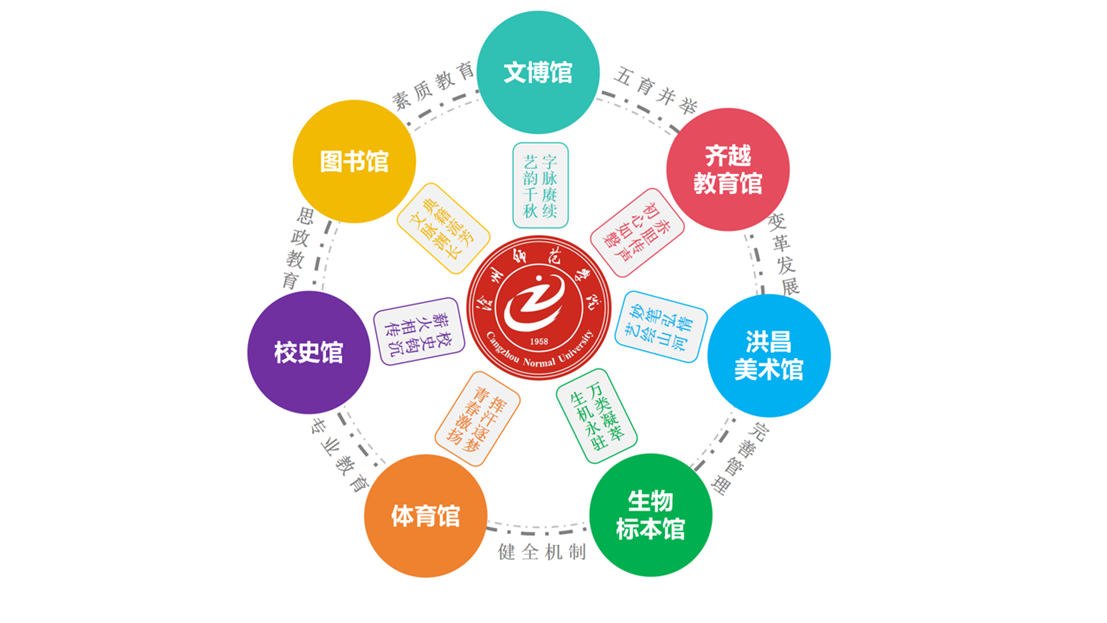
数智时代背景下 “沧州师范学院七色文化 + 双创” 助力高校思想政治教育发展
Yang Shi Wang· 2025-07-01 03:47
Core Viewpoint - Cangzhou Normal University is integrating "Seven Colors Culture" and "Innovation and Entrepreneurship Education" to create a unique ideological and political education system amidst the digital transformation wave [1][10]. Group 1: Ideological Guidance - The university is building a multi-level complementary ideological education system by incorporating the spirit of the 20th National Congress of the Communist Party into various cultural activities [3]. - A modular and dynamic ideological teaching matrix is being established, utilizing AI technology to analyze student interactions with art exhibits and provide tailored ideological resources [3][4]. Group 2: AI Empowerment - The university is leveraging AI image recognition technology to develop a "Species Evolution - Ecological Responsibility" ideological teaching model, creating a systematic intelligent education framework [4]. - A three-dimensional intelligent cultivation system is being constructed, generating profiles based on students' reading data and project practices to match cultural interests with ideological education [4][5]. Group 3: Cross-Disciplinary Integration - The curriculum is being reformed to include interdisciplinary courses that combine AI technology ethics with red culture dissemination, enhancing the educational experience [5]. - Innovative teaching methods are being employed through virtual entrepreneurship simulation platforms, allowing students to apply data visualization and ecological protection concepts in practical projects [5][6]. Group 4: Collaborative Ecosystem - The university is extending its cultural achievements beyond campus through online exhibitions, emphasizing the need for ideological education to break down campus walls and achieve a closed loop of cultural education and social service [6][8]. - A collaborative mechanism is being established to deepen resource sharing and support for students and educators, promoting a new model of integrated education and practice [8][10].