新发展模式

Search documents
龙湖集团陈序平:有信心在两到三年过渡到新发展模式
2 1 Shi Ji Jing Ji Bao Dao· 2026-03-27 12:17
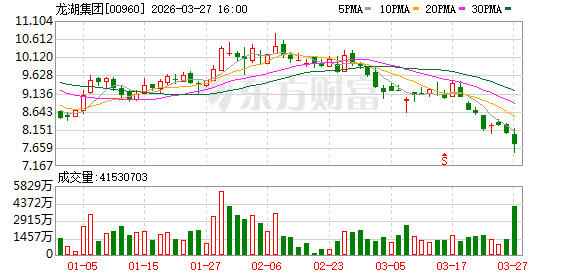
Core Viewpoint - Longfor Group reported a significant decline in revenue and profit for the year 2025, reflecting the ongoing challenges in the real estate market, including a drop in new home sales and increased inventory pressure [2][3]. Financial Performance - Longfor Group achieved an operating revenue of 97.31 billion yuan, a year-on-year decline of over 20% [2]. - The revenue from real estate development was 70.54 billion yuan, while the revenue from operations and services was 26.77 billion yuan, accounting for 27.5% of total revenue [2]. - The net profit attributable to shareholders was 1.02 billion yuan, but after excluding fair value changes, the company recorded a loss of 1.7 billion yuan, marking the first loss under this accounting measure [2]. Sales and Market Conditions - The total contracted sales amount for Longfor was approximately 63.16 billion yuan, a year-on-year decrease of 37.54% [2]. - The company faced pressure on profit margins due to inventory challenges and price adjustments in the market [2]. Debt Management - Longfor has successfully reduced its total debt to 152.81 billion yuan, a decrease of 23.51 billion yuan from the previous year, with cash reserves of 29.2 billion yuan [2]. - The net debt ratio stood at 52.2%, with an average financing cost of 3.51% and an average loan term of 12.12 years [2]. Strategic Direction - The Chairman and CEO emphasized the need for a transition to a new development model while maintaining a strong foundation in traditional development business [3]. - Longfor has integrated business and debt adjustments, reducing interest-bearing debt by 60 billion yuan over the past three and a half years [3]. - The company aims to shift its revenue model, with operational and service income expected to surpass development income by 2028 [3][4].


十大宏观趋势分析报告
Sou Hu Cai Jing· 2026-02-26 12:31
Group 1 - The core viewpoint of the report is that China's economy will continue to experience "reparative growth" in 2026, with the real estate sector being a key variable affecting the overall economic landscape [2][13][26] - The real estate cycle is defined as an "L-shaped" bottoming phase, indicating that it will neither continue to decline deeply nor experience a V-shaped recovery, but will stabilize gradually [2][26] - The report emphasizes that real estate is no longer the primary driver of economic growth, with a shift in policy focus towards a "new development model" that includes affordable housing construction and urban renewal [2][26] Group 2 - Inflation is expected to rise moderately, with nominal GDP growth projected to rebound from 4% in 2025 to 5% in 2026, which is crucial for improving corporate profits and household incomes [3][30][38] - The report notes that the prolonged period of low inflation has pressured corporate profit margins, leading to a perception that earning money has become increasingly difficult [3][30] - The anticipated recovery in inflation is expected to be driven by stable food prices and a rebound in core service consumption, which will positively impact nominal GDP growth [3][30][38] Group 3 - Fiscal policy is expected to become more proactive, shifting from large-scale stimulus to optimizing expenditure structures, focusing on supporting livelihoods and technology rather than traditional infrastructure [4][13][26] - The report predicts that the fiscal deficit rate may remain high, around 4%, but emphasizes the importance of where the funds are allocated [4][15][26] - There is a notable shift in fiscal spending towards social security, employment, and technology, indicating a focus on long-term competitiveness and addressing demographic challenges [4][15][26] Group 4 - The consumption engine is transitioning from goods consumption to service consumption, with an expected increase in the household consumption rate [5][14][26] - In 2025, the "trade-in" policy for appliances and automobiles was a major driver of consumption, but by 2026, service consumption is expected to take over, supported by increased transfer income and improved nominal GDP [5][14][26] - The report highlights that young families, with higher marginal consumption tendencies, will particularly drive growth in service sectors such as dining, tourism, and healthcare [5][14][26] Group 5 - Investment growth is expected to stabilize and rebound, with a narrowing decline in real estate development investment, while manufacturing and infrastructure investments will act as stabilizers [6][14][26] - The report notes that fixed asset investment experienced negative growth in 2025, but factors such as relaxed housing policies in first-tier cities and increased fiscal support for investment may lead to a turnaround in 2026 [6][14][26] - Predictions indicate a 10% decline in real estate development investment, while manufacturing and infrastructure investments are expected to grow by 5%, leading to an overall fixed asset investment growth of around 2% [6][14][26] Group 6 - The transition from old to new economic drivers is accelerating, with capital expenditure in "new economy" sectors like artificial intelligence replacing traditional real estate and infrastructure investments [7][14][26] - The report confirms this shift through macro-level data and micro-level corporate spending, indicating that technology firms are maintaining high growth in capital expenditure while real estate companies are contracting [7][14][26] - This "temperature difference" in capital allocation reveals the core drivers of future growth, emphasizing the need for technological innovation and equipment upgrades rather than reliance on traditional construction [7][14][26] Group 7 - The global liquidity environment is expected to remain accommodative, with both the Federal Reserve and the People's Bank of China likely to pursue easing measures [8][15][26] - The report suggests that if financial markets face pressure, the Federal Reserve will likely inject liquidity again, while China may also implement a reserve requirement ratio cut and interest rate reduction in 2026 [8][15][26] - This "loose monetary" environment is seen as a crucial support for stock markets and resource performance [8][15][26] Group 8 - The US dollar is expected to maintain a strong position, while the Chinese yuan may appreciate further, driven by internal and external economic rebalancing [9][15][26] - The report explains that the strong fundamentals of the US economy compared to Europe and Japan support a strong dollar, while easing trade tensions between China and the US may increase demand for the yuan [9][15][26] - The appreciation of the yuan is viewed as a reflection of China's shift from external demand reliance to internal-driven growth, which will attract international capital inflows [9][15][26] Group 9 - A-shares are seen as having more favorable opportunities compared to bonds, with a "slow bull" market foundation remaining solid [10][15][26] - The report highlights that the friendly policy environment and rising inflation will benefit corporate profit recovery, while rising bond yields will enhance the relative attractiveness of stocks [10][15][26] - The re-evaluation of technology assets, particularly in AI, and the expectation of re-inflation are expected to guide the recovery of traditional economic fundamentals [10][15][26] Group 10 - Resource commodities, especially precious and non-ferrous metals, are expected to see their strategic value continue to rise, facing long-term opportunities [11][15][26] - The report identifies three key factors: the favorable impact of a global loose monetary environment on commodity prices, increased demand for non-ferrous metals driven by the AI revolution and high-end manufacturing, and the geopolitical uncertainties leading to a "security premium" for critical minerals [11][15][26] - Particularly for gold, the report suggests that its status as a reserve asset is returning, with prices likely to rise in the context of loose monetary policy and high debt levels [11][15][26]
【理响中国·经视图】新发展模式支撑中国经济行稳致远
Zhong Guo Jing Ji Wang· 2026-01-27 00:46
Group 1 - The article presents a neutral stance on the opinions expressed, indicating that they do not reflect the views of Hexun and that the site does not guarantee the accuracy or completeness of the content [1]
房地产品牌最新研究:产品主义与新发展模式重塑行业竞争格局
Xin Jing Bao· 2025-09-12 09:00
Industry Overview - The report released by the China Enterprise Evaluation Association, Tsinghua University Real Estate Research Institute, and China Index Academy indicates that the average brand value of national real estate companies has decreased by 7.6% year-on-year, marking the fourth consecutive year of decline [1] - Despite the overall decline, leading companies in the industry have only seen a slight decrease of 2.7% in brand value, demonstrating strong anti-cyclical capabilities [1] - The real estate industry is undergoing a deep adjustment and model restructuring phase, facing challenges such as sales contraction, profit pressure, and strategic consolidation [1] - Policies aimed at stabilizing the market are being implemented, with the State Council emphasizing the need for greater efforts to halt the decline in the real estate market [1] Brand Strategy - Brand companies are adopting a "light and heavy combined + business synergy" strategy to respond to current challenges, focusing on new growth areas such as agency construction, leasing, and commercial operations while enhancing product and service quality [1] - During this adjustment period, brand identity has evolved from merely a premium tool to a core competitive advantage for survival and development [1] - Leading real estate firms are transitioning from single development brands to a diversified business brand ecosystem, utilizing sub-brands to support the parent brand, digital empowerment for brand management, and integrating ESG into brand DNA [1] Case Study: Greentown China - Greentown China has achieved a brand value of 117.6 billion yuan, ranking third in the industry and maintaining its title as a leading brand for 14 consecutive years, also topping the list for product excellence [2] - The company's success is attributed to its long-term commitment to a customer-centric product philosophy, establishing a comprehensive quality control system from research and development to delivery [2] - Greentown has consistently ranked high in residential satisfaction surveys for 15 years, building a strong foundation of brand trust [2] - In the current adjustment phase, Greentown focuses on "brand genes + cultural value" as core drivers, enhancing its strategy of being "most understanding of customers and products" while integrating light asset businesses to enrich brand connotation [2] - The company's approach highlights that the adjustment period is a critical window for brand value reassessment, encouraging firms to shift from short-term sales thinking to long-term brand building [2] - The report emphasizes that brand trust and resource attraction will be essential for future competition in the real estate sector, advocating for brands to be embedded in customer perception and social value for sustainable high-quality development [2]
2025中国房地产品牌价值研究成果发布会在京举行
Zhong Guo Jing Ji Wang· 2025-09-11 07:52
Group 1 - The core viewpoint of the reports indicates that the brand value of Chinese real estate companies has decreased by 7.6% due to industry adjustments, highlighting resilience through a combination of "light and heavy" strategies and business collaboration [1] - The reports emphasize the importance of refining and deepening the development and rental housing sectors to accelerate the construction of a brand ecosystem [1] - Continuous upgrades in brand management are driven by digital intelligence empowerment, organizational innovation, and the integration of ESG principles [1] - The use of new media matrices enhances brand communication reach and strengthens the dissemination of brand events [1] Group 2 - The brand value growth rate of property service companies is slowing down as the industry prioritizes transformation quality and efficiency [2] - Companies are addressing brand issues through a dual approach of breaking down old structures and establishing new ones, focusing on core strategies [2] - Emphasizing service as the foundation strengthens brand core values, while technology empowerment shapes the brand's identity and professional advantages build brand barriers [2]
2025年7月政治局会议点评:落实城市工作会议精神,高质量开展城市更新
Shenwan Hongyuan Securities· 2025-07-30 12:13
Investment Rating - The report maintains an "Overweight" rating for the real estate and property management sectors, indicating a positive outlook for these industries [3][19]. Core Insights - The report emphasizes the need for sustained macroeconomic policy support, including more proactive fiscal policies and moderately loose monetary policies, to stabilize the economy and support urban renewal initiatives [3][6]. - Urban renewal is highlighted as a key focus, with the central government calling for high-quality implementation of urban renewal projects, particularly in core first- and second-tier cities [3][11]. - The report suggests that the current real estate market is transitioning from a focus on quantity to quality, aligning with the "good housing" development direction, which is expected to create significant opportunities for quality real estate companies [3][11]. Summary by Sections Macroeconomic Policy - The central government aims to enhance fiscal spending and maintain liquidity to lower financing costs for businesses and residents [3][6]. - The emphasis is on accelerating government bond issuance and improving fund utilization efficiency [3][6]. Urban Renewal - The report notes that urban renewal is being positioned as a critical measure to boost demand, particularly through the transformation of urban villages [3][11]. - The central government has set higher standards for urban renewal, indicating a shift towards improving existing urban environments rather than merely expanding [3][11]. Real Estate Market Dynamics - The report identifies a potential bottoming out of broad housing demand, with expectations for policy measures to further stimulate the market, including urban renewal and mortgage rate reductions [3][11]. - Quality real estate companies are expected to lead the recovery, with improvements in return on equity (ROE) driven by better inventory management rather than increased leverage [3][11]. Investment Recommendations - The report recommends focusing on high-quality real estate firms with strong product capabilities and inventory management, such as Jianfa International, Binjiang Group, and China Resources Land [3][11]. - It also highlights undervalued firms like Xincheng Holdings and China Overseas Development as potential investment opportunities [3][11].




招商蛇口(001979):业绩实现稳健增长 拿地表现明显改善
Xin Lang Cai Jing· 2025-05-08 10:35
Core Viewpoint - The company reported a decline in revenue but achieved robust growth in net profit, indicating a resilient performance despite market challenges [2][6]. Financial Performance - In Q1 2025, the company achieved operating revenue of 20.4 billion yuan, a decrease of 13.9% year-on-year, while net profit attributable to shareholders was 450 million yuan, an increase of 34.0% [1]. - The gross margin decreased by 2.7 percentage points to 11.8%, and the expense ratio (excluding R&D expenses) increased by 1.2 percentage points to 7.1% [2]. - The net profit growth was primarily driven by an increase in the proportion of project equity transferred [2][6]. Sales and Land Acquisition - The company recorded sales of 35.1 billion yuan in Q1 2025, down 12.8% year-on-year, but the decline was less severe compared to the previous year [3]. - The total land acquisition amount reached 20 billion yuan, a significant increase of 102.0%, with a land acquisition intensity of 57% [3]. - The company focused on core first- and second-tier cities, with 93% of land acquisition in these areas, ensuring a solid foundation for future sales performance [3]. Financial Stability - As of the end of Q1 2025, the company had a debt-to-asset ratio of 60.5% (excluding advance receipts) and a net debt ratio of 51.1%, indicating a relatively low leverage level [4]. - The average financing cost was 2.99% at the end of 2024, maintaining the lowest level in the industry [4]. - The operational efficiency has been declining but the rate of decline has slowed, suggesting a potential stabilization [4]. Business Development - The asset operation business generated a total income of 7.46 billion yuan in 2024, with a stable EBITDA return rate of 6.42% [5]. - The urban service business achieved revenue of 4.46 billion yuan in Q1 2025, reflecting a growth of 19.9% [5]. - The company has established three domestic and international REITs platforms, enhancing the value of its existing assets and maintaining a leading position in exploring new business models [5]. Future Outlook - The company expects net profits for 2025, 2026, and 2027 to be 4.2 billion, 4.5 billion, and 4.9 billion yuan respectively, with corresponding P/E ratios of 19.9X, 18.6X, and 16.9X [6]. - Despite a high apparent P/E ratio, the actual P/B ratio is relatively low, indicating significant long-term value that is not yet reflected in the current valuation [6].