
日元套利交易逆转

Search documents
日元暴涨未掀风暴:美股抗跌的套利密码
Xin Lang Cai Jing· 2026-01-27 05:32
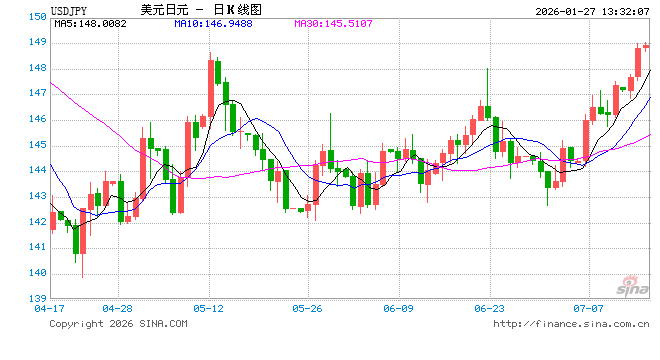
Core Viewpoint - The recent surge in the Japanese yen against the US dollar has sparked speculation about potential direct intervention by Japanese authorities to support the yen, with the yen reaching its highest point in two months, rising approximately 1.1% to surpass the 154 yen mark [2][14]. Group 1: Market Dynamics - The narrative surrounding the reversal of yen carry trades has resurfaced, highlighting the potential impact of Japanese monetary policy changes and US interest rate expectations on global risk assets [3][15]. - Despite the recent volatility in the yen, there has not been a corresponding systemic sell-off in US equities or a typical liquidity withdrawal in global risk assets, raising questions about the actual impact of carry trade reversals [15][22]. Group 2: Carry Trade Conditions - The current market environment shows that while the interest rate differential between the US and Japan remains, its marginal attractiveness has decreased, with a nominal interest rate differential of 2.89% (289 basis points) as of January 22, 2026 [17]. - The actual interest rate in Japan remains negative when adjusted for inflation, providing a cushion for carry trades, which means that significant losses would only occur if the yen appreciates more than 2.9% annually [17][19]. Group 3: Structural Changes in Trading - Modern carry trades have become "invisible," with many transactions executed through currency swaps and cross-currency basis, allowing for risk adjustments without the need for visible actions like selling US equities [18]. - The current speculative positions indicate that traders are still short on the yen, with a net short position of 44,800 contracts as of January 23, 2026, suggesting that a large-scale withdrawal of carry trade funds is not imminent [20]. Group 4: Market Sensitivity and Future Risks - The sensitivity of US equities to interest rate and policy signals has increased, with recent fluctuations in US Treasury yields having a more pronounced impact on growth and technology stocks [21]. - The market appears stable, but this stability is underpinned by mathematical thresholds rather than macroeconomic narratives, indicating that risks may accumulate without immediate visible consequences [22].

铂钯强势运行,波动可能加剧
Tong Guan Jin Yuan Qi Huo· 2025-12-22 02:19
Report Industry Investment Rating - Not provided in the report Core Viewpoints - Last week, platinum and palladium prices were strong, outperforming gold and silver. The domestic platinum and palladium prices outperformed their overseas counterparts. The main palladium futures contract on the Guangzhou Futures Exchange hit the daily limit on Wednesday and Thursday, with a weekly increase of 23.3%. The main platinum futures contract rose 18% weekly, far exceeding the increase of silver futures. The international gold price maintained a high - level volatile and strong trend [3][6]. - The unexpectedly slow US inflation last week strengthened the market's expectation of the Fed's interest rate cut. However, some economists suspected that the government shutdown led to data distortion. The selection process of the Fed Chairman is still ongoing, and the shortlist has been narrowed to four people. The Bank of Japan raised interest rates by 25 basis points to 0.75% last Friday, earlier than market expectations, which may lead to the reversal of the yen carry - trade, capital outflows from US Treasuries and US stocks, and an increase in US Treasury yields, putting pressure on the US dollar index and US stocks [3][7]. - The sharp rise in platinum and palladium prices is mainly driven by tight supply and capital. After the silver price hit new highs, platinum and palladium, which also have industrial attributes, have been favored by investors. The opening restrictions on platinum and palladium futures by the Guangzhou Futures Exchange last week will suppress market sentiment, and it is expected that the volatility of platinum and palladium will be very intense in the near future [3][8][9]. Summary by Relevant Catalogs 1. Last Week's Trading Data - The report provides the closing prices, price changes, price change percentages, total trading volumes, and total open interest of various precious metal contracts, including SHFE gold, Shanghai Gold T + D, COMEX gold, SHFE silver, Shanghai Silver T + D, COMEX silver, GFEX platinum, platinum 9995, NYMEX platinum, GFEX palladium, and NYMEX palladium [4]. 2. Market Analysis and Outlook - The strong performance of platinum and palladium is supported by macro, fundamental, and capital factors. The Fed's interest - rate cut expectation provides macro support for precious metals. The fundamental logic of platinum and palladium's rise is similar to that of silver, mainly due to supply shortages and strong industrial demand. The supply of platinum and palladium is under pressure, and the continuous inflow of funds into platinum ETFs has made the supply in the spot market even tighter [6][9]. - The US inflation slowed down unexpectedly in November, with the core CPI rising 2.6% year - on - year, the lowest since 2021. The Fed Chairman candidate Hasset said there is a lot of room for the Fed to cut interest rates, but some economists suspect data distortion. The number of initial jobless claims in the US last week fell to 224,000, reversing the previous surge [6]. - The New York Fed President Williams said there is no urgent need to cut interest rates again, strengthening the market's expectation of a short - term pause in rate cuts. The European Central Bank kept interest rates unchanged for the fourth time, reiterating that inflation will return to the 2% target in the medium term without clear easing guidance. The Bank of Japan raised interest rates by 25 basis points to 0.75% last Friday, which may lead to capital outflows from US Treasuries and US stocks [7]. 3. Important Data Information - In November, the US non - farm payrolls increased by 64,000, higher than the expected 50,000, but the unemployment rate unexpectedly rose to 4.6%, the highest since September 2021. The average hourly wage increased 3.5% year - on - year, the lowest growth rate since May 2021 [10]. - In October, US retail sales were flat month - on - month, slightly lower than the expected 0.1% increase, mainly dragged down by a 1.6% decline in auto sales. Core retail sales increased 0.5% month - on - month, slightly exceeding the expected 0.4% increase [10]. - In November, the US CPI rose 2.7% year - on - year, lower than market expectations and down from 3.0% in September. The core CPI rose 2.6% year - on - year [10]. - The preliminary value of the US S&P Global Manufacturing PMI in December fell to 51.8, a five - month low. The preliminary value of the service PMI fell from 54.1 to 52.9, and the preliminary value of the composite PMI fell to 53, both hitting six - month lows [11]. - The final value of the University of Michigan's one - year inflation expectation for US consumers in December was 4.2%, and the five - year inflation expectation was 3.2% [11]. - The final value of the US consumer confidence index in December rose to 52.9, higher than 51.0 in November but far lower than 74.0 in December last year [11]. - Since the end of November, the platinum ETF holdings have increased by more than 3 tons, and the palladium ETF holdings are near historical highs, which has further boosted the prices of platinum and palladium [11]. - The Guangzhou Futures Exchange announced that starting from December 23, 2025, non - futures company members or clients are restricted to a maximum of 500 daily opening positions for platinum futures contracts PT2606, PT2608, PT2610, PT2612 and palladium futures contracts PD2606, PD2608, PD2610, PD2612 [12]. 4. Related Data Charts - The report includes various charts showing the price trends, inventory changes, and other data of precious metals, such as SHFE and COMEX gold and silver prices, COMEX and LBMA gold and silver inventories, and the net long positions of non - commercial traders in COMEX gold and silver [13][15][18].
投资策略周报:“跨年行情”是否会提前启动?盘整、蓄势与逢低布局-20251207
HUAXI Securities· 2025-12-07 12:14
Market Review - Global stock indices mostly rose this week, with the South Korean Composite Index, Taiwan Weighted Index, and A-shares Shenzhen Component Index leading the gains. The Brazilian stock index experienced a significant drop on Friday due to political changes [1] - A-shares continued to rise with reduced trading volume, led by the ChiNext Index, Northbound 50, and CSI 300 Index. Meanwhile, micro-cap indices and dividend indices fell. Sectors benefiting from event catalysts, such as commercial aerospace, non-ferrous metals, semiconductors, and insurance, showed strength [1] - In commodities, copper and silver reached historical highs, with LME copper and COMEX silver rising by 4.3% and 2.9% respectively this week. The US dollar index continued to decline, while the RMB exchange rate remained strong, approaching the 7.0 mark against the dollar [1] Market Outlook - The year-end market rally is expected to gradually unfold. Increased capital inflow into A-shares is anticipated due to the likelihood of a Federal Reserve rate cut and a strong RMB exchange rate favoring foreign investment in Chinese assets. Additionally, the regulatory body has lowered the risk factors for insurance funds' stock investments, enhancing the momentum for insurance capital to enter the market [2] - Key areas of focus for industry allocation include: 1) high-growth sectors supported by industrial policies, such as innovative pharmaceuticals and AI applications; 2) sectors benefiting from improved overseas liquidity, like non-ferrous metals; 3) high-dividend preference sectors for long-term capital accumulation [2] Regulatory Environment - The regulatory authority has again lowered the risk factors for insurance companies' stock investments, which will help cultivate patient capital in A-shares and support long-term investments in technology innovation. This adjustment is expected to release more space for insurance capital in equity investments [5] - As of Q3 2025, the allocation ratio of insurance funds to stocks and funds reached 14.9%, the highest since 2016, with the stock allocation ratio at 9.7%, an increase of 2.8 percentage points from the end of 2023. This trend indicates a strong momentum for insurance capital to enter the market, especially at the beginning of the year [5] Economic Policy - The upcoming Central Economic Work Conference in December is anticipated to be a critical policy window for the initiation of the year-end market rally. The A-share market has been fluctuating within a range since September, and the recent decline in trading volume and low implied volatility suggest that the market is awaiting new guiding themes [5] - The financial sector's recent surge indicates a positive market response to capital market policies, with the conference expected to address issues such as reducing internal competition and expanding domestic demand [5]
李立峰、张海燕:“跨年行情”是否会提前启动?盘整、蓄势与逢低布局
Sou Hu Cai Jing· 2025-12-07 11:28
Market Review - Global stock indices mostly rose this week, with the South Korean Composite Index, Taiwan Weighted Index, and A-share Shenzhen Component Index leading the gains. The Brazilian stock index fell sharply on Friday due to political changes [1] - A-shares continued to rise on low volume, with the ChiNext, Northbound 50, and CSI 300 indices leading the gains, while micro-cap indices and dividend indices declined. Benefiting sectors included commercial aerospace, non-ferrous metals, semiconductors, and insurance [1] - In commodities, copper and silver reached historical highs, with LME copper and COMEX silver rising by 4.3% and 2.9% respectively this week [1] - The US dollar index continued to decline, while the RMB exchange rate remained strong, approaching the 7.0 mark against the dollar [1] Market Outlook - The year-end market rally is expected to gradually unfold, with multiple sources of incremental capital entering the A-share market. The likelihood of a US Federal Reserve rate cut is high, which could encourage foreign investment in Chinese assets [2][3] - The recent reduction in investment risk factors for insurance funds by regulatory authorities is expected to enhance the patience capital in A-shares, supporting long-term investments [3] - The upcoming Central Economic Work Conference in December may serve as a critical policy window for initiating the year-end market rally, with a focus on anti-involution, expanding domestic demand, and new productivity [4] Key Focus Areas - The Federal Reserve is expected to adopt a "hawkish rate cut" stance in December, with an 86% probability of a 25 basis point cut. This is reinforced by a decrease in US ADP employment numbers, which fell by 32,000 in November, significantly below market expectations [2] - The reduction in insurance fund investment risk factors is aimed at encouraging long-term holdings and supporting technological innovation, with insurance capital's allocation to stocks and funds reaching a new high of 14.9% by Q3 2025 [3] - The anticipated influx of insurance capital at year-end, driven by premium income expectations, is expected to accelerate market participation [3]
