智能化种植

Search documents
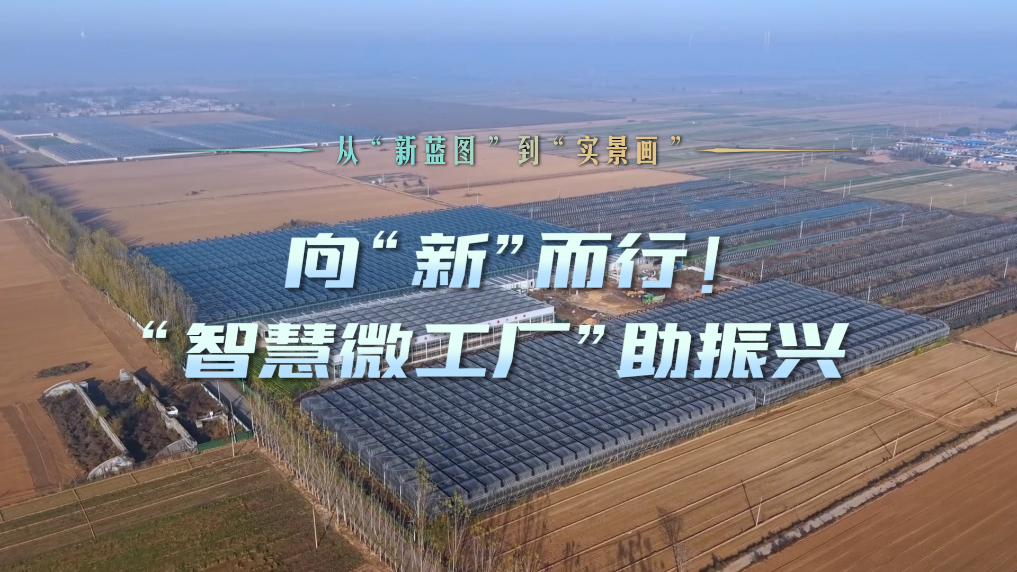
从“新蓝图”到“实景画”丨向“新”而行!“智慧微工厂”助振兴
Xin Hua Wang· 2026-02-27 00:50
Core Insights - Rare mushrooms from southern regions are now being cultivated on a large scale in northern areas, specifically in Hebei Xinhe, utilizing 5G smart container technology to transform the concept of "southern mushrooms grown in the north" into reality [1] - The local industry has shifted from traditional farming reliant on weather to a scientific and industrialized approach to mushroom cultivation, enhancing the economic prospects for local communities and contributing to collective economic growth [1] - The cultivation of these mushrooms serves as a vital source of income for local residents, symbolizing a significant improvement in their livelihoods [1]

南疆小城种瓜记
Ke Ji Ri Bao· 2026-02-03 09:08
Core Viewpoint - The article highlights the innovative agricultural practices in Shule County, Xinjiang, where winter watermelon cultivation is made possible through advanced greenhouse technology and smart farming techniques. Group 1: Agricultural Innovation - The "Shule" modern high-efficiency agricultural demonstration park utilizes self-heating greenhouses to grow watermelons in winter, overcoming the region's harsh climate with temperatures dropping to -10°C [7] - The park employs a water and fertilizer integration management platform that automates irrigation, reducing labor intensity and conserving resources [4] - The introduction of mechanized grafting technology ensures consistent quality in watermelon production, enhancing overall yield [8] Group 2: Economic Impact - The watermelon industry in the demonstration park has created stable employment for over 400 individuals, with seasonal labor exceeding 1,000 [8] - The unique characteristics of the watermelons, such as thin skin and uniform sweetness, allow them to be sold at prices exceeding 100 yuan, significantly higher than ordinary watermelons [8] - The park's expansion, including the construction of additional greenhouses, aims to further boost local employment and economic development [8] Group 3: Future Plans - The company plans to collaborate with local breeding enterprises to develop new watermelon varieties suited to market demands and regional climate conditions [8] - The focus will be on creating an integrated modern seed industry ecosystem that encompasses breeding, propagation, promotion, and service [8]
高原鲜切玫瑰走俏市场 背后有啥秘诀?
Yang Shi Xin Wen· 2026-01-17 09:31
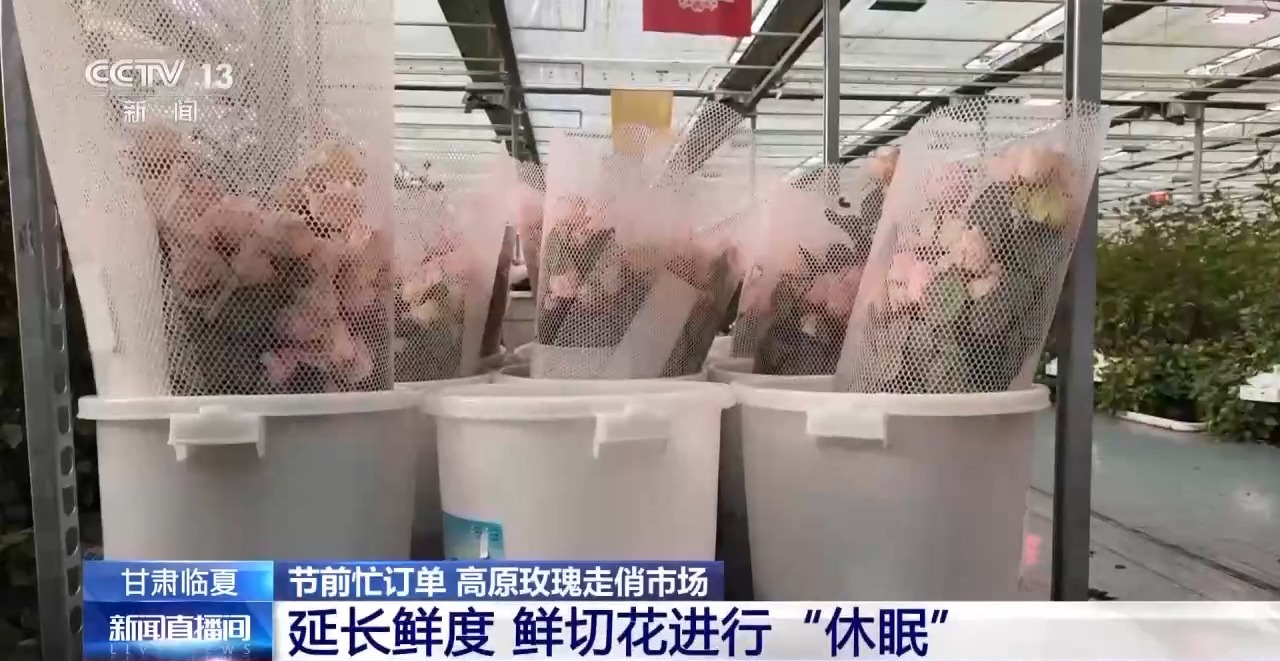
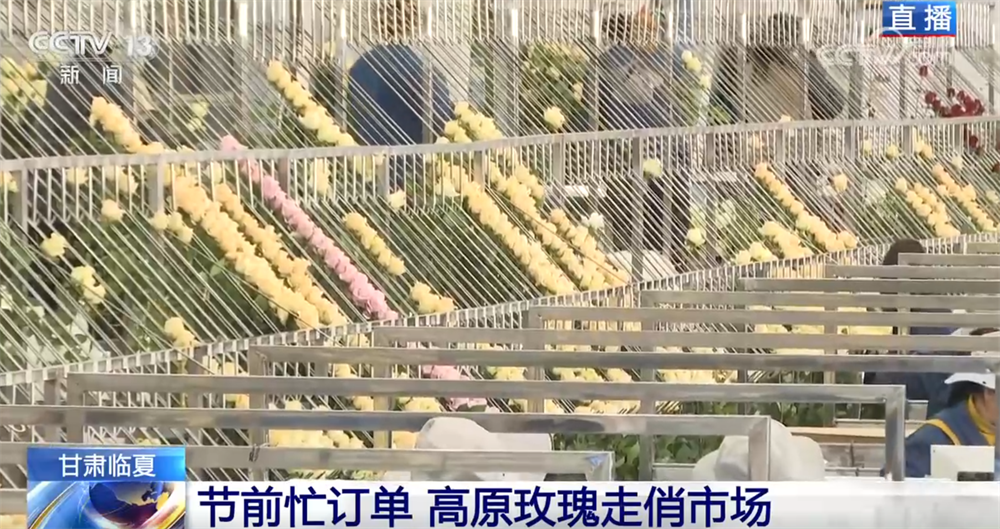
Core Insights - The flower base in Gansu's Linxia Hui Autonomous Prefecture is experiencing a peak sales season for fresh-cut roses, utilizing scientific preservation techniques and smart planting technology to ensure supply before the holiday [1][12]. Group 1: Preservation Techniques - The processing workshop at the base employs pre-processing methods that extend the freshness of cut flowers to approximately 15 days [3]. - Freshly harvested flowers are immediately soaked in a special preservative solution to replenish nutrients and moisture, followed by pre-cooling to induce a "dormant" state, significantly reducing dehydration and decay [3][10]. - After pre-cooling, flowers are sorted by stem length and flower head size before being cut, bundled, and dispatched via cold chain vehicles [5]. Group 2: Cultivation and Technology - The base has established over 200,000 square meters of smart glass greenhouses, introducing 10 rose varieties, including Luoshen and Xueshan, with over 1.5 million plants [6][10]. - The greenhouse employs rock wool soilless cultivation, which minimizes pests and diseases, and features a smart management system for temperature, humidity, light, and CO2 levels, allowing for a growth cycle that is half as long as traditional methods, with roses ready for harvest in about 40 days [10]. Group 3: Market Performance and Sales Strategy - Orders for fresh flowers have increased by over 20% year-on-year, with the base preparing for adverse weather by establishing stock in advance warehouses in cities like Xi'an, Zhengzhou, and Lanzhou [12]. - The sales strategy includes a combination of online and offline channels, supported by a team of over 20 e-commerce live-streaming personnel, with fresh-cut roses also gaining popularity in overseas markets such as Russia and Kazakhstan, resulting in nearly 5.7 million flowers exported annually [14].
高原玫瑰走俏市场 以“智”赋能、向“新”而行绘就鲜切花产业发展新图景
Yang Shi Wang· 2026-01-17 08:45
Core Viewpoint - The flower industry in Gansu's Linxia Hui Autonomous Prefecture is experiencing a peak sales season for fresh-cut roses, utilizing scientific preservation techniques and smart planting technologies to ensure supply before the festival [1][14]. Group 1: Preservation Techniques - Fresh-cut flowers undergo pre-processing to extend their freshness to approximately 15 days, involving immersion in a special preservative solution and pre-cooling to enter a "dormant" state, significantly reducing dehydration and decay rates [3][10]. - After pre-cooling, flowers are sorted by stem length and flower head size before being packaged and shipped via cold chain logistics [5]. Group 2: Cultivation Practices - The base has established over 200,000 square meters of intelligent glass greenhouses, introducing 10 rose varieties and cultivating over 1.5 million plants [7][10]. - The greenhouse employs rock wool soilless cultivation, allowing for cleaner conditions and reduced pest issues, with smart management systems controlling temperature, humidity, light, and CO2 levels, shortening the growth cycle to about 40 days [10][12]. Group 3: Market Demand and Sales - Orders for fresh flowers have increased by over 20% year-on-year, with pre-stocked warehouses in cities like Xi'an, Zhengzhou, and Lanzhou to ensure market supply during adverse weather conditions [14]. - The company has adopted an "online + offline" sales model and formed a 20-member e-commerce live streaming team, successfully exporting nearly 5.7 million fresh-cut flowers annually to markets including Russia and Kazakhstan [14][16].
电力赋能菌菇飘香“鲜”上市
Xin Lang Cai Jing· 2025-12-25 23:32
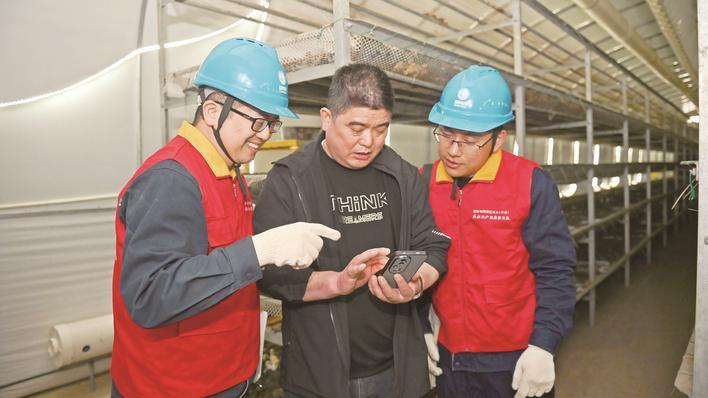
Core Viewpoint - The article highlights the efforts of the State Grid Pinghu City Power Supply Company in ensuring reliable electricity supply for the Jieyun Edible Mushroom Cooperative, which is a model for agricultural industry upgrading in the region [3][4]. Group 1: Company Initiatives - The company conducted a safety inspection of the electricity supply for the cooperative, focusing on irrigation lines, ventilation systems, and lighting equipment to ensure stable power supply [4]. - The company actively engaged with the cooperative to understand their electricity needs and developed feasible plans to support peak electricity demand during mushroom production [4][5]. Group 2: Industry Development - The Jieyun Edible Mushroom Cooperative has transformed traditional mushroom cultivation into an intelligent system, increasing production efficiency and annual output value to 160,000 yuan per 5,000 square meters [3]. - The cooperative's shift to high-end mushroom varieties has led to a significant increase in annual output value from over 1 million yuan in 2019 to 12 million yuan in 2024, benefiting over 20 local farmers [4]. Group 3: Future Plans - The company plans to continue monitoring the electricity needs of local specialty industries and enhance the quality and efficiency of its power supply services to support agricultural development and improve farmers' livelihoods [5].
告诉雪龙号,大洋极地也能种菜了
Bei Jing Ri Bao Ke Hu Duan· 2025-12-05 15:57
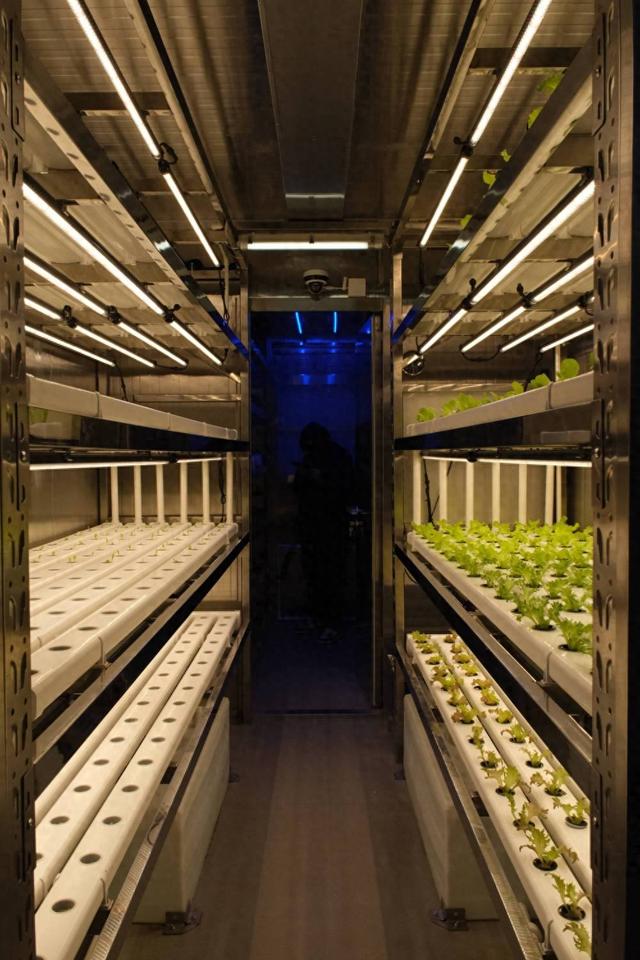
Core Viewpoint - The introduction of China's first ship-based hybrid intelligent planting facility aims to address the long-standing issue of fresh vegetable scarcity for workers in remote maritime and polar environments, enabling them to grow their own fresh produce [1][10]. Group 1: Product Features - The hybrid intelligent planting facility integrates advanced smart technology, precise environmental control systems, and eco-friendly design, allowing for year-round cultivation of mushrooms, vegetables, and fruits on mobile platforms like ships [3][4]. - The facility features a unique "vegetable-mushroom symbiosis" system, where vegetables absorb carbon dioxide and mushrooms release it, creating an efficient gas circulation in enclosed spaces, thus reducing energy consumption caused by temperature differences and frequent ventilation [6][10]. - The product can grow over 120 types of mushrooms, vegetables, and fruits in a pesticide-free environment, ensuring that all harvested produce meets safety, cleanliness, and high-quality standards [6][4]. Group 2: Energy Efficiency - The current global leading energy consumption for producing 1 kilogram of lettuce is around 10 kilowatt-hours, while this new product reduces the energy consumption to less than 6 kilowatt-hours per kilogram of lettuce [6]. - When averaged between lettuce and mushrooms, the actual energy consumption for producing 1 kilogram of both is approximately 3 kilowatt-hours, based on a daily production of about 5 kilograms each [9][6]. Group 3: Market Impact - The product addresses the challenges faced by workers in remote areas, where fresh vegetables can be scarce for weeks or even months, thus potentially improving their physiological and psychological health [10]. - It also has the potential to serve as a source of fresh and healthy vegetables for residents in water-scarce islands and arid inland regions, breaking the limitations imposed by geography, climate, and resources [10].

年宵花市场销售升温!江苏淮安智能化种植助力蝴蝶兰“颜值”升级
Sou Hu Cai Jing· 2025-12-05 12:39
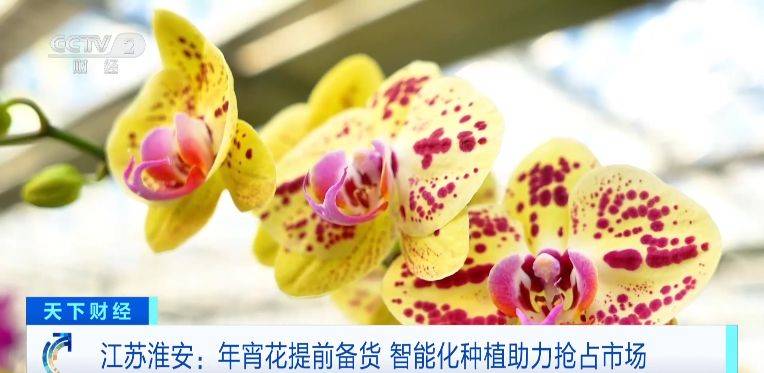
Group 1 - The sales of the New Year flower market are heating up, particularly for butterfly orchids in Jiangsu Huai'an, where 300,000 orchids are maturing and farmers are working hard to fulfill orders and capture market demand [1][3] - The butterfly orchid production base in Huai'an employs a "company + farmers + base" model, providing a significant number of flexible job opportunities, with peak employment reaching 300 to 400 local workers [9] - Advanced technologies such as fully automated intelligent temperature-controlled greenhouses and live dyeing techniques are enhancing the aesthetic appeal of the orchids, while nano-level preservation technology extends shelf life up to two months [7] Group 2 - Orders for the butterfly orchids are particularly strong in major cities like Beijing, Shanghai, and Yunnan, with the latter experiencing a supply shortage [5]
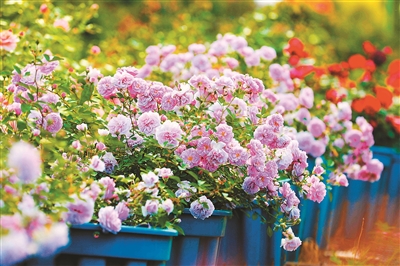
月季花开,添彩美丽中国
Ren Min Ri Bao Hai Wai Ban· 2025-05-07 01:12
Core Viewpoint - The article highlights the journey of Wang Mengxiao and her company, Qicai Garden, in cultivating high-quality rose varieties suitable for urban landscaping in China, emphasizing the importance of innovation and environmental sustainability in the horticulture industry [4][6][12]. Company Overview - Qicai Garden, located in Handan City, Hebei Province, specializes in the cultivation of various rose species, focusing on introducing and hybridizing foreign varieties to create high-quality, low-maintenance options for urban environments [6][9][10]. - The company has established over 10 testing stations across different climate zones in China to develop rose varieties that are well-suited for local conditions [10]. Product Development - The company has successfully introduced over 1,000 rose varieties from abroad, selecting around 50 high-quality options for domestic cultivation, and has developed 17 experimental new varieties through hybrid breeding [11][13]. - Qicai Garden's roses are characterized by their low maintenance requirements and long lifespan, with some varieties needing only one plant per square meter, significantly reducing care costs compared to traditional varieties [13]. Market Impact - The company has achieved an annual production of over 20 million potted roses and more than 20 million high-quality seedlings, distributing its products to over 80 cities across China [13][14]. - The cultivation of roses has not only contributed to the company's growth but also provided employment opportunities for over 300 local villagers, enhancing the economic vitality of the surrounding area [14]. Technological Integration - Qicai Garden employs modern technology in its operations, including automated irrigation systems and smart greenhouse management, to optimize the cultivation process and improve efficiency [12]. - The company actively utilizes social media platforms to promote its products and educate the public about the benefits of its environmentally friendly rose varieties [12].