
本币互换

Search documents
人民币大消息!中加两国央行续签,互换规模为2000亿元人民币
Sou Hu Cai Jing· 2026-01-24 14:12
Core Viewpoint - The article discusses the renewal of the currency swap agreement between China and Canada, which is seen as a strategic move to challenge the dominance of the US dollar and enhance bilateral trade relations, particularly in light of recent tariff reductions on electric vehicles and the return of canola seeds to the Chinese market [1][2]. Group 1: Currency Swap Agreement Details - The People's Bank of China announced the renewal of the bilateral currency swap agreement with the Bank of Canada, with a scale of 200 billion RMB, valid for five years, and extendable upon mutual agreement [3][8]. - This agreement aims to facilitate trade and investment between the two countries by allowing businesses to settle transactions in their local currencies, thus reducing costs and risks associated with currency exchange [10][14]. Group 2: Historical Context and Benefits - The initial agreement was established in 2017 but was not renewed immediately due to various factors; however, the willingness to cooperate remained, leading to the reactivation of the agreement in 2021 amid complex global economic conditions [8][12]. - The currency swap has proven beneficial for businesses engaged in cross-border trade, as it eliminates the need to convert currencies through a third party, thereby reducing transaction costs and exposure to exchange rate fluctuations [6][12]. Group 3: Broader Implications and Global Context - The currency swap agreement between China and Canada is part of a larger strategy by China to expand its global financial cooperation network, having established similar agreements with 32 countries and regions as of May 2025 [16][18]. - The increasing international acceptance of the RMB and the practical benefits of currency swaps have led to a growing number of countries seeking to engage in such agreements, enhancing the RMB's role in global trade [18][22]. - The cooperation between China and Canada serves as a model for other nations, demonstrating that equitable and mutually beneficial financial partnerships can lead to shared economic growth [24].


人民币,传来大消息!对外贸企业有什么好处?
Xin Lang Cai Jing· 2026-01-22 01:40
Core Insights - The People's Bank of China (PBOC) has renewed a bilateral currency swap agreement with the Bank of Canada, with a scale of 200 billion RMB, valid for five years, and extendable by mutual consent [1][14] - In the past year, the PBOC has signed or renewed bilateral currency swap agreements with 11 foreign central banks, covering over 30 countries and regions [1][14] Currency Swap Overview - A currency swap is essentially a "backup account" opened by two central banks, allowing them to exchange currencies directly for trade settlements without going through the US dollar [1][14] - This mechanism can be likened to a "currency credit card" between central banks, facilitating direct currency exchanges for trade payments [1][14] Benefits for Foreign Trade Enterprises - The reliance on the US dollar for international trade has historically led to high transaction fees and exposure to exchange rate fluctuations [3][15] - Currency swaps provide a solution to this "dollar dependency," allowing commercial banks and import/export enterprises to directly apply for the counterpart's currency for trade settlements [5][15] - For example, a seafood exporter in Qingdao can receive Icelandic króna directly from an Icelandic customer, eliminating the need to convert to USD first, thus saving on fees and reducing exchange rate anxiety [5][17] Expansion of RMB's Global Network - As of September 30, 2025, the PBOC has signed effective bilateral currency swap agreements with 32 countries and regions, covering major economies across Asia, Europe, Africa, the Americas, and Oceania [7][19] - Recent agreements include a renewal with the Bank of Indonesia for 400 billion RMB, the Bank of Brazil for 190 billion RMB, and others with Turkey, Thailand, New Zealand, and European central banks [20]
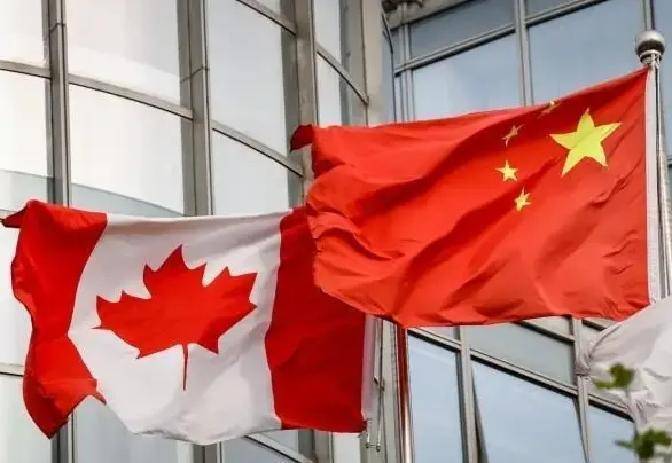
重大转向!中加签2000亿大单,加拿大放弃对我们加税,特朗普只淡淡回复一句话
Sou Hu Cai Jing· 2026-01-20 19:44
Group 1 - The core point of the article highlights a significant shift in Canada-China relations, marked by Canada's decision to eliminate the 100% punitive tariff on Chinese electric vehicles and establish a new quota system for imports [1][5][11] - Canadian Prime Minister Justin Carney's visit to China is characterized by a pragmatic approach, acknowledging the changing global landscape and the need to rectify past policies that have negatively impacted Canada's economy [2][4] - The previous punitive tariff, implemented in August 2024, resulted in a dramatic decline in the Canadian electric vehicle market and adversely affected Canadian farmers due to retaliatory measures from China [4][9] Group 2 - The new agreement allows for 49,000 Chinese electric vehicles to enter Canada annually under a 6.1% standard tariff, with plans for gradual increases in the quota over the coming years [5][9] - The signing of a bilateral currency swap agreement worth 200 billion yuan aims to reduce reliance on the US dollar, providing a more stable economic environment for trade between Canada and China [6][7] - In exchange for tariff reductions, China has committed to lowering import tariffs on Canadian canola and restoring import processes for various Canadian agricultural products, addressing the concerns of Canadian farmers [9][14] Group 3 - The article notes a surprising lack of strong reaction from the US government, with President Trump responding to the Canada-China agreement in a surprisingly calm manner, indicating a tactical choice to avoid escalating tensions with an ally [11][13] - Public opinion in Canada shows significant support for strengthening trade ties with China, with over half of Canadians favoring actions to enhance trade relations and 62% supporting the removal of tariffs on Chinese electric vehicles [14][15] - The overall shift in policy reflects a response to domestic economic pressures and the need for Canada to balance its relationships with both China and the US in a complex global environment [14][15]

2000亿本币互换续签,中加突然出招,对老百姓有啥新变化
Sou Hu Cai Jing· 2026-01-18 08:20
Core Viewpoint - The signing of a bilateral currency swap agreement between the People's Bank of China and the Bank of Canada, with a limit of 200 billion RMB and a validity of five years, is expected to enhance trade efficiency and reduce costs for businesses in both countries, while also contributing to the internationalization of the RMB [1][5][9]. Group 1: Impact on Trade and Business - The currency swap agreement allows companies to settle transactions directly in their respective currencies, eliminating the need for conversion to USD, thus reducing transaction costs and exchange rate risks [3][7]. - This agreement is anticipated to stabilize trade between China and Canada, leading to increased investment activity and supporting foreign trade [5]. - The reduction of USD as an intermediary currency enhances financial autonomy for both countries, allowing for more direct and efficient trade [7]. Group 2: Broader Economic Implications - The agreement is expected to increase the presence of the RMB in North America, potentially leading to its use in local bank accounts and transactions, thereby enhancing its status as an international reserve currency [9][11]. - The expansion of similar agreements with other countries (32 as of last May) may create a network effect, further promoting the use of the RMB in global trade [9]. - The long-term implications may include a gradual reduction in the dominance of the USD in international trade, as more countries adopt direct currency settlements [8][11].

拉美期待对华合作提到“新高度”
Huan Qiu Shi Bao· 2025-12-15 23:08
Core Viewpoint - The release of China's third policy document on Latin America and the Caribbean has generated significant attention, outlining enhanced cooperation in various sectors such as trade, investment, technology, education, agriculture, and clean energy, with Latin American countries expressing optimism about the opportunities this presents for regional development [1][2]. Group 1: Policy Document Highlights - The new policy document aims to elevate China-Latin America relations to a "new height," building on previous versions from 2008 and 2016, and emphasizes the region's potential as a crucial player in global multipolarity and economic globalization [1]. - Future negotiations may focus on facilitating the transfer and exchange of goods and services, including free trade agreements and investment protection agreements [1]. - Financial cooperation is expected to strengthen, with enhanced collaboration between central banks and financial regulators, promoting cross-border settlement in local currencies and advancing currency cooperation, including currency swaps [1]. Group 2: Strategic Areas of Cooperation - The document highlights key strategic areas for economic cooperation, including artificial intelligence, telecommunications, renewable energy, hydrogen, mining, and mineral processing [2]. - Infrastructure projects such as transportation, logistics, housing, electricity, and urban development will continue to be focal points for collaboration [2]. - The presence of China's "Silk Road Ark" hospital ship in Jamaica, providing medical services, illustrates the tangible benefits of China's engagement in the region, enhancing geopolitical relations and offering more options and credit channels for local governments [2]. Group 3: Broader Implications - The relationship between China and Latin America is recognized as one of the most significant geopolitical and economic relationships of the 21st century, encompassing comprehensive cooperation across political, economic, technological, and cultural dimensions [3]. - The challenges for Latin America include transforming these agendas into sustainable development, technology transfer, and social welfare while maintaining balance in international relations amid global geopolitical tensions [3].
基辛格:美元是我们的货币,却是你们的麻烦!
Sou Hu Cai Jing· 2025-11-10 08:48
Group 1 - The core argument emphasizes that the dominance of the US dollar is crucial for American power, with military strength serving to uphold this monetary hegemony [1][3]. - The high costs associated with maintaining the dollar's status are highlighted, including over a trillion dollars in military spending and extensive military bases worldwide [3]. - The article discusses China's attempts at internationalizing the renminbi, noting the challenges faced and the strategic pivot towards initiatives like the Belt and Road and currency swaps to enhance industrial tax collection [3][5]. Group 2 - The concept of currency swaps is presented as a method to disrupt the dollar's dominance, allowing countries to manage their debts more effectively without resorting to asset liquidation [5][7]. - The issuance of €4 billion in sovereign bonds in Luxembourg is framed as a signal to other nations that they can seek debt restructuring with China, while also indicating a loss of confidence in the dollar due to excessive issuance [7]. - The article suggests that China's control over rare earth resources and recent restrictions on silver exports serve as leverage against US dominance in high-end manufacturing, indicating a strategic shift towards securing commodity transactions in renminbi [7].

美国财政部与阿根廷央行签署200亿美元本币互换协议
Shang Wu Bu Wang Zhan· 2025-10-30 14:54
Core Viewpoint - The U.S. Treasury and the Central Bank of Argentina have signed a $20 billion currency swap agreement aimed at strengthening Argentina's foreign exchange reserves and maintaining macroeconomic stability [1] Group 1: Agreement Details - The $20 billion currency swap agreement is part of Argentina's comprehensive strategy to enhance monetary policy and improve its ability to respond to financial market volatility [1] - Following the announcement, Argentine dollar-denominated bonds rose by 2.5%, and the country risk index decreased to 1000 points [1] Group 2: Market Implications - The agreement is expected to directly increase the Central Bank's foreign reserves, helping to hedge against market fluctuations ahead of the elections and the rising demand for dollars [1] - Despite the positive effects, the market has largely priced in the news, and uncertainties surrounding the elections remain, making it difficult for the dollar to avoid approaching its upper limit [1] Group 3: Future Financial Obligations - President Milei indicated that if Argentina cannot access capital markets for refinancing, the currency swap amount will be used to repay debts maturing in 2026 [1] - Argentina faces $18.18 billion in foreign currency debt maturing next year [1]
本币互换规模和范围不断扩大 对我国经济有何作用
Ren Min Ri Bao· 2025-10-13 01:45
Core Insights - The People's Bank of China (PBOC) has been actively deepening foreign currency financial cooperation by signing bilateral currency swap agreements with multiple foreign central banks, enhancing the international use of the Renminbi [1][3] Group 1: Currency Swap Agreements - In 2023, the PBOC has signed or renewed bilateral currency swap agreements with eight foreign central banks, including the European Central Bank, the Swiss National Bank, and the Bank of Thailand [1] - As of September 30, 2023, the PBOC has established effective bilateral currency swap agreements with 32 countries and regions, covering major economies across Asia, Europe, Africa, the Americas, and Oceania [3] Group 2: Benefits of Currency Swaps - Currency swaps facilitate cross-border trade and investment, significantly promoting international economic development [4] - For example, the renewed currency swap agreement between the PBOC and the Central Bank of Brazil, which started in 2013, has helped deepen trade relations and maintain financial stability in the region [4] Group 3: Impact on Enterprises - Companies engaged in overseas operations can apply for local currency funding under the swap agreements, allowing them to quote and settle transactions in Renminbi or the counterpart's currency, thus stabilizing costs and profits [5] - This mechanism enables businesses to achieve more precise pricing and enhances their competitiveness in international markets [5] Group 4: Implications for the Renminbi - The expanding scale and scope of currency swaps indicate a growing willingness among countries to hold and use the Renminbi, reflecting an increase in its international recognition [6] - Currency swaps have become an essential part of the global financial safety net, enhancing financial autonomy and stability for participating countries [6]
政策解读·问答丨本币互换对我国经济有何作用
Ren Min Ri Bao· 2025-10-13 01:07
Core Viewpoint - The People's Bank of China (PBOC) has been actively deepening foreign currency cooperation and steadily advancing bilateral currency swap agreements, which enhance financial stability and facilitate trade and investment [1][2][3]. Group 1: Bilateral Currency Swap Agreements - In 2023, the PBOC has signed or renewed bilateral currency swap agreements with eight foreign central banks, including the European Central Bank and the Bank of Thailand [1]. - As of September 30, 2023, the PBOC has established effective bilateral currency swap agreements with 32 countries and regions, covering major economies across Asia, Europe, Africa, the Americas, and Oceania [3]. - The total scale of these currency swap agreements is approximately 4.5 trillion RMB, providing stable RMB liquidity globally [3]. Group 2: Economic Impact - Bilateral currency swaps facilitate cross-border trade and investment, significantly promoting international economic development [4]. - For example, the renewed currency swap agreement between China and Brazil, which started in 2013 with a scale of 190 billion RMB, enhances trade relations and market confidence, contributing to regional and global financial stability [4]. - Companies engaged in international trade can utilize local currency funds obtained through swaps, allowing them to quote and settle transactions in RMB or the counterpart's currency, thus stabilizing costs and profits [5]. Group 3: Implications for the RMB - The expanding scale and scope of currency swaps indicate a growing willingness among countries to hold and use RMB, reflecting an increase in the international recognition of the currency [6]. - Currency swaps have become an essential part of the global financial safety net, enhancing financial autonomy and stability for participating countries [6]. - The ongoing cooperation and trust-building between the PBOC and other central banks will further advance the internationalization of the RMB [7].
央行已与32个国家和地区签署本币互换协议 对我国经济有何作用
Ren Min Ri Bao· 2025-10-13 00:23
Core Insights - The People's Bank of China (PBOC) has been actively deepening foreign currency financial cooperation by signing bilateral currency swap agreements with multiple foreign central banks, enhancing the international use of the Renminbi [1][3] Group 1: Bilateral Currency Swap Agreements - In 2023, the PBOC has signed or renewed bilateral currency swap agreements with eight foreign central banks, including the European Central Bank and the Bank of Thailand [1] - As of September 30, 2023, the PBOC has established effective bilateral currency swap agreements with 32 countries and regions, covering major economies across Asia, Europe, Africa, the Americas, and Oceania [3] Group 2: Benefits of Currency Swaps - Bilateral currency swaps facilitate cross-border trade and investment, allowing businesses to settle transactions directly in their local currencies, thus avoiding the complexities and costs associated with converting currencies through the US dollar [2][4] - For companies operating overseas, currency swaps enable them to secure local currency funding, allowing for direct pricing and settlement in Renminbi or the local currency, which stabilizes costs and profits [5] Group 3: Economic Impact - The expansion of currency swap agreements is expected to enhance the international recognition of the Renminbi, contributing to its acceptance in global markets [6] - The ongoing development of these agreements is seen as a crucial part of the global financial safety net, promoting financial autonomy and stability among participating countries [6]