森林四库

Search documents
今年,四川林草产业总产值冲刺7300亿元
Xin Lang Cai Jing· 2026-02-09 10:01
Group 1 - The core objective for the forestry and grassland industry in Sichuan is to achieve a total output value of 660 billion yuan by 2025, with a year-on-year growth of 13.8%, and to strive for 730 billion yuan in 2026 [1] - Sichuan will focus on high-level development of the "Four Forests" demonstration province, which includes water reservoirs, grain storage, financial resources, and carbon storage, with plans to complete 20 "Tianfu Forest Grain Storage" projects this year [1] - The provincial forestry industry chain will be strengthened by focusing on four key industries: wood, bamboo, grain, and tourism, with initiatives to promote reserve forest construction and support the high-end bamboo industry [1] Group 2 - In response to the severe fire prevention situation, the provincial forestry and grassland system will adhere to three strict standards: no human-caused fires, no major human-caused fires, and rapid and safe handling of fire situations [2] - A comprehensive monitoring network integrating air, ground, and personnel will be established, along with strengthening grassroots early fire response teams and strict control of outdoor fire sources [2] - Special attention will be given to fire safety during the 2026 Spring Festival and throughout the year to prevent various safety incidents [2]
林上增绿林下生金 激活森林“四库”——专访中国林业科学研究院研究员、国务院特殊津贴专家陈幸良
Zhong Guo Jing Ji Wang· 2026-02-06 06:11
Core Viewpoint - The "under-forest economy" is being elevated to a national strategic level in China, aiming to transform ecological resources into economic benefits, aligning with the concept that "green mountains and clear waters are as valuable as mountains of gold and silver" [1][2]. Group 1: National Strategy and Economic Impact - The under-forest economy has been included in the government's work report and the 14th Five-Year Plan, highlighting its importance for national ecological security, rural revitalization, and common prosperity [1][2]. - The FAO's 2024 report indicates that nearly 6 billion people rely on non-timber forest products for their livelihoods, with 70% of the impoverished population directly depending on forest resources [2]. - The under-forest economy aims to efficiently convert the ecological value of "green mountains and clear waters" into economic wealth, addressing both international concepts and China's unique conditions [2][4]. Group 2: Ecological and Economic Synergy - The under-forest economy successfully integrates ecological protection with economic development, utilizing forest space without deforestation or land occupation [5][6]. - This model enhances forest management efficiency and sustainability, contributing to carbon sequestration and biodiversity [6][7]. - The economic advantages include high land utilization rates and the emergence of new industries, particularly in non-timber forest products, which have significant market potential [7][9]. Group 3: Employment and Rural Development - The under-forest economy is expected to create numerous job opportunities and support small farmers, providing a pathway for rural income generation [9][10]. - In Guangxi, the under-forest economy's annual output value is projected to reach 138.8 billion yuan by 2024, benefiting over 12 million farmers with an average annual income increase of over 4,000 yuan [10]. - However, challenges such as higher initial investments and the need for new skills in ecological management and processing remain [10][11]. Group 4: Technological and Policy Support - To overcome barriers, collaboration among government, research institutions, and social capital is essential, including establishing dedicated funding and technical support for the under-forest economy [11][12]. - Various operational models have emerged, including under-forest planting, breeding, and eco-tourism, but balancing ecological protection with economic returns is crucial [12][13]. - Emphasizing ecological protection as a priority, policies should ensure sustainable practices while allowing for economic development [13][14]. Group 5: Future Directions and Innovations - The under-forest economy is expanding into new areas such as carbon trading and functional forest food development, indicating significant growth potential [15][16]. - The establishment of a dedicated research office for the under-forest economy aims to focus on resource conservation, efficient management, and advanced processing technologies [16]. - Overall, the under-forest economy represents a pathway for ecological industrialization and rural integration, enhancing the well-being of the population through innovative practices [16].

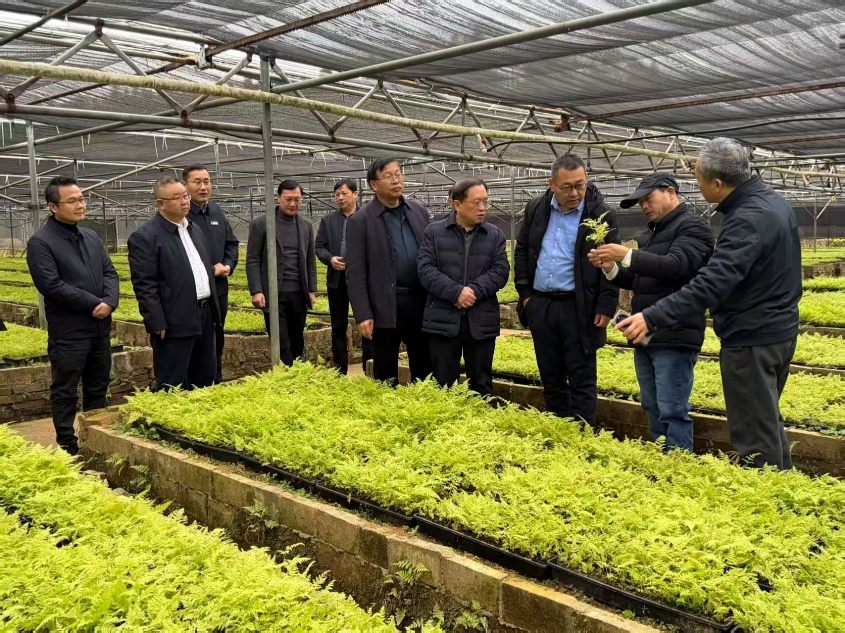
一棵树可以实现多少功能?北京大兴让梨树成为“钱库+粮库”
Zhong Guo Huan Jing Bao· 2025-12-09 01:55
Core Insights - The article discusses the multifunctionality of pear trees in Daxing District, Beijing, highlighting their roles as a "grain bank" and "money bank" through innovative practices in the pear industry [1] Economic Value of the Pear Industry - The pear industry in Daxing District, particularly in Lianghua Village, is recognized for its historical and natural appeal, featuring over 30,000 ancient pear trees, including a 417-year-old tree that produces over 2,000 pounds of "Jinba Huang Duck Pear" annually [2] - The annual production of "Jinba Huang Duck Pear" across five core production areas reaches 20,000 tons, with a direct economic benefit of approximately 60 million yuan, alongside the development of five deep-processing products that enhance income by over 100,000 yuan [2] - The brand value of "Jinba Huang Duck Pear," supported by geographical indication certification, allows for a price premium over regular pears, with the implementation of an "Internet + field market + e-commerce" model to reduce costs and improve economic efficiency [2] Integration of Agriculture, Culture, and Tourism - Lianghua Village leverages local party organization leadership to promote rural revitalization, establishing a "demonstration village" initiative focused on brand, environmental, and cultural strength [3] - The village has developed 64 tourism reception households, providing employment opportunities and generating 1.4 million yuan in revenue from 120,000 visitors in 2024 [3] Support for the Pear Industry as a "Grain Bank" - Daxing District promotes the "big food concept," utilizing forest resources to enhance food production through the "forest-flower" model, which includes planting edible lilies for both food and tourism [4] - The introduction of circular agriculture practices, such as using fruit tree branches for mushroom cultivation and organic fertilizer production, enhances resource utilization and sustainability [4] Financial Support for the Pear Industry - Financial innovations in Daxing District include credit loans for farmer cooperatives, with 27.5 million yuan in credit extended to 23 cooperatives and individual loans for home renovation projects [5] - A mutual guarantee loan model has been implemented to lower financing barriers, allowing farmers to access loans of 200,000 to 300,000 yuan [5] - The integration of ancient tree resources, deep processing, and financial empowerment has successfully established the dual functions of "grain bank" and "money bank" in the pear industry [5]
破解林业发展“老大难”,多地创新激活森林“四库”
Di Yi Cai Jing· 2025-10-13 03:23
Group 1 - The core viewpoint emphasizes the need for accurate understanding of the goals, methods, and practical requirements of collective forest reform, as stated by Liu Guohong, the head of the National Forestry and Grassland Administration [1] - Various regions are innovating forest management models to activate the "four reservoirs" (water, finance, food, carbon) and develop the entire forestry industry chain, addressing longstanding issues in forestry development [1][2] - In Sanming City, Fujian Province, with a forest coverage rate of 77.12% and a forest stock of 210 million cubic meters, significant potential exists for forest resource development [1] Group 2 - Sanming City promotes a "forest + medicinal plants/tourism and health" model, cultivating industries such as Dendrobium, golden thread orchid, and Ganoderma, with the forestry industry expected to generate a total output value of 137.7 billion yuan in 2024, a 6% increase year-on-year [2] - The city has developed 62 carbon credit projects with a total carbon reduction of 1.266 million tons, generating nearly 3 million yuan in transaction value [2] - In Nanping City, challenges include low quality of forest resources and fragmented collective forest land, which hinder forestry development [3][5] Group 3 - Nanping City has established village-level forest resource operation platforms to consolidate fragmented land for more efficient management, covering 97.8% of the city's forestry-related towns and involving over 100,000 households [5] - The city’s cooperative management model has led to an average income increase of over 30% for participating farmers, with significant financial benefits projected for specific villages [5] - Fuzhou City has implemented a rights certificate system for forestry management, integrating various economic rights and facilitating financing, with a projected forestry industry output value of 72.153 billion yuan in 2024, a 70% increase over four years [6] Group 4 - Fengdu County in Chongqing has developed a "1+N" financial support model to address long-standing financing challenges in forestry, leading to significant loan disbursements for various forestry projects [7][9] - The county's forestry industry has reached a total output value of 4.188 billion yuan, with the under-forest economy contributing 1.587 billion yuan and creating employment for over 40,000 farmers [9] - The National Forestry and Grassland Administration aims to establish a clear, unified, and effective collective forest rights system by 2025, promoting sustainable forest management and increasing farmers' incomes [9]
《森林的呼吸 中国的力量》公益宣传片发布
Zhong Guo Zi Ran Zi Yuan Bao· 2025-09-10 07:27
Core Viewpoint - The release of the public service advertisement "The Breath of Forests, The Power of China" emphasizes the importance of forest ecosystems in combating climate change and promoting green development, aligning with China's "dual carbon" goals and the "Two Mountains" concept [2][4][5]. Group 1: Event Overview - The event marks the 20th anniversary of the "Two Mountains" concept and the 5th anniversary of the "dual carbon" goals, highlighting China's commitment to ecological civilization [2][4]. - The advertisement is a collaborative effort involving the China Green Carbon Foundation, WildAid, and the Green China Film and Television Media Center, featuring Olympic champion Zhang Yufei [2][5]. Group 2: Key Messages - The advertisement aims to raise awareness about the role of China's forest and grassland systems in achieving national "dual carbon" goals and showcases the country's significant contributions, including a quarter of the world's new greening area [5][7]. - Zhang Yufei's participation underscores the message that individual actions are crucial in addressing climate change and achieving the "dual carbon" objectives [7]. Group 3: Organizational Roles - The China Green Carbon Foundation focuses on climate change response, biodiversity protection, and green development, serving as a bridge for various sectors to collaborate on carbon neutrality goals [4][5]. - The foundation is actively promoting public participation in carbon-neutral forest initiatives and exploring innovative carbon offset mechanisms [7].