
汇率检查

Search documents
日美外汇协调信号增强?日本称与美方高频沟通,关系“更加紧密”
Hua Er Jie Jian Wen· 2026-02-24 06:12
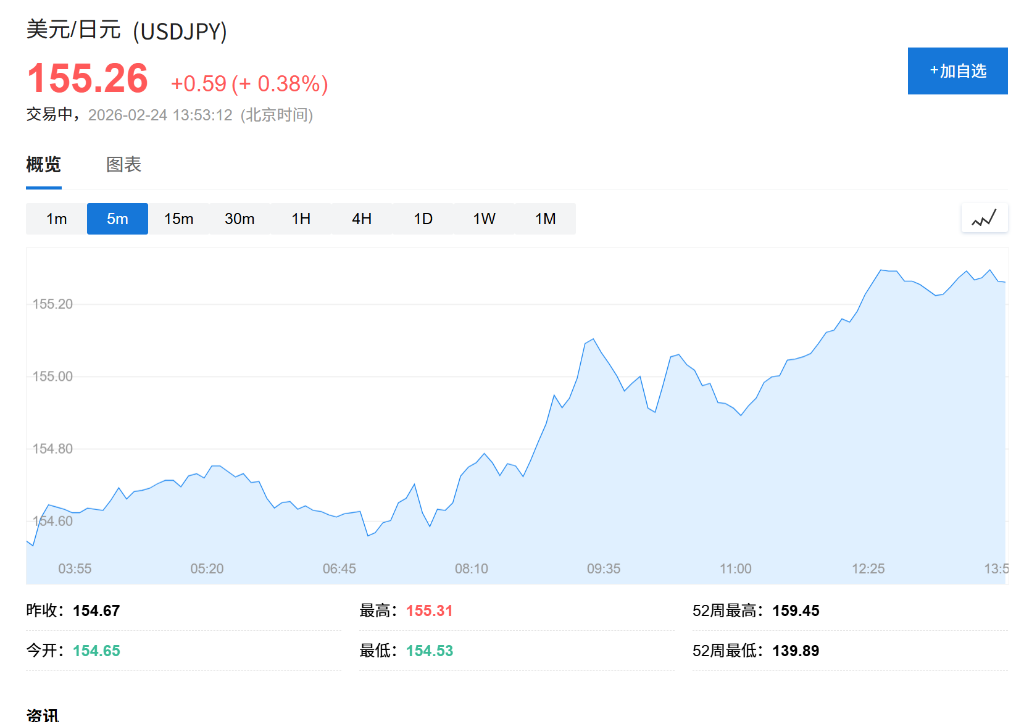
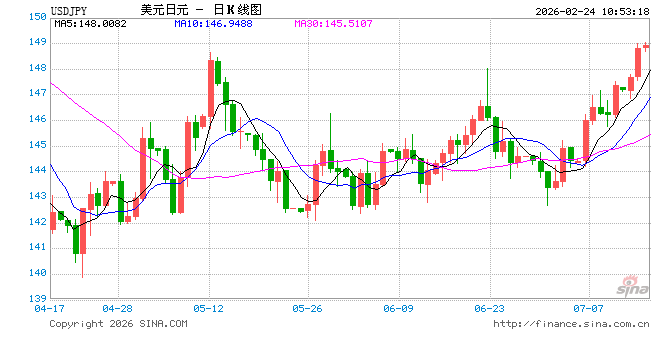
Core Viewpoint - Japan's Finance Minister Satsuki Katayama emphasized ongoing close dialogue with the U.S. regarding foreign exchange movements, as the market remains alert to potential joint intervention to support the yen [1] Group 1: Currency Intervention Speculation - Katayama stated that she has maintained close communication with U.S. officials over the past four months, indicating a strengthening relationship [1] - The market is highly vigilant regarding potential currency intervention, particularly after the yen surged to the mid-155 range, which was widely attributed to U.S. authorities conducting a currency check [1][3] - The Federal Reserve's January meeting minutes confirmed that the New York Fed conducted a currency check on behalf of the U.S. Treasury, although subsequent data from Japan's Ministry of Finance clarified that Japan did not participate in the yen's rise during that period [2][3] Group 2: Current Yen Status - The yen remains in a precarious position, trading close to 160 against the dollar, a level not seen since July 2024, when Japan intervened by selling dollars to support the yen [6] - Economic analyst Junichi Makino from SMBC Nikko Securities noted that if the Japanese government decides to buy yen and sell dollars, the U.S. is unlikely to oppose such actions [6] - Should intervention occur, the yen could rebound to its fair value based on interest rate differentials, estimated at around 142 yen per dollar [7]

美国主动“亮剑”撑日元,联合干预一度箭在弦上
Xin Lang Cai Jing· 2026-02-24 02:54
Core Viewpoint - The U.S. government has initiated a "currency check" aimed at supporting the yen, with preparations for potential joint intervention with Japan if requested, driven by concerns over political uncertainty ahead of Japanese elections [2][7]. Group 1: Currency Check Details - The currency check was led by U.S. Treasury Secretary Yellen and conducted by the New York Federal Reserve, not at the request of the Japanese Ministry of Finance [2][7]. - This action is seen as a preliminary step towards buying yen to stabilize the currency, with U.S. officials indicating readiness to intervene in the foreign exchange market if Tokyo makes such a request [2][7]. Group 2: Market Reactions - Prior to the currency check, the yen had fallen to a critical psychological level of 160 against the dollar, which increased expectations for potential intervention [3][8]. - Following the currency check, the yen surged over 1% to a three-month high of 152.10, with trading around 154.60 during the Asian session [3][8]. Group 3: Implications of Yen Weakness - The weakness of the yen has become a significant concern for Japanese policymakers, as it raises import prices and overall living costs for households [4][8].
中金 • 全球研究 | 日本外汇干预: 日美联合汇率检查,日元能持续升值吗?
中金点睛· 2026-01-27 23:50
Core Viewpoint - The recent appreciation of the Japanese yen is likely influenced by a "rate check" conducted by Japan and the United States, rather than direct "foreign exchange intervention" [3][4]. Group 1: Rate Check and Its Implications - A "rate check" is a preparatory action for foreign exchange intervention, where central banks inquire about market prices without executing trades, thereby influencing market sentiment [5]. - The intensity of a rate check is stronger than verbal intervention but less than actual foreign exchange intervention, serving as a precursor to potential intervention [5]. - Following a recent Bank of Japan meeting, the yen appreciated significantly, suggesting that market speculation about a rate check may have prompted buying of yen [6][9]. Group 2: U.S. Involvement and Market Dynamics - The U.S. is reportedly conducting its own rate checks, which have a more substantial impact on yen appreciation compared to Japan's actions due to the U.S.'s greater capacity for intervention [9][10]. - The U.S. may assist Japan to stabilize its capital markets, as instability in Japan could lead to actions that disrupt U.S. markets [10]. - Historical precedents show that the U.S. has previously engaged in similar supportive actions for other countries facing currency crises [10]. Group 3: Future Expectations and Conditions for Yen Appreciation - The potential for sustained yen appreciation is limited; significant global risk events would be necessary for a trend reversal, with a maximum appreciation limit projected at a USD/JPY rate of 140 [19]. - Japan's ongoing economic challenges, including a dual deficit in both capital and current accounts, hinder structural yen appreciation [20]. - The capital account is characterized by significant outflows due to direct investments abroad, while the current account appears to be in deficit when considering actual cash flows [20]. Group 4: Historical Context and Intervention Effectiveness - Past foreign exchange interventions have shown that while they can stabilize the currency temporarily, they do not change the overall direction of the exchange rate [17]. - Japan has previously engaged in unilateral interventions without the need for coordinated efforts with other countries, indicating a willingness to act independently if necessary [17]. - The effectiveness of foreign exchange interventions typically lasts only a few months, serving more as a "speed bump" rather than a permanent solution [17].

日元一度升至153,两个半月来高位
日经中文网· 2026-01-26 08:00
Core Viewpoint - There is a growing belief in the market that Japan and the U.S. have begun coordinated actions to curb the excessive depreciation of the yen, leading to increased yen buying activity [2]. Group 1: Yen Exchange Rate Movements - On January 26, the yen reached a level of 153 yen per dollar for the first time in about two and a half months, indicating significant fluctuations in the exchange rate [2]. - The yen briefly surged to nearly 155.6 yen per dollar on January 23, with a notable increase of 2 yen within approximately 10 minutes [4]. - Following initial selling pressure, the yen appreciated again by around 2 yen against the dollar around noon Eastern Time [4]. Group 2: U.S. Intervention - The U.S. Federal Reserve, under the direction of the U.S. Treasury, conducted a "rate check" as a preliminary step before potential foreign exchange intervention [4]. - Reports from financial intermediaries in London confirmed that the U.S. had implemented this rate check, indicating a proactive stance on currency management [4]. Group 3: Japanese Government's Stance - Japanese Prime Minister Kishi Nobuo's comments on January 25 were interpreted by the market as an attempt to restrain yen depreciation, contributing to the acceleration of yen buying activity [5]. - Japan's Deputy Finance Minister, Jun Miura, refrained from confirming the joint implementation of the rate check by Japan and the U.S., emphasizing the importance of ongoing cooperation between the two nations [5].

日元急速升值是因为日美联手牵制?
日经中文网· 2026-01-26 03:12
Core Viewpoint - The article discusses the recent appreciation of the Japanese yen against the US dollar, highlighting the potential collaboration between the US and Japan to manage currency fluctuations and prevent further depreciation of the yen [2][6]. Group 1: Yen Appreciation and Market Reactions - The yen has appreciated to the 154 yen range against the dollar, marking a significant increase since December 17, 2025 [2]. - On January 25, the yen reached 155 yen in the European and American forex markets, and further increased to 154 yen in the Tokyo market on January 26 [2]. - The Federal Reserve is reportedly conducting currency checks in response to the yen's fluctuations, which has led to a rapid strengthening of the yen from around 158 yen [4]. Group 2: US-Japan Cooperation and Currency Checks - The currency checks are seen as a preparatory step for potential intervention by the Federal Reserve, with the New York Fed responsible for actual operations [4]. - Speculation has arisen regarding a possible agreement between the Japanese Ministry of Finance and US Treasury Secretary Yellen to address the yen's depreciation and rising interest rates [6]. - The US Treasury has not commented on the currency checks, but the information has circulated among traders in Europe and the US [4]. Group 3: Implications for Interest Rates and Economic Policy - The depreciation of the yen has led to rising interest rates in Japan, with concerns about the impact on US markets [6]. - There is a possibility that the Japanese government may consider currency intervention if the yen continues to weaken, as indicated by Yellen's comments on the matter [6]. - Analysts suggest that the Bank of Japan could buy government bonds to suppress rising interest rates, but this could also signal support for fiscal policy, potentially leading to further yen depreciation [7].
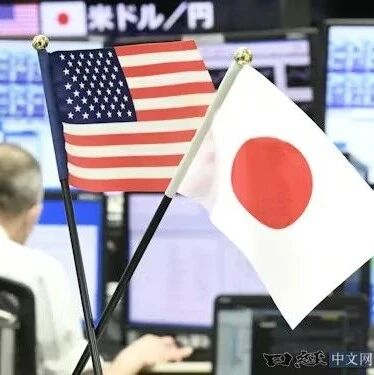
日元“保卫战”警报拉响:罕见美日协同干预预期升温,市场屏息以待
Xin Lang Cai Jing· 2026-01-25 23:32
Core Viewpoint - The market is on high alert regarding potential actions by the Japanese government to curb the recent depreciation of the yen, possibly with rare assistance from the U.S. government, as Prime Minister Fumio Kishida warns of "abnormal fluctuations" [1][2][10]. Group 1: Yen Exchange Rate Movements - The yen appreciated by 0.5% against the U.S. dollar to 154.90, marking its strongest level since December 17 of the previous year [1][8]. - The yen experienced significant volatility, reversing a decline towards the 160 mark and achieving a one-day increase of 1.75% to 155.63, the largest single-day gain since August of the previous year [1][10]. - The yen's recent decline was reversed following comments from Bank of Japan Governor Kazuo Ueda after a monetary policy meeting, which led to speculation about potential government intervention [10][11]. Group 2: Government and Market Reactions - Prime Minister Kishida stated that the government would take all necessary measures to address speculative and highly abnormal market fluctuations, although he did not specify which markets he was referring to [2][9]. - The Japanese government has issued warnings regarding both bond yields and the yen exchange rate, with the longest-term Japanese government bond yield recently spiking to record levels before retreating [2][8]. - Analysts expect traders to remain vigilant, with predictions that the yen may trade around 155 against the dollar at the beginning of the week [9]. Group 3: Speculation on Intervention - Speculation about intervention has intensified, with reports indicating that the New York Federal Reserve contacted financial institutions regarding the yen's exchange rate [1][8]. - The concept of coordinated action between Japan and the U.S. is being compared to the 1985 Plaza Accord, which aimed to devalue the dollar [3][11]. - The Japanese government has previously spent nearly $100 billion to support the yen, with intervention occurring around the 160 level, which is viewed as a potential trigger for future actions [11][12]. Group 4: Political Context and Implications - The upcoming unexpected elections in Japan on February 8, where Kishida has promised to cut food taxes, have created ripples in the bond market, with the 40-year Japanese government bond yield surpassing 4% for the first time since its introduction in 2007 [12]. - Analysts suggest that intervention may only delay the yen's depreciation trend rather than reverse it, given the current macroeconomic environment focused on increased fiscal spending [12].
外汇市场剧烈波动:美元跌至三个月低点与日本央行干预疑云
Di Yi Cai Jing· 2026-01-25 13:06
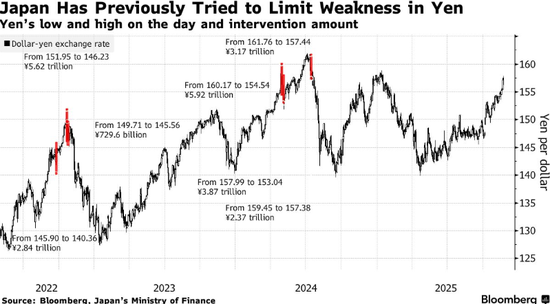
Group 1: Currency Market Dynamics - The US dollar index (DXY) has dropped to around 97.7, marking a three-month low and a decrease of approximately 1.5% since the end of the previous year, influenced by easing geopolitical tensions, adjustments in Federal Reserve policy expectations, and movements in the Bank of Japan's monetary policy [1] - The USD/JPY exchange rate has seen significant fluctuations, falling from a high of 159 to the 156-158 range, raising speculation about potential intervention by Japanese authorities [1][4] - The volatility in the currency market has led to an increase in overall market volatility, with the volatility rate rising to over 8.5%, reflecting policy divergences and geopolitical risks [5] Group 2: Japanese Economic Context - Japan's economy has faced structural challenges for over two decades, with negative GDP growth and deflation, prompting the Bank of Japan to implement negative interest rates and yield curve control to stimulate growth [2] - The GDP growth forecast for Japan has been revised upward to 0.9% for FY2025 and 1.0% for FY2026, supported by overseas economic recovery and government stimulus measures [2] - Following the election of Prime Minister Suga, there are concerns about a shift to dovish policies, despite rising inflation, which has led to increased long-term interest rates [2][3] Group 3: Precious Metals Market - Silver prices have surged past $100 per ounce, a 40% increase since the end of the previous year, while gold prices have approached $5,000 per ounce, reflecting a 79% annual increase due to global uncertainty [6][7] - The Shanghai silver price has reached a record premium of $13 per ounce over COMEX futures, indicating a physical silver shortage in China, with domestic inventories at their lowest since 2016 [7] - The upward trend in precious metals prices is linked to increased demand for safe-haven assets amid geopolitical tensions, which may lead to a re-evaluation of global silver prices [6][7] Group 4: Global Economic Implications - The depreciation of the US dollar is beneficial for emerging markets, alleviating debt pressures, but continued intervention by Japan could lead to rising US Treasury yields, increasing global borrowing costs [8] - The fluctuations in the currency market may trigger adjustments in risk models, leading to widespread deleveraging in the financial system, which is already exhibiting significant leverage levels [8] - The outlook for global growth remains stable at 3.3%, but risks include potential further rate cuts by the Federal Reserve and uncertainties surrounding trade negotiations [8]