
汇率测试

Search documents
【财经分析】美元兑日元升破159后急速回落 市场警惕潜在干预风险
Sou Hu Cai Jing· 2026-01-23 14:10
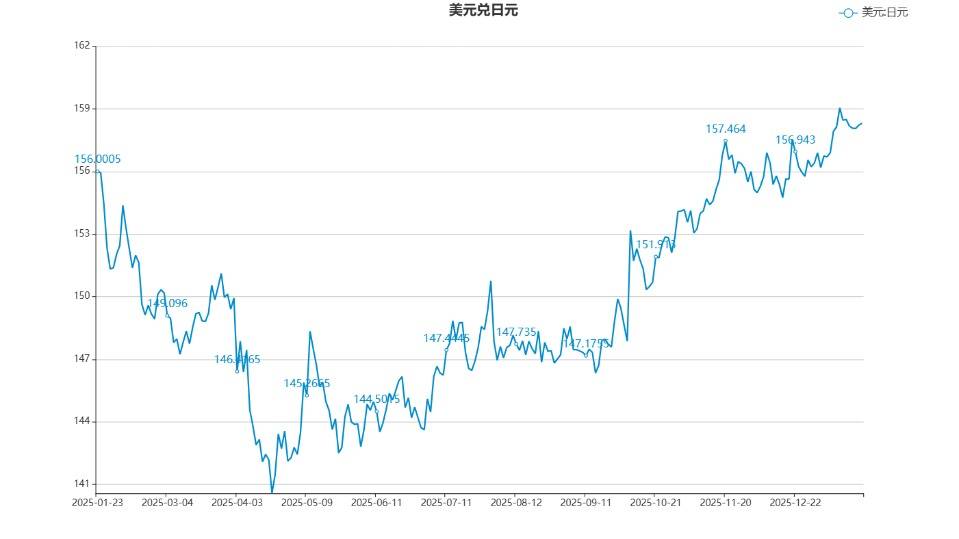
Core Viewpoint - The USD/JPY exchange rate has shown volatility, with a recent spike above 159 followed by a rapid decline, indicating increased intervention risk from the Japanese government [1][2]. Group 1: Exchange Rate Movements - The USD/JPY rate reached approximately 159.22 before dropping to 157.34, reflecting market behavior similar to past "currency tests" conducted by the Japanese Ministry of Finance [2]. - The last reported "currency test" occurred in mid-July 2024, which was followed by actual intervention to buy yen [2]. - Analysts suggest that the recent fluctuations do not indicate a genuine intervention, as true intervention would have a more significant impact [4]. Group 2: Intervention Risks - As the USD/JPY approaches the 160 mark, traders are on high alert for potential intervention, with officials seemingly reluctant to allow the rate to fall below this threshold [5]. - If volatility in the yen remains high, the risk of intervention will increase, potentially prompting Japanese authorities to act to maintain credibility [5]. - Short-term intervention may alleviate some pressure on the currency but is unlikely to change the overall trend [5]. Group 3: Economic Context - The yen has been under pressure due to concerns over Japan's fiscal expansion policies and a lack of supportive fundamentals [7]. - Analysts predict that the yen's structural weakness will persist, with expectations that the USD/JPY rate could fall to 160 or lower by the end of 2026 due to ongoing factors such as significant interest rate differentials and capital outflows [7]. - The trajectory of the yen will largely depend on the interest rate outlook between Japan and major economies like the U.S., as well as the balance of domestic inflation and growth [8].

日本央行,突发!刚刚,直线拉升!
Sou Hu Cai Jing· 2026-01-23 09:31
Core Viewpoint - The Japanese yen experienced a sudden appreciation against the US dollar, with the dollar-yen exchange rate dropping approximately 170 points to around 157.50 after previously exceeding 159.20. This movement is linked to the Bank of Japan's (BOJ) ongoing monitoring of market volatility and potential interventions in the bond market [1][2]. Group 1: Bank of Japan's Position - The BOJ Governor, Kazuo Ueda, indicated that the central bank is closely watching market dynamics due to high volatility and that the monetary environment remains accommodative following the interest rate hike in December [1]. - Ueda mentioned that the overall inflation rate in Japan is expected to fall below 2% soon, and the core Consumer Price Index (CPI) is likely to remain below target for an uncertain duration [1][4]. - The BOJ maintained its policy interest rate at 0.75% and noted that the Japanese economy may continue to recover moderately, with consumer inflation expected to gradually accelerate [4]. Group 2: Market Reactions - Following the BOJ's announcement, the yen initially depreciated slightly but then surged, indicating market volatility and potential "currency testing" similar to past interventions [2][4]. - The Japanese bond market saw a rise in yields, with the 2-year government bond yield reaching 1.246% and the 10-year yield at 2.256%, reflecting concerns over fiscal stability [2][4]. - Analysts suggest that the recent fluctuations in the bond market may lead to expectations of increased BOJ bond purchases or adjustments in debt issuance to stabilize the situation [5]. Group 3: Political Context - The Japanese House of Representatives was officially dissolved, with elections scheduled for February 8, 2024. This move is seen as a strategy by Prime Minister Fumio Kishida to consolidate power amid high domestic approval ratings [3]. - Analysts believe that Kishida's decision to dissolve the House was influenced by the desire to avoid potential scrutiny over economic and diplomatic issues that could arise in a regular session [3].
日本央行,突发!刚刚,直线拉升!
券商中国· 2026-01-23 09:02
Core Viewpoint - The Japanese yen experienced a sudden appreciation against the US dollar, with the USD/JPY exchange rate dropping approximately 170 points to around 157.50 after previously exceeding 159.20. This movement is linked to the Bank of Japan's (BOJ) ongoing monitoring of market volatility and potential bond market operations to stabilize yields [1][2]. Group 1: Bank of Japan's Policy and Economic Outlook - BOJ Governor Kazuo Ueda indicated that the central bank will closely monitor market dynamics due to persistent volatility and that the economic environment remains accommodative following the December rate hike. He emphasized that the pace of future rate increases will depend on economic conditions [1]. - Ueda projected that Japan's overall inflation rate would likely fall below 2% soon, with core CPI remaining uncertainly below the target for an extended period. He noted that the impact of tax cuts on fiscal policy should be explained by the government [1]. - The BOJ maintained its policy interest rate at 0.75%, suggesting a potential for continued moderate economic recovery and gradual acceleration of consumer inflation. Market expectations for a rate hike in April have risen, with a 75% probability indicated by overnight index swap movements [5]. Group 2: Market Reactions and Bond Yields - Following the BOJ's announcement, the yen initially depreciated slightly before experiencing a sharp rise. Analysts suggest that this price movement resembles a "currency test" rather than a direct intervention, as previous tests occurred before actual intervention actions [2]. - The Japanese bond market saw a significant increase in yields, with the 2-year government bond yield rising to 1.246% and the 10-year yield reaching 2.256%. This reflects growing concerns about Japan's fiscal situation and the potential for policy measures to address rising yields [2][5]. - The Japanese House of Representatives was officially dissolved, with elections scheduled for February 8, 2024. This political move is seen as a strategy by Prime Minister Fumio Kishida to consolidate power amid high domestic approval ratings [4].

日元惊魂!盘中突拉200点,干预疑云笼罩
Jin Shi Shu Ju· 2026-01-23 08:43
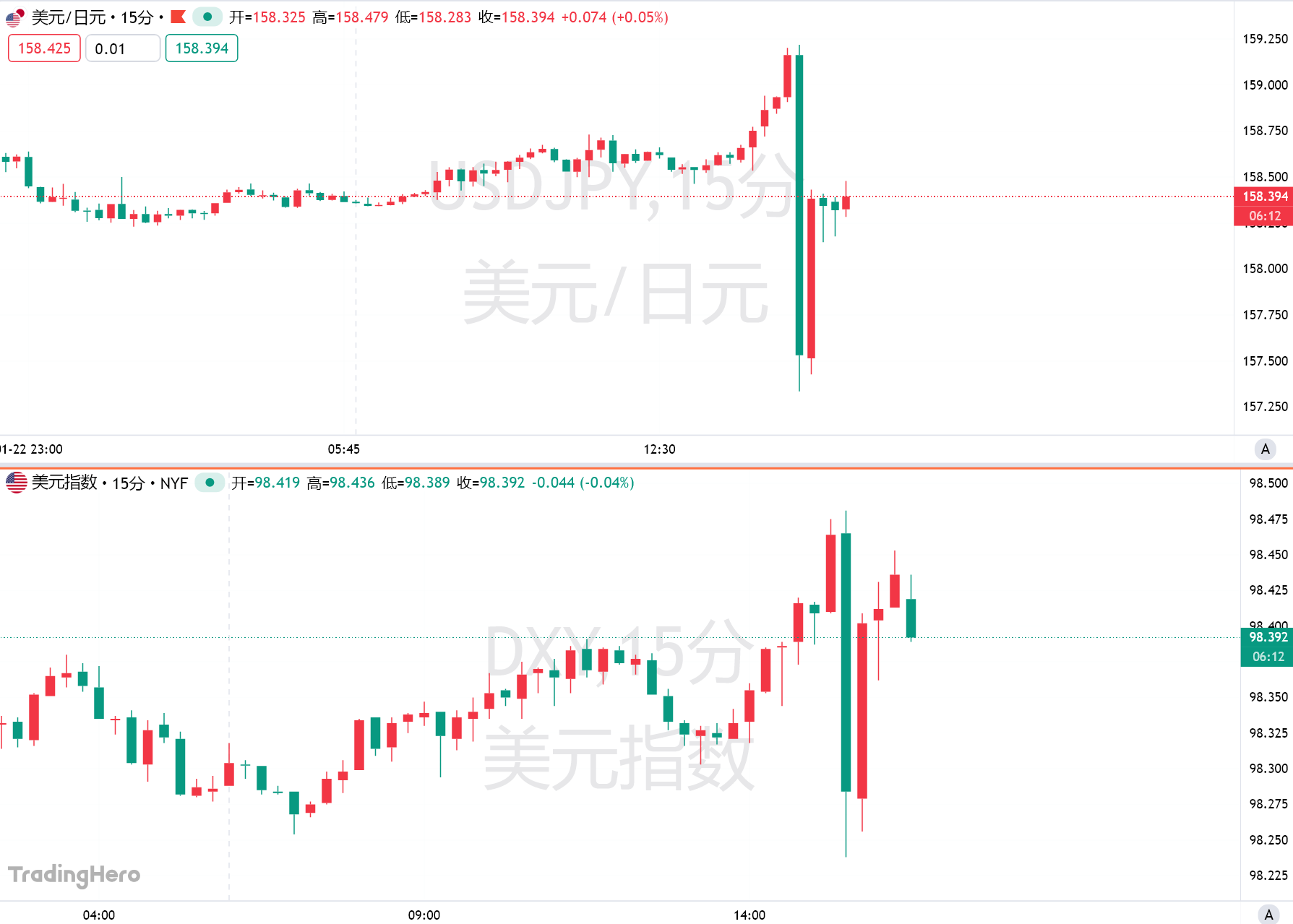
Core Viewpoint - The Japanese yen weakened after the Bank of Japan maintained interest rates, raising concerns about potential intervention to prevent the yen from hitting multi-year lows [1][2]. Group 1: Currency Movements - The USD/JPY exchange rate fell to a low of 157.33, dropping nearly 200 points from its daily high, before rebounding and nearly erasing all gains [1]. - The dollar index experienced a significant drop during the trading session, although the reasons behind these movements remain unclear [1]. Group 2: Market Reactions and Speculations - Traders are on alert for possible intervention by Japanese authorities as the USD/JPY approaches the 160 mark, with some analysts suggesting it is too early to confirm any intervention [2]. - The recent price fluctuations of the yen resemble previous "currency tests" conducted by the Japanese Ministry of Finance, which typically precede actual intervention actions [3]. Group 3: Intervention Insights - The purpose of the "currency test" is to provide a warning to the market before any intervention measures are taken, allowing for a more cautious approach to betting against the yen [4]. - Analysts believe that while intervention may provide short-term relief for the yen, it will not change the overall trend unless the Bank of Japan adopts a more hawkish stance and accelerates policy normalization [4]. Group 4: Economic Indicators - The Bank of Japan's decision to maintain the benchmark interest rate was accompanied by an upward revision of inflation expectations, suggesting that the next rate hike may occur sooner than previously anticipated [4]. - The chief economist at S&P Global Market Intelligence indicated that the recent depreciation of the yen is influenced by rising inflation expectations, reinforcing the likelihood of continued rate hikes [4].
日元突然跳涨可能只是日本当局的一次“测试”和“预警”
Sou Hu Cai Jing· 2026-01-23 08:23
Core Viewpoint - The recent significant fluctuation in the Japanese yen is reminiscent of previous "currency tests" conducted by the Japanese Ministry of Finance, indicating potential upcoming intervention measures in the currency market [1] Group 1: Currency Fluctuation Analysis - The yen experienced a substantial jump, similar to patterns observed during past "currency tests" in July 2024 and September 2022 [1] - The purpose of these "currency tests" is to provide the market with a warning before actual intervention measures are implemented [1] Group 2: Intervention Expectations - Analysts anticipate that intervention actions will occur, but the timing remains uncertain [1] - The current situation does not appear to be a genuine intervention, as any substantial action by Japan would likely have a broader and more pronounced impact [1] - Official sources are expected to provide clarifications in the coming hours regarding the recent fluctuations [1]