汽车产品质量

Search documents
涉及MEGA冷却液、L系列下摆臂等问题,理想汽车针对质量事故内部问责
Mei Ri Jing Ji Xin Wen· 2025-11-14 11:41
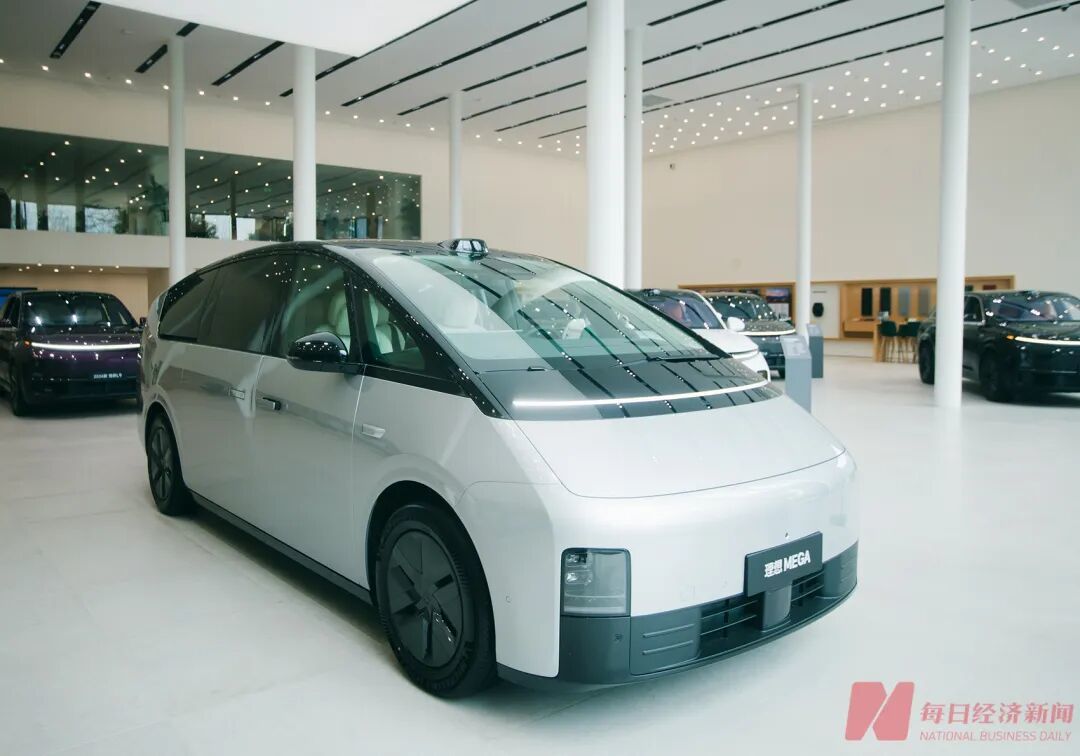
Core Points - Li Auto has issued two handling announcements regarding quality issues with the 2024 MEGA vehicles and the 2025 L series vehicles, acknowledging the incidents and apologizing to affected users [1][3] - The company emphasizes its commitment to safety and reliability in product development, aiming to provide an experience that exceeds user expectations [1] Group 1: 2024 MEGA Vehicle Issues - A fire incident involving a Li Auto MEGA vehicle on October 23 raised concerns, leading to a recall of 11,411 units produced between February 18, 2024, and December 27, 2024, due to insufficient corrosion resistance of the coolant [3] - Internal handling announcements indicate that personnel responsible for material technology and battery testing were primarily accountable for the coolant leakage risk assessment failures [3][4] - The company has taken disciplinary actions against employees involved, including contract termination and penalties for management [4] Group 2: 2025 L Series Vehicle Issues - The 2025 L series vehicles have reported issues with noise from the front wheels, attributed to a new type of hydraulic bushing grease that changes viscosity at high temperatures [4] - Li Auto claims that this issue only causes occasional noise and does not affect vehicle performance, safety, or durability [4] - The company has acknowledged insufficient testing of the new grease, leading to the noise problem, and has implemented corrective measures against responsible employees [4]


从铜陵到成都的198天:小米汽车陷入安全争议漩涡
Di Yi Cai Jing· 2025-10-15 14:06
Core Points - Xiaomi's automotive division is facing significant scrutiny following two fatal accidents involving its vehicles, raising concerns about safety and product quality [1][5][11] - The company's public image has deteriorated from an initial "blockbuster" status to a more negative perception amid ongoing safety controversies [3][5] - Regulatory changes in the automotive industry are being accelerated in response to these incidents, with new safety standards being introduced [9][10][11] Summary by Sections Accident Details - The first accident occurred on March 29 in Tongling, resulting in three fatalities, followed by a second incident on October 13 in Chengdu, where the vehicle caught fire and the doors could not be opened [1][5] - In both cases, the inability to open the car doors during emergencies has become a central point of criticism [1][11] Company Response - Following the accidents, Xiaomi's CEO Lei Jun maintained a focus on product promotion on social media, with little direct acknowledgment of the incidents [4][6] - Despite the controversies, Xiaomi's new model YU7 saw significant initial demand, with over 240,000 orders within 18 hours of its launch [6] Regulatory Environment - The accidents have prompted the introduction of three major national safety standards aimed at improving the safety of electric vehicles, particularly in areas such as battery safety and door handle functionality [9][10][11] - The new standards include requirements for battery safety that prevent fire and explosion after thermal runaway and mandate mechanical release functions for car doors [10][11] Public Perception and Market Impact - Public sentiment towards Xiaomi's automotive products has shifted negatively, with social media filled with criticisms regarding vehicle safety and quality [5][6] - The company has experienced a decline in followers on social media platforms as a result of the ongoing controversies [5]

2025中国汽车AQR报告:核心零部件持续向好,行业质量整体下降
Zhong Guo Qi Che Bao Wang· 2025-09-26 10:05
Core Insights - The automotive industry is entering a critical phase of smart technology integration, where quality is essential for realizing user-perceived value [3] - The 2025 China Automotive Product Quality Performance Research (AQR) report indicates a decline in overall industry quality despite improvements in core component modules [11][12] Group 1: Industry Trends - The number of effective complaints received by Chezhinet from January to August exceeded 150,000, with issues related to in-car connectivity, driving assistance, and OTA upgrades being the most common [3] - The global automotive market is shifting towards stock competition, with China's electric vehicle market expected to see a penetration rate of over 70% by 2030 [6] - The demand for differentiated, personalized, and intelligent automotive products is significantly increasing among Chinese consumers, with domestic brands expected to capture over 65% market share by 2030 [6] Group 2: Quality Performance - The report on the quality performance of the three electric systems in new energy vehicles shows an overall improvement, with a notable reduction in issues related to range and motor performance compared to the previous year [7] - Battery degradation remains the most significant issue in market quality performance, with the highest number of complaints [7][9] - The overall market quality score for 2025 is 27.19, reflecting a 23% increase from 2024, indicating a decline in industry quality [12] Group 3: User Experience - The introduction of the "experience quality" concept highlights a sharp increase in user experience-related issues, particularly as the market transitions to a stock market [11][15] - Users' satisfaction with product experience has decreased, with smart cockpit and driving systems having a more substantial negative impact on user recommendations [14][15] - Many quality complaints arise from heightened user expectations and the industry's internal pressures leading to cost and cycle compression, resulting in quality decline [15]

独家对话特斯拉“车顶维权”女车主:终于赢了特斯拉一次!“打官司已经花了不止两个40万元,只想要一个结果”
Mei Ri Jing Ji Xin Wen· 2025-09-16 16:51
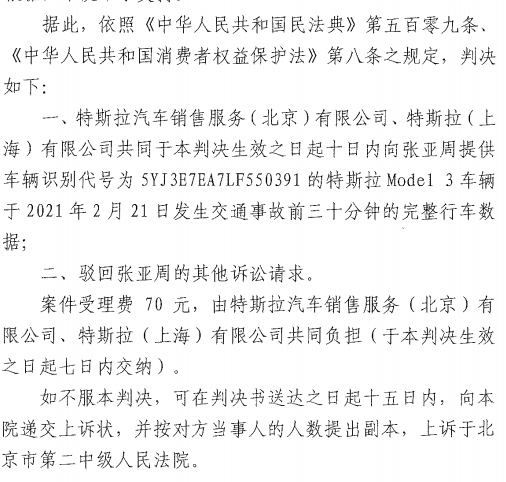
Core Viewpoint - The recent court ruling in favor of Zhang Yazhou against Tesla highlights ongoing concerns regarding vehicle safety and data transparency, particularly related to the brake failure incident involving her father's Tesla Model 3 [1][2][4]. Group 1: Legal Proceedings - On September 16, 2023, the Beijing Daxing District People's Court ordered Tesla to provide complete driving data from the Model 3 involved in a February 2021 accident within ten days [1]. - Zhang Yazhou has been engaged in legal battles with Tesla for four years, primarily seeking transparency regarding the vehicle's brake system and the circumstances surrounding the accident [2][5]. - The court's decision marks Zhang's first legal victory against Tesla, which she interprets as validation of her claims regarding the company's failure to comply with regulatory data requests [5][6]. Group 2: Consumer Rights and Advocacy - Zhang emphasizes the importance of consumer rights and the need for accountability from large corporations like Tesla, stating that the lack of data is indicative of a product defect [6][8]. - The case has broader implications for consumer safety, as it raises questions about the responsibility of automotive companies to provide complete and accurate information regarding their products [8][9]. - Zhang's persistence in the legal battle is supported by her family, who believe in the necessity of advocating for consumer rights and transparency in the automotive industry [7][9]. Group 3: Financial Implications - Zhang has incurred significant legal expenses, reportedly exceeding 800,000 yuan (approximately 120,000 USD), in her pursuit of justice against Tesla [9]. - The financial burden reflects the challenges faced by individual consumers when taking on large corporations in legal disputes [9].