汽车行业稳增长

Search documents
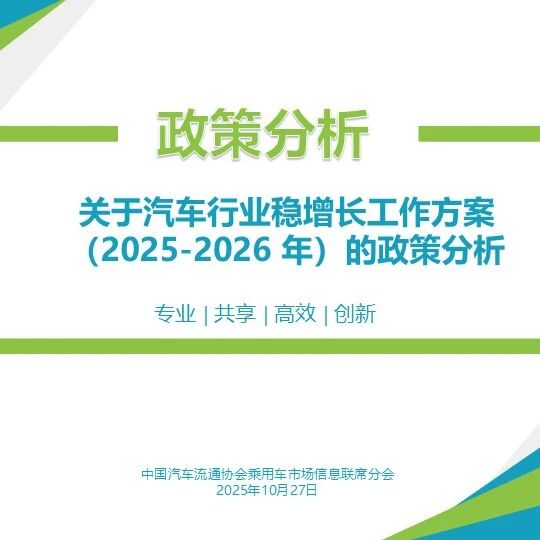
【政策综述】关于汽车行业稳增长工作方案(2025-2026年)政策分析
乘联分会· 2025-11-13 08:40
Core Viewpoint - The article discusses the "Automobile Industry Stabilization and Growth Work Plan (2025-2026)" issued by eight ministries, aiming to promote stable growth and high-quality development in the automotive sector through multi-departmental collaboration [4][5]. Background and Implementation Significance - The 2025-2026 work plan is a response to the complex external environment and domestic challenges faced by the automotive industry, following the success of the previous 2023-2024 plan which aimed for a total vehicle sales target of approximately 27 million units in 2023, with a 3% year-on-year growth [7][8]. - The plan emphasizes the automotive industry's role as a "ballast stone" for economic growth, focusing on quality improvement, technological advancement, and green transformation to meet both domestic and international challenges [9]. Key Policy Measures Expanding Domestic Automobile Consumption - The plan includes measures to accelerate the market expansion of new energy vehicles (NEVs), with a target of promoting over 700,000 NEVs in public sectors across 25 pilot cities [11]. - It also aims to enhance automotive consumption through trade-in programs and support for second-hand vehicle sales, alongside promoting smart connected vehicle applications [11]. Improving Supply Quality - The plan emphasizes technological innovation to stimulate demand, with policies aimed at enhancing product performance and fostering internationally competitive Chinese brands [12]. - It includes upgrading standards for NEVs and related technologies, ensuring supply chain stability, and promoting digital transformation within the industry [12]. Optimizing Industry Development Environment - The plan outlines the need for improved infrastructure, including charging facilities, and regulatory reforms to streamline vehicle production and management [13]. - It aims to enhance competition order within the industry and strengthen recycling and utilization management for end-of-life vehicles [12]. Enhancing International Cooperation - The plan encourages automotive exports by supporting companies in developing products suited for international markets and improving financial services for exports [14]. - It also promotes collaboration in setting international standards and participating in global automotive forums [14]. Support Measures - The plan highlights the importance of coordinated efforts among various departments and emphasizes the need for monitoring and talent development to support the automotive industry's growth [15]. - It aims to create a robust policy framework that aligns with future demands and fosters innovation [15]. Overall Analysis - The work plan provides a clear roadmap for the automotive industry, balancing growth targets with quality improvements and international expansion [16]. - It sets ambitious sales targets for NEVs, projecting 15.5 million units by 2025, while ensuring that the automotive sector contributes positively to the overall economy [16].

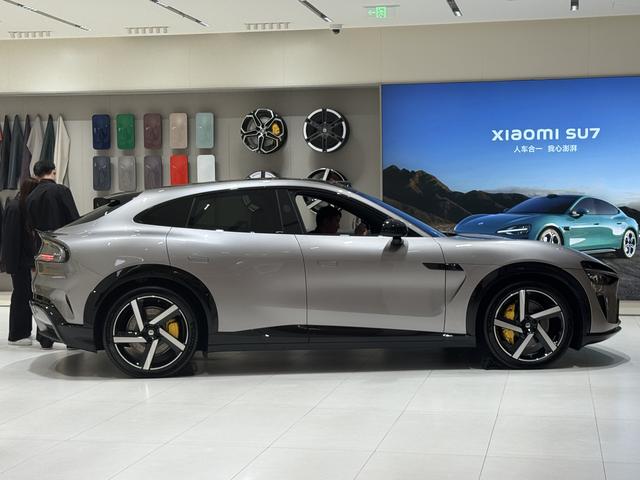
新能源车购置税减半征收落地在即 小米、理想等车企发布补贴方案
Zhong Guo Jing Ying Bao· 2025-10-31 20:54
Core Viewpoint - The article discusses the recent trend of automotive companies in China, such as Xiaomi, Li Auto, and NIO, launching subsidy plans to mitigate the impact of the upcoming reduction in the new energy vehicle (NEV) purchase tax, which is set to be halved in 2026. This strategy aims to secure consumer demand and stabilize cash flow amid changing policies and production challenges [3][4][5]. Group 1: Policy Changes and Industry Response - The NEV purchase tax exemption will continue until 2027, but the reduction will gradually adjust, with a full exemption until 2025 and a 50% reduction from 2026 [3][4]. - Automotive companies are implementing "purchase tax subsidy" plans to lock in orders before the tax changes take effect, with the aim of stabilizing production and cash flow [4][5]. - The Chinese automotive market is expected to see significant growth, with predictions of a 7% year-on-year increase in retail sales, reaching 24.5 million units in 2023 [3][11]. Group 2: Company Strategies and Market Dynamics - Companies like Xiaomi and Li Auto are offering subsidies that cover the purchase tax for vehicles ordered by the end of 2025, which will be delivered in 2026, effectively allowing consumers to benefit from the current tax exemption [5][6]. - The push for these subsidy plans is linked to the need for companies to manage production ramp-up and long delivery times, as well as to counteract potential consumer hesitation due to increased costs from the tax changes [7][8]. - The fourth quarter is traditionally a peak sales period, and companies are intensifying promotional efforts to meet annual sales targets, with expectations of increased market activity [9][10]. Group 3: Market Performance and Future Outlook - In the first nine months of 2023, the automotive industry in China saw production and sales growth of 13.3% and 12.9%, respectively, with NEV sales reaching 46.1% of total new car sales [11][12]. - The industry aims for a total vehicle sales target of approximately 32.3 million units in 2025, with NEV sales projected to reach around 1.55 million units, reflecting a 20% year-on-year increase [11]. - The introduction of stricter technical requirements for NEVs is expected to drive companies to accelerate promotions and clear out lower-range inventory in anticipation of the new regulations [10].



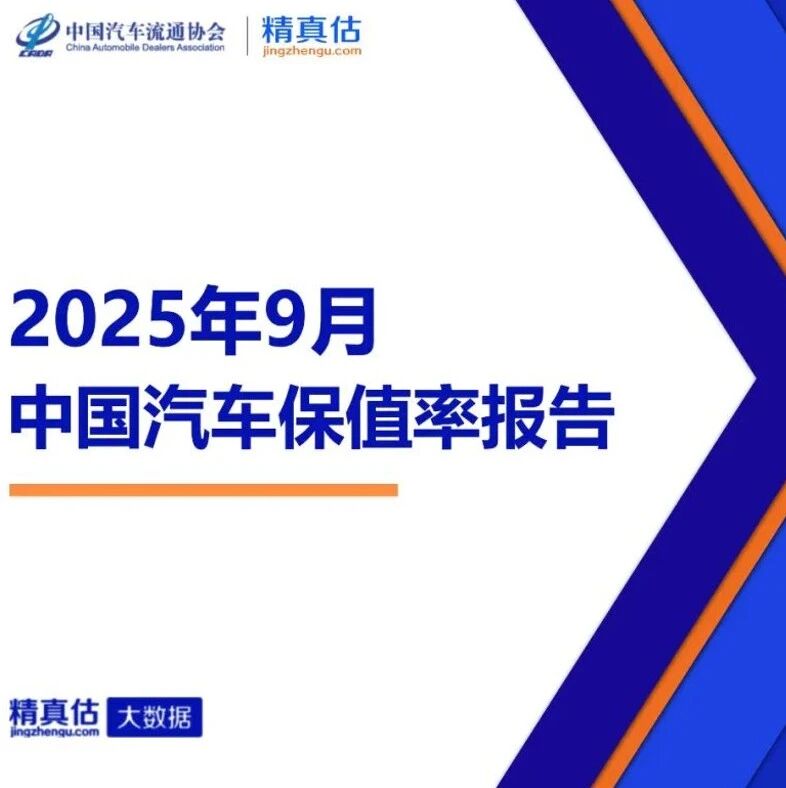
【保值率】2025年9月中国汽车保值率报告
乘联分会· 2025-10-23 08:38
Core Insights - The report highlights the importance of vehicle resale value as a reflection of brand strength, product quality, and market perception, providing critical data for various automotive business operations [2][4] Policy Direction - The automotive industry has become a key economic pillar in China, contributing approximately 10% to the national GDP. The recent growth stabilization plan includes 15 specific measures aimed at enhancing the efficiency of used car transactions and promoting high-quality supply to stimulate demand [6] Market Trends - The automotive market is experiencing fluctuations in vehicle supply, with discussions around subsidies impacting new car sales and subsequently affecting the used car market. The market was active in early September but slowed down towards the end of the month, likely in preparation for the upcoming holiday marketing activities [11] Resale Value Analysis - The resale values of mainstream vehicle models have increased due to new car price rebounds driven by subsidy limits. However, high-end models, particularly MPVs, have seen a decline in resale value. Recent new models launched by manufacturers offer better cost-performance ratios [15] Quality Control in New Energy Vehicles - Strengthening quality supervision is a key measure to combat industry "involution." A special inspection initiative covers various emerging industries, including new energy vehicles, ensuring that the quality of sampled products matches market offerings [17] New Energy Vehicle Resale Value - The resale value of plug-in hybrid vehicles has decreased, influenced by price cuts from new models. While domestic brands are leading the development of electric vehicles, the second-hand market for hybrids faces challenges due to performance disadvantages compared to newer models [20]
稳增长政策发力 今年汽车销量冲刺3230万辆
Zhong Guo Chan Ye Jing Ji Xin Xi Wang· 2025-10-17 00:16
Core Viewpoint - The recent implementation of the "Automobile Industry Steady Growth Work Plan (2025-2026)" injects strong momentum into the development of the automotive industry, setting clear growth targets for vehicle sales and production value by 2025 [1][2] Group 1: Growth Targets - The plan aims for total automobile sales to reach 32.3 million units in 2025, representing a year-on-year increase of approximately 3% [1] - New energy vehicle sales are targeted at 15.5 million units, with a year-on-year growth of around 20% [1] - The added value of the automotive manufacturing industry is expected to grow by about 6% year-on-year [1] Group 2: Current Market Performance - In the first eight months of 2025, China's automobile production and sales both exceeded 20 million units, reaching 21.05 million and 21.12 million units respectively, with a year-on-year increase of over 12% [2] - The average monthly sales during this period were 2.641 million units, indicating a strong market performance [2] Group 3: Policy Measures to Boost Consumption - The plan includes specific measures to expand consumption, such as continuing the "old-for-new" vehicle policy and optimizing restrictions in areas with vehicle purchase limits [4] - The Ministry of Commerce is also promoting automotive consumption through the implementation of the "old-for-new" policy and enhancing platform functionalities to ensure subsidies reach consumers efficiently [4] Group 4: Challenges and Strategic Focus - Despite positive trends, the automotive industry faces challenges such as shortages in high-end automotive chips and basic software, insufficient effective demand, and issues with irrational competition [5][6] - The Ministry of Industry and Information Technology has outlined five key areas of focus to address these challenges, including enhancing planning guidance, increasing innovation efforts, promoting automotive consumption, improving management systems, and deepening open cooperation [6][7]
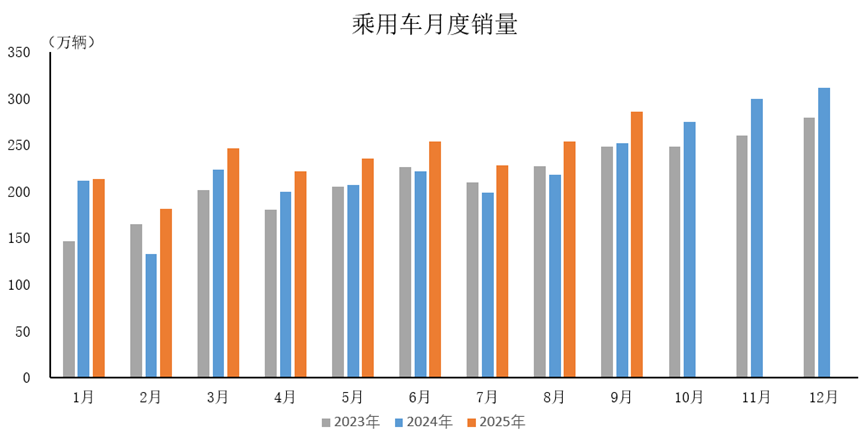
中汽协:9月乘用车产销分别完成290万辆和285.9万辆 环比分别增长16%和12.5%
智通财经网· 2025-10-16 09:20
Core Insights - The Chinese automotive industry is experiencing significant growth in both production and sales of passenger vehicles, with a notable increase in exports and domestic sales in September 2025 compared to previous months and the same period last year [1][5][6]. Production and Sales Performance - In September 2025, the production and sales of passenger vehicles reached 2.9 million and 2.859 million units respectively, marking a month-on-month increase of 16% and 12.5%, and a year-on-year increase of 15.9% and 13.2% [1]. - From January to September 2025, the production and sales totaled 21.241 million and 21.246 million units, reflecting a year-on-year growth of 13.9% and 13.7% [1]. Vehicle Types and Trends - In September 2025, among the main types of passenger vehicles, the production of crossover vehicles slightly decreased while their sales saw a minor increase; other three major categories experienced double-digit growth [4]. - For the period of January to September 2025, all four major categories of passenger vehicles showed varying degrees of growth compared to the same period last year, with crossover vehicles exhibiting the most significant growth [4]. Export Performance - In September 2025, passenger vehicle exports reached 560,000 units, representing a month-on-month increase of 5% and a year-on-year increase of 22.4% [5]. - From January to September 2025, total passenger vehicle exports amounted to 4.201 million units, showing a year-on-year growth of 15.6% [5]. Domestic Sales - In September 2025, domestic sales of passenger vehicles were 2.299 million units, with a month-on-month increase of 14.5% and a year-on-year increase of 11.2% [6]. - For the first nine months of 2025, domestic sales totaled 17.044 million units, reflecting a year-on-year growth of 13.3% [6].
数据简报 | 2025年9月乘用车产销情况简析
中汽协会数据· 2025-10-16 09:05
Core Viewpoint - The recent implementation of a new growth stabilization plan in the automotive industry aims to boost consumer confidence and support the stable operation of the passenger car market through continuous new model launches by companies [1]. Production and Sales Data - In September 2025, passenger car production and sales reached 2.9 million and 2.859 million units, respectively, representing a month-on-month increase of 16% and 12.5%, and a year-on-year increase of 15.9% and 13.2% [3]. - From January to September 2025, passenger car production and sales totaled 21.241 million and 21.246 million units, showing a year-on-year growth of 13.9% and 13.7% [4]. - In September 2025, domestic sales of passenger cars were 2.299 million units, with a month-on-month increase of 14.5% and a year-on-year increase of 11.2% [9]. - For the same period, passenger car exports reached 4.201 million units, reflecting a year-on-year growth of 15.6% [8]. Segment Performance - In September 2025, among the main types of passenger cars, the production of crossover vehicles saw a slight decline, while sales experienced a slight increase. Other three major categories of passenger cars showed double-digit growth [6]. - From January to September 2025, all four major categories of passenger cars exhibited varying degrees of growth compared to the same period last year, with crossover vehicles showing the most significant growth [7]. - In September 2025, passenger car exports amounted to 560,000 units, with a month-on-month increase of 5% and a year-on-year increase of 22.4% [10].
连续5个月产销同比增速超10% 九月汽车产销首次超过三百万辆
Zhong Guo Zhi Liang Xin Wen Wang· 2025-10-16 07:27
Core Insights - The Chinese automotive market has shown strong performance, with production and sales exceeding 3 million vehicles for the first time in September, marking a continuous growth trend for five months with year-on-year growth rates above 10% [1][2] Group 1: Market Performance - In September, vehicle production reached 3.276 million units and sales reached 3.226 million units, with month-on-month increases of 16.4% and 12.9%, and year-on-year increases of 17.1% and 14.9% respectively [1] - Cumulative production and sales from January to September totaled 24.333 million and 24.363 million units, reflecting year-on-year growth of 13.3% and 12.9% [1] Group 2: Policy and Market Drivers - The positive market performance is attributed to the effectiveness of the vehicle replacement policy, recovery in certain regions, and the introduction of new models by manufacturers [2] - The Ministry of Industry and Information Technology, along with eight other departments, has issued a plan to stabilize growth in the automotive industry, outlining 15 measures to enhance domestic consumption and improve supply quality [2] Group 3: Passenger Vehicle Insights - In September, passenger vehicle production and sales reached 2.9 million and 2.859 million units, with month-on-month increases of 16% and 12.5%, and year-on-year increases of 15.9% and 13.2% [2] - Chinese brand passenger vehicles accounted for 70.2% of sales in September, with a year-on-year increase of 2.5 percentage points [2] Group 4: New Energy Vehicles - New energy vehicle production and sales reached 1.617 million and 1.604 million units in September, with year-on-year growth of 23.7% and 24.6%, making up 49.7% of total new vehicle sales [4] - From January to September, cumulative production and sales of new energy vehicles were 11.243 million and 11.228 million units, reflecting year-on-year growth of 35.2% and 34.9% [4] Group 5: Commercial Vehicle Trends - Commercial vehicle production and sales in September reached 376,000 and 368,000 units, with month-on-month increases of 19.3% and 16.3%, and year-on-year increases of 27.7% and 29.6% [3] - Cumulative production and sales of commercial vehicles from January to September totaled 3.091 million and 3.117 million units, with year-on-year growth of 9.4% and 7.8% [3] Group 6: Market Concentration - The top 10 automotive companies accounted for 83.9% of total vehicle sales from January to September, with a total of 20.431 million units sold [4] - Among the top 10 companies, Dongfeng Motor and GAC Group experienced varying degrees of sales decline, while other companies showed growth [4]
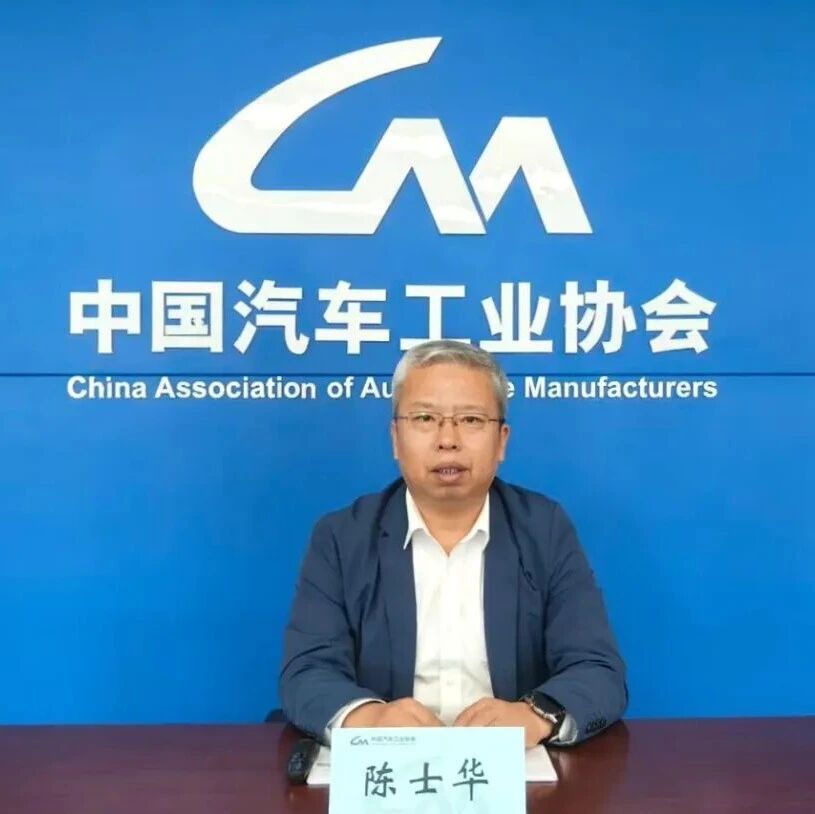
中国汽车工业协会2025年10月信息发布会在北京召开
中汽协会数据· 2025-10-15 09:13
Core Viewpoint - The automotive market in China is experiencing stable growth, supported by favorable macroeconomic policies and initiatives such as the vehicle trade-in program, which has positively impacted production and sales figures [3]. Group 1: Economic Environment - In September 2025, various regions and departments intensified the implementation of proactive macro policies to strengthen domestic circulation, ensuring policy continuity and stability, which has contributed to a steady economic development trend [3]. - The sustained improvement in the macro economy has played a crucial role in the stable operation of the automotive market [3]. Group 2: Market Performance - The automotive market has shown a positive trend, with production and sales growth rates maintaining over 10% year-on-year for five consecutive months [3]. - The recent vehicle trade-in policy has continued to show effectiveness, with some previously paused regions beginning to recover, and local auto exhibitions are thriving [3]. Group 3: Industry Initiatives - The Ministry of Industry and Information Technology, along with eight other departments, issued the "Automotive Industry Stabilization and Growth Work Plan (2025-2026)," which outlines 15 measures across four dimensions: expanding domestic consumption, improving supply quality, optimizing the industrial development environment, and enhancing international cooperation [3]. - These initiatives aim to provide a clear path for stable growth and high-quality development in the automotive industry, ensuring continued positive market conditions [3].
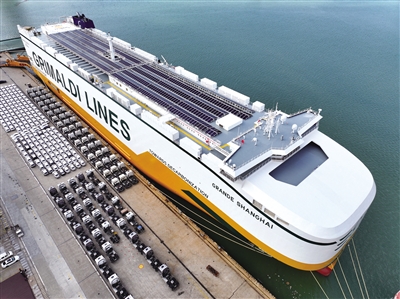
9月汽车产销历史同期首次超300万辆 产销月度同比增速连续5个月保持10%以上
Xin Hua Wang· 2025-10-15 02:04
Core Insights - In September, China's automobile production and sales exceeded 3 million units for the first time in history, with a year-on-year growth rate maintained above 10% for five consecutive months [2][3] Group 1: Production and Sales Data - In September, automobile production reached 3.276 million units, while sales were 3.226 million units, representing month-on-month increases of 16.4% and 12.9%, and year-on-year increases of 17.1% and 14.9% respectively [2] - From January to September, production and sales totaled 24.333 million and 24.363 million units, with year-on-year growth rates of 13.3% and 12.9%, showing an acceleration in growth compared to the previous months [2] Group 2: New Energy Vehicles (NEVs) - In September, NEV production and sales reached 1.617 million and 1.604 million units, marking a historical high with year-on-year growth of 23.7% and 24.6%, accounting for 49.7% of total new car sales [3] - From January to September, NEV production and sales were 11.243 million and 11.228 million units, with year-on-year growth of 35.2% and 34.9%, indicating a significant increase in market share [3] Group 3: Commercial Vehicles - In September, commercial vehicle production and sales were 376,000 and 368,000 units, with month-on-month increases of 19.3% and 16.3%, and year-on-year increases of 27.7% and 29.6% [3] - Notably, natural gas commercial vehicle sales reached 26,000 units, with a month-on-month growth of 30.2% and a year-on-year increase of 100% [3] Group 4: Future Outlook - The Ministry of Industry and Information Technology and other departments have issued a "Work Plan for Stable Growth in the Automotive Industry (2025-2026)", outlining 15 measures to support stable growth and high-quality development in the automotive sector [4] - The automotive market is expected to experience a critical policy transition by the end of the year, with manufacturers accelerating supply and consumers targeting purchase opportunities [5]
进一步巩固汽车产业国民经济支柱产业地位(附图片)
Xin Lang Cai Jing· 2025-10-14 23:43
Core Viewpoint - The introduction of the "Automobile Industry Stabilization and Growth Work Plan (2025-2026)" aims to provide direction and momentum for the automotive industry amidst complex external environments and insufficient domestic demand [2][3]. Group 1: Sales Targets and Growth - The plan sets a target of approximately 32.3 million vehicle sales by 2025, reflecting a year-on-year growth of about 3%, and aims for around 15.5 million new energy vehicle sales, with a year-on-year growth of about 20% [3]. - In the first eight months of the year, vehicle production and sales reached 21.1 million and 21.1 million units, respectively, showing year-on-year growth of 12.7% and 12.6%, exceeding expectations [3]. - New energy vehicle sales grew over 36% year-on-year, accounting for 45.5% of total sales, indicating a steady growth of new momentum [3]. Group 2: Policy Innovations - The plan introduces a comprehensive set of measures to stimulate automotive consumption, including expanding new energy vehicle promotion, supporting trade-ins, and facilitating second-hand vehicle circulation [4]. - The focus on smart connected technology, particularly the production access for L3-level vehicles, aims to create demand through improved supply, contributing to industry transformation [4]. - A new regulatory framework is established to address issues such as outdated entry mechanisms and structural contradictions in capacity, enhancing the efficiency of resource allocation [5]. Group 3: Collaborative Measures - Eight departments are involved in the implementation of the plan, creating a collaborative effort to address current demand shortages and strengthen the foundation for long-term industry development [6]. - The plan proposes 15 actionable measures across four dimensions, emphasizing the importance of efficient circulation, increased support for consumer demand, and improved consumption environments [6]. - The development of charging and battery swap infrastructure is expected to enhance the user experience of new energy vehicles and stimulate related industry investments [6]. Group 4: Long-term Industry Positioning - The plan is a timely response to the current need for stabilization in the automotive industry and serves as a long-term strategy for industrial transformation and upgrading [7]. - The implementation of the plan is anticipated to solidify the automotive industry's role as a pillar of the national economy, driving breakthroughs in technological innovation, structural optimization, and regulatory order [7].