
活跃券切换

Search documents
股市缩量震荡,债市发酵换券
Zhong Xin Qi Huo· 2025-10-17 01:58
1. Report Industry Investment Rating No relevant information provided. 2. Core Views of the Report - The stock index futures market is experiencing a period of low - volume consolidation, waiting for policy - related catalysts. The strategy is to hold long positions in IM and wait for policy - driven market movements [1][6]. - The stock index options market maintains a medium - term optimistic sentiment. The operation strategy is to continue with covered calls or intraday double - selling [2][7]. - In the treasury bond futures market, there is an expectation of an active bond switch for 25 Special Bond 6. The short - term trend of the long - end of the bond market is likely to be volatile [3][7]. 3. Summary by Relevant Catalogs 3.1 Market Views 3.1.1 Stock Index Futures - The market is in a low - volume consolidation state. The base spreads and inter - period spreads of IF, IH, IC, and IM have changed compared to the previous trading day, and their positions have also changed. The market shows a dumbbell - shaped structure, with the dividend index rising for six consecutive days. The impact of tariff increases on the stock market has weakened. As an important meeting approaches next week, there is an expectation of policy intensification. The recommended operation is to hold long positions in IM [1][6]. 3.1.2 Stock Index Options - The underlying market's optimistic sentiment continues but is somewhat differentiated, with small and medium - cap stocks underperforming large - cap stocks. The trading volume of the options market decreased by 14.01% compared to the previous day, while the liquidity of 50 and 300 - related varieties increased. The call trading on 50ETF and 300ETF was relatively active, but the out - of - the - money degree of call trading decreased. The seller's sentiment in large - cap varieties continued to recover. The recommended operations are covered calls or intraday double - selling [2][7]. 3.1.3 Treasury Bond Futures - The closing performance of treasury bond futures was differentiated. The 30 - year main contract rose by 0.42%, the 10 - year main contract rose by 0.06%, and the 5 - year and 2 - year main contracts fell by 0.01%. The central bank's open - market operation led to a net withdrawal of 376 billion yuan, but the capital market remained relatively loose. The low - volume consolidation of the equity market and the decrease in risk appetite supported the long - end of the bond market. There was an expectation of an active bond switch for 25 Special Bond 6, but it remains to be seen. The short - term trend of the long - end of the bond market is likely to be volatile. Recommended strategies include trend trading with a volatile outlook, short - hedging when the basis is low, long - end arbitrage, and paying attention to the steepening of the yield curve [3][7][8]. 3.2 Economic Calendar - China's export annual rate in September was 8.3% (expected 7.1%, previous 4%); PPI annual rate was - 2.3% (expected - 2.3%, previous - 2.9%); and the social financing scale from the beginning of the year to September was 30.09 trillion yuan (expected 29.91 trillion yuan, previous 26.56 trillion yuan). The data for the US non - farm payrolls in September is yet to be released [9]. 3.3 Important Information and News Tracking - Two new policies: With the implementation of large - scale equipment renewal and consumer goods trade - in policies, the equipment renewal of industrial enterprises in China has accelerated in the first three quarters of this year. The procurement of mechanical equipment by industrial enterprises increased by 9.4% year - on - year, with high - tech manufacturing and the power, heat, gas, and water production and supply industries showing growth rates of 14% and 10.5% respectively [10]. - US employment: The US job market has shown a significant change. Enterprises are neither hiring nor firing, and there are many applicants for each position. Labor demand and supply are shrinking at the same rate, and productivity seems to be increasing, which may offset some cost pressures. Consumers are still spending but are making choices due to less abundant funds [10].
超长期利率债交易受热捧 “换券”行情成为债市新热点
Xin Hua Cai Jing· 2025-09-04 14:47
Group 1 - The bond market has shown resilience in September, but some ultra-long bond yields have slightly increased against the trend, with "bond switching" becoming a key factor driving market movements [1][2] - As of September 4, the yield on the 10-year government bond (active bond 250011) rose by 0.75 basis points to 1.755%, while the 30-year government bond (active bond 2500002) increased by 1.15 basis points to 2.0085% [1] - The trading volume of the ultra-long government bond "25 Ultra Long Special Government Bond 06" has surged, with nearly 900 trades over three consecutive days, indicating a shift in market focus towards new bonds [2][3] Group 2 - The process of "bond switching" typically involves a shift in market pricing towards newly issued bonds due to their interest rate advantages and improved liquidity, leading to a decline in trading volume of older bonds [3] - The issuance schedule for the 30-year ultra-long special government bonds is relatively fast, with three more issuances planned in September and October, suggesting a potential for higher cost-effectiveness in pre-switch configurations [3] - The trading behavior indicates that the main sellers of ultra-long bonds are insurance funds and mutual funds, while banks and brokerages are the primary buyers, reflecting a strategic shift in market participation [3][6] Group 3 - Market sentiment appears to be at a short-term turning point, influenced by the "stock-bond seesaw" effect, with overall bond market performance being strong despite the rapid rise in long-end bond yields at the end of the trading day [6] - Future fluctuations in ultra-long bond rates may require stronger consensus expectations, potentially driven by a systemic weakening of market risk appetite or additional monetary easing from the central bank [6] - If the stock market continues its consolidation phase, the bond market is expected to remain within a volatile range, while a stock market recovery could test the upper limits of current bond market fluctuations [6]

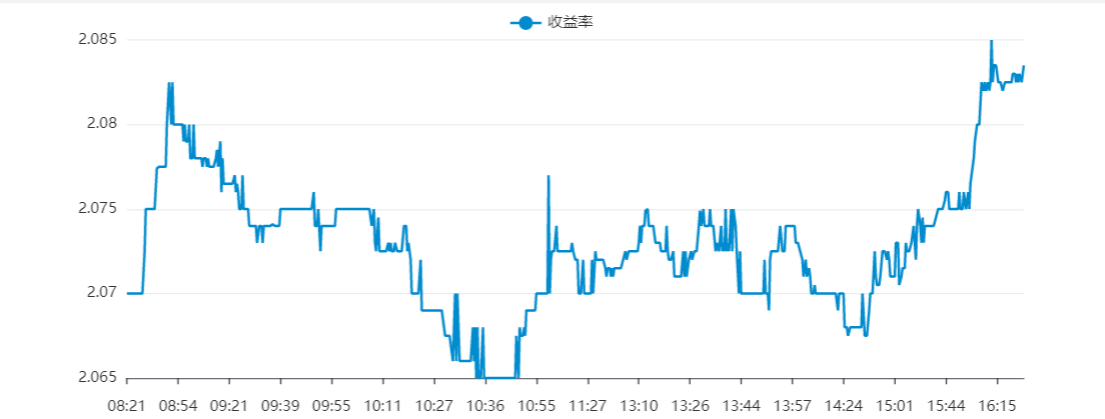
怎么看关键期限国债新发定价与活跃券切换
Minsheng Securities· 2025-08-24 14:17
Report Industry Investment Rating No relevant content provided. Core Viewpoints - On August 22, 2025, key - term treasury bonds were newly issued after the levy of coupon VAT. The coupon rate of 10Y25 Treasury Bond 16 (2516) is 1.83%, and that of 30Y25 Ultra - long Special Treasury Bond 06 (25T6) is 2.15%. Whether 2516 and 25T6 can become active bonds is the key to the rationality of their issuance pricing [1][7]. - For 30Y treasury bonds, there are three possibilities for the next active bond: 25 Ultra - long Special Treasury Bond 02 may remain active throughout the year; the active bond may switch to 25T6; or it may switch to 25 Treasury Bond 02. If 25T6's actual issuance scale is close to the estimated scale, it is likely to become the next active bond and has investment value [2][10]. - For 10Y treasury bonds, 25 Treasury Bond 11 may remain active for some time due to market investment habits, but 2516 has the possibility of quickly switching to the active bond. If it switches successfully, it has certain cost - effectiveness with an implied tax rate of 3.77% when priced with reference to the active bond [3][16]. Summary by Relevant Catalog 1.1 Subsequent 30Y Treasury Bond Active Bond Possibility Analysis - **Estimated Scale of 25T6**: According to the issuance plan, 25T6 will have three more consecutive issuances in September and October. Assuming 20Y and 50Y consecutive issuances are based on the recent issuance scale of 35 billion yuan, 25T6's total scale may reach 317 billion yuan, higher than 25 Ultra - long Special Treasury Bond 05 but slightly lower than 25 Ultra - long Special Treasury Bond 02 [8]. - **Estimated Scale of 25 Treasury Bond 02**: In 2025, 25 Treasury Bond 02 will have two consecutive issuances in November and December. Assuming each issuance is 78 billion yuan, its final scale is expected to reach 273 billion yuan, less than the estimated scale of 25T6 [9]. - **Next 30Y Treasury Bond Active Bond Possibility**: Since 2020, most 30Y treasury bonds can remain active for over 150 days after becoming active bonds, and generally become active within 60 days after the first issuance. The average proportion of the issuance scale when becoming an active bond to the final scale is 54%. There are three possibilities for the next active bond: 25 Ultra - long Special Treasury Bond 02 may remain active, in which case 25T6 may have low value; the active bond may switch to 25T6, which has high cost - effectiveness; or it may switch to 25 Treasury Bond 02, but the probability is low. If 25T6's actual scale is close to the estimated one, it is likely to become the next active bond [2][10]. 1.2 Subsequent 10Y Treasury Bond Active Bond Possibility Analysis - **Historical 10Y Treasury Bond Active Bond Situation**: Since 2020, 10Y treasury bonds generally remain active for about three months after becoming active bonds and usually become active within one month after issuance. Since 2024, the issuance scale has become an important factor affecting whether a 10Y treasury bond can become an active bond [15]. - **Estimated Scale of 2516**: If 2516 is issued consecutively based on the current issuance scale, its final scale is expected to be 462.03 billion yuan, slightly lower than the current active bond 25 Treasury Bond 11, but still a large - scale 10Y treasury bond [15]. - **Possibility of 2516 Becoming Active Bond**: 25 Treasury Bond 11 may remain active for some time due to market investment habits, but 2516 has the possibility of quickly switching to the active bond. After the first consecutive issuance, if it switches successfully, it has certain cost - effectiveness with an implied tax rate of 3.77% when priced with reference to the active bond [3][16].
利率周记(6月第3周):今年个券博弈的五个新规律
Huaan Securities· 2025-06-17 10:50
Report Overview - Report Title: Fixed Income Weekly Report - Five New Rules for Individual Bond Gaming This Year - Interest Rate Weekly (Week 3 of June) [1] - Report Date: June 17, 2025 [2] - Analysts: Chief Analyst Yan Ziqi, Research Assistant Hong Ziyan [2] Industry Investment Rating - No industry investment rating is provided in the report. Core Viewpoints - The bond market is volatile and emphasizes trading. Capital gains as a proportion of comprehensive income have significantly increased compared to previous years, highlighting the importance of bond market trading. Investors are increasingly focusing on the spread opportunities of individual bonds. Since April this year, the bond market has been in an overall volatile state, and investors are gradually paying more attention to the spread compression opportunities between individual bonds [2]. - Apart from the traditional spread change rules between new and old bonds, there are five new characteristics in individual bonds this year. Investors can seize the trading opportunities of individual bonds with corresponding maturities by combining the changes in bond lending volume [3][6]. Summary by Content New Characteristics of Individual Bond Spreads - **Individual bond spreads are related to the funding situation**: When the funding is tight, active bonds are more advantageous. In the first quarter, the funding situation was overall tight, and the bond market was in a negative carry state. The spread between the second - active bond and the active bond widened. For example, the spread between the second - active bond 230023 and the active bond 2400006 of the 30Y Treasury increased from 4 - 5bp to a high of 8 - 9bp [3]. - **Enhanced learning effect on traditional new - old bond spreads**: In the environment of a volatile and trading - focused bond market, the market's learning effect on the switching of active bonds has significantly increased, and the timing of active bond gaming has advanced. After the Ministry of Finance announces the new Treasury bond issuance plan and single - issuance scale, the market anticipates the code of the next active bond, and the interest rate of the new bond may decline rapidly before the actual switching of trading volume [4]. - **Potential for the rise of second - active bonds during active bond switching**: When the expectation of active bond switching occurs, the trading volume of the current active bond will decline. Incremental funds will flow to new bonds and second - active bonds. The inflow of new funds and short - covering can push down the interest rate of second - active bonds [4][5]. - **Compression of the spread between second - active bonds and new bonds**: During the transition period of active bond switching, after the short - term decline of second - active bonds, the spread between second - active bonds and new bonds will compress. The increase in the lending volume of second - active bonds reflects the strategy of shorting second - active bonds and going long on new bonds to narrow the spread [5]. - **Potential for short - covering of second - active bonds with high short positions**: When the lending volume of second - active bonds rises to a relatively high level, as time passes and new bonds are issued, short - sellers may switch their positions, and the high lending volume will prompt brokers to cover their short positions, resulting in an additional decline in the interest rate of second - active bonds [5]. Analyst and Research Assistant Introduction - Chief Analyst Yan Ziqi is the assistant director of the Research Institute of Hua'an Securities and the chief fixed - income analyst, with 8 years of experience in sell - side fixed - income and equity research [9]. - Research Assistant Hong Ziyan is a research assistant in Hua'an's fixed - income department, a master of financial engineering from the University of Southern California, covering macro - interest rates, institutional behavior, and Treasury bond futures research [9].