炒菜机器人

Search documents
第一批吃到“江西小炒”的打工人,怀疑自己被骗了
3 6 Ke· 2025-11-27 03:36
Core Insights - The article discusses the rapid expansion of Jiangxi stir-fry restaurants, which have reached over 46,000 locations nationwide, and the emerging concerns regarding the authenticity and quality of these establishments as they proliferate [1][3][21] - The initial appeal of Jiangxi stir-fry lies in its fresh ingredients and affordable prices, but as chain restaurants emerge, the dining experience is perceived to deviate from the original concept of fresh, made-to-order dishes [1][19][21] Summary by Sections Expansion and Popularity - Jiangxi stir-fry has gained significant popularity, especially among urban workers, due to its fresh cooking style and reasonable prices, often around 30-40 yuan per meal [1][3] - The rapid growth of Jiangxi stir-fry restaurants has led to calls for their availability across the country, as many consumers prefer freshly cooked meals over pre-packaged options [1][3] Authenticity Concerns - As the number of Jiangxi stir-fry restaurants increases, some customers express doubts about the authenticity of their dining experiences, particularly when they do not find the signature large freezers filled with fresh ingredients [3][5] - Many diners report that their experiences in newly opened restaurants do not match the vibrant, fresh-cooked meals they associate with Jiangxi stir-fry, leading to suspicions of encountering "fake" versions of the cuisine [3][6] Consumer Preferences - A survey indicated that the main reasons consumers choose Jiangxi stir-fry include its spicy flavor and fresh ingredients, with 38% citing taste and 35% emphasizing the freshness of ingredients [5] - However, some customers have noted that the dishes served in certain chain restaurants lack the expected heat and freshness, raising concerns about the quality of food being served [5][6] Operational Challenges - The traditional Jiangxi stir-fry model relies heavily on skilled chefs and a flexible menu based on available ingredients, which poses challenges for standardization in chain operations [15][21] - The emergence of chain restaurants has led to a shift towards standardized processes, which may compromise the unique cooking style that originally attracted customers [15][21] Future Directions - The article suggests that the future of Jiangxi stir-fry may involve a blend of traditional cooking methods and modern technology, such as the use of cooking robots, to address the shortage of skilled chefs [26][30] - There is potential for Jiangxi to develop a reputation as a hub for culinary talent, focusing on training chefs and maintaining the essence of fresh, made-to-order cooking [34][30]

预制菜与中国连锁餐饮行业发展
2025-09-15 01:49
Summary of Conference Call on Prepared Dishes and the Development of China's Chain Restaurant Industry Industry Overview - The conference discusses the prepared dishes sector within the Chinese chain restaurant industry, highlighting the differences in definitions at consumer, industry, and national levels [1][2][3]. Key Points and Arguments - **Definition Discrepancies**: Prepared dishes are defined differently across various levels. National definitions exclude staple foods and dishes made in central kitchens, and prohibit preservatives [1][2]. - **Central Kitchen Benefits**: Chain restaurants utilize central kitchens to lower costs, ensure product quality consistency, standardize operations, and enhance food safety. However, initial processing or semi-finished products from central kitchens are not classified as prepared dishes under national definitions [1][3]. - **Japanese Influence**: The Japanese restaurant industry has optimized supply chains and food safety standards, establishing a robust system for central kitchens and cold chain logistics, which serves as a model for China's restaurant sector [1][4]. - **Consumer Expectations**: Chinese consumers expect healthy, safe, and innovative menu options from Chinese cuisine. Chain restaurants should enhance supply chain management, improve service levels, develop new products, and focus on brand building to meet these expectations [1][5]. - **Impact of Central Kitchens**: Central kitchens significantly influence the Chinese restaurant industry by improving efficiency and enabling standardized processes, making it easier for new brands to emerge [1][7]. - **Prepared Dishes Classification**: Prepared dishes are categorized into four types: pre-processed ingredients, ready-to-cook, semi-finished products requiring heating, and fully cooked dishes. Central kitchen products do not fall under the prepared dishes category as per the latest regulations [2][6]. - **Market Changes Post-Regulation**: Following new regulations in March 2024, which excluded central kitchen products from the prepared dishes category, consumer confidence in non-central kitchen prepared dishes declined, leading to a rebranding of some products as "quick dishes" [2][13]. Additional Important Insights - **Central Kitchen Types**: There are two main types of central kitchens: those with production licenses that can supply third-party restaurants and those that only supply their own outlets [8][12]. - **Future Trends**: The trend towards central kitchens and prepared dishes is expected to grow, especially as family sizes decrease and younger parents may prefer convenient meal options. Ensuring safety and taste will be crucial for market acceptance [16][17]. - **Technological Integration**: The use of cooking robots is anticipated to enhance the quality of prepared dishes while maintaining standardization, addressing the challenge of flavor consistency in mass production [19]. - **Profitability Comparison**: The profit margins in the Japanese restaurant industry are generally lower than those in China, suggesting that Chinese restaurants have room to balance pricing while maintaining profitability through central kitchen efficiencies [20][21].
京东“七鲜小厨”携炒菜机器人登场:一场餐饮外卖业的革新实验
Zhong Guo Shi Pin Wang· 2025-07-24 11:40
Core Insights - JD.com is entering the food delivery market with a new business model through its "Qixian Kitchen" initiative, which aims to differentiate itself from competitors like Meituan [1] - The "Qixian Kitchen" will recruit restaurant partners to co-develop recipes, while JD.com will manage all operational aspects, sharing sales revenue with partners [1] - Concerns have been raised about JD.com's direct involvement in food preparation potentially diverting customers from existing restaurants and the challenges of scaling this model [1] Group 1: Business Model and Operations - JD.com has officially launched "Qixian Kitchen," which features a unique operational structure where the company handles all aspects of restaurant management [1] - The kitchen utilizes cooking robots that significantly reduce cooking time, with dishes prepared in 3 to 5 minutes compared to 10 minutes by human chefs [3] - The kitchen design includes a transparent view of the cooking area and a live-streaming feature for customers to observe food preparation [3] Group 2: Technology and Efficiency - The cooking robots used in "Qixian Kitchen" are designed to enhance efficiency, with one operator able to manage multiple robots simultaneously, potentially doubling output during peak times [3] - The technology behind cooking robots has advanced, with models like the Chip Chef AI robot offering faster cooking times and safety features [4] - Chip Chef aims to provide standardized cooking solutions for restaurants, addressing issues like high labor costs and inconsistent food quality [6][8] Group 3: Market Implications - The introduction of "Qixian Kitchen" may disrupt the traditional food delivery market, prompting questions about the sustainability of JD.com's approach in a competitive landscape [1] - The initiative reflects a broader trend in the restaurant industry towards automation and efficiency, potentially reshaping consumer expectations for food delivery services [8]


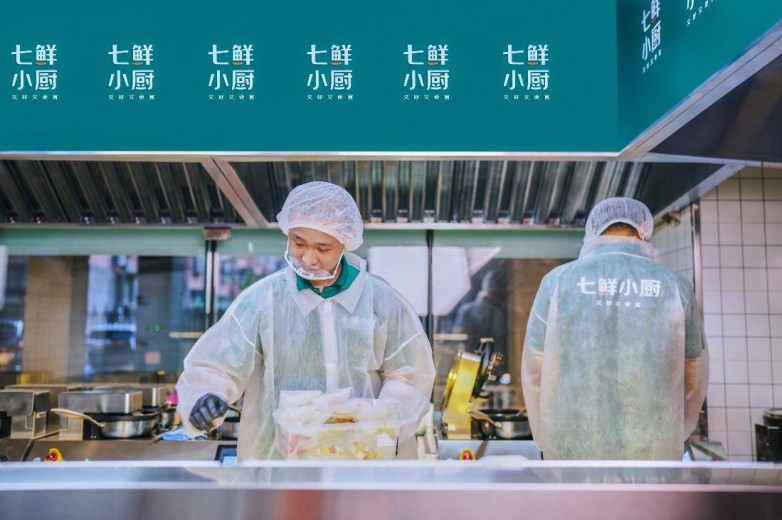
京东在北京上线自营无堂食外卖店,采用自炒自销自送模式
雷峰网· 2025-07-22 00:37
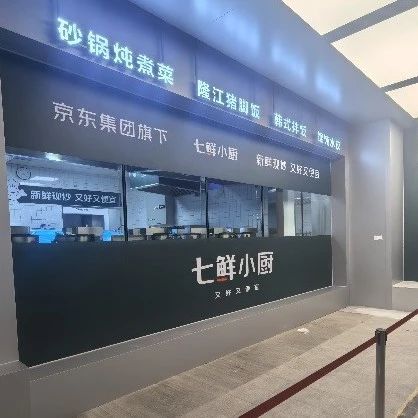
Core Viewpoint - JD.com has launched its first self-operated takeout store "Qixian Kitchen," which utilizes a robot cooking model and operates without dine-in options, indicating a potential shift in the takeout market dynamics [2][4]. Group 1: Store Launch and Operations - The first self-operated takeout store "Qixian Kitchen" opened recently in Beijing, combining takeout and self-pickup without dine-in facilities, with initial sales of 800 items within the first week [2]. - The average customer price at "Qixian Kitchen" is approximately 25-35 yuan, with promotional prices ranging from 15-20 yuan, currently only available on the JD.com platform [2]. - The store features a layout that separates the pickup areas for delivery personnel and customers, with no seating available for dining [2]. Group 2: Technology and Management - "Qixian Kitchen" employs a robot cooking model, which has faced operational challenges, including power outages that disrupt the cooking process, requiring staff to restart the preparation of dishes [4]. - The operations are managed by Guo Qing, who has been involved in the robot cooking sector since 2022, with his company "Xianglu Technology" receiving nearly 200 million yuan in strategic investment from JD.com [6]. - The business model of "Qixian Kitchen" is distinct from "Qixian Food Mall," as it is a self-operated kitchen that sources ingredients independently, while the latter operates as a third-party vendor model [6].
财经早报:中美元首是否会举行会晤?中方回应,A股两大指数创今年以来新高
Xin Lang Zheng Quan· 2025-07-21 23:38
Group 1 - The Chinese government has announced the implementation of the "Housing Rental Regulations" starting from September 15, 2025, aimed at regulating rental activities and promoting high-quality development in the housing rental market [3] - Central Huijin has invested 200 billion yuan in 10 broad-based ETFs in the second quarter, reinforcing its role in stabilizing the market [5] - The LPR (Loan Prime Rate) remains unchanged at 3.0% for one year and 3.5% for five years, indicating a stable monetary policy environment [6] Group 2 - A-share market indices have reached new highs this year, with significant increases in trading volume and a broad-based rally across various sectors, particularly in infrastructure and construction [8] - Public fund assets have surpassed 34 trillion yuan, reflecting increased investor confidence and a growing trust in the fund management industry [9] - Korean investors have significantly increased their investments in Chinese assets, with a total trading volume exceeding 5.4 billion USD (approximately 388 billion yuan) in the year to date [11] Group 3 - JD.com has made strategic investments in three leading companies in the robotics sector, indicating a strong focus on enhancing its capabilities in intelligent technology [15][16] - The stock of Dongfang Electric experienced an unusual surge of over 700% in early trading, attributed to both market speculation and significant project announcements [14] - The acquisition proposal by Alimentation Couche-Tard for Seven & i Holdings has been withdrawn, marking a significant development in the convenience store sector [17]