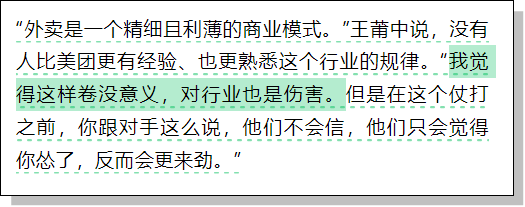
烧钱换市场

Search documents
硅鲸科技CEO赵绍辉:阿里 美团 京东 拼多多财报呈现“增收不增利”的共性特征
Sou Hu Cai Jing· 2025-09-08 02:25
Group 1 - The core viewpoint of the article discusses the competitive landscape of the food delivery market in 2025, focusing on the performance of four major retail e-commerce platforms: Alibaba, JD.com, Pinduoduo, and Meituan [1] Group 2 - Financial highlights and key indicators reveal that all four platforms exhibit a common trait of "increased revenue without increased profit," with significant differences in strategic direction and performance [8] - Alibaba's highlights include: - Instant retail revenue reaching 14.78 billion yuan, a 12% year-on-year increase, contributing to a 25% growth in monthly active users on the Taobao app, despite an expected loss of 22 billion yuan in instant e-commerce [8] - Cloud intelligence revenue of 33.398 billion yuan, a 26% year-on-year increase, with capital expenditure on AI rising 220% to 38 billion yuan [8] - International digital commerce group revenue of 34.741 billion yuan, a 19% year-on-year increase [8] - JD.com highlights include: - Revenue of 356.7 billion yuan, a 22% year-on-year increase [8] - Retail business revenue growth of 20.6%, achieving a new profit margin high during promotional seasons [8] - Daily order volume for food delivery surpassing 25 million, supported by 150,000 full-time delivery riders [8] - Meituan highlights include: - Revenue of 91.84 billion yuan, an 11.7% year-on-year increase [9] - Core local business revenue of 65.3 billion yuan, a 7.7% year-on-year increase, with annual user transaction frequency rising to 45 times [9] - New business revenue of 26.5 billion yuan, a 22.8% year-on-year increase [9] - Pinduoduo highlights include: - Revenue of 104 billion yuan, with growth slowing to 7% [9] - Initiatives like "2025 Duohuo Specialty Products" and "New Quality Merchant Support Plan" [9] - A model combining farmers, cooperatives, and e-commerce driving over 40% growth in agricultural product sales [9] Group 3 - The balance between short-term profits and long-term investments is crucial, with strategies including maintaining cash cow businesses, heavy investments in new growth engines, and setting loss limits for long-term innovations [10] - Corporate social responsibility and entrepreneurial spirit play a key role, as seen in JD.com's provision of social insurance for delivery workers and Pinduoduo's initiatives to support agricultural products [11] Group 4 - The industry is transitioning from a phase of "burning money for market share" to a focus on value creation, with a consensus on green consumption, smart technology, and experience upgrades by 2025 [12][13]


外卖大战后的首份财报:京东烧掉147亿
Sou Hu Cai Jing· 2025-08-16 09:36
Core Viewpoint - JD's second-quarter financial report highlights significant revenue growth but substantial losses in its new food delivery business, raising questions about the sustainability of its aggressive market expansion strategy [1][10][19]. Group 1: Financial Performance - JD's total revenue reached 356.7 billion yuan, marking a 22.4% increase, the highest growth rate in nearly three years [1]. - The net profit attributable to shareholders was only 6.2 billion yuan, a staggering 51% year-on-year decline [1]. - The retail business generated 310.1 billion yuan in revenue, a 20.6% increase, contributing nearly 87% of the group's total revenue [1][6]. Group 2: Losses in New Business - The food delivery segment incurred a loss of 14.7 billion yuan, averaging a loss of 5.6 yuan per order delivered [1][14]. - Despite the losses, the new business revenue surged by 199% year-on-year to 13.85 billion yuan, with daily order volume exceeding 25 million [12][14]. - The operational strategy involved high marketing costs, increasing from 4.1% to 7.6% of revenue, while R&D investment saw only a marginal increase [18]. Group 3: Market Strategy and Competition - JD's aggressive entry into the food delivery market included zero commission fees and substantial subsidies, leading to rapid market penetration [11][12]. - The competitive landscape is shifting, with JD's strategy facing scrutiny as it competes against Alibaba and Meituan, both of which are also incurring significant losses [21][27]. - The market is becoming increasingly cautious about the sustainability of "buying growth" through subsidies, as evidenced by a drop in JD's stock price following the earnings report [16][14]. Group 4: Long-term Outlook - JD's cash reserves stood at 223.4 billion yuan, providing a buffer for ongoing investments in new business ventures [7]. - The company is exploring differentiated models to address long-standing issues in the food delivery sector, such as food safety and quality [23]. - The financial report serves as a warning to the industry about the need for genuine value creation rather than merely inflating competition through unsustainable practices [27].
被外卖大战折磨的商家,不想干了
Hu Xiu· 2025-07-23 07:43
Core Viewpoint - The intense competition in the food delivery industry is being called to a halt due to irrational pricing strategies that harm the overall market and businesses involved [1][2][3][4]. Group 1: Industry Competition - The State Administration for Market Regulation has warned major food delivery platforms to engage in rational competition [2]. - The CEO of Meituan expressed that the ongoing price war is meaningless and detrimental to the industry, stating that most orders are "bubbles" [5][6]. - A significant influx of nearly 800 billion in subsidies from various platforms has created a festive atmosphere around low prices, leading to unsustainable competition [9][10]. Group 2: Impact on Small Businesses - The price war has severely affected the operational structure of many small businesses, with some reporting a drastic drop in customer traffic as consumers flock to subsidized delivery options [22][24]. - Small businesses are caught in a dilemma where they either participate in subsidy wars, which erodes their profit margins, or risk losing visibility and sales [32][33]. - Many small businesses are now forced to subsidize their own prices to remain competitive, which is not a sustainable solution [34][35]. Group 3: Consumer Behavior - Consumer demand for food is limited, and the influx of subsidies has shifted orders towards larger brands, leaving smaller businesses struggling [28][29]. - The perception of low prices due to subsidies may lead consumers to believe that normal prices are too high, further harming small businesses when subsidies end [87][90]. - The competition has created a scenario where consumers may enjoy short-term benefits, but the long-term implications could lead to reduced quality and fewer choices [89][90]. Group 4: Calls for Change - Various restaurant associations across multiple provinces have called for an end to irrational competition, highlighting the survival crisis faced by businesses due to excessive subsidies [58][59]. - Industry leaders have voiced concerns about the negative impact of the price war on profitability and the overall health of the restaurant sector [56][57]. - The need for rational pricing strategies and a focus on sustainable growth has been emphasized, as the current approach is deemed harmful to all parties involved [94][95].