
狼性文化

Search documents
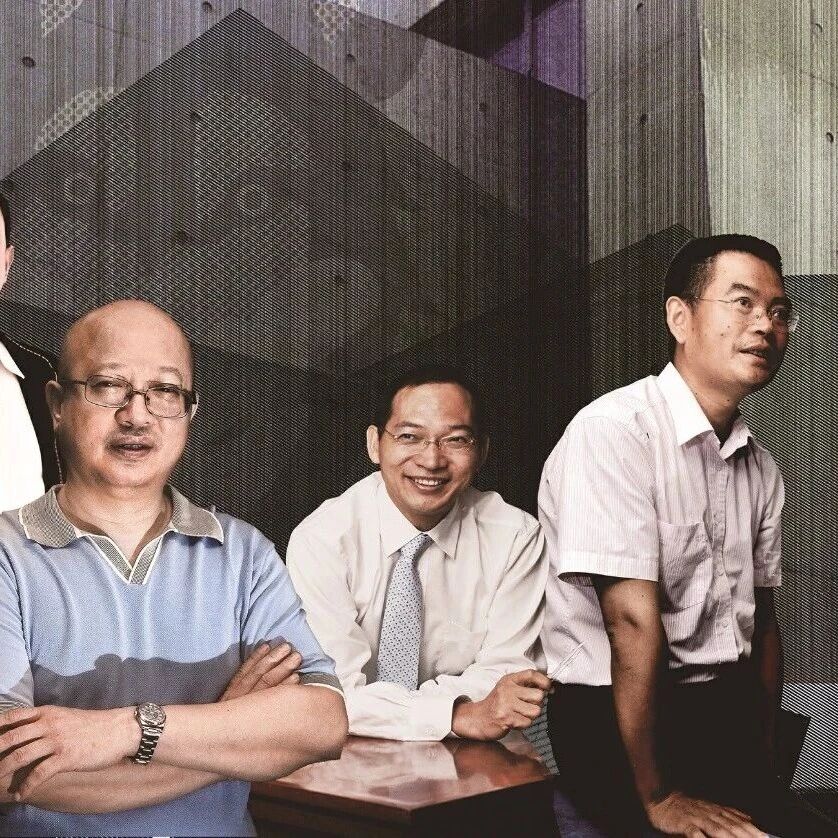
深圳创投帮:一群“土狼”的成长
创业家· 2026-02-28 10:28
Core Viewpoint - The article discusses the evolution and competitive strategies of local venture capital (VC) firms in Shenzhen, highlighting their unique approaches compared to foreign VC firms and the significant impact of historical and cultural factors on their development [3][5][39]. Group 1: Historical Context and Development - In 1999, Liu Zhou faced a decision on where to establish a new investment company, ultimately choosing Shenzhen due to its market potential and proximity to Hong Kong [3][4]. - By 2008, Shenzhen's venture capital firms, including Shenzhen Innovation Investment Group and Dacheng, ranked first and eighth respectively in China's VC landscape, surpassing many established foreign VCs [4][5]. - Today, over 200 VC firms are based in Shenzhen, accounting for one-third of the national market share, with significant participation in the first batch of companies applying for the Growth Enterprise Market [4][5]. Group 2: Competitive Strategies - Shenzhen's local VCs prefer investing in traditional enterprises with technological innovation capabilities, focusing on projects that drive domestic consumption, contrasting with foreign VCs that target high-tech startups [33][34]. - The investment philosophy of local VCs emphasizes patience and cost-effectiveness, often opting for lower P/E ratios compared to foreign counterparts [34][35]. - Local VCs employ a "wolf culture," characterized by teamwork and a focus on collective success rather than individual stardom, which is a departure from the celebrity-driven model of foreign VCs [36][39]. Group 3: Key Figures and Leadership - Wang Shouren, a prominent figure in Shenzhen's VC community, played a crucial role in advocating for the local VC ecosystem and was respected for his willingness to challenge government policies [2][39]. - Liu Zhou, the chairman of Dacheng, embodies the "hard-fighting" spirit of local VCs, emphasizing a strategic approach to investment that balances direction and cost [33][34]. - Jing Haitao, chairman of Shenzhen Innovation Investment Group, is recognized for his strategic vision and ability to navigate the complexities of managing a large investment team [18][22]. Group 4: Future Outlook - The future of Shenzhen's VC landscape will depend on the ability of firms like Shenzhen Innovation Investment Group to adapt to changing market conditions and government policies while maintaining a competitive edge [21][42]. - There is a growing recognition of the need for local VCs to develop their own identity and operational strategies that align with China's unique market environment [39][41].


国信证券往事:狼群消逝,大象无形
Xin Lang Cai Jing· 2026-01-26 01:28
Core Viewpoint - The article chronicles the evolution of Guosen Securities, highlighting its survival and growth amidst the turbulent history of China's securities industry, contrasting its journey with that of other firms that have failed or been absorbed. Group 1: Historical Context - In the early 1990s, Shenzhen was a hub of financial opportunity, with numerous securities firms emerging, including notable ones like Tequ Securities and Bank of China Securities [1][2] - Guosen Securities, originally known as Shenzhen International Trust Investment Company, faced near bankruptcy in 1987 but was revived under the leadership of Li Nanfeng [2][4] - Unlike its contemporaries, Guosen managed to survive the industry's consolidation and became a significant player after the separation of trust and securities in 1994 [4][24] Group 2: Leadership and Strategy - The transformation of Guosen into a national securities firm was spearheaded by Hu Guanjin in 1996, who implemented cost-cutting and revenue-generating strategies [6][25] - Hu Guanjin introduced a performance-based culture, including a "last place elimination" policy, which linked employee compensation to performance [7][26] - Hu Jizhi, who succeeded Hu Guanjin in 2002, further revolutionized the firm by adopting a "quasi-entrepreneurial" model, allowing each department to operate as an independent profit center [8][27] Group 3: Performance and Growth - By leveraging its 68 branches, Guosen achieved a top-five trading volume nationally, despite having significantly fewer branches than competitors like Galaxy Securities [8][27] - The firm was also a pioneer in offering high salaries to attract top talent, with a notable advertisement in 2004 offering a chief analyst position at an annual salary of 500,000 yuan [9][29][30] - This high compensation strategy attracted many leading analysts, rapidly enhancing Guosen's research capabilities [9][31] Group 4: Challenges and Ethical Concerns - The aggressive incentive structure turned Guosen into a "settlement center," where employees focused solely on personal financial gain, often at the expense of long-term company loyalty [13][34] - Following the implementation of the sponsorship system in 2004, Guosen expanded its investment banking division significantly, but this growth also led to ethical issues and scandals [15][36] - The firm faced significant challenges, including the tragic suicide of its CEO Chen Hongqiao in 2015, which highlighted the pressures within the industry [16][37] Group 5: Current Status and Industry Reflection - Guosen Securities has evolved into a large, stable state-owned enterprise, contrasting sharply with the once vibrant and competitive landscape of the 1990s [17][38] - The firm’s survival amidst the collapse of many competitors reflects a broader narrative of the Chinese securities industry's transformation from chaotic growth to regulated stability [18][38]
登味管理,正在杀死企业
投资界· 2026-01-25 08:11
Core Viewpoint - The article discusses the contrasting management styles in contemporary workplaces, highlighting the divide between genuine employee appreciation and hollow motivational rhetoric, termed "登味管理" (Dengwei Management) [4][5][10]. Group 1: Management Styles - Taylor Swift's distribution of $197 million in year-end bonuses to her tour team exemplifies a genuine appreciation for employees, acknowledging their contributions beyond just high-level management [2][3]. - In contrast, New Oriental's founder Yu Minhong's communication, which was perceived as disconnected and insincere, illustrates the pitfalls of "Dengwei Management," where management fails to resonate with employee realities [3][6]. Group 2: Generational Divide - The article identifies a generational gap in workplace values, with older managers often adhering to a "suffer now, succeed later" mentality, while younger employees prioritize meaningful work, autonomy, and work-life balance [8][9]. - A report indicates that by 2025, the percentage of employees voluntarily resigning is expected to rise to 21.13%, reflecting a shift in workforce attitudes towards job stability and satisfaction [8]. Group 3: Organizational Challenges - The article points out that many mid-level managers are stuck in their roles, unable to innovate or empower their teams, leading to a disconnect between management and the younger workforce [9][10]. - The reliance on outdated management philosophies, such as "KPI-driven" assessments, fails to address the needs and motivations of modern employees, who seek transparency and fairness [10][14]. Group 4: Solutions for Improvement - The article suggests that companies should shift from a focus on spiritual motivation to tangible rewards, as demonstrated by ByteDance's decision to significantly increase employee bonuses and salary structures [12][13]. - It advocates for a two-way empathetic communication approach, where management acknowledges employee challenges and fosters a culture of trust and collaboration [13][15]. - The establishment of performance systems that align employee growth with organizational development is essential for fostering a productive work environment [14][15].

永赢基金“新瓶装旧酒”,股权激励奖什么?
Xin Lang Cai Jing· 2025-12-08 03:09
Core Viewpoint - Yongying Fund has become the first bank-affiliated fund company to implement employee stock ownership incentives, reflecting its aggressive corporate culture and management approach [1][7]. Group 1: Employee Stock Ownership Incentives - Yongying Fund introduced employee stock ownership incentives, with three employee holding partnerships collectively owning 3.51% of the company [1][7]. - A total of 90 employees participated in the stock ownership plan, contributing a total of 100 million yuan [1][7]. - Key executives, including the chairman and general manager, invested significant amounts in the stock, indicating a potential for increased personal financial benefits through asset management expansion [1][7]. Group 2: Fund Performance and Strategy - Since 2025, the "Smart Selection" series of funds has seen a dramatic increase in scale, with a total growth of approximately 100 billion yuan in the first nine months of the year [2][10]. - The Yongying Technology Smart Selection fund, launched in October 2024, has achieved a net value growth rate of about 200%, with its scale increasing from 0.26 billion yuan to 11.52 billion yuan [2][10]. - The fund claims to focus on high-growth sectors like cloud computing and innovative pharmaceuticals, but it has been accused of violating performance benchmarks, leading to a "blind box" investment approach [2][10]. Group 3: Investment Risks and Concerns - The "Smart Selection" series is criticized for being a rebranded version of previous aggressive investment strategies, with significant deviations from performance benchmarks [3][11]. - The fund's high net value growth is seen as unsustainable, facing substantial mean reversion risks [4][12]. - Historical data indicates that funds with similar high returns often experience significant declines in subsequent years, raising concerns about the sustainability of Yongying Fund's performance [5][12]. Group 4: Corporate Culture and Ethical Concerns - The aggressive "wolf culture" within Yongying Fund is linked to distorted incentive mechanisms that prioritize rapid asset growth over long-term investor interests [6][13]. - The company’s approach may undermine the integrity of the fund management industry, as other firms may attempt to replicate its high-risk investment strategies [6][14]. - The leadership of Yongying Fund, despite their qualifications, has exposed investors to risks beyond what is stipulated in fund contracts, raising ethical questions about their practices [7][14].
姜海荣跨界出任深蓝汽车CEO 邓承浩:狼性文化让我们双向奔赴
Zhong Guo Jing Ji Wang· 2025-09-15 09:35
Core Insights - The appointment of Jiang Hairong as CEO of Deep Blue Automotive is seen as a significant step for the company, merging automotive and ICT thinking for future growth [1][2] - Jiang Hairong brings extensive experience from Huawei and Honor, which is expected to complement the existing leadership and enhance market competitiveness [2][3] Leadership Transition - Jiang Hairong officially joined Deep Blue Automotive as CEO on September 8, marking a new chapter for the company [1] - His background includes over 20 years in the technology sector, with roles in product development and marketing, making him a valuable asset for Deep Blue [2] - The leadership believes that Jiang's experience in both domestic and international markets will provide a strategic advantage [2][3] Strategic Vision - Deep Blue aims to leverage Jiang's expertise to enhance its product experience and market presence, both in China and globally [1][6] - The company has set ambitious sales targets, aiming for over 300,000 units this year and 2 million units by 2030 as part of the broader Changan Group goal of 5 million units [6][7] Cultural Alignment - The leadership emphasizes a shared "wolf culture" between Deep Blue and Huawei, which is characterized by competitiveness and a strong drive for success [3][4] - Trust and collaboration are highlighted as essential components for achieving the company's goals, with a focus on mutual support within the team [3][4] Brand Development - Deep Blue aims to establish itself as a trusted brand, moving from initial market recognition to a more substantial presence [7][8] - The company plans to adopt a systematic approach to global expansion, leveraging Jiang's previous experience in international marketing [7][8] - The focus will be on delivering differentiated products that resonate with consumers, ensuring that the brand is perceived positively in the market [8]