
电动车普及

Search documents
美股异动 | 宣布10亿美元股票回购计划 理想汽车(LI.US)开盘涨超5%
智通财经网· 2026-03-24 14:07AI Processing
智通财经APP获悉,周二,理想汽车(LI.US)开盘涨超5%,报17.98美元。消息面上,3月24日,理想汽 车宣布董事会已批准一项股份回购计划,公司获授权在批准日期起至2027年3月31日期间,购买最高10 亿美元的A类普通股和/或美国存托股。 此外,日内国际油价再度上涨,布伦特原油期货大涨超4%,报99.85美元。高盛分析师指出,油价上涨 将加速全球市场电动车的普及,同时锂价下行持续改善电池经济性和定价竞争力。 ...

26年锂电需求展望-超预期之详细拆解2026年欧洲电车需求
2026-01-08 16:02
Summary of Key Points from Conference Call Records Industry Overview: Lithium Battery and Electric Vehicle Market Global Electric Vehicle Sales Forecast - In 2025, global electric vehicle (EV) sales are expected to reach 29.076 million units, representing a year-on-year growth of 33% with a penetration rate of approximately 30% [5] - The second half of 2025 is projected to see growth rates exceeding 30%, with December potentially surpassing 40% [5] - By 2027, global EV sales are anticipated to grow by 13% to 15%, with an increase in battery capacity per vehicle of about 17% [3] European Market Dynamics - European countries are actively promoting EV adoption through subsidies, with major markets like the UK, France, Germany, and Spain covering over 70% of sales [6] - The expected growth in the European commercial vehicle segment is conservatively estimated at 25%, while passenger vehicles are projected to grow by 29%, corresponding to an increase of 70 GWh in battery demand [3] Key Players and New Models - Major automotive manufacturers such as BMW, Volkswagen, and Stellantis are set to launch new platforms and models in 2027, which are expected to contribute an additional 5.5% to sales growth, equating to over 250,000 units [7] - BYD's factory in Hungary is also expected to drive significant sales growth [7] Lithium Battery Supply Chain Growth - The European lithium battery supply chain is projected to grow by over 29% in 2027, driven by the adoption of 800V high-voltage architectures and increased use of lithium iron phosphate batteries [9] - The production ramp-up at the Hungarian factory will further support this growth [9] Market Demand and Supply Insights Current Demand for Lithium and Materials - The demand for lithium and materials is currently very strong, particularly in the energy storage sector, with estimates ranging from 900 to over 1,000 GWh [2] - Despite domestic subsidy policies, the overall vehicle prices are high, which may lead to a slight decline in sales growth for power batteries [2] Supply Chain Challenges - Supply chain bottlenecks, particularly in lithium hexafluorophosphate and lithium carbonate, may lead to tight supply-demand conditions [3][12] - The global lithium battery market is expected to grow by approximately 33% to reach 2.8 TWh by 2027, with optimistic scenarios suggesting growth could reach 40% [3][12] Investment Opportunities and Risks Focus Areas for Investment - Attention is recommended on lithium carbonate and lithium hexafluorophosphate segments, which are expected to see high capacity utilization rates and significant price increases [3][13] - Key material companies such as those producing lithium iron phosphate, anode materials, separators, copper foil, and aluminum foil are considered attractive for investment due to their valuation potential [3][13] Price Transmission and Profitability - The battery industry is expected to maintain profitability through price linkage mechanisms with downstream customers, despite potential material cost increases [14][16] - Companies like CATL are focusing on supply chain stability to ensure long-term profitability rather than short-term gains [14] Future Market Growth Expectations - The energy storage market is anticipated to experience strong growth, with a projected demand increase of approximately 2,800 GWh in 2027, representing a year-on-year growth of 36% [20] - The European market is expected to see a conservative growth rate of 30%, translating to an additional 70 GWh in battery demand [20] Conclusion - The overall outlook for the lithium battery and electric vehicle market remains positive, with significant growth opportunities driven by technological advancements, supportive government policies, and increasing consumer demand for electric vehicles and energy storage solutions.
中国科技产业集团将为霆晞提供EPC服务 以建造电动车充电设施
Zhi Tong Cai Jing· 2025-11-24 12:36
Core Viewpoint - The company has entered into a contract to provide EPC services for the construction of electric vehicle charging facilities, marking a strategic expansion into the Hong Kong EPC services industry, which is identified as a key growth area due to its significant potential and synergy with existing operations in the renewable energy sector [1][2]. Group 1 - The contract is established between China Technology Industry Investment and Tingxi for the provision of EPC services to build electric vehicle charging facilities in Kwun Tong, Hong Kong [1]. - The scope of the EPC services includes design, construction, and installation, with responsibilities such as site engineering design, provision of technical documents, compliance with safety and regulatory standards, and progress reporting [1]. - This contract signifies a strategic move to formalize EPC services as a core business segment, diversifying and strengthening the company's financial revenue base [2]. Group 2 - The company recognizes the Hong Kong EPC services industry as a primary area for expansion due to its growth potential and alignment with the company's existing renewable energy operations [2]. - The timing of this expansion is opportune, capitalizing on the increasing popularity of electric vehicles, which drives substantial demand for related infrastructure, including charging facilities [2].
通用汽车因调整电动车计划计提16亿美元费用
Ge Long Hui A P P· 2025-10-14 10:48
Core Viewpoint - General Motors (GM) will incur a $1.6 billion charge due to adjustments in its electric vehicle (EV) production plans, which includes approximately $1.2 billion in non-cash impairment and other costs related to capacity adjustments [1] Financial Impact - The $1.6 billion charge consists of about $1.2 billion in non-cash impairment and other expenses, primarily due to adjustments in EV production capacity [1] - The remaining portion of the charge relates to contract cancellation costs and commercial settlements associated with EV investments, which will have a direct impact on cash flow [1] Policy Changes - The recent cancellation of EV tax credits by the Trump administration and the relaxation of fuel economy and emissions standards have led automakers to favor the sale of more profitable gasoline vehicles, resulting in a reduction in EV production [1] - GM anticipates that the pace of EV adoption will slow down due to recent changes in U.S. government policies, including the termination of certain consumer tax incentives for EV purchases and the loosening of emissions standards [1]

寸土寸金的香港:油车是“重奢”,电车则属“轻奢”|记者观察
Di Yi Cai Jing Zi Xun· 2025-10-12 15:13
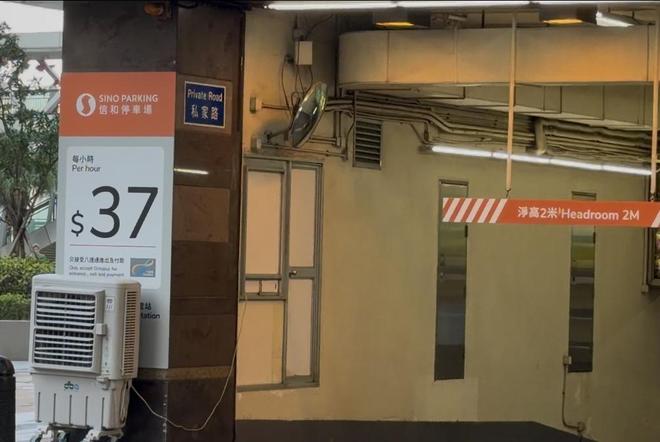
Core Viewpoint - The high costs associated with owning and operating a car in Hong Kong make it a luxury choice, leading to a low vehicle ownership rate despite the presence of electric vehicles gaining popularity [1][3][5]. Summary by Sections Transportation Costs - Public transportation in Hong Kong is highly developed, making car ownership less appealing due to high costs associated with parking, fuel, and vehicle purchase [1]. - Parking costs in Hong Kong range from 30 to 40 HKD per hour, while fuel prices are stable at 27 to 30 HKD per liter, resulting in a fuel cost of 270 to 300 HKD for every 100 kilometers driven [1]. Vehicle Purchase Costs - The first registration tax for purchasing a vehicle in Hong Kong is significantly high, with rates escalating based on the vehicle's taxable value. For example, a vehicle priced at 300,000 HKD incurs a tax of approximately 198,000 HKD, making the total cost nearly 1 million HKD [3][5]. - The tax structure is as follows: 46% for the first 150,000 HKD, 86% for the next 150,000 HKD, 115% for the next 200,000 HKD, and 132% for any amount exceeding 500,000 HKD [5]. Electric Vehicle Market - Despite the high costs of traditional fuel vehicles, electric vehicles (EVs) are becoming increasingly popular in Hong Kong, with brands like Tesla and BYD leading the market. BYD surpassed Tesla in sales in the first half of 2025, with a total of 18,356 registered electric private cars, achieving a penetration rate of 68.6% [5][6]. - The Hong Kong government is actively promoting EV adoption through tax incentives, including a two-year extension of the first registration tax reduction for electric vehicles until March 31, 2026 [6]. Tax Incentives and Policies - The new tax reduction rules for electric vehicles include a cap on the maximum tax reduction amount, which has been lowered for general electric vehicle owners and those participating in the "one-for-one" program [6]. - The "one-for-one" program allows owners to scrap an old vehicle to receive a tax reduction on a new electric vehicle, with specific eligibility criteria that must be met [6][7]. Charging Costs - Electric vehicles also benefit from lower operational costs, with charging fees in Hong Kong being competitive. Charging can be billed at 30 HKD per hour or at a rate of 3 HKD per kilowatt-hour at fast charging stations [9].



韩电动汽车注册量创新高
Shang Wu Bu Wang Zhan· 2025-10-09 16:55
Core Insights - In August 2023, South Korea registered 126,800 new vehicles, with electric vehicles (EVs) accounting for 23,300 units, representing a record high of 18.4% of total new car sales [1] - The cumulative market share of EVs from January to August 2023 reached 12.7%, with expectations for the annual share to exceed 10% for the first time [1] - The market share of EVs was only 2.4% in 2020, and it has shown a significant upward trend in 2023, contrasting with the stable rates of around 9% in 2023 and 2024 [1] Electric Vehicle Market Dynamics - The imported vehicle market shows even higher enthusiasm for EVs, with 10,900 imported EVs registered in August, making up 39.9% of total imports, which is four times that of gasoline vehicles [1] - Since May 2023, the share of imported EVs has rapidly increased, reaching 32.8% in June and 37.6% in July, with a cumulative share of 27.8% for the year [1] - Industry experts believe that the South Korean EV market is moving beyond the "gulf period," with total sales expected to surpass 200,000 units for the first time, as 142,000 units have already been registered from January to August [1] Competitive Landscape - The entry of emerging brands like China's BYD is increasing the supply of high-cost performance models in the market [1] - Experts indicate that the introduction of new models and competitive pricing are accelerating the adoption of EVs in South Korea, aligning with trends observed in the European market [1]
2025年上半年英国电动汽车销量同比增长了三分之一
Shang Wu Bu Wang Zhan· 2025-07-10 16:03
Group 1 - UK electric vehicle sales increased by 34.6% in the first half of 2025, reaching 224,838 units [1] - Overall new car sales in June rose by 6.8% year-on-year, totaling 191,200 units, marking the highest level since pre-COVID-19 [1] - Approximately one-quarter of new cars sold in June were electric vehicles, with nearly 47,400 units sold [1] Group 2 - Electric vehicle sales accounted for 21.6% of all new car sales in 2025, below the government target of 28% [2] - The demand for electric vans surged, with sales increasing by 50% in the first half of 2025, meaning one in ten vans sold is electric [2] - The market is entering a new phase of electric vehicle adoption, driven by better performance and lower prices [2]