盈利优先

Search documents
福特汽车2025年净亏损超81亿美元,电动化战略全面调整
Ju Chao Zi Xun· 2026-02-12 10:18
Core Insights - Ford reported a total revenue of $187.3 billion for the year 2025, a slight increase of 1.23% year-on-year, marking five consecutive years of revenue growth. However, the company faced a net loss of $8.182 billion for the year, with a significant quarterly net loss of $11.1 billion in Q4 [2] - The primary reasons for the substantial losses were the ongoing challenges in the electrification business and costs associated with strategic adjustments. The electric vehicle division incurred a loss of $4.8 billion in 2025, with cumulative losses exceeding $10 billion. The company also recorded a special project expense of $19.5 billion, primarily accounted for in Q4 [2] - Additional cost pressures arose from a production accident at an aluminum supplier, leading to increased costs for core models, along with $2 billion in extra tariff expenses, further compressing profit margins [2] Business Strategy - In response to the financial challenges, Ford announced the cessation of production for certain all-electric models, reallocating resources towards hybrid and extended-range vehicles, while also developing smaller all-electric products that better meet market demand [2] - The company aims to strengthen its traditional business segments, with the fuel and hybrid business and commercial vehicle sector expected to remain profitable in 2025, serving as crucial support for overall performance. Notably, hybrid vehicle sales increased by over 20% year-on-year, and the commercial vehicle segment achieved a profit margin of 10.3% [2] Future Outlook - Ford's management has emphasized a profit-first strategy moving forward, anticipating that the electric vehicle business will continue to experience short-term losses, but the scale of these losses is expected to gradually narrow. By 2026, adjusted EBIT is projected to rebound to between $8 billion and $10 billion [3] - The company is also exploring new revenue streams in battery storage and is restructuring its existing electric vehicle battery factories to accommodate the storage business, aiming to shift from a focus on scale expansion to quality growth [3]



盒马关闭会员店,开始面对新对手
Hua Er Jie Jian Wen· 2025-08-06 02:43
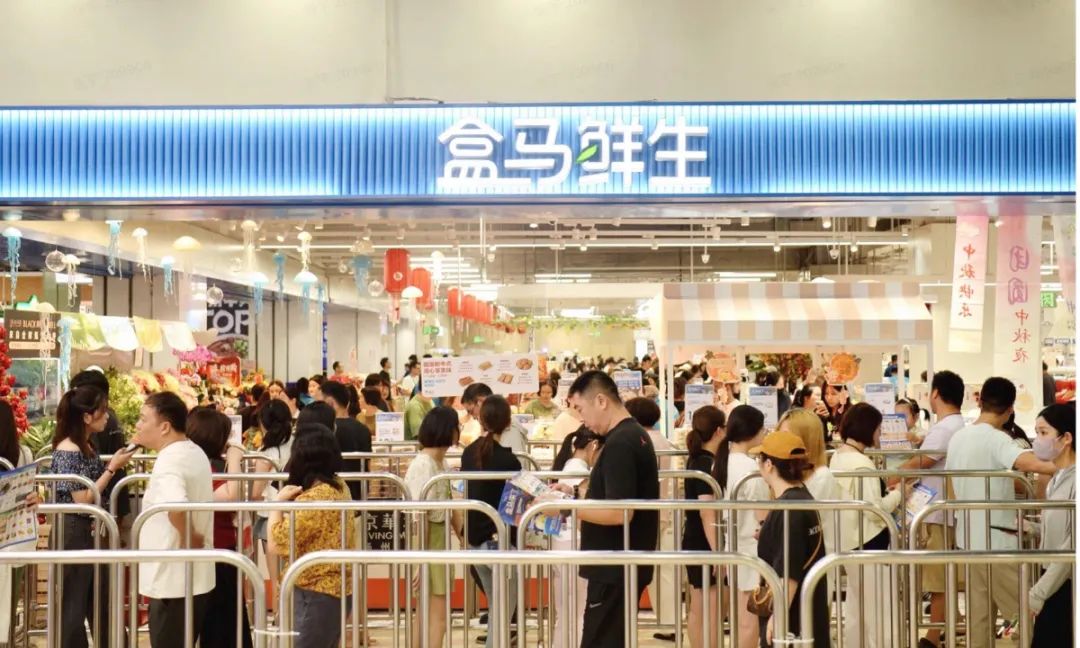
Core Insights - Hema has decided to abandon its membership store model after five years of trials, with multiple locations closing down by the end of August 2023, marking the end of Hema X membership stores [2][5] - The strategic shift focuses on Hema Fresh and Hema NB (neighborhood business) as the two core business lines moving forward [2][7] Group 1: Strategic Shift - The closure of Hema X membership stores is a result of Hema's strategic focus, as the company aims to concentrate on its core businesses amidst increasing competition in the fresh food sector [3][4] - Hema's membership store journey began in October 2020, with ambitious plans to open 100 stores within three years, but faced challenges due to a lack of differentiation and high operational costs [5][6] Group 2: Competitive Landscape - Hema's competitors are increasingly focusing on instant retail and fresh food, leading to a need for Hema to leverage its group resources to enhance competitiveness [4][12] - The integration of Hema into Alibaba's new membership system, which connects various services, is expected to provide Hema with a significant potential customer base [10][11] Group 3: Business Performance - Hema's membership stores peaked with 10 locations and over 3 million paid members, generating nearly 600 million yuan in annual revenue, but the model struggled with profitability [5][7] - The new strategy under CEO Yan Xiaolei emphasizes profitability, with projections indicating Hema's GMV could reach 75 billion yuan in the 2025 fiscal year, marking its first year of overall profitability [7][14] Group 4: Future Directions - Hema plans to open 72 new Hema Fresh stores in 21 cities in 2024, with an additional 100 stores planned for 2025, focusing on enhancing its fresh food offerings [8][9] - Hema NB stores, characterized by smaller sizes and lower prices, are positioned to penetrate community markets effectively, with 216 locations already established by March 2025 [8][9]

十岁盒马,开始赚钱
3 6 Ke· 2025-04-22 12:24
Core Insights - Hema has achieved its first annual profitability since its establishment, marking a significant milestone for the company [2][3] - The company plans to open nearly 100 new Hema Fresh stores in the upcoming fiscal year, indicating a strong focus on expansion [6][18] - Hema's business structure has been streamlined into four core segments, enhancing decision-making efficiency [2][15] Financial Performance - Hema reported a total transaction volume of 59 billion yuan for the 2024 fiscal year, a notable increase from 55 billion yuan in the previous year, with online transactions contributing over 63% to GMV [5] - The company experienced a customer growth rate exceeding 50% and achieved double-digit growth after nine consecutive months of profitability [4][12] Strategic Focus - Under the leadership of new CEO Yan Xiaolei, Hema has shifted its strategy from "model exploration" to "profitability first," focusing on two core business models: Hema Fresh and Hema NB [3][9][11] - Hema is actively enhancing its product offerings and supply chain capabilities, including the introduction of private label products and improvements in logistics [13] Market Expansion - Hema is targeting the lower-tier market, having entered 21 new cities and regions in the past year, with a focus on areas with strong consumer purchasing power [18][19] - The company is adapting its strategies to meet the unique challenges of the lower-tier market, including price sensitivity and varying consumer habits [19]