
科学家红利

Search documents
从“工程师红利”到“科学家红利”,双重优势如何助力中国制造出海
第一财经· 2026-03-10 15:39
Core Viewpoint - China is transitioning from an "engineer dividend" to a "scientist dividend," indicating a shift towards advanced technology and innovation in various industries, particularly in biopharmaceuticals and shipbuilding [3]. Group 1: Biopharmaceuticals - The revenue from technology licensing in China's biopharmaceutical and gene pharmaceutical sectors reached $135 billion in the previous year, showcasing significant growth from a focus on raw materials and generic drugs [3]. - A major report on liver cancer prevention and treatment, led by Chinese scholars, was published in The Lancet, marking a historic achievement for Chinese research in global health [7]. Group 2: Shipbuilding Industry - Chinese shipbuilders, particularly Hudong-Zhonghua, have gained international orders due to superior technology and quality, with a strategic focus on high-value ship types like LNG carriers and ultra-large container ships [4]. - In 2025, China is projected to complete 53.69 million deadweight tons of shipbuilding, accounting for 56.1% of the global total, with new orders reaching 107.82 million deadweight tons, representing 69.0% of the global market [5]. - The market share of Chinese shipbuilders in the LNG sector has improved significantly, with the ratio of Chinese to Korean market share narrowing from 1:9 to 3:7 [4]. Group 3: Nuclear Energy - China has developed a fifth-generation nuclear energy system, termed "Chinese Hedianbao," which has been recognized internationally and is characterized by its small size, modularity, and long-term stable operation [7][8]. - The "nuclear treasure" technology is expected to play a crucial role in providing stable, low-carbon power for various applications, including remote areas and high-load computing centers, highlighting its potential in international markets [8].


外资巨头,深挖中国科技股
Shang Hai Zheng Quan Bao· 2026-01-25 05:34
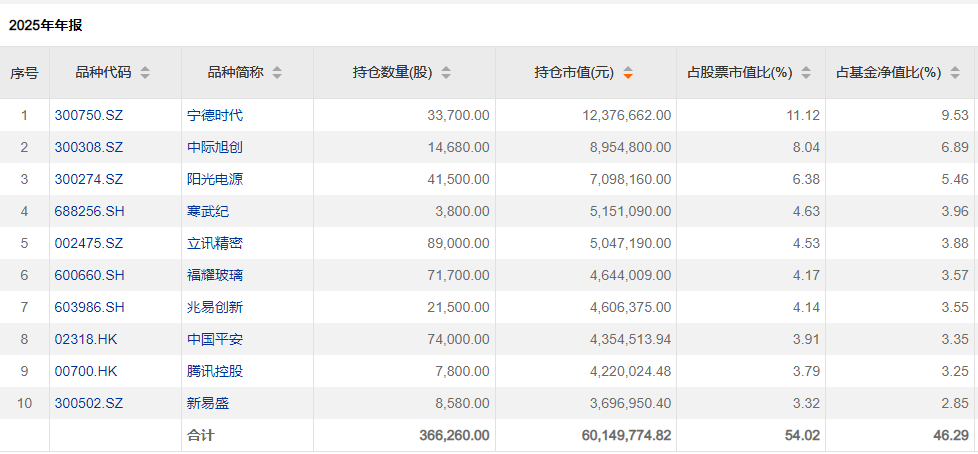
Group 1 - The core viewpoint of the articles indicates that foreign public funds are optimistic about the Chinese stock market, particularly in the technology sector, which is expected to undergo a historical value reassessment by 2026, potentially generating excess returns [1][7][10] - Since 2025, the A-share market has shown resilience, with the Shanghai Composite Index stabilizing around 4100 points, and several foreign public fund products have reported significant performance, with net value increases exceeding 50% for multiple funds [3][8] - Foreign public funds have focused their investments on high-quality technology assets, with notable holdings in leading Chinese tech companies such as Tencent, Zhongji Xuchuang, and Han's Laser [3][4][5] Group 2 - Fund managers from various foreign public funds have expressed a commitment to maintaining a high equity position, focusing on growth-oriented investment opportunities in sectors like high-end manufacturing, electric vehicles, and AI technology [5][6] - The outlook for the A-share market in 2026 is positive, with fund managers highlighting the significant allocation value of Chinese stocks compared to RMB bonds, suggesting a continued overweight in equities [8][10] - There is a consensus among fund managers that high-quality technology assets are likely to continue yielding excess returns, with a focus on sectors benefiting from innovation and structural changes in the economy [9][10]






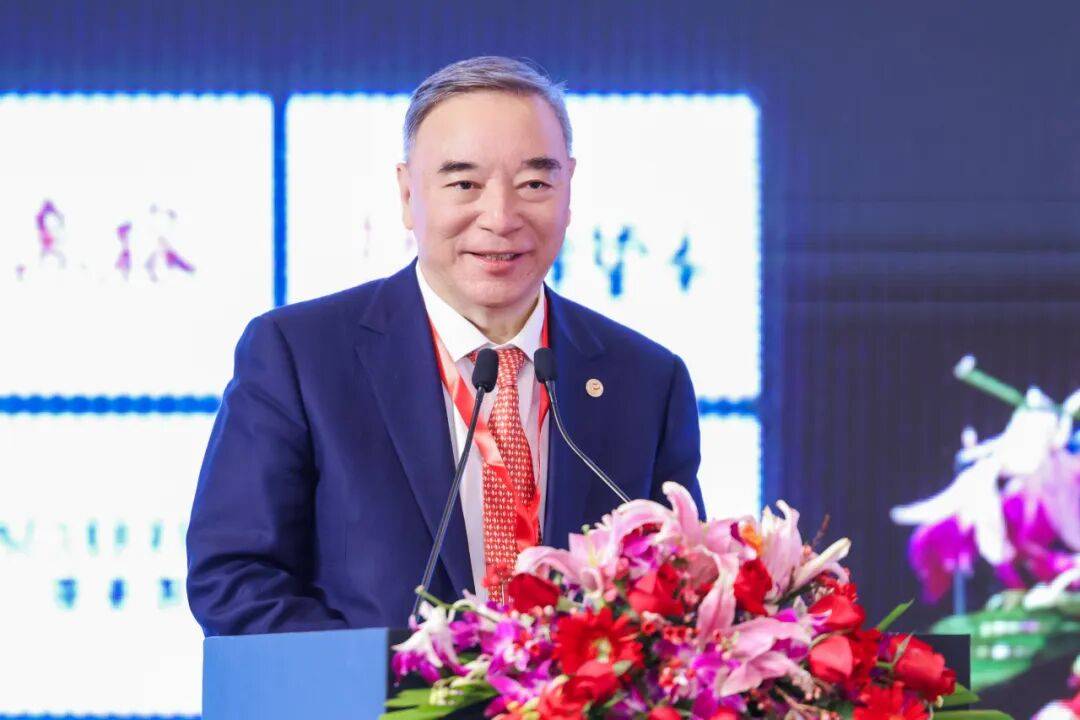
宋志平:建设市场新蓝海
Sou Hu Cai Jing· 2026-01-19 12:42
Core Insights - The article discusses the challenges faced by Chinese enterprises in a highly competitive environment characterized by "involution," where companies engage in excessive competition leading to diminished profits and innovation [1][3][4] - It emphasizes the need for businesses to focus on micro-management and understanding the essence of operations to thrive in a new economic normal [1][4] Group 1: Involution and Competition - "Involution" is a significant issue across various industries in China, driven by factors such as globalization setbacks, technological shifts, and deep structural adjustments in the domestic economy [3][4] - The article highlights that many companies are trapped in homogeneous competition, leading to price wars that erode profit margins and stifle innovation [3][4] Group 2: Case Studies and Strategies - The case of Shandong Luhua Group is presented as a model for breaking through involution by focusing on product differentiation rather than price competition, achieving nearly 20 billion yuan in revenue and 2.7 billion yuan in profit in 2023 [6][7] - Luhua's strategy includes maintaining high product quality and respecting upstream suppliers, which fosters a sustainable industry ecosystem [7] Group 3: Policy and Industry Transformation - The Chinese electrolytic aluminum industry serves as an example of successful transformation through government intervention, where a production capacity ceiling was set at 45 million tons, leading to increased profits and a healthier market [9][10] - The article notes that from 2017 to 2024, the industry's total profit is expected to approach 100 billion yuan, demonstrating the effectiveness of macroeconomic regulation [10] Group 4: Mergers and Industry Consolidation - Historical examples from Japan's cement industry illustrate how government-led consolidation can effectively address overcapacity, resulting in a stable market with three major players maintaining reasonable pricing [12][13] - The article discusses how the Chinese cement industry underwent a similar consolidation under the leadership of Song Zhiping, leading to significant profit increases from 20-30 billion yuan to over 150 billion yuan between 2018 and 2021 [13] Group 5: Future Economic Strategies - Song Zhiping proposes five rules for constructing a new economic blue ocean in China, emphasizing the importance of industry self-regulation, consolidation, capacity reduction, pricing strategies, and innovation [15][16][17][18][19] - The article highlights the shift from "engineer dividends" to "scientist dividends," indicating a new era of innovation driven by returning talent and enhanced domestic research capabilities [15] Group 6: Conclusion - The article concludes with the notion that effective management and a focus on value creation are essential for long-term sustainability in the face of increasing global uncertainties [23]
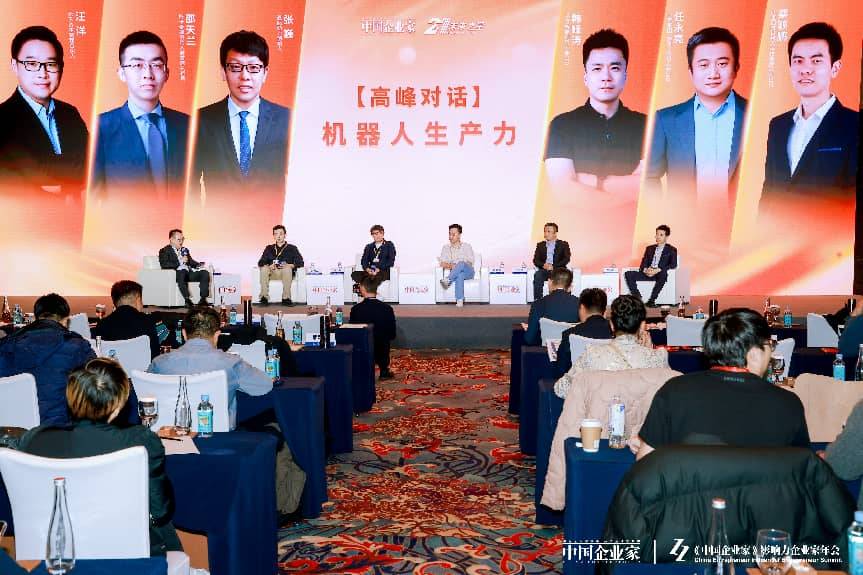
《中国企业家》2025影响力企业家年会,心言集团任永亮聚焦机器人产业的“情感价值”新机遇
Sou Hu Cai Jing· 2025-12-19 02:01
Core Insights - The article discusses the participation of Ren Yongliang, founder and CEO of Xinyan Group, at the 2025 Influence Entrepreneur Annual Conference, focusing on the development of embodied intelligence technology and its commercial application in robotics [1][8] - Xinyan Group has been a pioneer in the AI emotional companionship sector since its establishment in 2011, providing online psychological services to over 55 million users through the "Cecy" app [3][4] - Ren emphasizes the shift in productivity definition from efficiency to research, creativity, and innovation, highlighting the role of emotional robots in fostering curiosity and supporting children's development [3][4] Company Overview - Xinyan Group launched its self-developed "Xinyuan Model" in May 2024, which has been approved for use in the emotional guidance and companionship sector, marking a significant milestone in the industry [3][4] - The company has developed various AI-driven services, including "Companion Xiaoxing" and "AI Mood Town," leveraging daily emotional data to enhance empathy and user experience [6][8] - Xinyan Group holds numerous qualifications, including being a national high-tech enterprise, with 51 patents and extensive intellectual property rights, indicating its strong position in the market [7] Industry Insights - Ren identifies the challenge of commercializing robotics, particularly the distinction between "hands-on" and "talking" robots, suggesting that talking robots are more likely to achieve market readiness in the near term [4][6] - The relationship between general and specialized robots is characterized by coexistence and competition, with specialized products finding unique survival paths despite the encroachment of general products [7] - The company is exploring the "embodiment" of psychological services, aiming for AI emotional companionship robots to evolve into family members with independent awareness and proactive interaction capabilities [8]

受益全球资本再平衡 中国资产重估正当时
Zhong Guo Zheng Quan Bao· 2025-07-27 21:07
Group 1: Market Overview - The global capital rebalancing trend is shifting from US stocks to non-US markets, creating a significant window for value reassessment in A-shares and Hong Kong stocks [1][4] - As of July 15, 2023, Korean investors have traded over $5.4 billion in Chinese mainland and Hong Kong stocks, making China the second-largest overseas investment destination for them, following the US [4][5] Group 2: Investment Strategy - The investment strategy of Fidelity Fund, led by Zhang Xiaomu, focuses on growth stocks, particularly in sectors benefiting from global capital rebalancing and China's economic transformation [1][2] - Zhang Xiaomu's internal assessment in August 2022 deemed A-shares as "gold mines," leading to a strategic shift from value stocks to growth stocks in the Fidelity fund portfolio [2][3] Group 3: Performance Metrics - Fidelity Fund's equity products achieved a return of 12.24% in the first half of 2023, ranking first among foreign public funds and within the top 10 in the overall market [1][2] Group 4: Sector Focus - Zhang Xiaomu emphasizes the "one super three strong" investment direction, identifying artificial intelligence as the super track, alongside aerospace, low-altitude economy, and innovative consumption as key sectors [1][7] - The current valuation of the Hong Kong market, with a price-to-earnings ratio just above 10, presents a significant advantage compared to other major markets, indicating a favorable investment environment [6] Group 5: Future Outlook - The market is expected to maintain a growth-oriented trend, with a focus on sectors that align with China's economic transformation and innovation [7][8] - The "engineer dividend" and "scientist dividend" are anticipated to drive China's global competitiveness, presenting investment opportunities in innovative sectors [8]