
纳米银

Search documents
欧菲光涨2.08%,成交额6.21亿元,主力资金净流入3954.87万元
Xin Lang Zheng Quan· 2026-01-23 05:09
Core Viewpoint - O-film Technology Co., Ltd. has shown fluctuations in stock performance, with a recent increase of 2.08% in midday trading, while facing challenges in profitability and shareholder dynamics [1][2]. Company Overview - O-film Technology, established on March 12, 2001, and listed on August 3, 2010, is based in Shenzhen, Guangdong Province. The company specializes in optical imaging modules, optical lenses, microelectronics, and products related to smart vehicles, primarily serving the consumer electronics and smart automotive sectors [1]. - The revenue composition of O-film includes 75.60% from smartphone products, 12.83% from smart automotive products, 11.23% from new field products, and 0.33% from other sources [1]. Stock Performance - As of January 23, O-film's stock price is reported at 10.82 CNY per share, with a market capitalization of 36.363 billion CNY. The stock has increased by 1.88% year-to-date but has seen a decline of 1.64% over the past five trading days and a 9.23% drop over the last 60 days [1]. - The trading volume on January 23 reached 621 million CNY, with a turnover rate of 1.75% [1]. Financial Performance - For the period from January to September 2025, O-film reported a revenue of 15.816 billion CNY, reflecting a year-on-year growth of 9.29%. However, the net profit attributable to shareholders was -68.0486 million CNY, indicating a significant decline of 244.42% compared to the previous year [2]. - The company has distributed a total of 648 million CNY in dividends since its A-share listing, with no dividends paid in the last three years [2]. Shareholder Dynamics - As of January 9, 2025, O-film had 495,300 shareholders, a decrease of 0.78% from the previous period. The average number of circulating shares per shareholder increased by 0.78% to 6,694 shares [2]. - Notable changes in institutional holdings include an increase in shares held by Hong Kong Central Clearing Limited and a decrease in holdings by several ETFs [2].

商业航天、卫星互联网等概念走强 104股获主力资金净流入超1亿元
Zheng Quan Shi Bao Wang· 2025-12-25 02:55
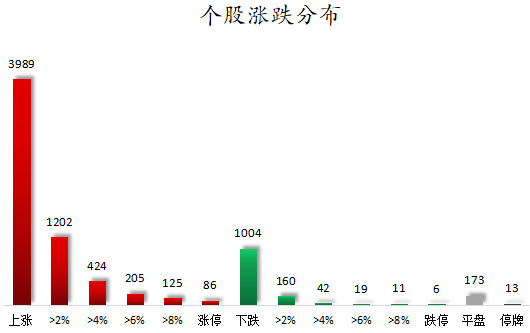
Market Overview - The Shanghai Composite Index closed at 3940.95 points, up 0.53%, with a trading volume of 773.9 billion yuan [1] - The Shenzhen Component Index closed at 13486.42 points, up 0.88%, with a trading volume of 1106.34 billion yuan [1] - The ChiNext Index closed at 3229.58 points, up 0.77%, with a trading volume of 508.985 billion yuan [1] - The STAR 50 Index closed at 1352.13 points, up 0.9%, with a trading volume of 51.1 billion yuan [1] - The total trading volume of both markets was 1880.24 billion yuan, a decrease of 19.647 billion yuan compared to the previous trading day [1] Sector Performance - Strong sectors included defense, electronics, construction materials, light industry manufacturing, machinery, environmental protection, chemicals, and computers [2] - Active concepts included commercial aerospace, satellite internet, 6G, nano-silver, passive components, space stations, PCB, and nuclear pollution prevention [2] - Weak sectors included agriculture, precious metals, coal, insurance, and banking [2] Stock Performance - A total of 3989 stocks rose, while 1004 stocks fell, with 173 stocks remaining flat and 13 stocks suspended [2] - 86 stocks hit the daily limit up, while 6 stocks hit the daily limit down [2] Capital Flow - The net inflow of main funds in the Shanghai and Shenzhen markets was 0.381 billion yuan, with the ChiNext seeing a net inflow of 0.512 billion yuan [5] - The Shanghai and Shenzhen 300 index experienced a net outflow of 3.272 billion yuan, while the STAR market saw a net outflow of 1.448 billion yuan [5] - The electronics sector had the highest net inflow of main funds, amounting to 4.916 billion yuan [5] Individual Stock Highlights - 104 stocks saw a net inflow of over 1 billion yuan, with Demingli leading at 0.955 billion yuan [6][8] - Other notable stocks with significant net inflows included Tianji Shares, Dongshan Precision, and ZTE [6][8] - 73 stocks experienced a net outflow of over 1 billion yuan, with Xinyi Sheng leading at 0.928 billion yuan [10][11] Institutional Activity - Institutions had a net buy of approximately 1.469 billion yuan, with Tianyin Electromechanical being the top net buy at 0.496 billion yuan [13][14] - Other significant net buys included Tongyu Communications, Western Materials, and Hainan Development [13][14]


纳米银板块上涨 西部材料上涨10.01%
Mei Ri Jing Ji Xin Wen· 2025-12-10 01:52
Group 1 - The nanometer silver sector experienced an increase of 1.12% on December 10 [1] - Western Materials saw a significant rise of 10.01% [1] - Yangzi New Materials and Yingtang Intelligent Control also reported increases of 0.53% and 0.29% respectively [1]


有机硅、固态电池等概念走强 50股获主力资金净流入超1亿元
Zheng Quan Shi Bao Wang· 2025-11-28 05:32
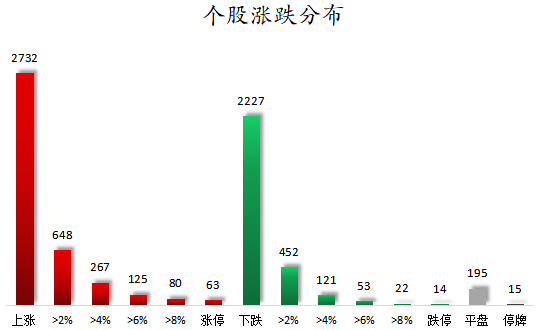
Market Overview - On November 27, the Shanghai Composite Index closed at 3875.26 points, up 0.29%, with a trading volume of 698.5 billion yuan. The Shenzhen Component Index closed at 12875.19 points, down 0.25%, with a trading volume of 1011.275 billion yuan. The ChiNext Index closed at 3031.30 points, down 0.44%, with a trading volume of 499.106 billion yuan. The total trading volume of both markets was 1709.775 billion yuan, a decrease of 73.552 billion yuan compared to the previous trading day [1]. Sector Performance - The chemical, light manufacturing, petroleum and petrochemical, coal, beauty care, and public utilities sectors showed the highest gains. Concepts such as organic silicon, solid-state batteries, and AI mobile phones were particularly active. In contrast, sectors like media, retail, computer, real estate, and transportation experienced declines [2]. Stock Performance - A total of 2732 stocks rose while 2227 stocks fell, with 195 stocks remaining flat and 15 stocks suspended. Excluding newly listed stocks, there were 63 stocks that hit the daily limit up, while 14 stocks hit the limit down [2]. Fund Flow - The net outflow of main funds in the Shanghai and Shenzhen markets was 18.622 billion yuan, with the ChiNext experiencing a net outflow of 9.423 billion yuan. The most significant net inflow was seen in the light manufacturing sector, amounting to 471 million yuan [4]. Individual Stock Highlights - Among individual stocks, ZTE Corporation (000063) had the highest net inflow of main funds at 915 million yuan, followed by Annie Co., Ltd. (002235) with 398 million yuan and Shannon Technology with 384 million yuan [8][9]. - Conversely, Zhongji Xuchuang (300308) experienced the largest net outflow of 1.479 billion yuan, followed by Huadian Electric (002463) with 954 million yuan and CATL (300750) with 806 million yuan [11][12]. Institutional Activity - Institutions had a net buy of 9 stocks, with Haike New Source being the most purchased stock at approximately 133 million yuan. The most sold stock was Shanghai Film, with a net sell of about 86.869 million yuan [14][15].




延续弱势,还有"舅"吗?
Ge Long Hui· 2025-09-24 03:07
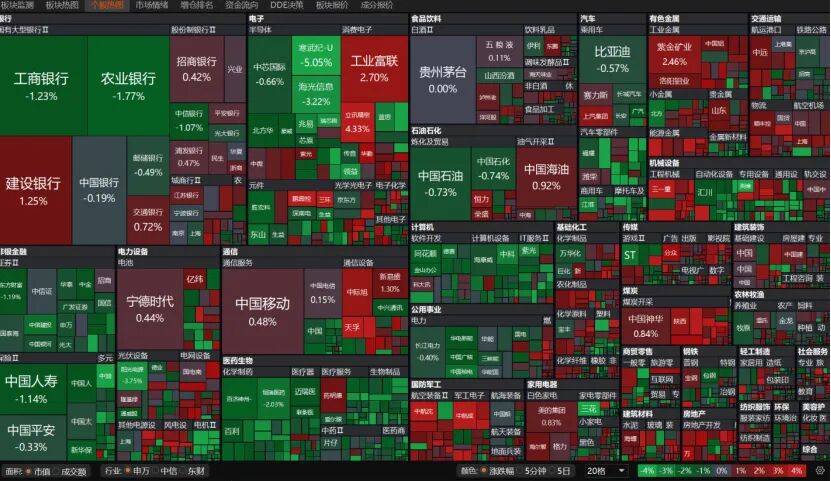
Market Performance - The market continued its weak trend, with the Shanghai Composite Index down 1.23% and the Shenzhen Component Index down 1.84% at midday, while the ChiNext Index fell by 1.75% [1] - Over 4,900 stocks declined across both exchanges, with a total trading volume of 1.7 trillion yuan [1] Sector Performance - The tourism and hotel sector experienced a significant drop, with an average decline of 4.75%, including Yunnan Tourism hitting the daily limit down and Huatianshijiu down 9.33% [3] - Several stocks in the tourism sector, such as Tibet Tourism and Caesar Travel, saw declines exceeding 8% [3] - The banking sector reversed its recent downtrend, with individual stocks like Nanjing Bank rising over 5% [3] - The semiconductor industry maintained its strong performance, with stocks like Changchuan Technology and Lianang Microelectronics hitting the daily limit up [3] - The port and shipping sector was active against the trend, with Nanjing Port and Ningbo Maritime both hitting the daily limit up [3] Commodity and Corporate News - COMEX gold approached the historical high of 3,800 USD per ounce, reaching a peak of 3,795.1 USD [3] - The Ministry of Education announced the establishment of the world's largest and high-quality smart education platform in China [3] - Pfizer officially announced a deal to acquire cardiovascular metabolic drug developer Metsera for a prepayment of 4.9 billion USD [3]
“眉飞色舞”!A股延续调整,下周怎么布局?
Sou Hu Cai Jing· 2025-09-19 16:05
Market Overview - A-shares continued to show a slight decline with the Shanghai Composite Index down 0.3% to 3820.09 points and the ChiNext Index down 0.16% to 3091 points, indicating a trend of shrinking trading volume and narrow fluctuations [2][3] - The trading volume decreased to 2.35 trillion yuan, reflecting a significant profit-taking effect in the market, with 1910 stocks rising and 3404 stocks falling [3][5] Sector Performance - The coal sector rose nearly 2%, while the non-ferrous metals, construction materials, and social services sectors saw gains of over 1% [5][6] - Conversely, the automotive sector fell nearly 2%, with the pharmaceutical, computer, and non-bank financial sectors also experiencing declines [7][9] Investment Sentiment - Market participants indicated that the weakness in A-shares was primarily due to profit-taking and normal sector rotation rather than systemic panic, suggesting that the upward momentum may gradually recover [1][10] - Analysts expect the short-term adjustment before the National Day holiday to be nearing its end, with a potential upward trend post-holiday [11][12] Strategic Insights - Investment strategies should focus on technology sectors (AI, semiconductors) as offensive positions, while pharmaceuticals and new consumption sectors can serve as defensive plays [10][12] - The market is anticipated to maintain a "structural market" rather than a broad bull market, with recommendations for investors to balance defensive and growth strategies [11][12]
电力设备、汽车等行业走强 86股获主力资金净流入超1亿元
Zheng Quan Shi Bao Wang· 2025-09-18 03:55
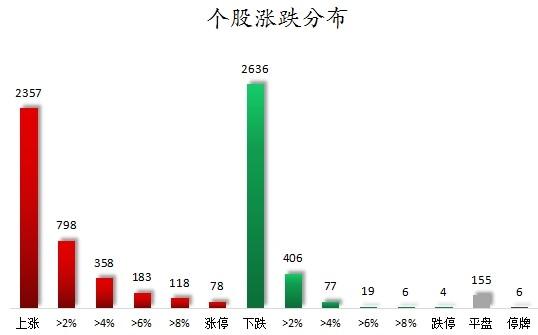
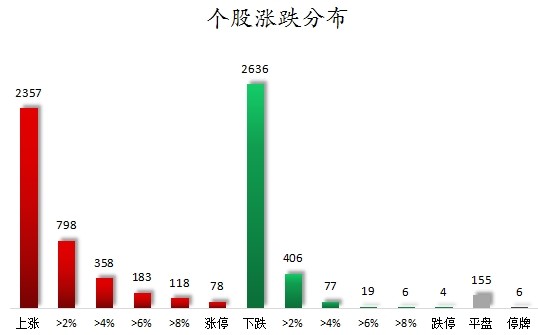
Market Overview - The Shanghai Composite Index closed at 3876.34 points, up 0.37%, with a trading volume of 10067 billion yuan [1] - The Shenzhen Component Index closed at 13215.46 points, up 1.16%, with a trading volume of 13700.67 billion yuan [1] - The ChiNext Index closed at 3147.35 points, up 1.95%, with a trading volume of 6682.82 billion yuan [1] - The STAR Market 50 Index closed at 1370.43 points, up 0.91%, with a trading volume of 922 billion yuan [1] - The total trading volume of both markets was 23767.67 billion yuan, an increase of 353.31 billion yuan compared to the previous trading day [1] Sector Performance - Strong sectors included electric power equipment, automotive, home appliances, coal, machinery, electronics, real estate, and media [2] - Active concepts included nano-silver, flexible screens, laser radar, synchronous reluctance motors, humanoid robots, copper cable high-speed connections, helium, and industrial mother machines [2] - Weak sectors included agriculture, retail, food and beverage, textiles, education, and banking [2] Stock Performance - A total of 2357 stocks rose, while 2636 stocks fell, with 155 stocks remaining flat and 6 stocks suspended [2] - 78 stocks hit the daily limit up, while 4 stocks hit the daily limit down [2] Fund Flow - The net outflow of main funds from the Shanghai and Shenzhen markets was 328.39 billion yuan, with the ChiNext seeing a net outflow of 45.7 billion yuan [6] - Only three sectors (automotive, public utilities, and chemicals) saw net inflows, while 28 sectors experienced net outflows, with the electronics sector seeing the largest outflow of 38.29 billion yuan [6] Individual Stock Highlights - 2047 stocks experienced net inflows, with 86 stocks receiving over 1 billion yuan in net inflows [9] - BYD had the highest net inflow at 12.99 billion yuan, followed by CATL and others [10] - 3100 stocks faced net outflows, with 147 stocks seeing over 1 billion yuan in net outflows [12] - Shenghong Technology had the largest net outflow at 15.37 billion yuan [13] Institutional Activity - Institutions had a net buy of approximately 2.08 billion yuan, with 11 stocks seeing net purchases and 10 stocks seeing net sales [15] - The stock with the highest net buy was Haoen Electric, with a net purchase of approximately 9597.71 million yuan [16]


数据复盘丨电力设备、汽车等行业走强 86股获主力资金净流入超1亿元
Zheng Quan Shi Bao Wang· 2025-09-17 11:40
Market Overview - On September 17, the Shanghai Composite Index closed at 3876.34 points, up 0.37%, with a trading volume of 10067 billion yuan [1] - The Shenzhen Component Index closed at 13215.46 points, up 1.16%, with a trading volume of 13700.67 billion yuan [1] - The ChiNext Index closed at 3147.35 points, up 1.95%, with a trading volume of 6682.82 billion yuan [1] - The total trading volume of the Shanghai and Shenzhen markets was 23767.67 billion yuan, an increase of 353.31 billion yuan compared to the previous trading day [1] Sector Performance - Strong sectors included electric power equipment, automobiles, home appliances, coal, machinery, electronics, real estate, and media [3] - Active concepts included nano-silver, flexible screens, laser radar, synchronous reluctance motors, humanoid robots, copper cable high-speed connections, helium, and industrial mother machines [3] - Weak sectors included agriculture, retail, food and beverage, textiles, education, and banking [3] Individual Stock Performance - A total of 2357 stocks rose, while 2636 stocks fell, with 155 stocks remaining flat [3] - 78 stocks hit the daily limit up, while 4 stocks hit the limit down [3] - *ST Asia Pacific had the highest consecutive limit up days at 8 [6] Fund Flow - The net outflow of main funds in the Shanghai and Shenzhen markets was 328.39 billion yuan, with the ChiNext seeing a net outflow of 45.7 billion yuan [7] - Only three sectors, namely automobiles, public utilities, and chemicals, saw net inflows, with amounts of 5.63 billion yuan, 4.36 billion yuan, and 1.58 billion yuan respectively [7] - The electronics sector experienced the largest net outflow of 38.29 billion yuan [7] Top Stocks by Fund Flow - BYD had the highest net inflow of main funds at 12.99 billion yuan, followed by CATL and other notable companies [11][12] - Conversely, Shenghong Technology saw the largest net outflow at 15.37 billion yuan [14][15] Institutional Activity - Institutional investors had a net buy of approximately 2.08 billion yuan, with the highest net buy in Haoen Automotive at about 95.98 million yuan [18][19] - The most sold stock by institutions was Tianji Shares, with a net sell of approximately 113 million yuan [18][19]



9月5日A股分析:三大指数集体上涨,两市合计成交23046.59亿元,资金流入最多的行业板块为电池、电子元件
Sou Hu Cai Jing· 2025-09-05 08:04
Market Overview - The Shanghai Composite Index rose by 1.24% to close at 3812.51 points, while the Shenzhen Component Index increased by 3.89% to 12590.56 points, and the ChiNext Index surged by 6.55% to 2958.18 points, with total trading volume decreasing by 239.599 billion to 2304.659 billion [2] Fund Flow Analysis - The net inflow of major funds was 42.7832 billion, with a net ratio of 1.86% [2] - The net inflow from super large orders was 41.59953 billion, with a net ratio of 1.81% [2] - The net inflow from large orders was 1.18367 billion, with a net ratio of 0.05% [2] - The net outflow from medium orders was -28.63237 billion, with a net ratio of -1.24% [2] - The net outflow from small orders was -14.15083 billion, with a net ratio of -0.61% [2] Sector Performance - The sectors with the highest fund inflow included battery, electronic components, photovoltaic equipment, energy metals, and consumer electronics, with inflows of 9.609 billion, 5.528 billion, 5.219 billion, 3.94 billion, and 2.179 billion respectively [3] - The sectors with the highest fund outflow were commercial retail, securities, banking, internet services, and food and beverage, with outflows of -1.885 billion, -1.428 billion, -1.362 billion, -1.334 billion, and -0.409 billion respectively [3] Concept Stock Trends - The concept stock with the highest fund inflow was margin financing and securities lending, followed by FTSE Russell, Shenzhen Stock Connect, MSCI China, and Shenzhen 500, with inflows of 44.079 billion, 30.631 billion, 26.54 billion, 25.66 billion, and 22.569 billion respectively [2] - The concept stocks with the highest fund outflow included yesterday's limit-up stocks, pre-made dishes, domestic trade circulation, and e-commerce concepts, with outflows of -3.277 billion, -3.156 billion, -1.577 billion, and -1.55 billion respectively [3] Industry Performance - The industries with the highest growth included battery, energy metals, photovoltaic equipment, wind power equipment, and power supply equipment, with growth rates of 9.29%, 7.62%, 6.1%, 5.64%, and 5.15% respectively [3] - The industries with the largest decline were banking, insurance, commercial retail, brewing industry, and food and beverage, with declines of -0.88%, -0.05%, -0.06%, -0.2%, and -0.29% respectively [4]
每日复盘:2025年5月20日市场全天冲高回落,微盘股指数创历史新高-20250520
Guoyuan Securities· 2025-05-20 13:43
Market Performance - On May 20, 2025, the market experienced a high and then a pullback, with the micro-cap stock index reaching an all-time high[2] - The Shanghai Composite Index rose by 0.38%, the Shenzhen Component Index increased by 0.77%, and the ChiNext Index also rose by 0.77%[2] - The total market turnover was 11,695.33 billion yuan, an increase of 832.28 billion yuan from the previous trading day[2] Sector and Style Analysis - All 30 sectors in the CITIC first-level industry index generally rose, with Media (1.93%), Retail (1.75%), and Comprehensive (1.74%) leading the gains[22] - The sectors that lagged included Defense (-0.55%), Coal (-0.24%), and Real Estate (-0.17%)[22] - Fund-heavy stocks outperformed the CSI All Share Index[22] Capital Flow - On May 20, 2025, the net outflow of main funds was 32.29 billion yuan, with large orders seeing a net outflow of 75.21 billion yuan and small orders continuing to see a net inflow of 94.47 billion yuan[27] - The major ETFs saw a decrease in turnover compared to the previous trading day, with the Huaxia Shanghai 50 ETF at 10.20 billion yuan, down by 2.69 billion yuan[32] Global Market Trends - On May 20, 2025, major Asia-Pacific indices had mixed results, with the Hang Seng Index up 1.50% and the Nikkei 225 Index up 0.08%[36] - European indices showed varied performance, with the DAX Index up 0.70% and the CAC40 Index down 0.04%[5] - In the US, major indices also saw gains, with the Dow Jones Industrial Average up 0.32%[5]



