美元大循环

Search documents
逆差暴跌,美元信用要崩?美国人自己都在反思:这钱印得太烫手!
Sou Hu Cai Jing· 2026-02-16 12:22
Core Viewpoint - The article discusses the complexities of the United States' trade balance, emphasizing the unique position of the US dollar as the world's primary reserve currency and the implications of trade deficits and surpluses on the economy and dollar credibility [3][5][11]. Group 1: Trade Surplus and Deficit - Trade surplus and deficit are defined as the difference between a country's imports and exports, with a deficit indicating that a country is spending more on imports than it earns from exports [3]. - For the US, the ability to print dollars at a low cost allows it to maintain trade deficits without the same negative consequences faced by other countries [5][6]. - The US dollar's status as the world's reserve currency necessitates maintaining trade deficits to ensure global liquidity, as other countries need sufficient dollars for circulation [5][9]. Group 2: Historical Context and Economic Mechanisms - The shift away from the gold standard in 1971 allowed the US to print money without the constraints of gold reserves, leading to a significant increase in trade deficits [6][8]. - Under the gold standard, trade balances would naturally adjust due to the flow of gold, which is no longer the case in the current fiat currency system [8][9]. - The Triffin Dilemma highlights the conflict between the need for the US to run trade deficits to supply dollars globally and the need for a balanced budget to maintain dollar credibility [9]. Group 3: Recent Developments and Future Considerations - Recent data shows that the US trade deficit narrowed significantly in October 2025, reaching its lowest level since June 2009, with exports hitting a record high [11]. - While efforts to reduce the trade deficit may have short-term benefits, they could undermine the dollar's international circulation and credibility [11]. - The article suggests a need for a stable international monetary system that avoids the inherent contradictions faced by the current dollar-centric system [11].

中金 | 股市长牛之美国经验:呵护成长性
Jin Shi Shu Ju· 2025-11-24 12:31
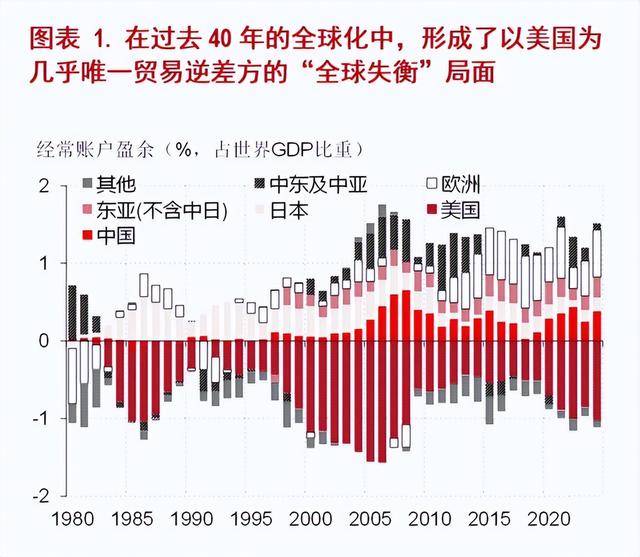
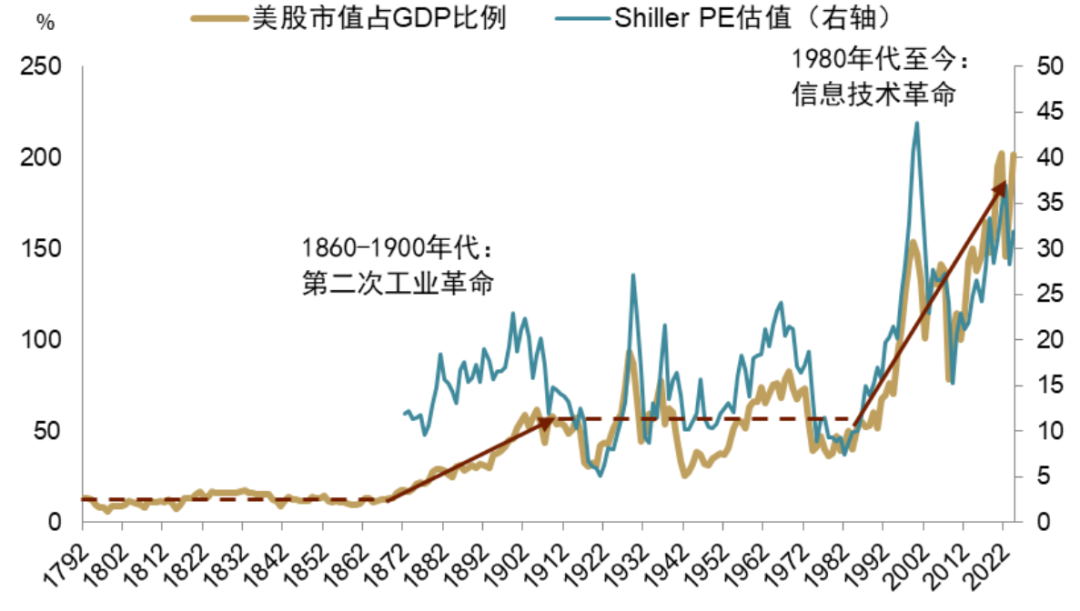
Core Viewpoint - The U.S. stock market has experienced a long-term bull market since the 1980s, driven by economic structural transformation and the information technology revolution, leading to a significant increase in market capitalization relative to GDP, from 60% in the 1980s to over 200% currently [1][3][4]. Macro Policy: "Replacing Old with New" - The Reagan administration's "Replacing Old with New" industrial policy enhanced U.S. economic efficiency by promoting the exit of outdated industries and fostering high-tech sectors [16][19]. - Specific measures included expanding international trade to phase out basic industries, reducing subsidies, and stimulating high-tech manufacturing through tax reforms and military industrial development [16][19]. Micro Enterprises: Focus on Profit Quality and Shareholder Returns - Companies began to prioritize operational efficiency and shareholder returns, with a shift in market focus from growth narratives to profitability metrics, particularly cash flow [21][26]. - The introduction of SEC Rule 10b-18 in 1982 facilitated stock buybacks, allowing companies to manage their stock prices more effectively [26][27]. Asset Side: Incremental Capital Flow - Long-term capital has steadily flowed into the U.S. stock market, supported by the rise of institutional investors and changes in retirement savings plans, significantly increasing household participation in equity markets [32][33]. - The share of long-term investors, such as pensions and mutual funds, rose to 40% in the 1980s, enhancing market stability and price discovery [33][37]. Globalization: Continuous Inflow of Overseas Capital - The formation of a "dollar cycle" and the influx of overseas capital have been crucial for the long-term bull market, with foreign investors significantly increasing their holdings in U.S. stocks since the 1980s [40][42]. - From 1980 to mid-2025, foreign investors accumulated $2.36 trillion in U.S. stocks, compared to $633.3 billion from domestic investors, highlighting the importance of foreign capital in supporting the bull market [40][42]. Federal Reserve Put: Guardian of the Bull Market - The strengthening of the Federal Reserve's "put" option has provided market stability, with the Fed intervening during crises to support liquidity and market confidence [44]. - This trend began in the late 1980s and has continued through various market downturns, establishing a market expectation that the Fed will act to stabilize the stock market during significant declines [44].
股市长牛之美国经验:呵护成长性
Sou Hu Cai Jing· 2025-11-24 00:18
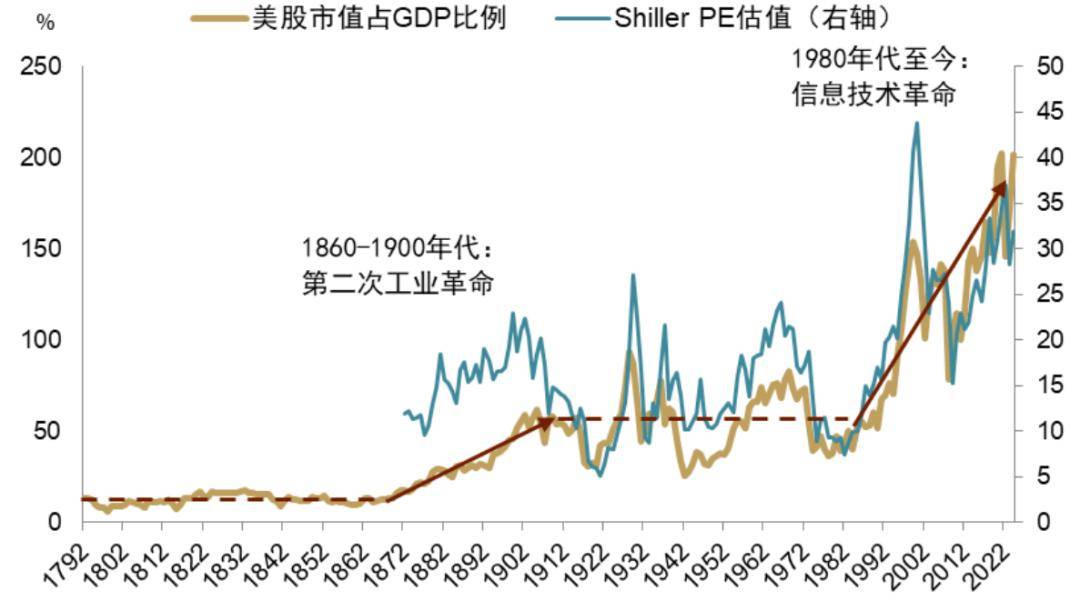
Group 1 - The core argument of the article is that the long-term bull market in the U.S. stock market since the 1980s is driven by structural economic transformation, technological advancements, and significant capital inflows, leading to a market capitalization to GDP ratio that has increased from 60% in the 1980s to over 200% today [1][3][6] - The U.S. stock market's growth rate has consistently outpaced economic growth, reflecting the market's ability to price in future growth potential [3][6] - The article highlights two historical periods of long bull markets in the U.S., specifically from 1860-1900 and from the 1980s to the present, both characterized by significant structural changes and technological progress [3][6] Group 2 - On the asset side, macroeconomic policies have focused on nurturing high-quality companies, with the Reagan administration's "creative destruction" policy facilitating the exit of outdated industries and promoting high-tech sectors [18][19] - Companies have increasingly prioritized operational efficiency and shareholder returns, with a notable shift towards high cash flow firms post-1980s, which began to outperform lower cash flow firms [23][28] - The introduction of SEC Rule 10b-18 in 1982 allowed companies to repurchase shares without the fear of being accused of stock price manipulation, leading to a significant increase in stock buybacks [28][29] Group 3 - Domestic long-term capital has steadily flowed into the U.S. stock market, driven by the introduction of retirement savings plans and the increasing participation of institutional investors [34][38] - The rise of long-term investors such as pension funds and mutual funds has contributed to market stability and improved price discovery [36][38] - The article notes that from 1980 to mid-2025, foreign investors have accumulated $2.36 trillion in U.S. stocks, significantly outpacing domestic investors' contributions [42][43] Group 4 - The Federal Reserve's "put option" policy has provided a safety net for the stock market, with the Fed intervening during market downturns to stabilize confidence and liquidity [48][49] - The article discusses how the Fed's focus on stock market performance has increased since the 1980s, with a notable rise in mentions of the stock market in FOMC minutes [48][49]
中金 | 股市长牛之美国经验:呵护成长性
中金点睛· 2025-11-23 23:39
Core Viewpoint - The article discusses the long-term bull market in the U.S. stock market since the 1980s, driven by economic structural transformation and the information technology revolution, leading to a significant increase in market capitalization relative to GDP, which has risen from 60% in the 1980s to over 200% currently [2][5]. Group 1: Macroeconomic Policy - The "腾笼换鸟" (tenglong huan niao) policy initiated by the Reagan administration aimed to enhance economic efficiency by phasing out outdated industries and promoting high-tech sectors, which helped reverse the long-term decline in U.S. economic efficiency [16][17]. - The policy included measures such as reducing subsidies, promoting international trade, and stimulating high-tech manufacturing, contributing to productivity growth [16][17]. Group 2: Microeconomic Enterprises - U.S. companies have shifted focus towards profitability quality and shareholder returns, with an increasing emphasis on cash flow and dividends since the 1980s [17][23]. - The introduction of SEC Rule 10b-18 in 1982 facilitated stock buybacks, allowing companies to manage their stock prices more effectively, which became a common practice post-1980s [23][24]. Group 3: Asset Side - Incremental Capital Flow - Long-term capital has steadily flowed into the U.S. stock market, supported by the rise of institutional investors and changes in retirement savings plans, significantly increasing household participation in equity markets [28][31]. - The share of long-term investors, such as pension funds and mutual funds, in the U.S. stock market rose to nearly 40% in the 1980s, enhancing market stability and price discovery [31][33]. Group 4: Globalization and Foreign Capital - The globalization process initiated in the 1980s led to significant inflows of foreign capital into the U.S. stock market, with overseas investors accumulating $2.36 trillion in U.S. equities from 1980 to mid-2025 [36][38]. - The "美元大循环" (dollar circulation) phenomenon facilitated the return of overseas dollars to the U.S., further supporting the bull market [36][38]. Group 5: Federal Reserve's Role - The Federal Reserve's "put option" policy has provided a safety net for the stock market, with interventions during major downturns since the late 1980s, reinforcing market confidence [40][41]. - The Fed's increasing focus on stock market performance has been evident, with more frequent mentions of the stock market in FOMC minutes since the 1980s [40][41].