美联储加息缩表

Search documents
期货市场交易指引2026年02月02日-20260202
Chang Jiang Qi Huo· 2026-02-02 04:05
Report Summary 1. Report's Investment Ratings for Different Industries - Macro - finance: Index futures are promising in the medium - to - long - term, recommended to buy on dips; Treasury bonds are expected to move in a range [1][5]. - Black building materials: Coking coal for short - term trading; rebar for range trading; glass recommended to buy on dips [1][8]. - Non - ferrous metals: Copper, aluminum, and nickel for observation; tin, gold, and silver for range trading; lithium carbonate for range - bound fluctuations [1][10][12][14]. - Energy and chemicals: PVC for range trading; caustic soda for temporary observation; soda ash for temporary observation; styrene for range trading; rubber for range trading; urea for range trading; methanol for range trading; polyolefins for weak - range fluctuations [1][17][19][20]. - Cotton textile industry chain: Cotton and cotton yarn for shock adjustment; apples and jujubes for shock operation [1][26]. - Agricultural and livestock: Pigs for rebound - based short - selling opportunities; eggs for hedging post - festival contracts on rallies; corn for cautious chasing of highs and hedging on rebounds; soybean meal for shorting on rallies; oils for strong - range fluctuations [1][29][30][31][32][33][34][35]. 2. Core Views - The overall market is affected by a variety of factors such as geopolitical situations, policy changes, and supply - demand relationships. Different industries and products show different trends and characteristics. For some products, there are potential investment opportunities, while for others, risks need to be carefully considered. For example, in the non - ferrous metals sector, the prices of copper and aluminum are affected by geopolitical and supply - demand factors, and investors are advised to observe; in the energy and chemicals sector, PVC may have long - term low - buying opportunities, while caustic soda is under pressure in the short - term [10][12][17][19]. 3. Summary by Industry Macro - finance - Index futures: Affected by factors such as Trump's nomination of the Fed chairman and China's PMI data, they are expected to move in a range in the short - term and are promising in the medium - to - long - term, recommended to buy on dips [5]. - Treasury bonds: With no obvious major negative factors in the bond market, they are expected to move in a range, but the downward space of bond yields is limited [5]. Black building materials - Coking coal: The coal market shows short - term fluctuations. Although the price has increased slightly, the sustainability of the price increase is insufficient, recommended for short - term trading [8]. - Rebar: The futures price is slightly higher than the valley - electricity cost of the electric furnace and lower than the flat - electricity cost. With low inventory and small supply - demand contradictions, it is expected to move in a range [8]. - Glass: Although there are negative factors such as inventory, demand, and holidays, the futures price is at a relatively low level, recommended to buy on dips, and pay attention to the opportunity of going long on glass and short on soda ash [9]. Non - ferrous metals - Copper: Affected by geopolitical and Fed chairman nomination factors, the price has fluctuated sharply. With tight supply and weakening demand, it is expected to move in a wide range, and investors are advised to control positions and pay attention to inventory changes [10]. - Aluminum: With the pressure on bauxite prices and the increase in alumina and electrolytic aluminum production capacity, and the approaching of the demand off - season, it is expected to adjust at a high level, and investors are advised to strengthen observation [12]. - Nickel: Affected by the reduction of Indonesian nickel ore quotas, the price has risen, but the fundamentals are weak. It is recommended to observe [14]. - Tin: With the supply of tin concentrate being tight and the downstream consumption maintaining rigid demand, it is expected to continue to fluctuate, recommended for range trading [15]. - Gold and silver: Affected by the nomination of the Fed chairman, the prices have corrected, but the medium - term price centers are expected to move up, and they are expected to continue to adjust in a range [16]. - Lithium carbonate: Affected by factors such as supply and demand and mine risks, it is expected to continue to fluctuate in a range [17]. Energy and chemicals - PVC: With weak domestic demand and high inventory, but low valuation, it is possible that the bottom has been reached. It is recommended to have a long - term low - buying idea, pay attention to policies such as export tax rebates and cost fluctuations [17]. - Caustic soda: With weak demand and high supply, there is short - term delivery pressure, and it is recommended to observe temporarily [19]. - Styrene: Although it has rebounded due to factors such as export increase and device maintenance, the valuation is high, recommended to be cautious about chasing highs, and pay attention to cost and supply - demand changes [20]. - Rubber: Affected by seasonal supply reduction and weak demand support, the price is expected to continue to fluctuate, and there is a possibility of further decline [21]. - Urea: With sufficient supply and increasing demand for compound fertilizers, the price is expected to move in a range, and attention should be paid to factors such as compound fertilizer start - up and urea device maintenance [22]. - Methanol: With the reduction of domestic supply and weak downstream demand, the price in the inland market is relatively weak, while the price in some regions is relatively strong due to geopolitical and port arrival factors [23]. - Polyolefins: With increasing supply, decreasing demand in the off - season, and inventory accumulation pressure before the Spring Festival, the price is expected to fluctuate weakly, and it is recommended to short on rallies [24]. - Soda ash: With supply over - capacity and rising production costs, the price may have limited downward space, and it is recommended to observe temporarily [25]. Cotton textile industry chain - Cotton and cotton yarn: Affected by the global cotton supply - demand forecast report, the price has adjusted after a high - level shock, and it is recommended to be cautious in the short - term and optimistic in the long - term [26]. - Apples and jujubes: The market is generally stable with weak trends, and the price is expected to move in a shock [26][29]. Agricultural and livestock - Pigs: In the short - term, the price is restricted by supply - demand game, recommended to short on rebounds for off - season contracts; in the medium - to - long - term, the price is cautiously bullish, and the industry can hedge on rallies before effective capacity reduction [29][30]. - Eggs: With low basis and high valuation, it is recommended to hedge post - festival contracts on rallies, especially the 05 and 06 contracts considering the supply pressure shift [31]. - Corn: In the short - term, the price is supported by supply - demand balance; in the medium - to - long - term, the supply - demand pattern is relatively loose, and it is recommended to be cautious about chasing highs and hedge on rebounds [32][33][34]. - Soybean meal: In the short - term, the M2603 contract is expected to move in a range; the 05 contract is under pressure, and attention should be paid to support and resistance levels [34]. - Oils: In the short - term, the three major oils are expected to correct but with limited amplitude, recommended to take rolling profit on previous long positions and wait to go long on dips [35][40][41].
银河期货每日早盘观察-20260202
Yin He Qi Huo· 2026-02-02 02:22
1. Report Industry Investment Rating - No relevant content provided. 2. Core Views of the Report - The overall market shows volatility, but the policy environment is generally positive, and the economy is expected to recover. Although there are short - term fluctuations in the stock index futures market, it still has an upward trend in the medium - to - long term. In the bond market, due to the official PMI falling short of expectations, there may be short - term opportunities for long positions, but the overall odds of long positions are limited before the policy interest rate is cut. In the agricultural product market, the supply and demand of various varieties are different, and the prices are affected by factors such as international prices and domestic production and sales. In the black metal market, the steel price follows the market sentiment and fluctuates, and the prices of double - coking and iron ore are also affected by multiple factors such as fundamentals, funds, and policies. In the non - ferrous metal market, the nomination of Wash as the new Fed chairman has a significant impact on precious metals and copper, and other metals are also affected by factors such as supply and demand and market sentiment. In the shipping market, the geopolitical conflict has an impact on the freight rate of container shipping. In the energy and chemical market, the prices of various products are affected by factors such as geopolitical premiums, supply and demand, and seasonal factors [22][24]. 3. Summary by Relevant Catalogs Financial Derivatives - **Stock Index Futures**: Although there were significant fluctuations on January 30, 2026, in the context of a positive policy environment and economic recovery expectations, the short - term fluctuations are expected to be followed by an upward trend. The trading strategies include unilateral long - term upward trends, IM\IC 2609 long - position and ETF short - position arbitrage, and bullish spread options [19][22][23]. - **Treasury Bond Futures**: The previous week's bond futures tended to fluctuate, and the official PMI in January fell significantly short of expectations. In the short term, investors may consider a long - position strategy, but the overall odds of long positions in the bond market are limited before the policy interest rate is cut [23][24]. Agricultural Products - **Protein Meal**: The overall supply is loose, and the US soybean price center is likely to move down. Although there are some supporting factors, the medium - to - long - term disk pressure still exists. The trading strategy is mainly to sell at high points, expand the MRM spread, and sell wide - straddle options [27][28]. - **Sugar**: International sugar prices have fallen sharply, and the domestic sugar market is in the peak crushing season with increased supply. It is expected that the domestic sugar price will be weak in the short term. The strategy is to pay attention to whether the key points of international sugar prices can be effectively broken through, with the 5 - month contract price expected to decline, and to wait and see for arbitrage and options [29][30][31]. - **Oilseeds and Oils**: The Malaysian palm oil may have production cuts and inventory reductions in January, but the inventory remains at a relatively high level. The US biodiesel has positive prospects, which is beneficial for soybean oil consumption, but there are also supply pressures. Rapeseed oil has a certain price support. The trading strategy is to consider short - selling at high points or long - buying after a callback, and consider reverse arbitrage for y59 [32][33]. - **Corn/Corn Starch**: The US corn futures have declined, and the domestic North Port spot price has fallen. The corn price is expected to be under pressure in the later period. The strategy is to be bullish on the 03 - month US corn after it stabilizes, short - sell the 03 - month corn at high points, and expand the spread between the 05 - month corn and starch [34][35][36]. - **Hogs**: The supply pressure has improved, and the spot price has generally increased. However, the overall inventory is still relatively high, and the supply pressure still exists. The strategy is to wait and see for unilateral trading and sell wide - straddle options [37][38]. - **Peanuts**: The spot price is stable, and the disk price is oscillating at the bottom. The strategy is to short - sell the 03 - month peanuts at high points lightly and sell the pk603 - C - 8200 option [40][41]. - **Eggs**: As the Spring Festival approaches, the demand for eggs has increased, and the price has risen. Considering the off - season after the Spring Festival, it is advisable to short - sell the 6 - month contract [43][47]. - **Apples**: The pre - festival sales are good, and the price is firm. It is expected that the price of the 5 - month contract will be easy to rise and difficult to fall. The strategy is to go long on the 5 - month contract at low points, short - sell the 10 - month contract at high points, and conduct more 5 - month and less 10 - month arbitrage [49][50][51]. - **Cotton - Cotton Yarn**: The fundamentals have not changed much, and the cotton price is supported. It is recommended to go long on the contract at low points [53][54]. Black Metals - **Steel**: The demand has weakened marginally, and the steel price follows the market sentiment and fluctuates. It is expected to follow the macro - sentiment and maintain an oscillatory trend before the festival [56]. - **Double - Coking**: In February, the coal mines will gradually start to have holidays, and the spot price tends to be stable. The disk price is mainly affected by funds and emotions. It is advisable to maintain a long - position strategy at low points [60]. - **Iron Ore**: The price fluctuated last week. The market is mainly dominated by macro and funds, and the iron ore valuation is moderately high. The supply is loose, and the demand is difficult to improve significantly. The price is expected to oscillate [62][63]. - **Ferroalloys**: Due to the sharp adjustment of leading commodities such as precious metals and non - ferrous metals, the previous long positions can be partially closed for profit [65][66]. Non - Ferrous Metals - **Gold and Silver**: The nomination of Wash as the new Fed chairman has triggered a risk release in the gold and silver markets. It is mainly a release of previously accumulated risks, and the medium - to - long - term macro - logic has not changed fundamentally. It is advisable to wait and see for the time being [67][70]. - **Platinum and Palladium**: After a huge decline, there is a fierce battle between long and short positions. It is necessary to be cautious when participating. Platinum has a stronger upward driving force than palladium in terms of fundamentals [70][71]. - **Copper**: The nomination of Wash has led to a sharp decline in copper prices. After the price stabilizes, a long - position strategy can be considered, and attention should be paid to the position control during the Spring Festival [73][74]. - **Alumina**: The supply has short - term maintenance and production reduction pressure, and the cost has declined. The price is expected to oscillate in the short term [75][76][77]. - **Electrolytic Aluminum**: After the nomination of the next Fed chairman, the dollar rebounded, and the aluminum price fell. Although the long - term supply and demand are in short supply, short - term liquidity risks need to be vigilant [78][79]. - **Cast Aluminum Alloy**: Affected by the nomination of the Fed chairman and the approaching Spring Festival, the market liquidity has tightened, and the price has fallen. It is advisable to wait and see [80]. - **Zinc**: The price is affected by market sentiment and funds. It is advisable to wait and see in the short term and try to buy both call and put out - of - the - money options [82][83]. - **Lead**: The price maintains an oscillatory range, with a supply - demand balance of both weakness. It is necessary to be vigilant about the impact of market sentiment [84][86]. - **Nickel**: After the speculative sentiment cools down, the price returns to the fundamentals. It is expected that there will be opportunities for long - positions after a callback and stabilization during the Spring Festival [92][93]. - **Stainless Steel**: Affected by the decline in non - ferrous metals and nickel prices, the price has fallen. However, there is cost support, and a long - position strategy can be considered after the price stabilizes [95][97]. - **Industrial Silicon**: Large - scale production cuts have been implemented, and the short - term price may be strong [98]. - **Polysilicon**: The demand is weak, and the price is expected to oscillate weakly. Attention should be paid to the spot transaction situation [100][101]. - **Lithium Carbonate**: The speculative heat has cooled down, and the price is expected to oscillate at a high level after a callback [103][105]. - **Tin**: The funds are leaving the market, and the price is expected to oscillate weakly. Attention should be paid to the resumption of production in Myanmar and the consumption realization rhythm [108]. Shipping - **Container Shipping**: The geopolitical conflict remains unresolved, and the spot freight rate has declined. The demand is gradually reaching the peak and then falling, and the supply has decreased slightly. It is advisable to wait and see for unilateral trading and conduct positive arbitrage for the 6 - 10 contracts [113][114][116]. Energy and Chemicals - **Crude Oil**: The geopolitical premium has partially retreated. The international oil price is expected to oscillate widely, and it is advisable to hold long positions without chasing high prices [118][119]. - **Asphalt**: The near - end cost fluctuates with geopolitical factors. The price is expected to oscillate strongly, and attention should be paid to the unilateral position risk [120][122][123]. - **Fuel Oil**: The high - sulfur spot price remains at a high level year - on - year, and the price is expected to oscillate strongly. Attention should be paid to geopolitical risks, and the FU59 positive arbitrage can be held [124][128][129]. - **LPG**: The price follows the trend of crude oil. The supply in the domestic market is increasing, and the demand is falling. It is advisable to hold long positions without chasing high prices [130][131][132]. - **Natural Gas**: As the cold wave fades, the upward momentum of the price weakens. It is advisable to hold short - positions in the third - quarter contracts of TTF and JKM and short - sell the second - quarter contract of HH [133][135][136]. - **PX & PTA**: The polyester demand is seasonally weak, and the terminal load is partially reduced. The price is expected to oscillate at a high level [136][139]. - **BZ & EB**: The supply - demand balance is expected to improve, and there is a phased inventory reduction. The price is expected to oscillate at a high level, and positive arbitrage can be considered [141][143]. - **Ethylene Glycol**: The inventory accumulation pressure before the Spring Festival is still obvious, and the price is expected to oscillate widely [144]. - **Short - Fiber**: The short - fiber factories are reducing production as planned, and the price is expected to follow the cost and oscillate at a high level [147][148]. - **Bottle Chips**: The processing margin has strengthened, and the price is expected to oscillate at a high level [150][153]. - **Propylene**: The supply is stable, and the price is expected to oscillate at a high level [154][155]. - **Plastic PP**: The L 2605 contract and the PP 2605 contract should pay attention to the support levels, and it is advisable to wait and see [156][157][158]. - **Caustic Soda**: The supply is sufficient, the demand is weak, and the price is expected to be weak [159][160][161]. - **PVC**: The supply is at a high level, and the demand is in the off - season. However, there is cost support, and a long - position strategy can be considered at low points [162][164]. - **Soda Ash**: The supply has increased, but the downstream demand is rigid. The price is expected to oscillate and rebound [165][166][167]. - **Glass**: The market pre - inflation is interrupted, and the price is expected to decline as the Spring Festival approaches [168][169][170]. - **Methanol**: The geopolitical premium has returned, and the international device start - up rate has declined. It is advisable to go long at low points and pay attention to the 59 positive arbitrage [172]. - **Urea**: The supply has reached a new high, the downstream demand is weakening, and the price is expected to be unstable. Futures trading should be cautious [174][175]. - **Pulp**: The supply - demand pattern is oversupplied, and the price is expected to oscillate weakly in a wide range. It is advisable to short - sell at high points [177][179]. - **Offset Printing Paper**: The high inventory suppresses the price increase. It is advisable to short - sell a small amount of positions against the previous high [181][182]. - **Logs**: The spot price is stable and strong. It is advisable to hold long positions and pay attention to the 3 - 5 reverse arbitrage opportunity [183][184][185]. - **Natural Rubber and No. 20 Rubber**: It is necessary to pay attention to the possibility of the macro - sentiment decline. It is advisable to wait and see for the RU 05 and NR 04 contracts and pay attention to the pressure levels [186][188]. - **Butadiene Rubber**: It is necessary to pay attention to the possibility of the macro - sentiment decline. It is advisable to wait and see for the BR 04 contract and pay attention to the pressure level [190][191].
美股又新高了!标普连涨5天,我们的钱该往哪放?
Sou Hu Cai Jing· 2025-07-27 14:57
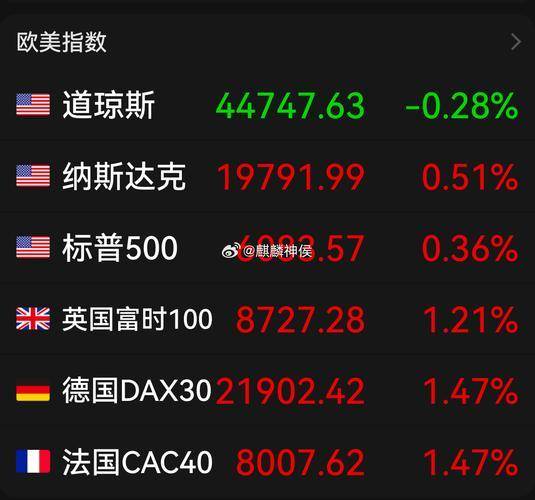
Group 1: U.S. Stock Market Performance - The U.S. stock market indices have reached new highs, with the Dow Jones surpassing 38,000 points, the Nasdaq exceeding 16,000 points, and the S&P 500 experiencing a five-day consecutive rise [1][2] - The recent surge in the S&P 500 is primarily driven by major technology companies, particularly Apple, Microsoft, Nvidia, and Google, indicating that the gains are concentrated among a few large firms rather than being widespread across the market [2][5] - The top 10 companies in the S&P 500 account for 30% of the index's weight, highlighting the influence of these tech giants on overall market performance [2][4] Group 2: Federal Reserve's Role - Despite the Federal Reserve's tightening measures, including raising interest rates by 550 basis points and reducing its balance sheet, the stock market continues to reach new highs, suggesting a mix of "liquidity legacy" and genuine corporate earnings growth [5][6] - The influx of capital into the stock market during the pandemic, when the Fed lowered interest rates to near zero and injected $3 trillion, has contributed to the current market conditions [5][6] - The expectation of future interest rate cuts by the Federal Reserve is driving market optimism, with projections indicating potential rate reductions in the coming year [6] Group 3: Comparison of U.S. and A-Share Markets - The U.S. stock market is characterized by institutional investors, which account for 70% of trading volume, while the A-share market is dominated by retail investors, leading to higher volatility in A-shares [7][8] - The U.S. market operates on a principle of "survival of the fittest," with a higher rate of company delistings, while the A-share market has a slower pace of removing underperforming companies [7][8] - The quality of listed companies in the U.S. is generally higher, with a strong focus on shareholder returns, contrasting with some A-share companies that have faced issues with transparency and governance [8] Group 4: Investment Strategies and Future Outlook - Investors are advised to focus on managing their portfolios rather than chasing trends in the U.S. market, with recommendations to invest in quality companies and consider index funds [9][10] - The A-share market is undergoing reforms that may enhance its structure and quality, potentially leading to better long-term investment opportunities [10][11] - The future of the U.S. stock market remains uncertain, with high valuations posing risks, while the A-share market may present opportunities for growth as it evolves [10][11]