能源供应紧张

Search documents
菲律宾:正在争取美方“豁免”,让其可以从受美国制裁的国家购买石油
中国能源报· 2026-03-26 05:17
Core Viewpoint - The Philippines is seeking to import oil from countries under U.S. sanctions due to ongoing global energy supply tensions caused by the conflict between the U.S. and Iran, with efforts to obtain a "waiver" from the U.S. government [1][3]. Group 1: Philippines' Energy Situation - The Philippines relies heavily on oil imports from the Middle East, with Saudi Arabia being the largest supplier [3]. - As of March 20, the Philippines' fuel supply is estimated to last approximately 45 days, prompting the government to procure over 1 million barrels of oil to establish a buffer stock [3]. - President Marcos declared a state of energy emergency, allowing the government to prepare for any potential energy supply disruptions [3]. Group 2: U.S. Sanctions and Import Options - The Philippine Ambassador to the U.S. indicated that all options, including importing oil from Venezuela and Iran, are being considered in discussions with the U.S. [3]. - The U.S. Treasury Department temporarily relaxed sanctions on Russian oil to address disruptions in the energy market caused by shipping issues in the Strait of Hormuz [4]. Group 3: Market Developments - Market service provider Kpler reported that at least two oil tankers from Russia are heading to the Philippines, with one carrying crude oil from the UAE expected to arrive on April 8 [4].


伊朗称美以袭击伊两处能源基础设施
21世纪经济报道· 2026-03-24 01:09
Group 1 - The article reports that the U.S. and Israel attacked two energy infrastructure sites in Iran, specifically in Isfahan and Khorramshahr [1] - The targeted facilities included a natural gas company building and a gas pressure reduction station in Isfahan, which suffered damage along with surrounding residential areas [1] - A gas pipeline at a power plant in Khorramshahr was also attacked, but there were no reported casualties [1] Group 2 - The article mentions that Trump described dialogue with Iran as "perfect," suggesting that successful negotiations could potentially end the conflict [2] - It also notes that a Russian oil shipping port was attacked, which may exacerbate tensions in energy supply [2]

俄罗斯石油装运港遭袭,或加剧能源供应紧张
21世纪经济报道· 2026-03-23 14:54
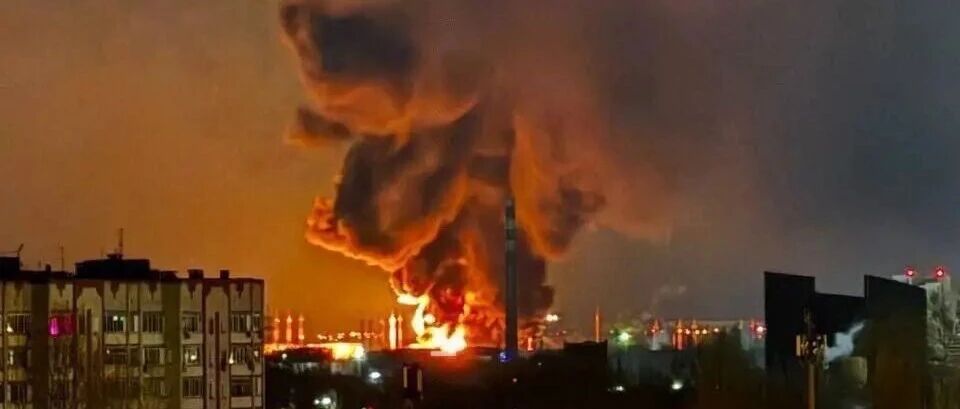
Core Viewpoint - The recent drone attacks on Russia's oil export ports in the Baltic Sea, specifically Primorsk and Ust-Luga, have led to a suspension of oil export operations, raising concerns about global energy supply tightness amid ongoing geopolitical tensions [1][2]. Group 1: Incident Overview - The drone attacks occurred between the night of the 22nd and the early morning of the 23rd, resulting in the suspension of oil export activities from both ports [1]. - The Primorsk port is a major terminal for Russian Urals crude oil and high-quality diesel, capable of handling over 1 million barrels of oil per day, while Ust-Luga exports approximately 700,000 barrels daily [1]. - The attacks have previously impacted these ports, with a similar incident in September last year causing significant disruptions to oil shipment operations [2]. Group 2: Broader Implications - The attacks are part of a broader pattern of ongoing conflict, with Ukraine frequently targeting Russian oil export facilities to undermine Russia's oil revenue [4]. - The drone strikes have also led to operational disruptions at other key locations, such as the Pulkovo International Airport in St. Petersburg, which temporarily suspended flights due to the security situation [5].
金融期货早评-20260310
Nan Hua Qi Huo· 2026-03-10 02:55
1. Report Industry Investment Ratings No relevant content provided. 2. Core Views of the Report - The inflation data in China in February 2026 exceeded market expectations. The economic is transitioning from policy - driven to endogenous recovery. CPI may face seasonal回调 pressure, while PPI is expected to turn positive as early as March. Attention should be paid to the impact of the Middle - East geopolitical conflict on inflation [1][2]. - The RMB exchange rate is affected by the US - Iran situation. In the short term, it is difficult for the RMB to start a trend appreciation, and the key lies in the change of corporate settlement willingness [3]. - The stock index is expected to oscillate and repair in the short term, and its subsequent trend depends on the release of the 15th Five - Year Plan policy documents after the Two Sessions [5]. - The bond market may have a short - term trading window, and long positions can be gradually entered [6]. - The container shipping European line futures are highly correlated with geopolitics and oil prices in the short term, with the sentiment side dominating. The main 04 contract is expected to maintain a high - level wide - range shock pattern [11]. - For lithium carbonate, in the long - term, the industry fundamentals support its value, and attention can be paid to the opportunity of going long on dips [15]. - The silicon industry chain is currently in a situation of weak supply and demand. It is necessary to wait for capacity clearance and improvement of the supply - demand pattern [17]. - The aluminum industry chain has obvious price fluctuations, and the short - term trend is dominated by the war situation. Alumina has short - term fluctuations and long - term over - supply. Cast aluminum alloy has a strong follow - up to aluminum [21]. - Copper shows resilience, and industrial customers can replenish inventory according to price ranges, while speculative customers can consider volatility - increasing strategies [25]. - Zinc is weak in the short term and strong in the medium term [26]. - Nickel - stainless steel oscillates repeatedly, and the market is affected by factors such as RKAB revision and sulfur import blockage [28]. - Tin follows the overall market fluctuations, and the ma60 support level still exists [30]. - Lead is in a weak shock state, and interval operations are recommended [31]. - For oilseeds, the internal market may be strong in the short term, and strategies such as positive spreads between months or widening the spread between soybean meal and rapeseed meal can be considered [33]. - Oils may maintain a high - level operation if diesel prices remain stable [34]. - The crude oil market is mainly affected by the Middle - East situation, and short - term attention should be paid to factors such as the passage of the Strait of Hormuz and the attitudes of the US and Iran [37]. - Fuel oil maintains a strong pattern in the short term [40]. - Asphalt prices follow the change of crude oil prices, and there may be a downward trend after the geopolitical disturbance subsides [41]. - Platinum and palladium are in an oscillating and strengthening state. In the long - term, the bull market foundation still exists, but short - term adjustments should be vigilant [46]. - Gold and silver are strategically bullish, and dips can be regarded as opportunities for long - term layout [48]. - Pulp futures can be traded in the short - term within an interval, and a low - long strategy can be considered in the medium - term. Offset printing paper futures can try a high - short strategy [53]. - Pure benzene and styrene are expected to be strong before the Strait of Hormuz passage problem is solved, but attention should be paid to callback risks [56]. - LPG price is affected by the Middle - East war, and the length of the Strait of Hormuz blockade determines its price trend [58]. - Methanol may catch up with the increase of olefins next week, but attention should be paid to the risks of geopolitical relaxation and monomer price reduction [61]. - Polyolefins are expected to maintain a strong trend before the Middle - East situation eases [63]. - Rubber is jointly affected by macro - sentiment and synthetic rubber trends, with multiple and short factors intertwined. In the medium - term, a long - on - dips view can be taken, and light positions are recommended [71]. - For soda ash, the supply may be affected by maintenance, and the price space is limited. For glass, the recovery of supply and high intermediate inventory limit its upward space [72][73]. - For steel products, the cost provides support, but the rebound height is limited [75]. - Iron ore has a high valuation, and its price is affected by supply, demand and geopolitical factors [76]. - Coking coal and coke have an over - supply problem, which restricts their price elasticity [79]. - Ferroalloys have cost support, but the upward space is limited due to weak downstream demand [81]. - For live pigs, the price is affected by feed costs, and a short - call option strategy can be considered [84]. - Cotton prices may be in a narrow - range shock adjustment, and attention should be paid to geopolitical conflicts and foreign trade policies [87]. - Sugar futures are strong, driven by rising oil prices and valuation repair [90]. - Eggs are expected to be strong in the short - term but with limited upward space, and short - call options can be sold [91]. - Apples' 05 contract maintains a strong shock pattern due to the scarcity of delivery products [99]. - Red dates may maintain a low - level shock due to insufficient demand drive [101]. - Log futures are affected by geopolitical sentiment, and an interval trading strategy can be adopted [102]. 3. Summaries According to Relevant Catalogs Financial Futures - **Macro**: The domestic inflation data in February 2026 exceeded expectations. The economic is transitioning to endogenous recovery. Attention should be paid to the inflation impact of the Middle - East geopolitical conflict [1][2]. - **RMB Exchange Rate**: The RMB exchange rate is affected by the US - Iran situation. In the short term, it is difficult for the RMB to start a trend appreciation, and attention should be paid to corporate settlement willingness, domestic export data and US inflation index [3]. - **Stock Index**: The stock index is expected to oscillate and repair in the short term, and its subsequent trend depends on the release of the 15th Five - Year Plan policy documents after the Two Sessions [5]. - **Treasury Bond**: The bond market may have a short - term trading window, and long positions can be gradually entered [6]. - **Container Shipping European Line**: The futures are highly correlated with geopolitics and oil prices in the short term, with the sentiment side dominating. The main 04 contract is expected to maintain a high - level wide - range shock pattern [11]. Commodities New Energy - **Lithium Carbonate**: In the long - term, the industry fundamentals support its value, and attention can be paid to the opportunity of going long on dips [15]. - **Industrial Silicon & Polysilicon**: The silicon industry chain is currently in a situation of weak supply and demand. It is necessary to wait for capacity clearance and improvement of the supply - demand pattern [17]. Non - ferrous Metals - **Aluminum Industry Chain**: The price fluctuations are obvious. The short - term trend is dominated by the war situation. Alumina has short - term fluctuations and long - term over - supply. Cast aluminum alloy has a strong follow - up to aluminum [21]. - **Copper**: It shows resilience. Industrial customers can replenish inventory according to price ranges, while speculative customers can consider volatility - increasing strategies [25]. - **Zinc**: It is weak in the short term and strong in the medium term [26]. - **Nickel - Stainless Steel**: It oscillates repeatedly, and the market is affected by factors such as RKAB revision and sulfur import blockage [28]. - **Tin**: It follows the overall market fluctuations, and the ma60 support level still exists [30]. - **Lead**: It is in a weak shock state, and interval operations are recommended [31]. Oils and Feeds - **Oilseeds**: The internal market may be strong in the short term, and strategies such as positive spreads between months or widening the spread between soybean meal and rapeseed meal can be considered [33]. - **Oils**: They may maintain a high - level operation if diesel prices remain stable [34]. Energy and Oil and Gas - **SC**: The market is mainly affected by the Middle - East situation, and short - term attention should be paid to factors such as the passage of the Strait of Hormuz and the attitudes of the US and Iran [37]. - **Fuel Oil**: It maintains a strong pattern in the short term [40]. - **Asphalt**: Its prices follow the change of crude oil prices, and there may be a downward trend after the geopolitical disturbance subsides [41]. Precious Metals - **Platinum and Palladium**: They are in an oscillating and strengthening state. In the long - term, the bull market foundation still exists, but short - term adjustments should be vigilant [46]. - **Gold and Silver**: They are strategically bullish, and dips can be regarded as opportunities for long - term layout [48]. Chemicals - **Pulp - Offset Printing Paper**: Pulp futures can be traded in the short - term within an interval, and a low - long strategy can be considered in the medium - term. Offset printing paper futures can try a high - short strategy [53]. - **Pure Benzene - Styrene**: They are expected to be strong before the Strait of Hormuz passage problem is solved, but attention should be paid to callback risks [56]. - **LPG**: Its price is affected by the Middle - East war, and the length of the Strait of Hormuz blockade determines its price trend [58]. - **Methanol**: It may catch up with the increase of olefins next week, but attention should be paid to the risks of geopolitical relaxation and monomer price reduction [61]. - **Plastic PP**: They are expected to maintain a strong trend before the Middle - East situation eases [63]. - **Rubber**: It is jointly affected by macro - sentiment and synthetic rubber trends, with multiple and short factors intertwined. In the medium - term, a long - on - dips view can be taken, and light positions are recommended [71]. - **Glass Soda Ash**: For soda ash, the supply may be affected by maintenance, and the price space is limited. For glass, the recovery of supply and high intermediate inventory limit its upward space [72][73]. Black Metals - **Rebar & Hot Rolled Coil**: The cost provides support, but the rebound height is limited [75]. - **Iron Ore**: It has a high valuation, and its price is affected by supply, demand and geopolitical factors [76]. - **Coking Coal and Coke**: They have an over - supply problem, which restricts their price elasticity [79]. - **Ferroalloys**: They have cost support, but the upward space is limited due to weak downstream demand [81]. Agricultural and Soft Commodities - **Live Pigs**: The price is affected by feed costs, and a short - call option strategy can be considered [84]. - **Cotton**: Its prices may be in a narrow - range shock adjustment, and attention should be paid to geopolitical conflicts and foreign trade policies [87]. - **Sugar**: Its futures are strong, driven by rising oil prices and valuation repair [90]. - **Eggs**: They are expected to be strong in the short - term but with limited upward space, and short - call options can be sold [91]. - **Apples**: The 05 contract maintains a strong shock pattern due to the scarcity of delivery products [99]. - **Red Dates**: They may maintain a low - level shock due to insufficient demand drive [101]. - **Logs**: The futures are affected by geopolitical sentiment, and an interval trading strategy can be adopted [102].
寒潮来袭,美国天然气价格两天狂飙50%,本周涨幅势创34年纪录
Hua Er Jie Jian Wen· 2026-01-22 07:35
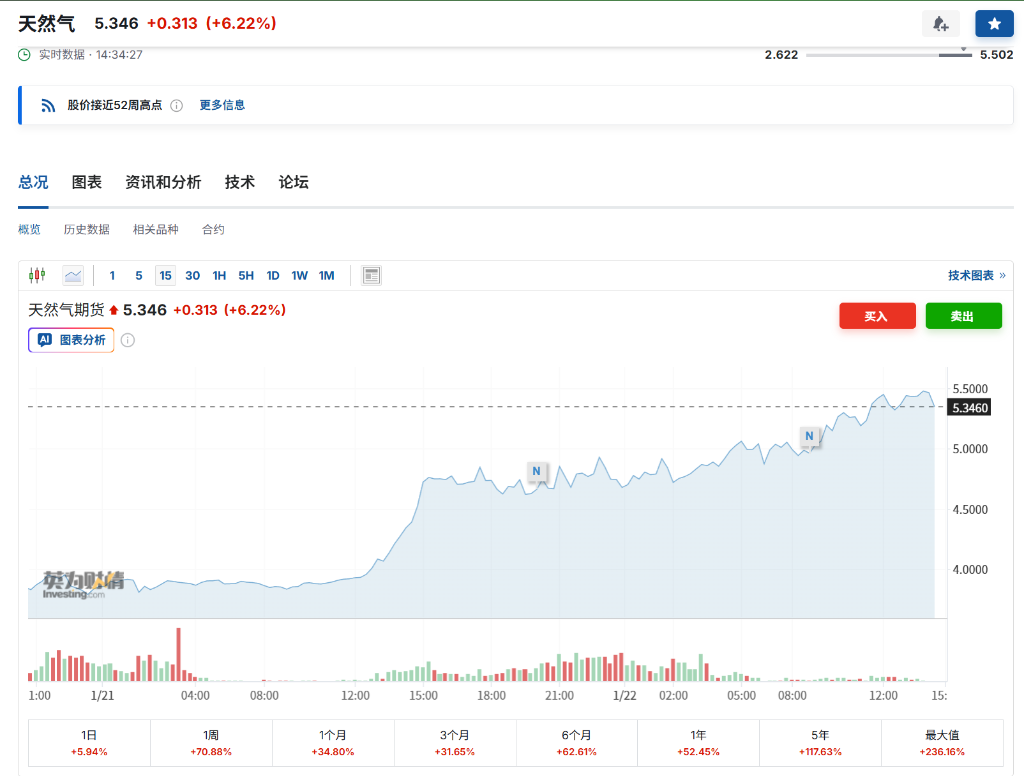
Group 1 - The core viewpoint of the articles highlights a significant surge in U.S. natural gas futures prices, reaching the highest level since 2022, driven by expectations of severe cold weather impacting supply and demand dynamics [1][2] - The National Oceanic and Atmospheric Administration (NOAA) forecasts indicate that two-thirds of the U.S. is likely to experience below-normal temperatures, contributing to heightened demand for natural gas [1] - The near-month natural gas contract saw a dramatic increase of 13% on Thursday, reaching $5.502 per million British thermal units, with a cumulative rise of over 50% in the previous two trading days, potentially marking the largest weekly gain in 34 years [1] Group 2 - Concerns are growing that extreme low temperatures may lead to "freezing" in the southern U.S., where moisture in pipelines could solidify and disrupt natural gas production, resulting in involuntary declines in output [2] - As cold weather intensifies, natural gas consumption is expected to rise significantly, accelerating inventory depletion [2] - The price surge in the U.S. market is affecting global energy dynamics, particularly impacting Europe and Asia, which heavily rely on U.S. liquefied natural gas (LNG) exports [2] - European natural gas futures prices have surged over 18% in the past week due to increased demand from low temperatures, while Japan's electricity prices reached a three-month high, indicating widespread supply tightness and upward price pressure in the global energy market [2]
高温天气推升用电需求 欧洲天然气价格止跌回升
智通财经网· 2025-06-11 09:18
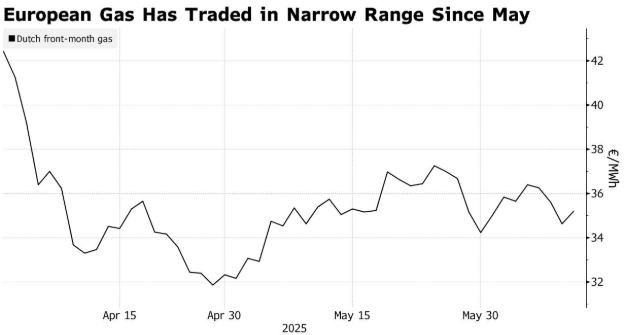
Group 1 - European natural gas prices ended a three-day decline due to unusually high temperatures across the continent, leading to increased air conditioning usage [1] - European benchmark futures prices rose by up to 2.5%, with cooling demand expected to reach its highest level since July 2022 [1] - The temperature in London is projected to exceed 30 degrees Celsius, reaching heatwave thresholds [1] Group 2 - Asia typically competes with Europe for liquefied natural gas transportation, and rising temperatures may complicate the task of filling gas storage facilities before winter [2] - Analysts from Citigroup highlighted the risk of supply disruptions during the hurricane season in the U.S. [2] - New risks have emerged in energy supply, including potential "stress corrosion" cracks affecting a nuclear reactor's pipeline in France, which previously led to energy price surges [2] - As of the report, Dutch TTF monthly futures (European natural gas benchmark price) increased by 2.4% to €35.48 per megawatt-hour [2]