
能源运输

Search documents
国投期货能源日报-20260323
Guo Tou Qi Huo· 2026-03-23 12:54
1. Report Industry Investment Ratings - Crude oil: ★☆☆ [1] - Fuel oil: ★☆☆ [1] - Low-sulfur fuel oil: ★☆☆ [1] - Asphalt: ★☆☆ [1] 2. Core Views - The core variable of oil price trends depends on the smooth passage of the global energy transportation route. Geopolitical conflicts show no sign of easing, and oil price fluctuations may intensify [1]. - Fuel oil is expected to follow crude oil, with a solid lower support, be easily affected by news, and show a wide - range oscillating pattern [2]. - The fundamentals of asphalt have marginal improvement expectations, and its direction will follow oil price fluctuations [3]. 3. Summaries by Related Catalogs Crude Oil - Trump issued a 48 - hour ultimatum to Iran, and Iran responded with a severe warning. The gap between alternative pipeline capacity and normal oil transport volume through the Strait of Hormuz is large. The release of strategic oil reserves by IEA member countries is for emergency buffering and has replenishment needs. The key to oil price is the strait's passage, and attention should be paid to whether energy infrastructure is directly attacked [1]. Fuel Oil & Low - Sulfur Fuel Oil - Geopolitical tensions over the weekend led to a sharp rise in fuel oil prices. Supply from the Middle East decreased, and although there are some alternative supplies, they are insufficient. Domestic refinery operating rates declined, increasing import demand. Overseas, LNG gas field attacks increased the demand for fuel oil. For low - sulfur fuel oil, the attack on Fujairah Port increased Singapore's bunkering demand, and supply is limited [2]. Asphalt - The military conflict between the US, Israel and Iran continues, and the traffic volume in the Strait of Hormuz is low. Asphalt refinery supply tightened, and production decreased. Downstream demand is expected to improve with rising temperatures. Refinery inventory decreased, and social inventory increased slightly, but both are at near - three - year lows. The asphalt's direction will follow oil price fluctuations [3]
中远海能(01138.HK)子公司与新加坡船东签订船舶光租合同 租入三艘大型气体船
Ge Long Hui· 2026-01-30 13:32
Core Viewpoint - The company has signed a long-term charter agreement to enhance its fleet of new energy transport vessels, aiming to optimize and upgrade its business structure [1] Group 1: Contract Details - On January 30, 2026, the company's wholly-owned subsidiary signed a light charter contract with a Singapore shipowner to lease three large gas carriers [1] - The charter agreements have a duration of 20 years, with options for the charterers [1] Group 2: Strategic Objectives - The company aims to build a fleet of new energy transport vessels to support the optimization and upgrading of its business structure [1] - The vessels involved possess technological advantages in green low-carbon and multi-liquid cargo compatibility, which can meet various clean energy chemical raw material transport needs [1] - This initiative is expected to enhance customer loyalty, expand capacity, and develop new pathways, thereby solidifying and deepening industry chain cooperation [1]
韩国船厂狂揽订单,中国为啥接不到单,背后是能源战争!
Sou Hu Cai Jing· 2025-12-23 06:32
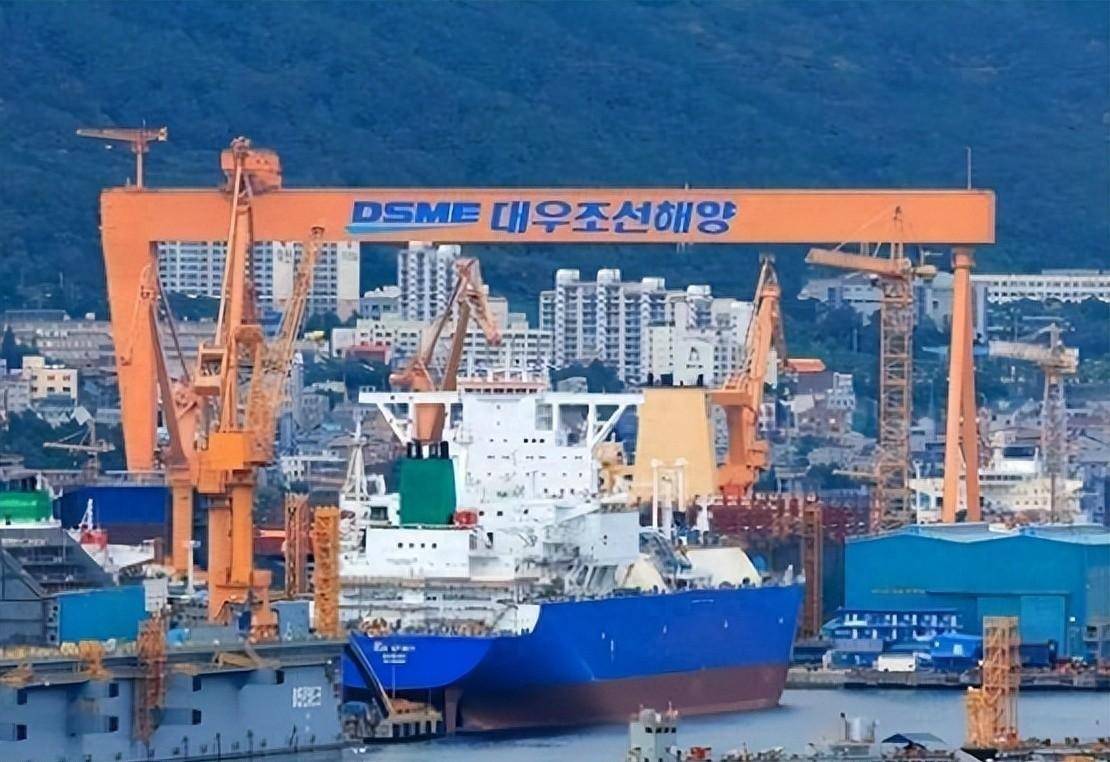
Group 1 - The South Korean shipbuilding industry is thriving, with Hanwha Ocean securing orders for seven liquefied natural gas (LNG) carriers totaling $1.75 billion, with each priced at $250 million, expected to be delivered by 2029 [1] - HD Hyundai has also reached an agreement with Nippon Yusen for four plus four vessels, with a unit price of $260 million, potentially bringing the total contract value to $2.08 billion [1] - All these vessels will be leased to Cheniere Energy in the United States, and this year, global orders for LNG carriers over 140,000 cubic meters have reached 21, all won by three South Korean shipbuilders, with no orders from China [1] Group 2 - Hanwha Ocean received $9.83 billion in orders this year, nearly tripling from last year, with 60% being LNG carriers, supported by long-term charters with clients [3] - The high-pressure engines used by South Korean shipbuilders are particularly favored by European shipowners for their environmental performance [3] - The shipyards in South Korea are fully booked until 2029, while the global planned delivery of new ships is only 17, indicating a significant supply-demand imbalance as LNG terminal production capacity is set to reach 52 million tons next year [3] Group 3 - The competition in the shipbuilding industry is not just about manufacturing but also about how energy flows and capital regulations, with U.S. LNG production increasing by 80 million tons annually [4] - Korean shipyards are preferred by charterers for their reliability and timely deliveries, supported by the Korean government promoting carbon compliance technologies [4] - Chinese shipyards face challenges in meeting international standards for new propulsion system certifications and gaining entry into the networks of major charterers and energy companies [4] Group 4 - By 2029, there are only about 70 LNG ship orders globally, while actual demand exceeds 150 ships, highlighting the urgency for China to secure 5 to 8 orders by 2025 to avoid missing out on this development cycle [4] - Chinese shipyards have the capability but lack a breakthrough point, with low pricing being a potential strategy, though it is insufficient without reliability in delivery [4] - The rapid development of South Korea is attributed to their advanced technology and strategic partnerships across the entire supply chain, while China is still fragmented and lacks established trust with clients [5] Group 5 - The global LNG market is changing, and competition in the shipbuilding industry is intensifying, with time running out for China to take action [5] - If no significant steps are taken by 2025, China may lose its eligibility to participate in bidding for future projects [5] - Success in this industry requires a combination of technology, client acquisition, and competitive pricing, all of which South Korea has successfully integrated [5]

中远海能: 中远海能2025年半年度报告
Zheng Quan Zhi Xing· 2025-08-29 17:57
Core Viewpoint - The report highlights the financial performance and operational status of COSCO SHIPPING Energy Transportation Co., Ltd. for the first half of 2025, indicating a decline in revenue and net profit compared to the previous year, while emphasizing the company's strong position in the energy transportation sector. Financial Performance - Total revenue for the first half of 2025 was approximately RMB 11.64 billion, a decrease of 2.55% compared to the same period last year [2][3] - Total profit amounted to approximately RMB 2.38 billion, reflecting a significant decline of 29.03% year-on-year [2][3] - Net profit attributable to shareholders was approximately RMB 1.77 billion, down 32.24% from the previous year [2][3] - Basic earnings per share decreased by 29.14% to RMB 0.3919 [3] Operational Overview - As of June 30, 2025, the company controlled a fleet of 157 oil tankers with a total deadweight tonnage of 23.45 million [7] - The company has invested in 87 LNG vessels, with 52 currently in operation, totaling 8.76 million cubic meters [5][7] - The LPG transportation segment operates 12 vessels with a capacity of 126,000 cubic meters [5][7] Industry Context - The global oil transportation market remains stable, with Middle Eastern oil exports dominating at 42% of global supply [9] - The LNG market is experiencing growth, with the company being a key player in both domestic and international LNG transportation [5][12] - The chemical transportation sector is expanding, with the company managing 8 chemical tankers [5][12] Strategic Positioning - The company maintains a leading position in China's oil and gas import transportation, leveraging strong relationships with major energy companies [7] - The operational strategy includes a diversified business model that encompasses oil, LNG, LPG, and chemical transportation, enhancing resilience against market fluctuations [7][12] - The company is focused on technological innovation and digital transformation to improve operational efficiency and service quality [8][12]